A T-shirt may look like one of the simplest garments in the market. But from a manufacturing view, it involves many technical steps. If one step goes wrong, the final product can suffer in fit, appearance, durability, or delivery.
The process of making a T-shirt includes product development, fabric sourcing, pattern making, sampling, fabric preparation, cutting, printing or dyeing, sewing, finishing, inspection, packing, and shipment. Each stage affects the final quality, cost, and consistency of the garment.
At Fusionknits, we do not treat T-shirt production as basic garment work. We treat it as a controlled manufacturing process. A well-made T-shirt is the result of clear standards, stable execution, and close attention at every stage.
How does the T-shirt manufacturing process begin?
Every T-shirt starts with a product plan. Before any fabric is cut or any seam is sewn, the factory needs to understand exactly what kind of T-shirt it is going to produce.
The T-shirt manufacturing process begins with product definition. At this stage, we confirm the fabric type, weight, fit, color, size range, logo method, label details, and target market, because these points guide all later production decisions.
A reference image is useful, but it is not enough for manufacturing. A factory needs technical information. Two T-shirts may look similar in a photo, but they can require very different fabric, pattern, and construction methods.
At Fusionknits, we usually begin with a product review. We study both the visual direction and the technical requirements. This helps us reduce confusion before sampling starts.
Key details we define at the beginning
- Fabric composition
- Fabric weight
- Knit structure
- Fit type
- Size chart
- Color standard
- Decoration method
- Label and packaging requirements
- Order quantity
- Delivery timeline
Why this stage matters
If the product definition is weak, the rest of the process becomes unstable. The sample may not match the target market. The sourcing team may choose the wrong fabric. The sewing line may follow assumptions instead of approved standards.
A clear start improves efficiency across the whole production chain.
| Development item | Why it matters |
|---|---|
| Fabric composition | Affects comfort, durability, shrinkage, and cost |
| Fabric weight | Influences hand feel, drape, and product positioning |
| Fit specification | Determines pattern shape and size consistency |
| Decoration method | Changes process flow, lead time, and pricing |
| Packaging details | Affects final presentation and warehouse handling |
From our experience, many avoidable production problems begin at this stage. That is why we treat product definition as a technical step, not a simple discussion.
How do we select the right fabric for a T-shirt?
Fabric is one of the most important parts of T-shirt manufacturing. It affects the hand feel, the appearance, the wash result, and the long-term performance of the garment.
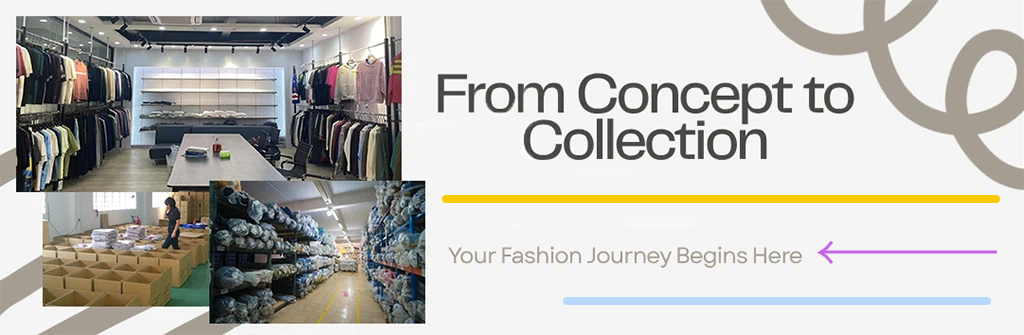
We select T-shirt fabric by matching the product purpose with the right composition, weight, texture, stretch, and finishing. A casual cotton T-shirt, a promotional T-shirt, and a performance T-shirt each need different material solutions.
Fabric choice should never be based on price alone. A cheaper fabric may reduce the unit cost at first, but it can create more problems later. Pilling, twisting, poor shrinkage control, and weak colorfastness often begin with poor material selection.
At Fusionknits, we evaluate fabric from both the product side and the production side. We need to know not only how the fabric looks, but also how it behaves during cutting, sewing, printing, washing, and inspection.
Common fabric options in T-shirt production
- 100% cotton jersey
Good for softness, breathability, and natural hand feel. - Cotton polyester blend
Good for cost balance, durability, and shape stability. - 100% polyester knit
Good for sportswear and activewear because it dries faster and handles moisture better. - Cotton with elastane or stretch blend
Good for fitted styles that need flexibility and better recovery.
Main fabric factors we check
Fabric weight
Lightweight fabric is often used for basic or seasonal T-shirts. Mid-weight fabric is common in retail. Heavyweight fabric is often used for premium or oversized products.
Yarn quality
Better yarn usually creates a cleaner surface and a more stable result.
Shrinkage
Shrinkage control is critical because it directly affects size stability after washing.
Colorfastness
Dark shades and strong colors need special attention.
Surface performance
We also check for pilling, spirality, and texture consistency.
| End use | Common fabric choice | Main focus |
|---|---|---|
| Casual lifestyle T-shirt | 100% cotton | Softness and comfort |
| Promotional T-shirt | Cotton polyester blend | Price and stability |
| Sports or gym T-shirt | Polyester or technical blend | Moisture management |
| Premium heavyweight tee | Heavy cotton jersey | Structure and appearance |
A professional manufacturer should do more than offer fabric swatches. It should explain why one fabric is more suitable than another for the target product.
Why are pattern making and sampling essential in T-shirt production?
Pattern making and sampling turn an idea into a real garment. This is the stage where the product starts to show its actual fit, shape, and construction quality.
Pattern making and sampling are essential because they allow us to test the T-shirt before bulk production. At this stage, we confirm measurements, fit balance, collar shape, sewing details, and fabric behavior under real production conditions.
A T-shirt may look simple, but its pattern still requires precision. Chest width, shoulder slope, armhole depth, sleeve shape, collar width, and body length all influence the final result. Even small changes can affect how the garment looks and wears.
At Fusionknits, we treat sample development as a control stage. It helps us verify that the selected fabric, pattern, and workmanship can work together in a stable way.
What we review during sampling
- Measurement accuracy
- Fit on body
- Collar proportion
- Sleeve balance
- Hem shape
- Stitch appearance
- Label placement
- Print or embroidery placement
- Wash performance
Why sample revision is normal
The first sample is not always the final answer. In many cases, revisions are needed. The collar may need to be tighter. The body length may need to be shorter. The chest width may need a small adjustment to fit the target market better.
This is not a sign of failure. It is part of a healthy development process.
Common sample issues we often identify
| Sample issue | Possible result in bulk |
|---|---|
| Loose collar | Weak neckline recovery |
| Body too long | Poor fit for target customer |
| Sleeve angle imbalance | Less attractive silhouette |
| Excessive shrinkage | Size complaints after washing |
| Decoration placed off-center | Poor retail presentation |
Skipping or rushing this stage creates risk. Sampling gives both the buyer and the factory a chance to align before production volume increases.
What happens before the fabric is cut?
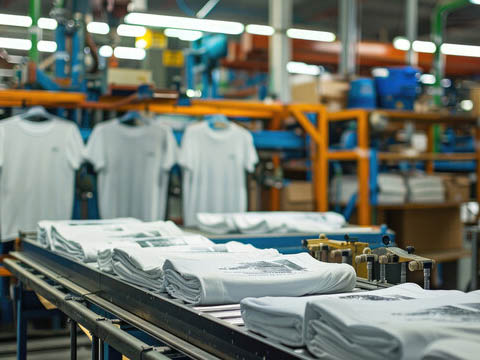
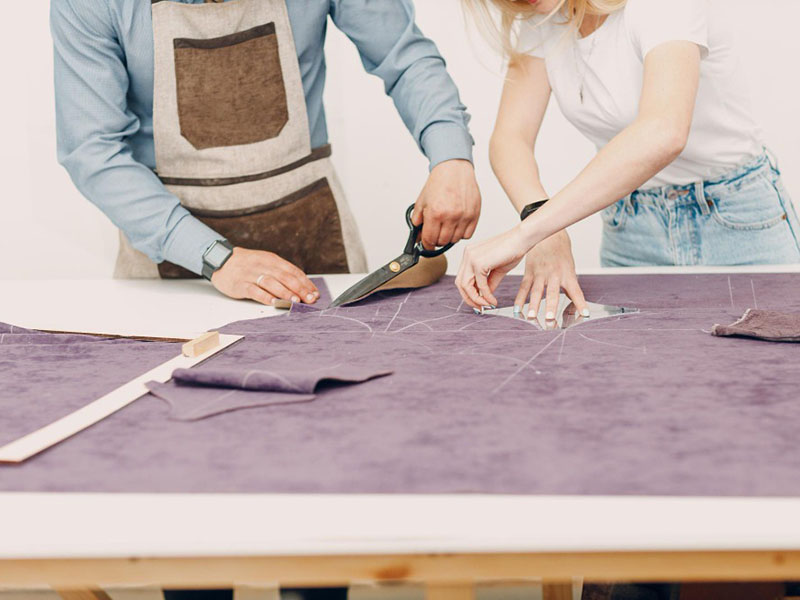
Before cutting begins, the fabric must be checked and prepared properly. This stage has a direct impact on size consistency, shade control, and cutting accuracy.
Before the fabric is cut, we inspect the fabric rolls, group shades, relax the material, confirm the marker, and prepare the lay plan. These steps help us reduce cutting errors and improve consistency in bulk production.
Many people outside the factory see cutting as a simple step. In practice, it is a control point. If the cutting is inaccurate, the sewing team cannot fully correct the problem later.
At Fusionknits, we focus on preparation before cutting because knitted fabric can be sensitive. It may hold tension after knitting, dyeing, and rolling. If it is not handled correctly, the garment size may shift later.
Main steps before cutting
- Inspect fabric rolls
- Group rolls by shade
- Relax the fabric
- Confirm marker efficiency
- Plan the fabric lay
- Cut garment panels
- Sort bundles by size and color
Why fabric relaxation matters
Relaxation helps the fabric return to a more stable state before cutting. This is especially important for knitted materials. Cutting fabric under tension can lead to size variation after sewing or washing.
Risks we control in the cutting room
- Shade difference between rolls
- Cutting off grain
- Inaccurate panel shapes
- Mixing sizes in the same bundle
- Fabric waste from poor marker planning
| Cutting control point | Why it matters |
|---|---|
| Shade sorting | Reduces visible color difference |
| Marker planning | Improves material usage |
| Grain alignment | Helps reduce twisting |
| Bundle control | Prevents size confusion |
| Cutting precision | Supports measurement consistency |
A strong cutting process creates a stronger foundation for sewing. If the panels are well prepared, the sewing line can work with better speed and fewer defects.
How do printing, dyeing, and sewing shape the final T-shirt?
This is the stage where fabric panels become a finished garment. It is also where the T-shirt receives its visual identity and structural form.
Printing, dyeing, and sewing shape the final T-shirt by adding color, decoration, and construction. The exact process sequence depends on the design, fabric type, decoration method, and production volume.
Not every T-shirt follows the same route. Some styles are piece dyed before cutting. Some are garment dyed after sewing. Some are printed on flat panels, while others are printed after the garment is assembled. The correct process depends on the product requirements.
At Fusionknits, we choose the workflow based on quality stability, efficiency, and the visual effect required by the customer.
Common decoration methods in T-shirt manufacturing
- Screen printing
- Heat transfer
- Digital printing
- Embroidery
- Silicone print
- Puff print
- Garment dye
- Special wash effects
Each method has its own production logic. Some methods are better for large volume orders. Some are better for smaller runs. Some offer stronger color effect, while others provide a softer hand feel.
Typical T-shirt sewing sequence
- Join shoulder seams
- Attach neck rib
- Set sleeves
- Close side seams
- Hem sleeves
- Hem bottom
- Attach main label and care label
- Trim loose threads
Sewing details that affect quality
Collar construction
A collar should sit flat and recover well after wear. A poor collar can damage the look of the whole T-shirt.
Stitch density
Stitch density must match the fabric and product purpose. Too loose can weaken the seam. Too dense can damage the fabric or reduce stretch.
Seam symmetry
Balanced seams improve both appearance and comfort.
Thread selection
The correct thread supports strength, durability, and wash performance.
What we monitor during this stage
- Print adhesion
- Decoration accuracy
- Color consistency
- Seam smoothness
- Fabric stretching during sewing
- Needle damage
- Thread tension
- Panel matching
This stage requires discipline on the production floor. A T-shirt may be a common item, but the quality still depends on technical control at each operation.
How do we finish and inspect a T-shirt before packing?
A T-shirt is not complete when the sewing line finishes its work. It must still go through finishing and inspection before it is ready for packing and shipment.
We finish and inspect a T-shirt by checking measurements, workmanship, decoration quality, fabric appearance, cleanliness, labeling, and folding. These steps help us confirm that the bulk order meets the approved production standard.
After sewing, garments usually move into thread trimming, pressing, final appearance review, and measurement checking. At this point, the product should be evaluated as a complete unit, not as separate operations.
At Fusionknits, we see finishing and inspection as critical parts of quality assurance. The goal is not only to find defects, but also to confirm consistency across the whole order.
Main inspection points before packing
- Measurement against approved spec
- Stitching quality
- Fabric flaws
- Stains or oil marks
- Print and embroidery quality
- Shade consistency
- Label accuracy
- Folding quality
Common T-shirt defects found during final inspection
| Defect | Likely impact |
|---|---|
| Uneven collar | Poor appearance |
| Open seam | Functional problem |
| Crooked print | Brand image issue |
| Wrong size label | Customer confusion |
| Loose threads | Weak finishing impression |
| Shade variation | Inconsistent display |
Why finishing matters
Appearance control
A clean and well-finished garment creates a stronger first impression.
Measurement confirmation
This helps ensure that bulk production remains within tolerance.
Decoration review
This helps avoid retail complaints caused by off-center prints or poor adhesion.
Label verification
Wrong label details can create problems in retail, warehousing, and export handling.
A strong finishing process supports both product quality and customer confidence. It is the last opportunity to correct visible issues before packing begins.
What should a factory check during packing and shipment preparation?
Packing is not only about putting garments into cartons. It is part of product control and shipment management.
During packing and shipment preparation, we check folding method, assortment ratio, barcode and label accuracy, carton quantity, shipping marks, and packing list details. Good packing protects the product and reduces logistics mistakes.
Packing errors can create serious problems even when the garments themselves are good. Wrong carton ratios, missing labels, or incorrect shipping marks can slow down warehouse receiving and damage buyer trust.
At Fusionknits, we treat packing as the final production step, not as separate warehouse work.
Packing points we usually confirm
- Folding standard
- Polybag requirement
- Assorted size ratio
- Quantity per carton
- Carton label
- Shipping mark
- Carton strength
- Packing list accuracy
Why packing quality matters
| Packing item | Why it matters |
|---|---|
| Folding consistency | Improves presentation and handling |
| Correct assortment | Prevents inventory confusion |
| Clear carton label | Supports warehouse receiving |
| Accurate shipping mark | Reduces logistics errors |
| Strong cartons | Protects garments during transit |
For wholesale orders, packing quality is part of product quality. A well-made T-shirt can still cause problems if the shipment is packed incorrectly.
Why should buyers understand the full T-shirt manufacturing process?
Buyers do not need to manage the factory floor themselves, but they benefit from understanding the main steps behind T-shirt production.
Buyers should understand the full T-shirt manufacturing process because it helps them evaluate suppliers more accurately, ask better technical questions, reduce sourcing risk, and make stronger decisions on quality, cost, and lead time.
A better understanding of production leads to better communication. It also helps buyers compare suppliers on more than price alone. A low quotation may look attractive at first, but it does not always reflect actual production control.
At Fusionknits, we believe informed buyers build better sourcing relationships. When the buyer understands how fabric, pattern, cutting, sewing, and inspection connect to each other, the whole project becomes clearer.
Useful questions buyers can ask a manufacturer
- What fabric options are best for this product?
- How do you control shrinkage and shade variation?
- What is your sample revision process?
- How do you manage cutting accuracy?
- What in-line and final inspections do you use?
- How do you control lead time during bulk production?
These questions help reveal whether a manufacturer has real production discipline. They also help reduce misunderstandings later.
What buyers gain from process knowledge
- Better supplier evaluation
- Clearer quality expectations
- Fewer avoidable revisions
- Stronger risk control
- More stable delivery planning
A T-shirt may be one of the most common garments in the apparel market, but consistent T-shirt manufacturing still depends on process management. The more clearly this process is understood, the easier it becomes to make better sourcing decisions.
Conclusion
The process of making a T-shirt involves much more than choosing a fabric and sewing the panels together. It is a complete manufacturing workflow that starts with product development and continues through fabric sourcing, pattern engineering, sampling, fabric preparation, cutting, decoration, sewing, finishing, inspection, packing, and shipment. Every stage has a direct effect on the final garment, from fit and appearance to durability, consistency, and delivery performance.
For buyers, understanding this process makes it easier to evaluate suppliers, set realistic expectations, and reduce common sourcing risks. For manufacturers, strong process control is what turns a basic T-shirt into a dependable wholesale product.
At Fusionknits, we believe good T-shirt manufacturing is built on technical clarity, disciplined execution, and consistent quality standards at every step of production. That is what helps transform a simple garment into a product that performs well in the market and supports long-term business growth.