A 100% cotton T-shirt looks simple, but its manufacturing process is not simple at all. If the cotton quality, knitting stability, or sewing control is weak, the final product can lose shape, shrink too much, or fail in bulk consistency.
100% cotton T-shirts are made through a controlled process that includes cotton fiber selection, yarn spinning, fabric knitting, dyeing and finishing, pattern making, sampling, cutting, sewing, inspection, packing, and shipment. Each stage affects the garment’s softness, fit, durability, and production stability.
At Fusionknits, we do not treat 100% cotton T-shirt production as basic garment work. We treat it as a complete manufacturing system. A good cotton T-shirt depends on technical control from fiber to finished product.
What raw cotton materials are used to make 100% cotton T-shirts?
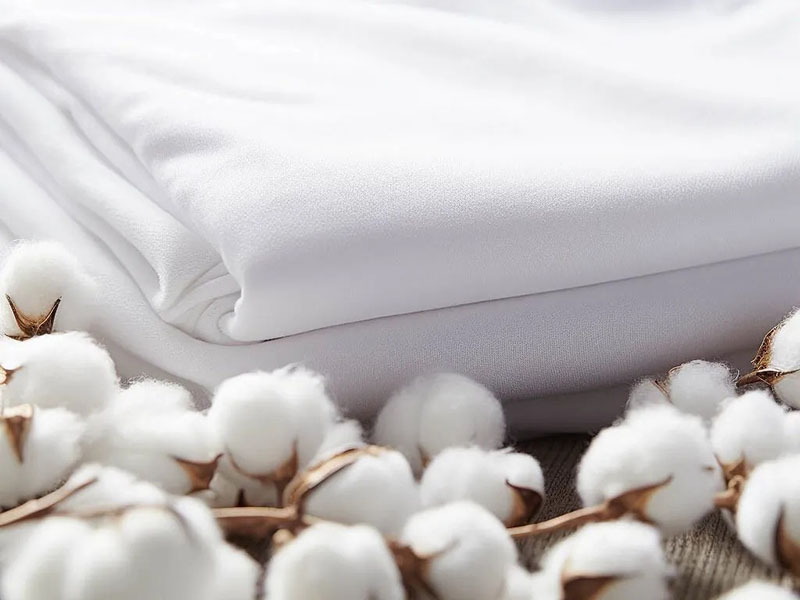
A 100% cotton T-shirt starts with cotton fiber, but not all cotton fibers create the same result. Fiber length, cleanliness, strength, and consistency all affect the final fabric quality.
The raw material used to make a 100% cotton T-shirt is cotton fiber, which is processed into yarn and then knitted into fabric. The fiber quality influences softness, yarn strength, surface appearance, shrinkage behavior, and overall product value.
In manufacturing, “100% cotton” only tells part of the story. Two T-shirts can both be made from 100% cotton and still feel very different. One may feel smooth, stable, and premium. Another may feel rough, loose, or less durable. That difference often begins at the fiber stage.
At Fusionknits, we look at cotton as a material system. We do not only ask whether the fabric is 100% cotton. We also look at what kind of cotton is being used and how stable that cotton is through production.
Main cotton factors that affect T-shirt quality
- Fiber length
- Fiber strength
- Fiber cleanliness
- Fiber maturity
- Color consistency
- Spinning suitability
Why cotton quality matters so much
Better cotton fiber usually creates stronger and smoother yarn. That leads to cleaner knitting, more stable dyeing, and better sewing performance. Lower-grade cotton may increase pilling, unevenness, and fabric instability.
| Cotton factor | Effect on the final T-shirt |
|---|---|
| Longer fiber | Softer and smoother fabric |
| Better strength | Stronger yarn and better durability |
| Cleaner fiber | Fewer surface imperfections |
| Better consistency | More stable bulk production |
| Better maturity | Improved dyeing and finishing result |
For this reason, professional cotton T-shirt production begins with raw material control, not only with garment assembly.
How is cotton turned into yarn for T-shirt production?
Before cotton can become fabric, it must be processed into yarn. This stage plays a major role in fabric feel, surface quality, and consistency.

Cotton is turned into yarn through opening, cleaning, carding, drawing, roving, and spinning. The spinning method and yarn quality affect the softness, strength, evenness, and appearance of the final cotton T-shirt fabric.
Cotton yarn is the direct base of the knitted fabric. Even when the fiber content is the same, different yarn quality can create very different fabric results. A premium cotton T-shirt often depends as much on yarn quality as on the cotton itself.
At Fusionknits, we pay close attention to yarn specification because it affects both product quality and manufacturing stability.
Main stages of cotton yarn production
- Opening and cleaning the cotton
- Carding the fibers
- Drawing to improve fiber alignment
- Roving preparation
- Spinning into yarn
- Winding and quality checking
Common yarn options used in cotton T-shirts
Carded cotton yarn
This is a more standard and cost-sensitive option. It can work for basic products, but the surface may be less smooth.
Combed cotton yarn
Combed yarn removes more short fibers and impurities. It usually creates a softer and cleaner fabric.
Ring-spun cotton yarn
Ring-spun yarn is widely used for better-quality T-shirts because it often gives a smoother hand feel and stronger yarn structure.
Why yarn quality matters in 100% cotton T-shirts
- It affects fabric softness
- It affects surface smoothness
- It affects pilling risk
- It affects yarn strength during knitting
- It affects color evenness after dyeing
A simple comparison of common yarn types
| Yarn type | Main advantage | Common use |
|---|---|---|
| Carded yarn | Lower material cost | Basic cotton T-shirts |
| Combed yarn | Cleaner and softer surface | Better-quality retail T-shirts |
| Ring-spun yarn | Smooth hand feel and stronger yarn structure | Premium cotton T-shirts |
A stable yarn creates a stronger base for the next stage. If yarn quality is weak, later processes can only correct part of the problem.
How is 100% cotton fabric knitted for T-shirts?
After the yarn is ready, it is knitted into fabric. For most cotton T-shirts, the most common structure is single jersey, but structure choice still depends on the product goal.
100% cotton fabric for T-shirts is usually knitted from cotton yarn into structures such as single jersey, interlock, or rib. The knitting method affects stretch, thickness, surface texture, drape, and sewing behavior.
Knitting is where yarn becomes garment fabric. At this stage, machine settings, tension control, and fabric construction all begin to shape how the T-shirt will perform. A good cotton yarn can still produce weak fabric if knitting control is poor.
At Fusionknits, we review knitting quality closely because cotton fabric is sensitive to tension, spirality, and surface consistency.
Common knit structures used in 100% cotton T-shirts
Single jersey
This is the most common structure for cotton T-shirts. It is efficient, flexible, and suitable for a wide range of casual products.
Interlock
Interlock creates a thicker and smoother fabric. It is often used when a fuller hand feel is needed.
Rib knit
Rib is usually used for neckbands because it offers stronger elasticity and better recovery.
What we check in knitted cotton fabric
- Fabric weight
- Width stability
- Surface evenness
- Spirality risk
- Stretch and recovery
- Needle line issues
- Roll consistency
Why knitting control matters
If the knitting is unstable, the fabric may twist after washing, roll too much at the edges, or create size inconsistency in bulk production. These problems affect both sewing efficiency and final garment quality.
Common knit structures and uses
| Knit structure | Common use in cotton T-shirts | Main feature |
|---|---|---|
| Single jersey | Body fabric | Soft and versatile |
| Interlock | Premium body fabric | Fuller and smoother |
| Rib | Neckline | Better stretch and shape retention |
A cotton T-shirt fabric is not only defined by fiber content. It is also defined by how well the yarn is knitted into a stable fabric form.
How is 100% cotton fabric dyed and finished?
After knitting, the cotton fabric usually goes through dyeing and finishing. This stage is critical because cotton reacts strongly to wet processing.
100% cotton fabric is dyed and finished through processes such as scouring, bleaching, dyeing, washing, softening, drying, and compacting. These steps affect color, hand feel, shrinkage control, and final fabric stability.
Cotton fabric can feel soft and natural, but it can also shrink, twist, or lose appearance if dyeing and finishing are not well controlled. This is why wet processing is one of the most important stages in cotton T-shirt production.
At Fusionknits, we pay close attention to finishing because good finishing helps turn knitted cotton into stable garment fabric.
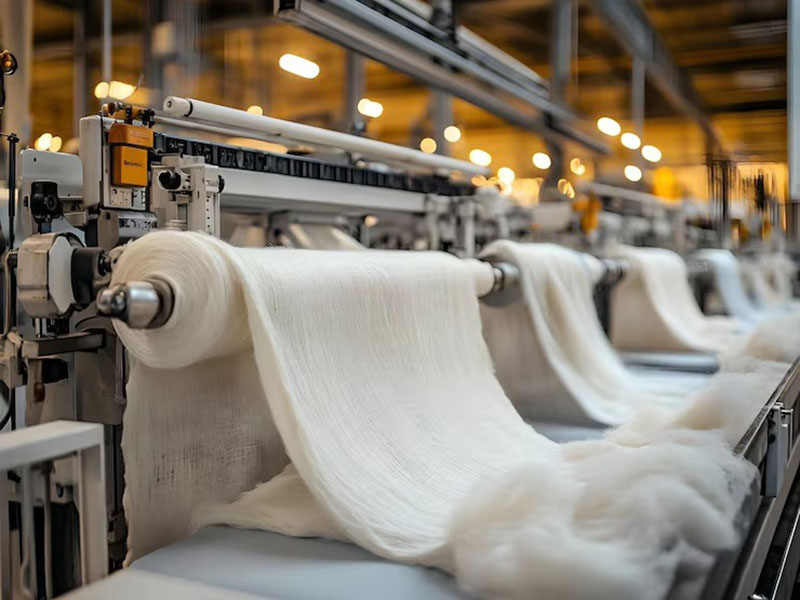
Main wet processing stages for cotton T-shirt fabric
- Scouring to clean the fabric
- Bleaching when needed
- Dyeing
- Washing
- Softening
- Drying
- Compacting or preshrinking
- Final inspection
Why finishing is especially important for cotton
Cotton absorbs moisture and dyes well, but it also changes shape more easily than some synthetic materials. Without good finishing, the fabric may show excessive shrinkage or poor hand feel.
Common finishing targets in 100% cotton T-shirt production
- Soft hand feel
- Controlled shrinkage
- Good colorfastness
- Stable fabric width
- Better surface cleanliness
- Reduced twisting risk
Common finishing problems if control is weak
| Problem | Likely result |
|---|---|
| Poor shrinkage control | Garment size complaints |
| Uneven dyeing | Shade inconsistency |
| Weak softening result | Rough hand feel |
| Poor compacting | Unstable bulk measurements |
| Incomplete washing | Surface issues after use |
Good cotton finishing does not only improve appearance. It also improves production consistency in cutting and sewing.
How are patterns and samples developed for a 100% cotton T-shirt?
Before bulk production starts, the factory needs to confirm how the cotton T-shirt will fit, look, and behave in real production. That is the role of pattern making and sample development.
Patterns and samples are developed for a 100% cotton T-shirt by turning the design into technical measurements, sewing a sample garment, and checking fit, shrinkage, collar balance, and overall construction before bulk production begins.
A cotton T-shirt may look basic, but pattern accuracy still matters. Shoulder line, body width, sleeve opening, collar proportion, and body length all affect the final result. Cotton fabric behavior also needs extra attention because washing and finishing can slightly change garment dimensions.
At Fusionknits, we use sample development to confirm both design direction and manufacturing stability.
What we review during sample development
- Measurement accuracy
- Fit balance
- Collar shape
- Body length
- Sleeve proportion
- Hem shape
- Fabric response after wash
- Print placement if decoration is used
Why sample testing is important for cotton garments
Cotton garments often need wash consideration. The fabric may change slightly after finishing or laundering. Sampling helps the factory and the buyer see these risks before bulk production begins.
Common issues found in cotton T-shirt samples
| Sample issue | Possible bulk problem |
|---|---|
| Collar too loose | Weak neckline recovery |
| Body length too short after wash | Size instability |
| Chest width imbalance | Poor fit result |
| Fabric twisting | Side seam distortion |
| Shrinkage above standard | Customer complaints |
This stage helps reduce risk later. It also improves alignment between the factory standard and the buyer’s expectations.
How is a 100% cotton T-shirt cut and sewn in bulk production?
Once the sample is approved, the order moves into bulk production. This is where fabric panels are cut and assembled into finished garments.

A 100% cotton T-shirt is cut and sewn in bulk production by inspecting and relaxing the fabric, cutting garment panels by pattern, sorting bundles, sewing the main seams, attaching the rib neckband, hemming the garment, and checking workmanship during production.
Cotton fabric needs careful handling before cutting. Since cotton knits can hold tension after finishing and rolling, fabric preparation is important for size stability.
At Fusionknits, we see cutting and sewing as linked control stages. If cutting is weak, sewing accuracy becomes harder. If sewing control is weak, even good fabric and pattern work can lose value.
Main bulk cutting steps
- Fabric roll inspection
- Shade grouping
- Fabric relaxation
- Marker confirmation
- Fabric laying
- Panel cutting
- Bundle sorting
Typical sewing sequence for a cotton T-shirt
- Join shoulder seams
- Attach neck rib
- Set sleeves
- Close side seams
- Hem sleeves
- Hem bottom
- Attach labels
- Trim loose threads
Sewing points that matter in cotton T-shirt production
Collar attachment
The neck rib must be attached with the right tension. If it is too loose or too tight, the neckline will not sit well.
Stitch density
The stitch count should suit the cotton fabric. It needs to support strength without damaging the knit.
Seam smoothness
Cotton knit garments should lie flat and feel comfortable.
Thread and needle control
Wrong settings can create skipped stitches or fabric damage.
Common bulk production risks
| Production risk | Possible effect |
|---|---|
| Shade mix in cutting | Visible color difference |
| Fabric cut off grain | Twisting after sewing |
| Poor rib attachment | Uneven collar appearance |
| Incorrect tension | Puckering or weak seams |
| Size mix in bundles | Wrong garment measurement |
A stable bulk process is what turns approved development into repeatable production quality.
How are 100% cotton T-shirts inspected and finished before packing?
After sewing, the T-shirt still needs finishing and inspection. This stage confirms whether the final garment meets the approved production standard.
100% cotton T-shirts are inspected and finished before packing through thread trimming, pressing, measurement checking, appearance inspection, label verification, folding, and carton packing. These steps help confirm quality, consistency, and shipment readiness.
Cotton garments often need extra attention in finishing because wrinkles, surface marks, and measurement tolerance can affect the final impression. A technically correct garment can still look weak if finishing is poor.
At Fusionknits, finishing and inspection are key parts of quality control, not only end-of-line routines.
Main finishing steps
- Loose thread trimming
- Surface cleaning
- Pressing
- Minor appearance correction
- Folding preparation
Main inspection points before packing
- Measurement against approved spec
- Collar and seam appearance
- Fabric flaws
- Stains or oil marks
- Label accuracy
- Shade consistency
- Folding quality
- Carton quantity and markings
Common defects checked before shipment
| Defect | Likely impact |
|---|---|
| Uneven collar | Poor visual quality |
| Open seam | Functional problem |
| Measurement out of tolerance | Fit complaint |
| Shade variation | Inconsistent order appearance |
| Wrong label | Packing and retail issue |
| Loose threads | Weak finishing impression |
Why packing control matters too
Packing is part of the final manufacturing result. Good folding, correct assortment, and accurate carton labels support warehouse receiving, retail handling, and export shipment.
A 100% cotton T-shirt is only ready when both product quality and packing accuracy are confirmed.
Why does process control matter so much for 100% cotton T-shirts?
100% cotton is a natural and popular material, but it can also be sensitive during production. That is why process control matters so much from the first stage to the last.
Process control matters in 100% cotton T-shirt manufacturing because cotton fabric is sensitive to shrinkage, twisting, dye variation, and sewing tension. Strong control helps factories keep quality stable across bulk orders and reduce production risk.
Many problems in cotton T-shirt production do not begin at final inspection. They begin earlier, with unstable yarn, weak finishing, poor shrinkage control, or inaccurate sewing methods. That is why each stage must support the next stage.
At Fusionknits, we believe a good 100% cotton T-shirt comes from connected process management, not from one strong operation alone.
What buyers should expect from a cotton T-shirt manufacturer
- Clear fabric and yarn logic
- Stable sampling process
- Shrinkage and wash awareness
- Accurate cutting control
- Clean sewing quality
- Reliable finishing and inspection
- Consistent packing standards
What strong process control improves
- Better fit consistency
- Better hand feel
- Better wash performance
- Lower defect rate
- Better bulk stability
- Stronger market value
Cotton T-shirts remain one of the most common products in the apparel industry. But consistent cotton T-shirt manufacturing still depends on technical discipline.
Conclusion
The process of making a 100% cotton T-shirt involves much more than knitting fabric and sewing the garment together. It begins with cotton fiber selection and continues through yarn spinning, fabric knitting, dyeing and finishing, sample development, cutting, sewing, inspection, packing, and shipment. Every stage affects the final result, from softness and fit to shrinkage control, appearance, and bulk consistency.
For buyers, understanding this process makes it easier to evaluate suppliers, compare material quality, and reduce sourcing risk. For manufacturers, strong control at each stage is what turns natural cotton into a dependable wholesale product. At Fusionknits, we believe high-quality 100% cotton T-shirt manufacturing depends on technical clarity, disciplined production management, and stable standards throughout the entire process.