Choosing the wrong print method can damage a T-shirt program even when the artwork looks good. The print may feel too heavy, crack too early, slow down production, or cost more than expected. That is why the choice between DTF and screen print matters much more than many buyers first assume.
DTF is better for small runs, complex artwork, and flexible order quantities, while screen print is better for larger orders, stronger production efficiency, and more stable long-term commercial printing. The better method depends on quantity, artwork style, fabric type, budget, and the final product standard.
At Fusionknits, DTF and screen print are not treated as competing trends. They are treated as different production tools. A strong print decision comes from matching the right method to the right product, not from asking which method is always better.
Why is there no single answer to DTF vs screen print?
Many buyers want one direct answer, but these two methods are built for different production goals. A method that works well for one order may be the wrong choice for another.
There is no single answer to DTF vs screen print because each method has different strengths in setup, speed, artwork handling, cost structure, durability, and production scale. The better option depends on the real business and product requirements.
From a manufacturing perspective, printing should never be chosen by trend alone. A print method needs to support the garment, the order size, the artwork detail, the target market, and the expected wash performance. DTF may look more convenient in one case, while screen print may be far more efficient in another.
At Fusionknits, print method selection usually begins with five practical questions: what fabric is being used, how many pieces are being printed, how complex the artwork is, what hand feel is expected, and what price level the product needs to reach.
Main factors that shape the decision
- Order quantity
- Artwork complexity
- Fabric type
- Print durability target
- Hand feel expectation
- Lead time requirement
- Cost structure
- Reorder potential
Why this decision affects more than decoration
It changes production efficiency
The print route affects setup time, labor flow, and output speed.
It changes garment feel
Some methods leave a softer effect, while others create a more visible transfer layer.
It changes commercial value
A print that looks acceptable in a sample may still be weak for bulk retail if the method is wrong.
A simple decision view
| Decision factor | DTF advantage | Screen print advantage |
|---|---|---|
| Small runs | Stronger | Weaker |
| Large runs | Weaker | Stronger |
| Artwork detail | Stronger | Good, but depends on setup |
| Production efficiency at scale | Weaker | Stronger |
That is why a professional print choice should always begin with production logic, not personal preference alone.
What is DTF printing and when does it work best?
DTF has become more visible in recent years because it allows flexible printing without the full setup demands of traditional screen printing. It is especially attractive in custom and short-run programs.
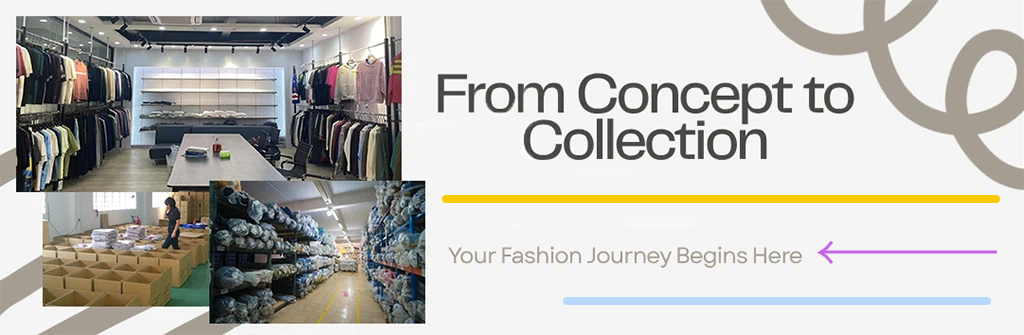
DTF, or direct-to-film printing, works by printing a design onto transfer film, applying adhesive powder, curing the film, and then heat pressing the design onto the garment. It works best for small orders, detailed full-color graphics, and flexible production where screen setup would be less efficient.
In practical use, DTF gives a business more freedom with artwork complexity. A detailed multi-color design does not require separate screens for each color. That makes the method especially attractive for custom printing, low-MOQ brands, and on-demand production.
At Fusionknits, DTF is usually considered when the order quantity is limited, the design changes often, or the customer needs more flexibility in artwork than a standard screen-printing setup can support efficiently.
When DTF usually works well
- Small production runs
- Full-color graphics
- Short lead-time custom jobs
- Frequent design changes
- Sampling and quick development
- Multi-design low-volume production
Why DTF is attractive in some projects
Lower setup complexity
There is less preparation compared with making multiple screens.
More artwork freedom
Detailed gradients and complex color transitions are easier to handle.
Better flexibility
The method suits shorter runs without creating heavy screen setup cost.
DTF strength in practical terms
| DTF feature | Why it matters |
|---|---|
| Flexible artwork handling | Useful for detailed and changing graphics |
| Lower setup demand | Better for short runs |
| Easy small-batch use | Good for custom programs |
| Broad print application use | Helpful in varied order structures |
DTF is not always the best print route, but it is very useful when flexibility matters more than maximum bulk efficiency.
What is screen printing and when does it work best?
Screen printing remains one of the most established methods in T-shirt production. It is still one of the strongest choices for commercial-scale printing.
Screen printing works by pushing ink through prepared screens onto the garment, usually one color layer at a time. It works best for medium to large orders, strong production efficiency, bold graphics, and stable repeat programs where setup cost can be spread across more units.
Screen print is often preferred in bulk production because it can deliver strong consistency, good wash performance, and better unit economics when quantities rise. While the setup is more complex than DTF, that setup becomes more efficient when the order size is large enough.
At Fusionknits, screen print is often selected for wholesale programs, retail production, event merchandise, and repeat orders where the artwork is stable and the quantity is strong enough to justify the setup.
When screen print usually works well
- Medium to large orders
- Spot-color graphics
- Bold logo placement
- Commercial retail production
- Repeat production programs
- Print styles requiring stable long-run output
Why screen print remains so important
Better scaling for bulk
Once the setup is complete, the method becomes more efficient for larger runs.
Strong wash durability
A properly cured screen print can perform very well in repeated wear and laundering.
Better commercial repeatability
The method is well suited to long-term programs and stable graphic orders.
Screen print strength in practical terms
| Screen print feature | Why it matters |
|---|---|
| Strong bulk efficiency | Better for larger quantities |
| Proven wash performance | Supports retail durability |
| Good visual consistency | Strong for repeated production |
| Lower unit cost at volume | Better commercial control in bulk |
This is why screen print is still one of the most important decoration methods in professional T-shirt manufacturing.
Which method is better for small orders and low MOQ programs?
This is one of the clearest areas where the two methods separate. Small-run economics and setup logic often make one method much more practical than the other.
DTF is usually better for small orders and low MOQ programs because it has less setup burden and can handle multiple designs more efficiently in short runs. Screen print is usually less economical at very low quantities because the setup time and screen preparation are harder to justify.
If a brand is printing 20 pieces with complex full-color artwork, DTF is often the more practical direction. If the same brand is printing 2,000 identical pieces, screen print usually becomes the stronger commercial choice.
At Fusionknits, this is one of the first questions reviewed when advising buyers. The right print method often becomes clear once the real order size is known.
Why DTF fits smaller runs better
- Lower setup requirement
- Easier handling of many artwork versions
- Better flexibility for custom orders
- Reduced preparation compared with multiple screen separations
Why screen print fits bulk better
- Setup cost spreads across more units
- Better output efficiency in repeated printing
- More stable long-run unit costing
- Better production rhythm for large orders
Small-run vs bulk comparison
| Order type | Better method |
|---|---|
| Very small custom run | DTF |
| Small multi-design order | DTF |
| Medium order with stable design | Depends on artwork and budget |
| Large bulk order | Screen print |
This is why MOQ and production volume are among the most important decision points in print method selection.
Which method gives better print quality and detail?
Print quality is not only about sharpness. It also includes edge clarity, color behavior, consistency, and how the print looks on the actual garment.
DTF is usually better for highly detailed, full-color, and gradient-heavy artwork, while screen print is often better for clean spot colors, bold graphics, and controlled commercial consistency. The better quality result depends on the design style rather than the method alone.
DTF can reproduce more complex image-style artwork more easily. This makes it attractive for graphics with many colors, fine transitions, or photographic effects. Screen print performs very strongly when the artwork uses clean solid areas, bold branding, or limited spot-color structures.
At Fusionknits, artwork style is always reviewed before recommending a print route, because a detailed design and a simple logo do not need the same production logic.
DTF quality strengths
- Fine detail handling
- Complex color transitions
- Full-color artwork
- Flexible design variation
Screen print quality strengths
- Bold solid color coverage
- Strong simple graphics
- Cleaner effect for some spot-color jobs
- Reliable consistency in larger commercial runs
Print quality comparison
| Print quality area | DTF | Screen print |
|---|---|---|
| Fine detail | Stronger | Good, but depends on setup |
| Spot-color boldness | Good | Stronger |
| Complex color image | Stronger | More setup-heavy |
| Large-run consistency | Good | Stronger |
This is why print quality should always be judged against the actual artwork, not only against the print method label.
Which feels better on the T-shirt?
Print hand feel is a major issue in T-shirt product development. A design may look strong but still feel too heavy or too artificial on the garment.
Screen print usually offers a better hand feel for many commercial T-shirt products, especially when the print is well engineered and not overloaded. DTF can feel heavier or more like a transfer layer, especially on larger print areas.
This is one of the most important product-level differences between the two methods. DTF often leaves a more noticeable surface layer because the design is transferred through film. In some products this is acceptable. In others, especially premium fashion basics, it may feel less natural than a well-executed screen print.
At Fusionknits, hand feel is reviewed carefully when the brand position is higher or when the product depends on softness and elevated garment quality.
Why hand feel matters so much
It affects product perception
Customers often judge print quality not only by appearance, but by touch.
It affects wear comfort
A heavy print area can reduce breathability or create a less natural wearing experience.
It affects brand position
Premium T-shirts usually need a print result that feels more integrated with the garment.
Hand feel comparison
| Hand feel area | DTF | Screen print |
|---|---|---|
| Light small logo | Often acceptable | Usually very good |
| Large chest graphic | Can feel heavier | Often better if well printed |
| Premium soft garment feel | Less ideal in many cases | Often stronger |
| Transfer-like surface feel | More common | Less common |
This is why screen print is often preferred when hand feel and garment quality image are priorities.
Which method is more durable after washing?
Durability is one of the most practical questions in any print program. A print that looks good at packing but fails after washing creates brand problems quickly.
Screen print is usually considered more reliable for long-term wash durability in commercial T-shirt production, especially in bulk retail programs. DTF can also perform well when applied correctly, but its durability depends strongly on film quality, adhesive quality, transfer settings, and garment compatibility.
Both methods can fail if process control is weak. A poor screen print may crack or undercure. A poor DTF transfer may peel, lift, or lose quality after repeated washing. That means the method alone is not enough. The execution matters.
At Fusionknits, durability is always judged through wash testing and real-use expectations, not only through visual sample approval.
What helps screen print durability
- Correct ink selection
- Proper curing
- Controlled layer build
- Good fabric compatibility
What affects DTF durability
- Transfer film quality
- Adhesive powder quality
- Proper heat and pressure setting
- Correct application onto the garment
Durability comparison
| Durability factor | DTF | Screen print |
|---|---|---|
| Wash stability in strong bulk production | Good if controlled | Usually stronger |
| Risk from poor application | Higher | Present, but more familiar in large-scale use |
| Long-term retail reliability | Acceptable in the right use | Often preferred |
For many wholesale and retail programs, screen print remains the more trusted route when long-term durability is a major concern.
Which method is more cost-effective?
Cost is one of the biggest reasons businesses compare DTF and screen print. But cost should be judged by order structure, not by the machine alone.
DTF is usually more cost-effective for small runs, multi-design orders, and complex full-color graphics, while screen print is usually more cost-effective for larger runs, repeat jobs, and simpler artwork that can benefit from scale.
A buyer should not ask only which method is cheaper. The better question is which method is cheaper for this order. A 30-piece custom run and a 3,000-piece retail run should not be costed with the same logic.
At Fusionknits, print costing is usually linked to quantity, artwork complexity, hand feel standard, and final commercial target.
Where DTF controls cost better
- Short runs
- Small custom orders
- Complex image-based graphics
- Frequent artwork changes
Where screen print controls cost better
- Medium to large orders
- Repeated designs
- Spot-color graphics
- Standard commercial printing programs
Cost comparison logic
| Cost condition | Better method |
|---|---|
| Low quantity, high detail | DTF |
| High quantity, stable artwork | Screen print |
| Many design variations | DTF |
| Repeat retail production | Screen print |
The lower-cost method is usually the one that matches the actual order shape most closely.
Which method is better for a T-shirt brand or wholesale buyer?
For brands and wholesale buyers, the right choice usually depends on whether the program is built for scale or flexibility.
For a T-shirt brand or wholesale buyer, screen print is usually better for bulk retail, repeat production, and stronger long-term commercial consistency, while DTF is better for small-batch launches, test collections, custom drops, and flexible short-run programs.
A new brand may begin with DTF because it allows faster testing and lower setup pressure. But as the brand grows and the bestselling designs become clearer, screen print often becomes more attractive for cost control and consistency.
At Fusionknits, this transition is common. Early collections may rely on flexible print methods, while core repeat styles often move toward more scalable production routes.
When DTF is stronger for brands
- Launching new designs
- Testing market response
- Keeping MOQ lower
- Running multiple small drops
When screen print is stronger for brands
- Building repeat bestsellers
- Scaling wholesale programs
- Improving unit economics at volume
- Creating more stable long-term production
Brand-stage comparison
| Business stage | Better print direction |
|---|---|
| Early small-batch launch | DTF |
| Mid-stage test collection | DTF or mixed strategy |
| Established repeat bestseller | Screen print |
| Large wholesale program | Screen print |
The strongest brand strategy is often not choosing one method forever. It is using each method where it works best.
So what’s better: DTF or screen print?
This is the final question, but the answer depends on how the business defines “better.” Better for flexibility is not the same as better for scale. Better for detail is not the same as better for hand feel.
DTF is better when flexibility, low MOQ, and complex artwork matter most. Screen print is better when bulk efficiency, stronger hand feel, commercial durability, and long-run cost control matter most. In professional T-shirt manufacturing, screen print is often the stronger choice for established bulk programs, while DTF is often the stronger choice for short-run and custom work.
At Fusionknits, neither method is treated as universally superior. The better print method is the one that supports the product, the order size, the brand position, and the production goal with the least risk and the strongest commercial result.
Conclusion
DTF and screen print are both useful T-shirt printing methods, but they serve different production needs. DTF is usually the stronger choice for small orders, detailed artwork, and flexible short-run printing. Screen print is usually the stronger choice for larger runs, better hand feel, stronger wash confidence, and more efficient commercial-scale production.
From a professional manufacturing perspective, the right answer depends on the real order structure, not on trend or convenience alone.
At Fusionknits, the best print decision is always based on artwork style, quantity, fabric, durability target, and final market position. When the method is matched correctly to the product, both DTF and screen print can perform well. The real mistake is not choosing one over the other. The real mistake is choosing the wrong one for the job.