Many clothing projects do not fail because the design is weak. They fail because the design is sent to the manufacturer in a vague, incomplete, or confusing way. A factory may want to help, but if the product information is not clear, the sample, costing, and production result can all move in the wrong direction.
To send a clothing design to a manufacturer, a brand should prepare a clear product package that includes reference images, technical details, measurements, fabric direction, trim information, artwork placement, quantity estimate, and quality expectations. A manufacturer can only develop the right product when the design is translated into clear production information.
At Fusionknits, sending a clothing design is not treated as simply emailing a sketch. It is treated as the beginning of product development. The clearer the design package is, the faster the factory can understand the product, quote more accurately, sample more effectively, and reduce avoidable mistakes.
Why is sending a clothing design more than just sending a picture?
Many new brands believe a product image is enough for a factory to understand the garment. In reality, a reference image only shows part of the design. It does not explain fit, fabric, construction, measurements, or the expected quality level.
Sending a clothing design is more than sending a picture because a manufacturer needs technical and commercial details, not just visual inspiration. A photo or sketch can explain the look of the garment, but the factory still needs construction information to develop the product correctly.
From a manufacturing perspective, product development begins when visual ideas are translated into production language. A supplier may understand that the garment is a hoodie, T-shirt, polo, or woven shirt from a photo, but the actual factory process still depends on many other details. The fabric type, stitch method, fit direction, trim selection, and print placement all need clarification.
At Fusionknits, this is one of the most important early steps in working with a brand. The factory does not only need to see what the design looks like. It needs to understand how the design should be built.
What a picture cannot explain by itself
- Fabric composition
- Fabric weight
- Measurement specifications
- Construction details
- Stitching expectations
- Print or embroidery size
- Label placement
- Packaging requirements
Why this matters in real production
A visual reference can be interpreted in different ways
Two factories can see the same image and still build different garments.
Missing details create weak samples
A sample may look close to the concept but still be wrong in fit, hand feel, or workmanship.
Costing becomes less accurate
A quote based only on an image usually includes more assumptions and more risk.
A simple communication comparison
| Design input type | Result at factory level |
|---|---|
| Only inspiration photo | More guessing and more risk |
| Photo plus product details | Better development accuracy |
| Full technical package | Strongest sample and costing control |
That is why sending a clothing design should always be treated as a communication process, not only a file transfer.
What should a brand prepare before sending a design to a manufacturer?
A manufacturer can only respond clearly when the product direction is already organized. That means the brand should prepare the design in a form that a development team can actually use.
Before sending a design to a manufacturer, a brand should prepare product references, garment category details, fabric direction, fit idea, measurements, trim requirements, decoration details, quantity estimate, and target quality level. Better preparation usually leads to faster and more accurate supplier feedback.
Some brands think they need a perfect tech pack before they can contact a manufacturer. That is not always true. But they do need enough product information to create a serious development conversation. A factory can help refine the details later, but it still needs a strong starting point.
At Fusionknits, the strongest development projects usually begin when the buyer already knows the basic product direction and has prepared the most important information clearly.
Key items to prepare before sending the design
- Product category
- Inspiration image or sketch
- Fabric direction
- Fit direction
- Size range
- Target quantity
- Artwork or logo details
- Quality expectation
- Packaging direction
- Delivery target
Why this preparation matters
It improves supplier understanding
The factory can review the design more realistically.
It improves quoting accuracy
Clearer inputs create better pricing and MOQ feedback.
It improves sample speed
The manufacturer does not need to ask basic questions again and again.
Preparation overview
| Prepared item | Why it helps |
|---|---|
| Product reference | Shows visual direction |
| Fabric idea | Supports sourcing and costing |
| Fit direction | Helps development planning |
| Quantity estimate | Helps evaluate MOQ and feasibility |
| Quality target | Helps the factory match the standard |
A stronger product package usually creates a stronger first conversation with the manufacturer.
Is a tech pack necessary when sending a clothing design?
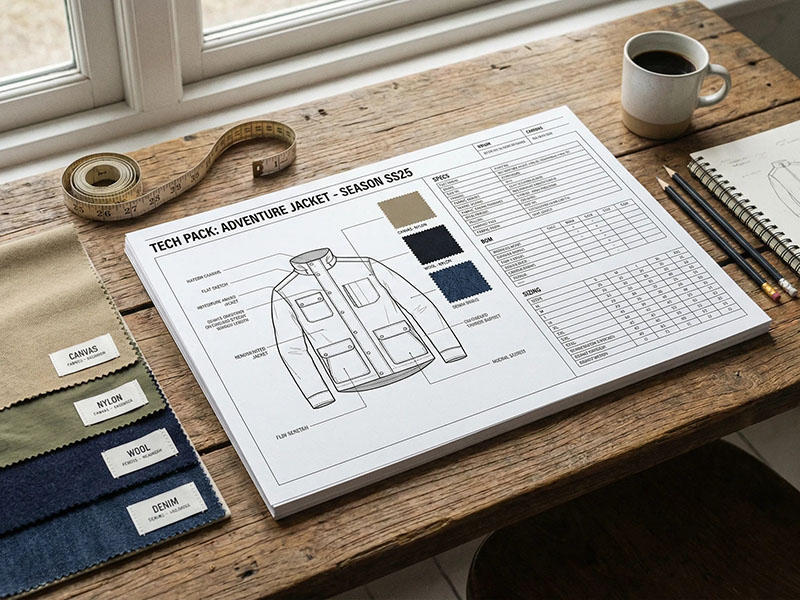
A tech pack is not always required in the same level of detail for every project, but it is usually one of the best ways to communicate with a manufacturer. It reduces confusion and turns creative ideas into production instructions.
A tech pack is not always mandatory to begin a conversation, but it is highly useful because it organizes the clothing design into a technical format. A good tech pack usually includes garment sketches, measurements, materials, trims, construction notes, artwork details, and label information.
From a manufacturing perspective, the tech pack is one of the strongest communication tools between a brand and a factory. It allows the supplier to see the design more clearly, quote more accurately, and produce a sample with fewer assumptions.
At Fusionknits, a complete tech pack is always helpful, but even a simplified product sheet is better than sending only visual inspiration without technical notes.
Common parts of a tech pack
- Front and back garment sketch
- Construction notes
- Measurement chart
- Fabric and trim direction
- Artwork placement
- Label and packaging notes
- Colorway information
- Stitching or finishing notes
Why tech packs help manufacturers
They reduce assumptions
The factory does not need to guess what the buyer means.
They improve cost control
Material and trim information make costing more accurate.
They improve sample development
The sample team can work from a clearer product standard.
Tech pack value by stage
| Development stage | Tech pack benefit |
|---|---|
| Quotation | Improves estimate accuracy |
| Sampling | Improves execution quality |
| Bulk production | Supports repeat consistency |
| Reorder | Protects product standard |
A brand does not need the most complex tech pack in the world, but it does need a clear technical communication tool.
What design files and reference materials should be sent?
A manufacturer usually needs more than one kind of file. Visual files show the concept, while technical files explain how that concept should become a real garment.
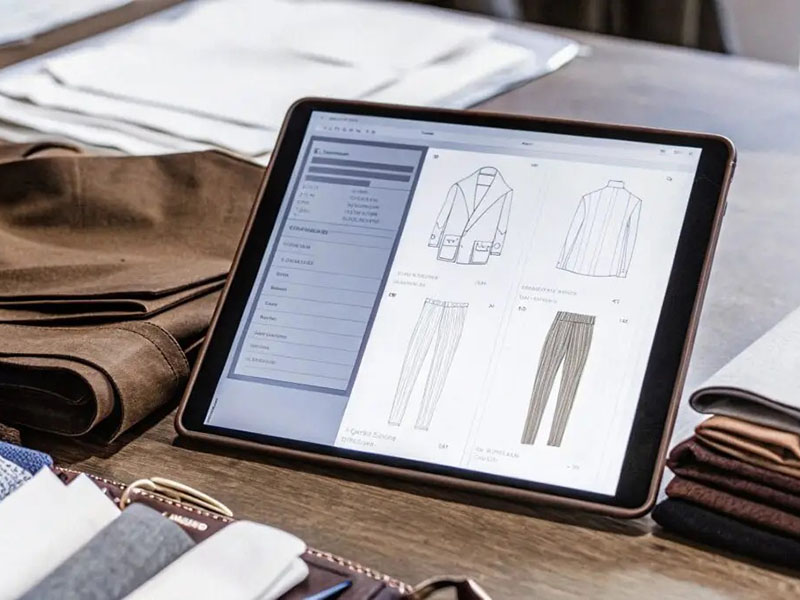
The design files and reference materials sent to a manufacturer should usually include product images or sketches, garment specifications, logo or artwork files, measurement charts, color references, and any notes about trims, labels, or packaging. The best design package combines visual direction with technical clarity.
A simple mood board may be useful in the early concept stage, but it is usually not enough for real development. The factory needs to know which details are essential and which are only inspiration. That is why the reference package should be as specific as possible.
At Fusionknits, design submissions usually work best when they include both inspirational material and direct production instructions.
Useful design materials to send
- Reference photos
- Flat sketches
- Tech pack or product sheet
- Measurement chart
- Logo files
- Print placement file
- Color references
- Fabric or trim notes
Why file quality matters
Poor artwork creates print problems
A weak logo file can reduce sharpness or create sizing mistakes.
Vague references create interpretation gaps
A mood board alone does not explain which details are required.
Missing measurement files slow development
The factory may need to pause and ask more questions before making a sample.
Design package overview
| File type | Main purpose |
|---|---|
| Reference photo | Shows visual direction |
| Sketch or flat | Shows garment structure |
| Measurement chart | Defines fit and sizing |
| Artwork file | Supports logo or graphic production |
| Color reference | Helps visual alignment |
The best design package is one that allows the factory to understand both the idea and the execution.
How should measurements and fit be explained to a manufacturer?
Fit is one of the most important parts of any garment, but it is also one of the most misunderstood. A factory cannot build the right fit from a general phrase alone.
Measurements and fit should be explained with a size chart, fit description, and where possible a reference garment or clear measurement points. Terms such as oversized, slim fit, regular fit, or boxy fit are helpful, but they should still be supported by actual dimensions.
From a manufacturing point of view, fit language without numbers is not enough. One brand’s regular fit may be another brand’s relaxed fit. A factory needs real measurements for chest width, body length, shoulder width, sleeve length, opening width, and other garment points.
At Fusionknits, fit communication is one of the most important parts of sample accuracy. A design can look correct visually and still fail if the measurements are not clear.
Best ways to explain fit
- Provide a size chart
- Describe the fit category
- Use a reference sample if available
- Mark key points of measurement
- Note tolerance expectations where needed
Why fit communication matters so much
Fit is hard to guess from photos
The silhouette may look similar, but body measurements can still be very different.
Fit affects market positioning
The same garment style can feel premium, casual, fashion-led, or commercial depending on its fit.
Better fit instructions improve sample approval
The more clearly the fit is defined, the fewer revision rounds are usually needed.
Fit communication guide
| Fit input | Why it matters |
|---|---|
| Size chart | Defines real garment dimensions |
| Fit description | Adds commercial and styling context |
| Reference sample | Helps factory compare shape and proportion |
| Measurement points | Improves technical accuracy |
A manufacturer can manage fit much better when the buyer provides both numbers and clear fit intention.
How should fabric, trims, and colors be communicated?
A clothing design is not complete without material direction. The same style can become a very different product depending on the fabric, trim quality, and color decisions behind it.
Fabric, trims, and colors should be communicated as clearly as possible by describing fiber content, fabric weight, hand feel, stretch, trim type, trim placement, and preferred colors or color references. A manufacturer needs these details to source the right materials and estimate the product correctly.
A shirt, hoodie, or T-shirt can look good in a sketch and still fail commercially if the material is wrong. The fabric may be too thin, too heavy, too stiff, or unsuitable for the intended print method. The trim may be too basic for the brand position. The color may not fit the target market.
At Fusionknits, material communication is one of the most important parts of design submission because it affects the sample, the cost, and the final product level.
Material and trim details that help the factory
- Fabric composition
- Fabric weight
- Knit or woven structure
- Desired hand feel
- Stretch requirement
- Rib or collar material
- Zippers, buttons, or cords
- Label type
- Packaging notes
Why color communication also matters
A color name is often not enough
“Cream,” “charcoal,” or “olive” may be interpreted differently by different suppliers.
Print compatibility depends on base color
The garment color affects how logos and graphics appear.
Reorders need stable color standards
A stronger color reference supports consistency later.
Material communication overview
| Material input | Why it matters |
|---|---|
| Fabric composition | Defines the base textile |
| GSM or weight | Supports feel and product level |
| Trim details | Affects function and branding |
| Color reference | Supports visual accuracy |
A good manufacturer can guide material development, but the brand still needs to communicate the product intention clearly first.
How should logos, prints, and embroidery be sent?
Decoration details often create some of the biggest sample mistakes. A logo that looks simple on a screen can still become wrong in size, placement, or finish if the information sent to the factory is incomplete.
Logos, prints, and embroidery should be sent with clear artwork files, size instructions, placement notes, color references, and decoration method preferences. The manufacturer should know not only what the design is, but also how large it should be, where it should sit, and how it should be applied.
From a factory point of view, sending only a logo image is not enough. The supplier still needs to know whether it should be screen printed, heat transferred, embroidered, or applied in another way. It also needs location and scale information.
At Fusionknits, decoration details are reviewed as part of the garment structure, not as a separate visual issue.
Best practice for sending decoration details
- Send vector artwork where possible
- Include print or embroidery size
- Mark placement clearly
- State color requirements
- Confirm decoration method
- Note whether the design changes by size
Why decoration communication matters
Incorrect scale changes the product look
A logo that is too large or too small can change the balance of the garment.
Wrong placement creates sample waste
A design positioned badly may require a full remake.
Wrong application method affects product quality
The same artwork may need different production logic depending on the garment and brand level.
Decoration detail checklist
| Decoration detail | Why it matters |
|---|---|
| Artwork file | Supports technical output |
| Placement | Controls visual balance |
| Size | Protects design proportion |
| Method | Affects production route |
| Color reference | Improves brand consistency |
A good design file becomes much more useful when it includes decoration instructions, not only the artwork itself.
What should be included in the first message to a manufacturer?
The first message should be simple, but it should still be serious. A factory does not need every possible detail in the first line, but it does need enough information to understand whether the project is a real fit.
The first message to a manufacturer should include a short introduction to the brand or project, the product category, target quantity, expected quality level, main design references, and a request for feedback on sampling or production. The goal is to begin a clear technical conversation, not only to ask for a price.
At Fusionknits, the best first messages are usually not the shortest ones and not the longest ones. They are the clearest ones. A manufacturer should immediately understand what the buyer wants to make and what kind of production relationship is being explored.
What a strong first message usually includes
- Brief introduction
- Product category
- Reference images or files
- Quantity estimate
- Quality expectation
- Timeline idea
- Request for next-step feedback
Why the first message matters
It shapes the factory’s response quality
A clear message usually receives a more serious and relevant reply.
It helps filter suppliers early
Weak suppliers often respond vaguely to clear technical messages.
It improves development speed
The more useful the first contact is, the faster the project can move toward sampling.
First message structure
| Message element | Why it helps |
|---|---|
| Product introduction | Gives context |
| Design references | Shows direction |
| Quantity | Helps assess feasibility |
| Quality level | Helps supplier judge fit |
| Clear question | Moves the discussion forward |
A stronger first message usually creates a stronger development process afterward.
How can a brand avoid mistakes when sending designs to manufacturers?
Most early mistakes happen because the design information is incomplete, unclear, or inconsistent. The product may be interesting, but the communication around it is too weak to support real development.
A brand can avoid mistakes when sending designs to manufacturers by keeping the design package organized, using clear technical notes, confirming measurements and materials early, avoiding vague terms, and reviewing samples against the original product brief. The goal is to reduce assumptions before production begins.
At Fusionknits, the most common early mistakes usually come from unclear fit direction, missing material details, weak artwork files, and no clear definition of what is required versus what is only inspiration.
Common mistakes to avoid
- Sending only mood boards
- No measurement chart
- No fabric direction
- Low-quality artwork files
- No print placement notes
- No quantity estimate
- No packaging expectations
- Too many late changes after submission
Why these mistakes create bigger problems later
They slow sampling
The factory must ask more questions or make more assumptions.
They weaken quote accuracy
A vague product brief creates a vague costing result.
They create rework
The first sample may go in the wrong direction even when the design itself is good.
Mistake prevention guide
| Common mistake | Better approach |
|---|---|
| Only sending inspiration photos | Send technical notes too |
| Vague fit terms | Add size charts and measurement points |
| Weak artwork | Send proper print-ready files |
| No trim details | Clarify labels, accessories, and packaging |
| Too many later revisions | Define the first package more clearly |
The strongest product development usually begins when the design is sent in a form that a factory can truly build from.
Conclusion
To send a clothing design to a manufacturer, a brand should prepare more than a visual concept. The most effective design package includes reference images, sketches, measurements, fabric direction, trim information, artwork details, quantity estimates, and clear quality expectations. The manufacturer needs enough information to translate the design into a real sample, a realistic quote, and eventually a stable production result.
From a professional manufacturing perspective, sending a clothing design is the first stage of product development.
At Fusionknits, the best results usually come when the design is communicated clearly, technically, and with enough detail to reduce assumptions. When the brand sends a stronger product package, the manufacturer can develop more accurately, quote more confidently, and produce with better consistency from the beginning.