
A T-shirt is one of the most common products in apparel, but the name is not always the same in every context. In daily speech, retail language, and manufacturing communication, people often use different words for the same garment or for a closely related version of it.
Another name for a T-shirt is “tee” or “tee shirt.” In apparel and retail language, people may also use related category terms such as crew neck tee, jersey tee, basic tee, or graphic tee, depending on the shirt’s style, neckline, fabric, or use.
At Fusionknits, this question matters because naming affects product communication. A buyer may say “T-shirt,” “tee,” or “basic tee,” and the intended product may still be the same. But in manufacturing, related names can also suggest different fabric, fit, or styling expectations. That is why a professional supplier should understand both the everyday language and the technical language behind the garment.
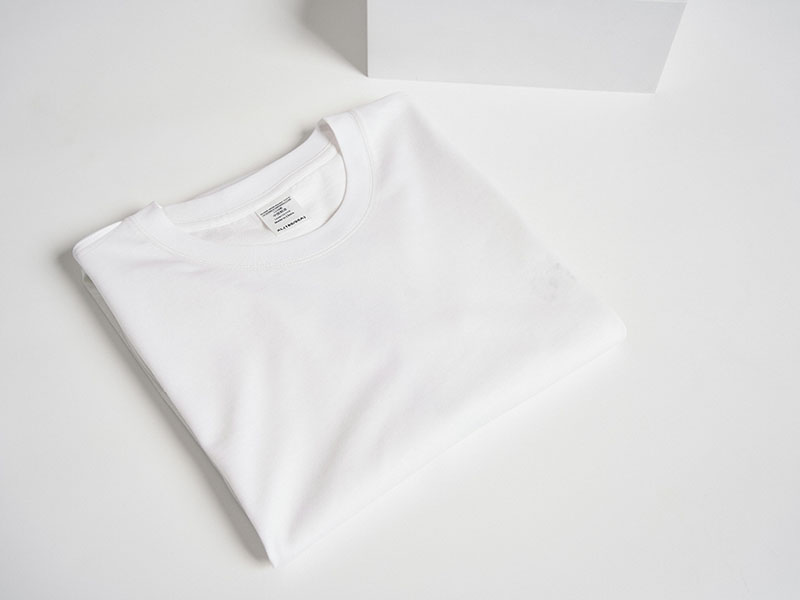
Is “tee” the most common other name for a T-shirt?
In most English-language retail and casual conversation, yes. “Tee” is usually the most common short alternative to “T-shirt.”
Yes, “tee” is the most common other name for a T-shirt in everyday and retail language. It is usually treated as a shorter and more casual version of “T-shirt,” while “tee shirt” is simply another spelling of the same term.
From a product communication point of view, “tee” is often used in fashion retail, e-commerce product titles, and casual business discussion because it is short and commercially familiar. Buyers may ask for a “basic tee,” a “graphic tee,” or an “oversized tee” instead of using the full term “T-shirt.”
At Fusionknits, this shortened naming style is very common in buyer conversations, especially when the discussion is focused on category, trend direction, or fit rather than dictionary-level garment naming.
Common ways people refer to a T-shirt
- T-shirt
- Tee shirt
- Tee
- Basic tee
- Graphic tee
- Jersey tee
Why “tee” is so widely used
It is shorter
Retail and casual language often favor faster and simpler terms.
It sounds more flexible
“Basic tee” or “fashion tee” can sound more product-specific than “basic T-shirt.”
It fits modern product naming
In e-commerce and merchandising, “tee” is often used in short product titles and style labels.
A simple naming comparison
| Name | Typical use |
|---|---|
| T-shirt | Standard and formal garment name |
| Tee shirt | Alternate spelling |
| Tee | Casual and retail shorthand |
So in most commercial and everyday settings, “tee” is the most common other name for a T-shirt.
Is “tee shirt” just another spelling, or is it a different garment?
This is one of the simplest parts of the topic. In standard English usage, “tee shirt” is not a different product category. It is just another way to write the same garment name.
“Tee shirt” is not a different garment. It is simply another spelling of “T-shirt,” and both terms refer to the same basic upper-body garment with short sleeves and no collar.
From a manufacturing angle, this matters because buyers sometimes think product naming differences mean construction differences. In this case, they usually do not. If someone requests a “tee shirt” instead of a “T-shirt,” the factory should normally treat those words as the same base category unless additional design details are specified.
At Fusionknits, this kind of language clarification is useful in early supplier communication because a product brief should avoid unnecessary confusion where the category is actually the same.

What “tee shirt” usually means
- The same garment as a T-shirt
- A spelling variation, not a new category
- A casual written form sometimes used in retail or conversation
Why this distinction matters in sourcing
It prevents category confusion
A supplier should not create a different garment simply because the spelling changed.
It keeps costing accurate
If the product is the same, the cost logic stays in the same category.
It supports cleaner communication
Simple wording differences should not create unnecessary sample mistakes.
Spelling vs category view
| Term | Category result |
|---|---|
| T-shirt | Standard category |
| Tee shirt | Same category |
| Tee | Same general category, but more casual wording |
So in practical garment language, “tee shirt” and “T-shirt” mean the same product.
Even though “tee” is the most common alternative name, retail language often uses more specific labels to describe the type of T-shirt being sold.
Retail language often uses related names such as crew neck tee, V-neck tee, basic tee, graphic tee, jersey tee, oversized tee, or raglan tee. These are not fully different garment families in the broad sense, but they describe different T-shirt variations by neckline, fabric, fit, or styling.
This is where naming becomes more commercially important. A buyer may not say “I need a T-shirt.” Instead, they may say they need a “premium heavyweight tee,” a “washed graphic tee,” or a “slim crew neck tee.” These names still belong to the T-shirt category, but they guide the factory toward a more specific product route.
At Fusionknits, these naming variations are very useful because they help narrow the product direction before the technical details are finalized.
- Crew neck tee
- V-neck tee
- Basic tee
- Graphic tee
- Jersey tee
- Oversized tee
- Raglan tee
Why retail naming becomes more specific
It helps product positioning
A “basic tee” and a “graphic tee” belong to different commercial uses even if the body shape is similar.
It supports easier merchandising
Retail teams use short product labels to help customers understand the item quickly.
It gives style information early
Neckline, fit, and fabric can often be suggested by the product name itself.
Retail naming examples
| Retail term | What it usually emphasizes |
|---|---|
| Basic tee | Simplicity and everyday use |
| Graphic tee | Printed design or branding |
| Crew neck tee | Standard neckline |
| Oversized tee | Relaxed fit direction |
| Jersey tee | Fabric type or knit direction |
This is why a T-shirt can have many product names in commerce even when the core category remains the same.
Is a crew neck another name for a T-shirt?
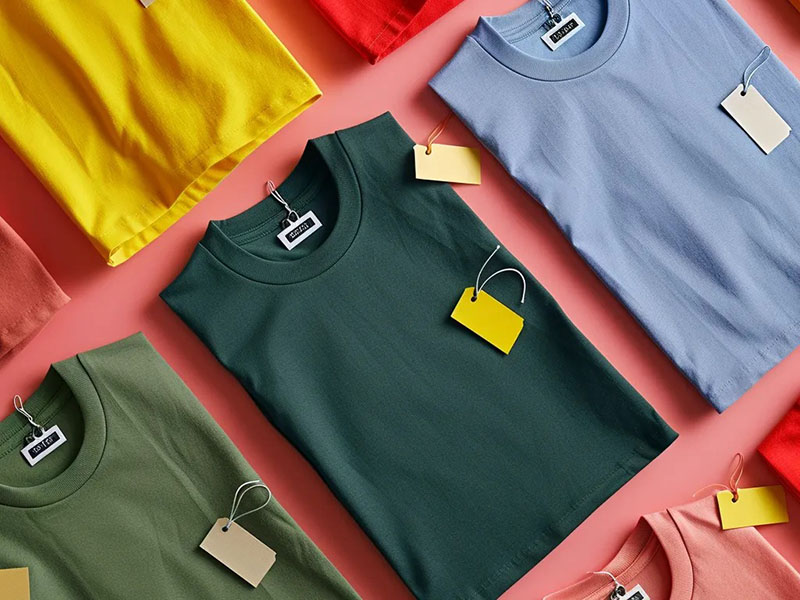
Not exactly. This is where apparel language becomes more technical. A crew neck is not another full name for the garment itself. It describes one neckline style within the T-shirt category.
A crew neck is not another full name for a T-shirt. It is a neckline type, and it is one of the most common neckline styles used in T-shirts. That means a crew neck T-shirt is a specific type of T-shirt rather than a separate overall synonym for the garment.
From a manufacturing point of view, this difference matters because naming errors can create sample mistakes. If a buyer says “crew neck” when they really mean “T-shirt,” the factory still needs to know whether the garment is a standard tee, a heavyweight tee, a long-sleeve tee, or another variation. The neckline alone does not define the full product.
At Fusionknits, this kind of distinction is important because many naming problems in development come from mixing garment category terms with style-detail terms.
What a crew neck actually means
- A round neckline
- A neckline that sits close to the base of the neck
- A common style detail in T-shirts
Why it is not a full synonym
It describes one part of the garment
The neckline is only one element of the product.
A T-shirt can have other necklines too
A T-shirt may also be a V-neck, scoop neck, or mock neck variation.
Product naming needs full clarity
Factories need the full garment type, not only one style feature.
Garment name vs neckline term
| Term | What it describes |
|---|---|
| T-shirt / tee | Garment category |
| Crew neck | Neckline style |
| Crew neck tee | Garment category plus neckline |
So “crew neck” is closely related to T-shirts, but it is not a true stand-alone synonym for the entire garment.
Is “undershirt” another name for a T-shirt?
This is partly true in some contexts, but not always. The relationship depends on how the word is being used.
An undershirt can sometimes refer to a T-shirt-style garment, especially in historical or functional contexts, but it is not always the same as a standard visible T-shirt. In modern apparel language, “undershirt” usually suggests an underlayer, while “T-shirt” or “tee” more often suggests a visible casual shirt.
The T-shirt originally developed from underwear and undershirt use. That is why the terms still overlap in some contexts. But in product development and retail communication today, the distinction is more useful. A base-layer undergarment and a normal retail T-shirt can share a basic shape while still having different fit, fabric weight, and market purpose.
At Fusionknits, this distinction matters because the product specifications may change if the buyer wants a true underwear-style base layer rather than a normal retail T-shirt.
Why the words overlap historically
- T-shirts began as undergarments
- Early T-shirts were often used under uniforms or other shirts
- The category evolved from underwear into outerwear
Why the words are not always interchangeable today
Modern T-shirts are often outerwear
Most T-shirts sold in retail today are intended to be visible everyday garments.
Undershirts may have different standards
They may use lighter fabric, tighter fit, or a different market purpose.
Product development changes with use case
A base-layer shirt and a graphic retail tee may share shape but not the same quality direction.
T-shirt vs undershirt view
| Term | Usual modern meaning |
|---|---|
| T-shirt | Casual outerwear or general shirt category |
| Undershirt | Underlayer garment |
| T-shirt as undershirt | Historical and functional overlap |
So “undershirt” can be related to T-shirts, but it is not always the best direct substitute in modern apparel selling language.
Why does the name of a T-shirt matter in manufacturing and sourcing?
At first, this may seem like a language issue only. But in apparel production, naming affects product understanding, sample accuracy, and the speed of factory communication.

The name of a T-shirt matters in manufacturing and sourcing because different names can suggest different necklines, fits, fabric expectations, or retail uses. A factory needs to know whether a buyer means a general T-shirt, a basic tee, a graphic tee, a jersey tee, or a specific style variation.
From a factory perspective, the wrong name can create the wrong product route. A buyer who says “tee” may mean a basic blank T-shirt. Another buyer may use “tee” to mean an oversized garment-dyed streetwear product. The word alone is not always enough.
At Fusionknits, garment naming is treated as the first layer of product communication, but it must still be supported by technical details such as fabric, fit, measurement, and finishing.
Why naming affects sourcing
- It influences product interpretation
- It changes fit and style assumptions
- It affects costing direction
- It affects sample planning
- It affects merchandising and packaging language
Why professional clarification helps
It reduces assumptions
A factory should not guess whether “tee” means slim, boxy, basic, or oversized.
It improves quoting
The more specific the product category is, the more accurate the costing can be.
It improves sample development
Clear naming reduces the chance of wrong silhouettes and wrong fabric choices.
Naming and production logic
| Product name style | Manufacturing effect |
|---|---|
| General “T-shirt” | Broad category only |
| “Basic tee” | Suggests simple everyday product |
| “Graphic tee” | Suggests decoration route |
| “Crew neck tee” | Adds neckline detail |
| “Oversized tee” | Adds fit direction |
That is why another name for a T-shirt can still carry different commercial meanings depending on the context.
So what is the best other name to use for a T-shirt?
The best answer depends on the situation. In everyday language and retail communication, “tee” is usually the most practical other name. In technical communication, “T-shirt” is often clearer because it leaves less room for casual interpretation.
The best other name to use for a T-shirt is usually “tee” in casual or retail language and “T-shirt” in clearer product or factory communication. “Tee shirt” is also correct, but it is usually treated as a spelling variant rather than a different naming strategy.
At Fusionknits, “T-shirt” is usually the strongest term for product clarity, while “tee” is very common in trend, styling, and merchandising language. Both work well, but the level of detail around the term is what really determines whether the manufacturer understands the garment correctly.
Best use by context
- Use T-shirt for clear technical communication
- Use tee for retail, merchandising, and casual product naming
- Use tee shirt when spelling style allows, but treat it as the same garment
Why context matters
Technical work needs clarity
Factories need the least ambiguous wording possible.
Retail language needs flexibility
Customers and merchandisers often respond well to shorter names.
Product naming should support the business goal
The best term is the one that communicates clearly to the intended audience.
Practical naming guide
| Context | Best term |
|---|---|
| Factory communication | T-shirt |
| Product title | Tee or T-shirt |
| Casual conversation | Tee |
| Technical development sheet | T-shirt |
The best name is the one that creates the least confusion and the strongest product understanding.
Conclusion
Another name for a T-shirt is most commonly “tee” or “tee shirt.” In retail and fashion language, related names such as basic tee, graphic tee, crew neck tee, and jersey tee are also widely used to describe different kinds of T-shirts by style, fabric, or use. While these related terms are not always exact dictionary synonyms, they all sit very close to the same garment family.
From a professional apparel manufacturing perspective, the best term is the one that communicates the product clearly.
At Fusionknits, “T-shirt” is usually the clearest technical name, while “tee” is the most common retail shorthand. Both are correct in the right context, but strong sourcing and development still depend on adding fit, fabric, and style details beyond the name itself.