Many sweater brands fail before the first season ends. The design may look good, but the yarn is wrong, the fit is unstable, the supplier is weak, or the pricing leaves no room for growth. A sweater brand needs more than ideas. It needs product structure from the beginning.
To start a sweater brand, you need a clear product direction, a defined target market, the right material strategy, a reliable manufacturing partner, a workable pricing model, and a disciplined launch plan. A strong sweater brand is built through product development, sourcing control, and market clarity at the same time.
At Fusionknits, a sweater brand is never treated as only a fashion concept. It is treated as a knitwear product business. The better the structure is at the beginning, the easier it becomes to develop consistent quality, stable supply, and stronger repeat sales.
Why does a sweater brand need a clearer plan than many beginners expect?
A sweater looks simple from a distance, but knitwear is not a simple product category. Gauge, yarn composition, stitch structure, fit, shrinkage, pilling, and finishing all affect the final result. If the brand begins with only mood boards and logo ideas, product problems usually appear very quickly.
A sweater brand needs a clear plan because knitwear development depends on yarn, gauge, shape, construction, and price positioning more heavily than many beginners expect. Without clear planning, the first collection often becomes too expensive, too inconsistent, or too difficult to scale.
From a manufacturing perspective, sweaters require stronger early decisions than many jersey or print-driven products. A T-shirt brand can sometimes adjust later with lower risk. A sweater brand usually cannot move as casually because knit structure and yarn choice affect almost everything at once.
At Fusionknits, early sweater development usually begins with product definition before branding language is expanded. The business must know what kind of sweater it wants to sell, who it is selling to, and what quality level the market will actually support.
What should be clear before launching a sweater brand
- Sweater category
- Target customer
- Price range
- Yarn direction
- Fit direction
- Knit structure
- Seasonality
- Sales channel
- Launch quantity
- Quality standard
Why early planning matters so much in knitwear
Knitwear cost is easy to misjudge
A sweater can look minimal, but the yarn and knitting process may create a much higher product cost than expected.
Product consistency is harder without structure
Small changes in yarn, tension, or finishing can change hand feel and sizing.
Sweater brands carry more inventory risk
Knitwear is often more seasonal, so the first order needs stronger planning.
A simple planning view
| Planning area | Why it matters |
|---|---|
| Product type | Defines development route |
| Price level | Controls yarn and construction choices |
| Target customer | Shapes fit, styling, and color direction |
| Sales channel | Affects packaging, MOQ, and margin structure |
| Supplier model | Determines production reliability |
A sweater brand usually performs better when it is built like a real knitwear program, not only like a visual label idea.
What kind of sweater product should a new brand start with?
Many new brands make the mistake of launching too many sweater types at once. They try to offer cardigans, crew necks, zip styles, cable knits, oversized styles, and fancy yarn textures in the first drop. That usually creates too much complexity too early.

A new sweater brand should usually start with one focused product direction, such as a core crew neck sweater, a cardigan line, or one signature knit silhouette. A narrower start usually creates better product control, better costing discipline, and a clearer market identity.
At Fusionknits, focused knitwear launches usually perform better because the business can learn from a smaller number of variables. One clean sweater block in the right yarn and fit usually teaches more than five loosely developed styles.
Strong starting directions for a sweater brand
- Core crew neck sweater
- Relaxed oversized pullover
- Minimal cardigan
- Premium basic knit
- Fashion-texture knit in one clear silhouette
- Lightweight layering sweater
Why a narrower start works better
It improves fit control
A smaller product range makes pattern and grading correction easier.
It simplifies yarn sourcing
The brand can work with fewer compositions and fewer development risks.
It creates a clearer identity
Customers understand the brand faster when the first offer is focused.
Launch comparison
| Launch direction | Likely result |
|---|---|
| Too many sweater styles at once | More complexity and slower control |
| One strong knit silhouette | Better product learning |
| Too many yarn types | Harder costing and consistency |
| One controlled yarn story | Stronger supply discipline |
A better sweater brand usually begins with one product story it can execute well.
How should a sweater brand choose yarn and material direction?
Yarn is one of the most important decisions in any sweater brand. It affects hand feel, warmth, drape, pilling, shrinkage, cost, and brand image at the same time. A sweater can have a strong silhouette and still fail if the yarn choice is wrong.
A sweater brand should choose yarn and material direction based on target price, customer expectation, climate use, hand feel, care requirements, and desired product image. The right yarn should support both the design concept and the commercial reality of the brand.
A premium-feeling sweater does not always require the most expensive yarn, but it does require the right yarn for the product goal. A soft brushed acrylic blend, a cotton knit, a viscose blend, a wool blend, or a cashmere mix all create very different business models and customer expectations.
At Fusionknits, yarn selection is usually reviewed through both product and market logic. The material must feel right in the hand, but it must also fit the brand margin and sourcing plan.
Common yarn directions in sweater development
- Cotton yarn
- Cotton-acrylic blend
- Viscose-nylon blend
- Acrylic blend
- Wool blend
- Cashmere blend
- Recycled fiber blend
Why yarn choice changes the whole product
It defines hand feel
The customer often judges sweater value first through softness and surface quality.
It defines care behavior
A beautiful sweater that is difficult to maintain may not fit every market.
It defines the selling story
Material direction affects whether the brand feels premium, practical, natural, or fashion-led.
Yarn selection guide
| Yarn direction | Typical product meaning |
|---|---|
| Cotton | Casual, breathable, trans-seasonal |
| Acrylic blend | Cost-effective, commercial, broad market |
| Viscose blend | Soft, fluid, elevated feel |
| Wool blend | Warmer, richer, seasonal |
| Cashmere blend | Premium and higher-price positioning |
A strong sweater brand usually begins with yarn decisions that balance feel, price, and repeat production stability.
Why is supplier selection even more important in a sweater brand?
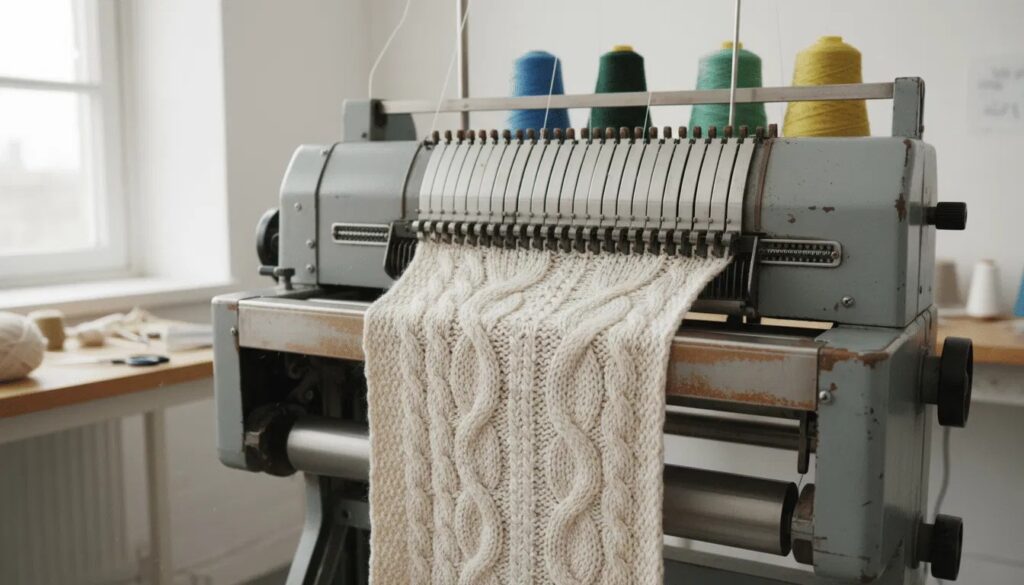
Knitwear suppliers do not all operate at the same level. Some are strong in flat knitting. Some are better in cut-and-sew knits. Some can support development but not larger repeat orders. A sweater brand depends heavily on supplier precision, because knitwear quality is sensitive to process control.
Supplier selection is especially important in a sweater brand because knitwear requires stronger control over gauge, yarn sourcing, stitch consistency, finishing, and measurement stability. A weak supplier can damage the product even when the design concept is strong.
From a manufacturing point of view, sweaters need more than simple sewing support. The supplier may need to manage knitting structure, linking, washing, steaming, and shape recovery. These are not minor details. They are core parts of the finished garment.
At Fusionknits, the right sweater supplier is usually chosen not by price first, but by knitwear capability first.
What to look for in a sweater supplier
- Knitwear specialization
- Yarn sourcing ability
- Sampling quality
- Gauge and stitch knowledge
- Consistent measurement control
- Clear finishing process
- Realistic MOQ
- Stable communication
Why a weak supplier creates bigger problems in sweaters
Yarn handling is technical
The wrong yarn tension or finishing treatment can change the entire garment.
Fit changes more easily in knitwear
Sweaters often react more strongly to wash and finishing than many woven products.
Sampling must be interpreted correctly
A supplier that does not understand sweater construction can misread the intended design quickly.
Supplier-fit overview
| Supplier factor | Why it matters in sweaters |
|---|---|
| Knitwear experience | Supports better product accuracy |
| Yarn access | Improves sourcing speed and consistency |
| Gauge knowledge | Helps execute the right product level |
| Finishing control | Protects size and hand feel |
A sweater brand becomes stronger much faster when it works with a supplier that truly understands knitwear.
What kind of samples does a sweater brand need before launch?
A sweater should never move directly from concept into bulk production without proper sampling. Knitwear is too sensitive for that. The first sample is not only about appearance. It is also about structure, feel, and behavior.
Before launch, a sweater brand needs development samples that confirm silhouette, gauge, yarn feel, stitch pattern, measurements, and finishing result. In many cases, sweater development also needs revisions because knitwear changes more visibly through washing and finishing than many beginners expect.
At Fusionknits, knitwear sampling is treated as a product validation stage. The first sample may show shape, but the next review often reveals whether the yarn, rib, shoulder line, body length, and cuff recovery are actually correct.
What a sweater sample should confirm
- Yarn feel
- Weight and drape
- Body shape
- Neckline balance
- Rib behavior
- Sleeve proportion
- Stitch appearance
- Wash and finish effect
- Overall product identity
Why sweater sampling needs more discipline
Knit garments can change after finishing
The factory may need to adjust the knitting plan after seeing the washed result.
Visual sketches are not enough
A cable pattern, rib, or open knit structure needs physical review.
Small changes affect the whole product
A slight change in gauge or yarn can alter the final fit and feel noticeably.
Sample review guide
| Sample point | Why it matters |
|---|---|
| Hand feel | Defines customer impression |
| Shape and proportion | Defines silhouette quality |
| Rib recovery | Protects neckline and hem stability |
| Finish result | Confirms real garment behavior |
A sweater brand should treat sampling as a technical stage, not only a presentation stage.
How should a sweater brand price its products?
One of the most common mistakes in knitwear is pricing too low. Sweaters often cost more to develop and manufacture than new brands expect, especially when the yarn and finishing are positioned above entry level.

A sweater brand should price its products by balancing yarn cost, knitting complexity, sampling expense, finishing, packaging, logistics, and target margin. A low selling price may make the product look accessible, but it can quickly weaken product quality and brand sustainability.
From a factory perspective, sweater pricing cannot be built on wishful thinking. A good sweater usually needs margin room because the material cost is meaningful, the development process is slower, and the risk of fit revisions is higher than in simpler basics.
At Fusionknits, the strongest knitwear brands usually begin by understanding their real cost structure before finalizing their retail ambition.
Main cost areas in a sweater brand
- Yarn cost
- Knitting cost
- Linking or assembly cost
- Finishing cost
- Sampling cost
- Labels and packaging
- Freight and duties
- Marketing and sales cost
Why underpricing hurts sweater brands fast
It limits yarn quality
The brand may be forced into weaker material choices.
It reduces room for development
A sweater program usually needs more sample discipline and correction time.
It weakens long-term growth
Without margin, the brand struggles to reorder, market, or improve the line.
Pricing logic overview
| Pricing mistake | Likely result |
|---|---|
| Price too low | Margin pressure and weaker product |
| Price too high without value | Slower sell-through |
| No full cost structure | Unstable product decisions |
| Better price-value match | Stronger brand growth |
A sweater brand does not become stronger by being cheap first. It becomes stronger by being clear about value.
What branding and market positioning does a sweater brand need?
A sweater brand cannot rely on knitwear alone. It still needs a clear market position. The customer should understand what kind of sweater brand it is, why it exists, and what role it plays in the wardrobe.
A sweater brand needs branding and market positioning that connect product identity with customer need. It should be clear whether the brand stands for premium basics, trend-led knitwear, cozy lifestyle products, refined layering pieces, or another focused category.
At Fusionknits, the strongest sweater brands usually connect branding with material logic. A soft premium knit should not be marketed like a low-cost seasonal item. A fashion-forward oversized sweater should not be presented like a classic office basic. The brand message and the product reality must match.
Common sweater brand positioning directions
- Premium essentials
- Cozy lifestyle knitwear
- Fashion-forward seasonal sweaters
- Sustainable knit basics
- Elevated minimal wardrobe pieces
- Youth street-influenced knitwear
Why positioning matters
It guides product choices
The brand direction affects fit, color, yarn, and finishing.
It shapes marketing language
A strong identity helps customers understand the product faster.
It reduces design confusion
A clearer market position creates a more coherent collection.
Positioning overview
| Brand direction | Product implication |
|---|---|
| Premium basics | Better yarn, cleaner finish, restrained design |
| Cozy lifestyle | Soft hand feel, wearable colors, relaxed silhouettes |
| Fashion knitwear | More trend focus, more visual texture |
| Sustainable brand | Material story and sourcing transparency |
A sweater brand becomes easier to sell when the product and the brand message say the same thing.
How should a new sweater brand launch without creating too much risk?
A sweater brand should not try to prove everything at once. Too many styles, too many yarns, or too much seasonal inventory can create pressure before the business has learned enough from the market.
A new sweater brand should launch with a focused product range, controlled quantity, realistic color selection, and one or two strong core silhouettes. A disciplined first collection usually creates better learning and lower inventory risk than a wide and ambitious launch.
At Fusionknits, the best early launches usually start with one clear product story and a limited number of variations. The goal is not to appear large. The goal is to build a repeatable foundation.
Safer ways to launch a sweater brand
- Start with one core sweater silhouette
- Limit color count
- Use one main yarn story
- Keep first-order quantity realistic
- Test fit and finish carefully
- Build sales around a clear product message
- Leave room for reorder learning
Why smaller launches work better
They lower stock pressure
Sweaters can be more seasonal and more expensive than lighter basics.
They improve product focus
The brand can refine one strong sweater instead of managing many weak ones.
They improve learning speed
Sales feedback is easier to read when the line is tighter.
Launch discipline overview
| Launch style | Likely result |
|---|---|
| Broad first collection | Higher complexity and inventory risk |
| Tight first collection | Better control and clearer feedback |
| Many yarn stories | Harder costing and sourcing |
| One controlled knit direction | Stronger development discipline |
A sweater brand usually grows better when the first collection is edited with more discipline.
How can a sweater brand build long-term growth after the first launch?
The first launch matters, but long-term success comes from what happens next. A sweater brand grows when it turns one good idea into a repeatable product system.
A sweater brand builds long-term growth by improving fit consistency, refining yarn choices, building stronger supplier relationships, controlling reorders carefully, and turning early customer feedback into better future collections. Long-term growth depends on product repetition and supplier discipline more than on one successful first drop.
At Fusionknits, stable sweater growth usually comes from better fundamentals, not louder launches. A brand that learns its core fit, core yarn direction, and core customer taste usually becomes much stronger over time.
Long-term growth priorities for a sweater brand
- Keep a strong core product
- Improve sizing and fit through feedback
- Maintain supplier consistency
- Build color expansions carefully
- Use customer response to refine the line
- Protect quality during reorders
- Grow slower than inventory risk
Why repetition matters in knitwear
Core products build trust
Customers often return to sweaters that feel dependable and easy to wear.
Supplier learning improves quality
Factories usually produce better results when the product direction remains stable.
Brand identity becomes clearer
A sweater brand grows faster when it becomes known for one strong knit standard.
Long-term growth guide
| Growth habit | Long-term benefit |
|---|---|
| Keep a core silhouette | Better repeat sales |
| Improve rather than replace | Stronger product evolution |
| Build supplier trust | Better consistency |
| Expand carefully | Lower operational risk |
A sweater brand becomes stronger when it grows from product discipline instead of from collection size alone.
Conclusion
To start a sweater brand, the essentials are clear product direction, strong yarn strategy, reliable knitwear suppliers, disciplined sampling, realistic pricing, and a focused launch plan. A sweater brand is not just a styling project. It is a knitwear product business that depends heavily on material choice, fit control, finishing quality, and repeatable production standards.
From a professional manufacturing perspective, the strongest sweater brands are usually built through clarity, not speed.At Fusionknits, a successful sweater brand begins with one controlled product story, one dependable development route, and one market position that the product can truly support.
When yarn, silhouette, supplier, and business model are aligned correctly, the brand has a much stronger chance to grow with better quality, better margins, and better long-term customer trust.