Many people use the word cardigan too loosely. Any soft knit with a front shape is sometimes called a cardigan, even when the product is actually closer to a sweater, knit jacket, or light outer layer. In real apparel development, a cardigan is not defined by softness alone. It is defined by construction, front-opening function, knitwear identity, and layering purpose.
What makes something a cardigan is usually a combination of knitwear construction and front-opening design. A cardigan is typically a knitted upper-body garment that opens at the front, with buttons, a zipper, a tie, a belt, or no closure at all. The key point is that it belongs to the knitwear family and is built to open in front rather than pull over the head like a standard pullover sweater.
At Fusionknits, this question matters because category accuracy affects product development, sourcing, sampling, and retail positioning. A cardigan is not just a style mood. It is a garment type with clear structural logic. The better that logic is understood, the easier it becomes to develop the right silhouette, gauge, closure, and material story.
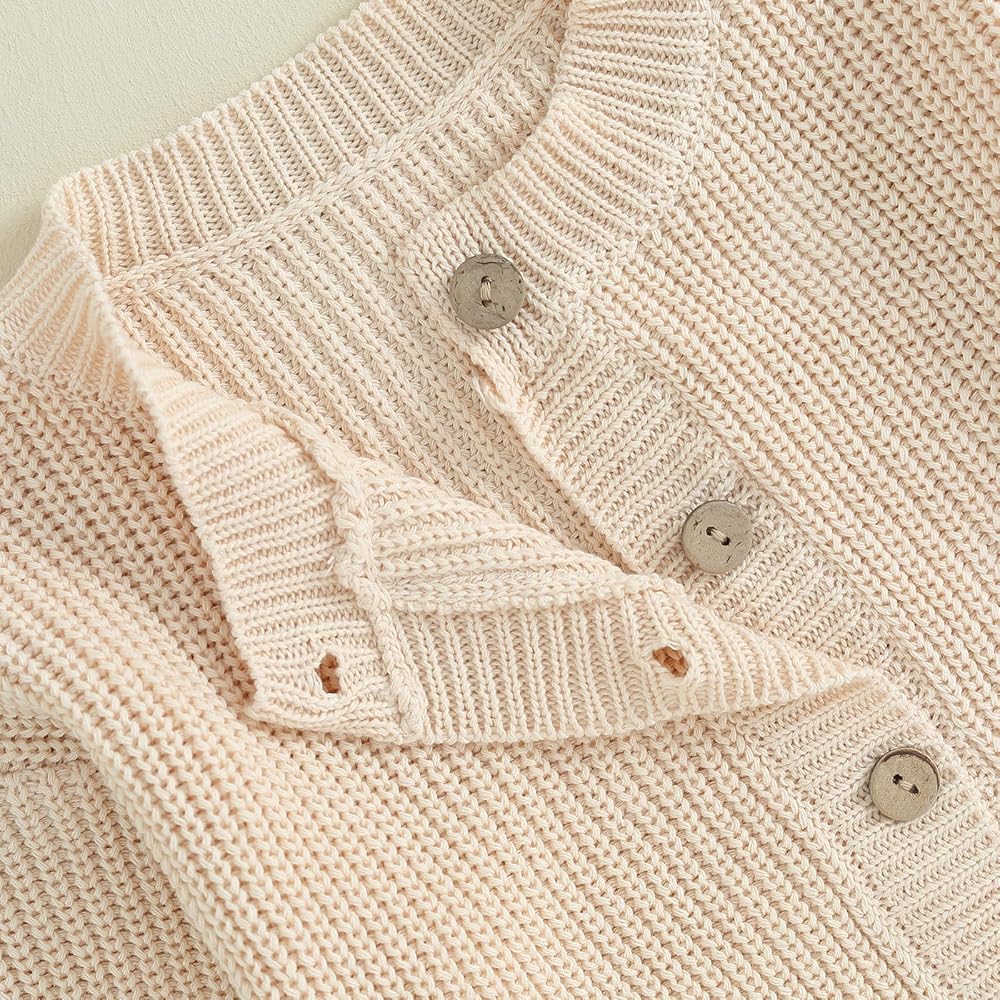
What is the basic definition of a cardigan in apparel terms?
A cardigan is often described in simple fashion language, but in apparel terms the definition is more precise. It belongs to the knitwear family, yet it differs from a pullover because it is built to open in the front.
In apparel terms, a cardigan is a knitted upper-body garment with a front opening, usually worn as a layer. It may close with buttons, zippers, ties, belts, or remain open by design, but the front-opening structure is one of the clearest things that qualifies it as a cardigan.
From a manufacturing point of view, this front-opening construction is essential. It changes front balance, placket planning, closure support, neckline behavior, and edge finishing. A pullover sweater and a cardigan may share similar yarns or stitch structures, but they are not the same category because the opening changes the full garment logic.
At Fusionknits, cardigan development usually starts with this distinction. Before discussing fit, color, or texture, the product team should confirm whether the garment truly belongs in the cardigan category.
Core elements in the basic cardigan definition
- Knitted or sweater-like construction
- Upper-body garment
- Front opening
- Layering function
- Knitwear identity rather than woven structure
Why the front opening matters so much
It changes the product category
A sweater that pulls over the head is usually not a cardigan.
It changes how the garment is worn
A cardigan is often layered on and off more easily than a pullover.
It changes technical construction
The front edges, placket areas, and closure zones need specific development.
Basic garment comparison
| Garment type | Front opening | Typical category |
|---|---|---|
| Pullover sweater | No | Sweater, not cardigan |
| Cardigan | Yes | Cardigan |
| Knit jacket | Yes | May overlap, but not always cardigan |
That is why the cardigan is usually defined first by knitwear identity and front-opening function.
Is the front opening the main thing that makes something a cardigan?
Yes. In most cases, the front opening is one of the strongest defining features. Without it, the garment usually moves into another knitwear category.
Yes, the front opening is one of the main things that makes something a cardigan. Whether the garment closes with buttons, a zipper, ties, or stays open by design, the fact that it opens at the front is usually what separates it from a standard pullover sweater.
From a product development angle, the front opening affects more than styling. It changes pattern balance, front reinforcement, edge stability, and closure placement. These are real technical differences, not only visual ones.
At Fusionknits, a garment is not called a cardigan simply because it looks cozy or soft. It needs the front-opening construction to support that name correctly.
Front-opening forms commonly found in cardigans
- Button front
- Zip front
- Open front
- Belted front
- Tie front
- Hook or clasp front in certain fashion styles
Why this feature defines the category
It affects garment function
The wearer can open, close, or partially layer the garment in different ways.
It affects construction logic
The product needs different front-edge engineering than a pullover.
It affects styling value
The opening gives the cardigan more flexibility in layering and outfit building.
Opening-type guide
| Opening type | Still qualifies as cardigan? |
|---|---|
| Button front | Yes |
| Zip front | Yes |
| Open front | Yes |
| Tie front | Yes |
| No front opening | Usually no |
So yes, the front opening is one of the clearest answers to what makes something a cardigan.
Does something have to be knitted to qualify as a cardigan?
In most cases, yes. A cardigan belongs to the knitwear family, so knitted construction is usually a core part of the category. A garment that opens in the front but is woven or structured like tailoring is usually classified differently.
Yes, something usually has to be knitted or sweater-like to qualify as a cardigan. The cardigan is generally understood as part of the knitwear family, so yarn-based construction, knit texture, or sweater-like hand feel are usually essential to the category.
From a manufacturing perspective, this is a very important distinction. A woven front-opening garment with buttons is not automatically a cardigan. It may be a shirt, overshirt, or lightweight jacket instead. A cardigan normally has knitwear characteristics such as softness, flexibility, ribbing, stitch texture, or yarn-based surface identity.
At Fusionknits, cardigan development is usually built around yarn, gauge, stitch, and knit finishing. That is what gives the product its correct textile identity.
Knitwear qualities that usually support cardigan classification
- Yarn-based construction
- Sweater-like hand feel
- Knit or rib texture
- Flexible body behavior
- Common use as a layering knit
Why knit identity matters
It separates cardigans from shirts and jackets
Not every front-opening garment belongs to the cardigan family.
It shapes customer expectation
When customers hear cardigan, they usually expect knitwear rather than woven tailoring.
It influences care and fit
Knitted garments behave differently in drape, washing, and recovery.
Construction comparison
| Construction type | Likely category result |
|---|---|
| Knitted front-opening garment | Usually cardigan |
| Woven front-opening garment | Usually not cardigan |
| Bonded or structured outerwear | More likely jacket or overshirt |
So while fashion categories can overlap, knitwear construction is still one of the strongest things that makes something a cardigan.
No. Buttons are common, but they are not required. Many people picture a classic button-front cardigan first, but the cardigan category is broader than that one familiar version.
No, a cardigan does not need buttons to be a cardigan. Buttons are one of the most traditional closure methods, but open-front cardigans, zip cardigans, belted cardigans, and tie-front cardigans can all still qualify as cardigans as long as they keep the front-opening knitwear structure.
This matters because buyers sometimes confuse the classic version of a cardigan with the full category. In reality, button-front is only one cardigan subtype. Modern retail programs include many cardigan designs that are closure-free or use alternative fastening methods.
At Fusionknits, closure is treated as a style and positioning choice, not the only rule that defines the category.
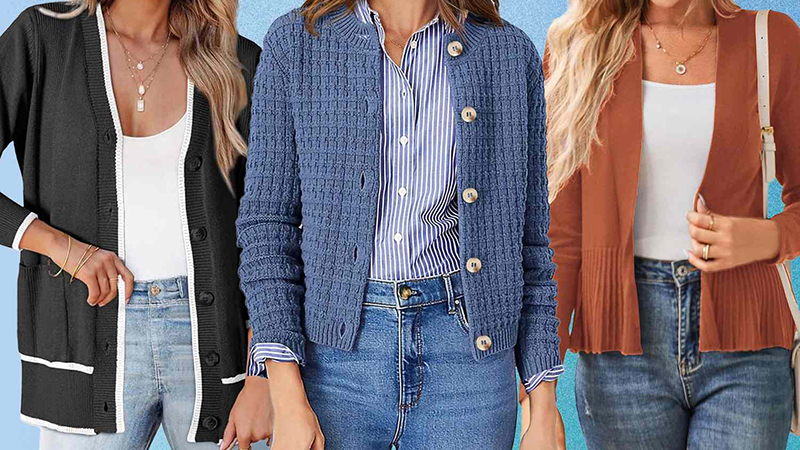
Common cardigan closure options
- Buttons
- Zippers
- Belts
- Ties
- Open front with no closure
- Decorative clasps in selected styles
Button cardigans are historically familiar
That makes them the most recognizable version of the category.
Modern cardigan design is wider
Current knitwear often includes zip fronts, open fronts, and wrap styles.
Product use changes closure needs
A soft layering cardigan may work better open, while a structured knit may need a stronger front closure.
Closure comparison
| Closure type | Qualifies as cardigan? |
|---|---|
| Button front | Yes |
| Zip front | Yes |
| Open front | Yes |
| Belted front | Yes |
| No front opening | No |
So buttons are important in the history of cardigans, but they are not the only thing that makes something a cardigan.
Do fit and length affect whether something is a cardigan?
Fit and length affect the style of the cardigan, but they do not usually decide whether the garment belongs in the cardigan category. A cardigan can be cropped, longline, oversized, fitted, or boxy and still remain a cardigan if the base structure is correct.
Fit and length do not usually decide whether something is a cardigan. They shape the cardigan style, not the cardigan category. A cropped cardigan, oversized cardigan, long cardigan, and fitted cardigan can all still qualify as cardigans if they are front-opening knitwear garments.
From a product development perspective, this distinction is very useful. Many buyers describe cardigans through silhouette first. They may ask for a cropped cardigan, a slouchy cardigan, or an oversized cardigan. Those are helpful style directions, but the cardigan qualification still comes from the knitwear structure and front-opening construction.
At Fusionknits, silhouette decisions are usually treated as category refinements rather than category definitions.
Cardigan fit variations that still qualify
- Cropped cardigan
- Longline cardigan
- Oversized cardigan
- Fitted cardigan
- Boxy cardigan
- Relaxed cardigan
Why fit alone does not define the category
Fit changes silhouette, not garment family
A cardigan can be wide or narrow and still remain a cardigan.
Length changes proportion, not construction
A longer cardigan still qualifies if the front-opening knitwear structure is intact.
Classification starts with structure
Silhouette matters, but it comes after category logic.
Fit and category overview
| Fit type | Still cardigan? |
|---|---|
| Cropped | Yes |
| Oversized | Yes |
| Longline | Yes |
| Fitted | Yes |
So fit and length matter for style direction, but they do not usually decide what makes something a cardigan.
What is the difference between a cardigan and a sweater?
This is one of the most useful category distinctions because many people use the word sweater too broadly. A cardigan is generally part of the sweater family, but not every sweater is a cardigan.
The difference is that a cardigan is a front-opening type of sweater, while sweater is a broader knitwear category that also includes pullovers and other non-opening garments. A cardigan is usually a kind of sweater, but a sweater is not always a cardigan.
From a manufacturing point of view, this matters because the category changes construction planning. A cardigan needs front balance, closure development, and edge finishing. A pullover sweater does not need those same front-opening details.
At Fusionknits, this distinction is essential for correct quoting and sample planning. If a buyer says only sweater, the factory still needs to know whether the garment opens in the front or not.
Why cardigan is more specific than sweater
- Sweater is the broad family word
- Cardigan is a front-opening knit subtype
- Cardigans usually function more clearly as layers
- Sweaters include both pullovers and cardigans
Why the difference matters commercially
It improves retail clarity
The garment can be merchandised more accurately.
It improves sourcing accuracy
The factory can begin from the right technical base.
It improves customer understanding
The buyer knows whether the garment opens or pulls over.
Category comparison
| Term | Scope |
|---|---|
| Sweater | Broad knitwear category |
| Cardigan | Front-opening sweater type |
| Pullover | Non-opening sweater subtype |
That is why a cardigan is best understood as a specific knitwear subcategory rather than a general sweater label.
Can something be a cardigan and also look like a jacket?
Yes. Some cardigans overlap visually with light jackets, especially when they use heavier gauge, stronger collars, denser yarns, or more structured fronts. But appearance alone does not always remove the garment from the cardigan category.
Yes, something can be a cardigan and also look like a jacket, especially when the knit is heavier or more structured. If the garment still keeps knitwear identity and front-opening cardigan logic, it may still qualify as a cardigan even when it has a jacket-like appearance.
From a product perspective, this overlap is common in modern knitwear. Some items are marketed as sweater jackets, cardigan jackets, or structured cardigans. The categories blend visually, but the garment may still remain a cardigan if the knitwear behavior is clear.
At Fusionknits, this overlap is usually resolved by looking at textile behavior first. If the garment still functions like knitwear rather than like tailored woven outerwear, it often stays closer to the cardigan family.
Features that can make a cardigan feel jacket-like
- Heavy gauge knit
- Stronger collar shape
- Patch pockets
- Denser rib or trim structure
- More substantial front edge
- Cleaner, more tailored silhouette
Why this overlap happens
Knitwear categories are expanding
Modern cardigans often carry more structure than classic homewear versions.
Customers want hybrid products
A cardigan that layers like a sweater but feels like light outerwear has strong commercial value.
Product naming follows usage
Some brands emphasize the jacket feeling, while others keep the cardigan label.
Overlap guide
| Product feature | Category direction |
|---|---|
| Soft fine-gauge open knit | Clear cardigan |
| Heavy structured knit with front opening | Cardigan-jacket overlap |
| Woven tailored outerwear | More likely jacket than cardigan |
So yes, something can feel jacket-like and still be a cardigan, as long as the knitwear and front-opening logic are still central.
Why does correct cardigan classification matter in manufacturing?
This is not only a language issue. Correct classification changes development, sourcing, materials, and production decisions from the beginning.
Correct cardigan classification matters because it affects yarn choice, gauge planning, closure construction, front balance, fit development, and retail positioning. If the product is classified incorrectly, the sample, quote, and bulk production result can all move in the wrong direction.
From a factory perspective, category clarity is one of the most important early steps. A cardigan and a pullover do not share the same front structure. A cardigan and a woven overshirt do not share the same material logic. A cardigan and a knit jacket may overlap, but they still need clearer positioning.
At Fusionknits, the best product development usually begins with the right category name before the technical details are expanded.
What category clarity improves
- Tech pack accuracy
- Costing accuracy
- Material selection
- Closure planning
- Fit development
- Sample interpretation
Why wrong classification creates problems
It leads to wrong construction assumptions
The factory may begin from the wrong base block.
It changes the sourcing route
A knitwear supplier and a woven supplier do not solve the same product problem.
It weakens commercial clarity
The brand may struggle to position the garment correctly.
Manufacturing value guide
| Correct classification helps | Business result |
|---|---|
| Material planning | Better sourcing accuracy |
| Closure development | Better function |
| Technical communication | Faster sampling |
| Retail category logic | Stronger positioning |
That is why understanding what makes something a cardigan is important for the full product workflow, not only for naming.
So what really makes something a cardigan?
This is the final product question behind the whole topic. A cardigan should not be defined by one small feature alone, but by a combination of knitwear identity and garment function.
What really makes something a cardigan is the combination of knitwear construction and front-opening design. If the garment is knitted or sweater-like, worn on the upper body, and built to open in the front through buttons, zippers, ties, belts, or an open-front structure, it usually qualifies as a cardigan. Fit, length, color, and texture may change the style, but they usually do not change the category.
At Fusionknits, that definition is the most useful because it supports both technical development and commercial clarity. A cardigan is not defined only by softness or only by buttons. It is defined by the way knitwear structure and front-opening functionality come together in one product.
Conclusion
What makes something a cardigan is usually a combination of knitwear construction and front-opening function. A cardigan is generally a knitted upper-body garment designed to open in the front, whether through buttons, a zipper, ties, a belt, or an open-front design. It belongs to the sweater family, but it differs from a pullover because of that opening and the layering role that comes with it.
From a professional knitwear manufacturing perspective, the clearest way to define a cardigan is through product structure rather than styling mood alone.
At Fusionknits, something qualifies as a cardigan when it combines knitwear identity, front-opening construction, and upper-body layering use in a technically and commercially consistent way. Once that category is understood correctly, fit, length, texture, and closure can be developed with much more precision.