A cardigan can look like a simple knitwear item, but its production time is often underestimated. Buyers sometimes focus only on sewing time or only on knitting time, while the real answer depends on the full manufacturing route. Yarn choice, gauge, stitch structure, front placket construction, linking method, washing, finishing, and inspection all affect how long the product takes to make.
It can take anywhere from a few production hours to more than a full day of total factory process time to make a cardigan, depending on the complexity of the knit, the gauge, the closure structure, the finishing standard, and the factory setup. A simple commercial cardigan may move through production much faster than a premium fully-fashioned or textured cardigan with more detailed finishing.
At Fusionknits, cardigan timing is never judged by one operation alone. A cardigan is not made in one continuous hand process from start to finish. It moves through several production stages, and the real time depends on both machine time and factory workflow time. That is why the better question is not only how many hours the cardigan takes, but which type of cardigan is being made and how the production line is structured.
Why is there no single fixed number of hours for making a cardigan?
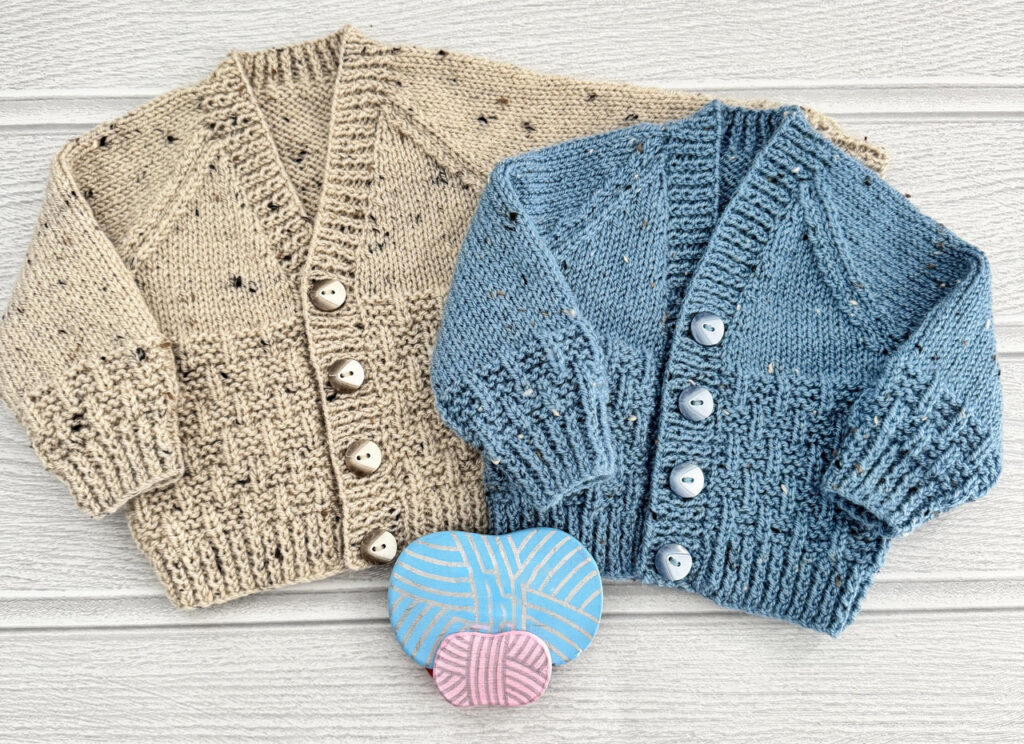
Many people want one simple answer, but cardigan production does not work that way. A lightweight basic cardigan and a chunky textured cardigan do not follow the same route. Even when two products look similar, the knitting program, assembly method, and finishing time can still be very different.
There is no single fixed number of hours for making a cardigan because total production time depends on cardigan type, yarn, gauge, stitch complexity, panel count, closure details, finishing requirements, and factory capacity. The more complex the cardigan is, the more time it usually needs across knitting, linking, finishing, and inspection.
From a manufacturing point of view, cardigan time is a process question, not a one-machine question. One cardigan may knit quickly but take longer in linking and finishing. Another may use a simple body construction but require a slow heavy-gauge knit program. A third may be easy to assemble but need more washing and shaping control.
At Fusionknits, time estimates are usually built from the full route: yarn preparation, panel knitting, assembly, placket or closure handling, washing, finishing, inspection, and packing.
Why production time changes so much
- Gauge changes knitting speed
- Stitch structure changes machine complexity
- Panel count affects assembly time
- Button bands or zippers add labor
- Washing and finishing can extend total turnaround
- Quality standards influence inspection time
Why the same garment category still gives different timings
Knitwear construction is not always equal
A plain jersey cardigan and a cable-knit cardigan may belong to the same category but need very different machine programs.
Finishing can change the total more than expected
A cardigan that needs more shaping, steaming, or softness correction may take much longer after knitting.
Factory method matters
A factory with stronger equipment and better line organization can reduce total production hours significantly.
Time-variation overview
| Cardigan factor | Effect on production time |
|---|---|
| Simpler stitch | Faster knitting |
| Heavier gauge | Slower knitting |
| More trims and details | Longer assembly time |
| Higher finishing standard | Longer final process time |
That is why there is no one universal number that fits every cardigan.
What production stages are included in the total time for making a cardigan?
To understand cardigan timing clearly, the full production route has to be broken down. A cardigan is not only knitted and then finished. It moves through several linked stages, and each one adds time.
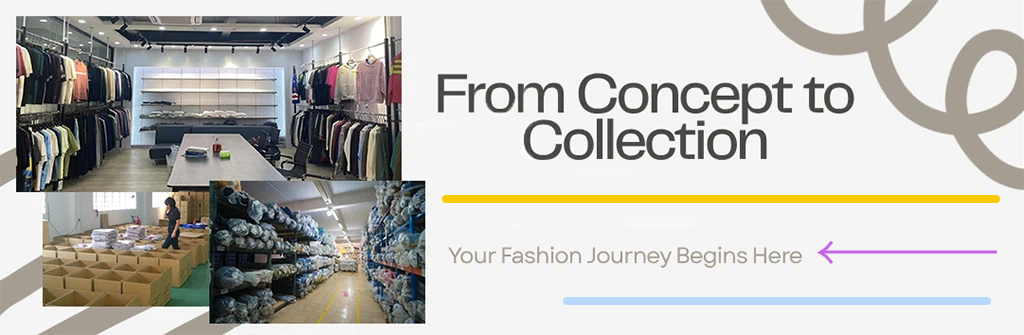
The total time for making a cardigan usually includes yarn preparation, panel knitting, linking or sewing, front placket or closure construction, trim attachment, washing, drying, steaming, final finishing, inspection, and packing. The total hour estimate should include both machine operations and supporting factory processes.
From a product engineering perspective, the biggest timing mistake is to count only the visible assembly stage. A cardigan often spends meaningful time in pre-production setup, post-knit relaxation, washing, and shaping before it is ready for final approval.
At Fusionknits, cardigan time planning usually starts by separating direct production time from total factory process time.
Main stages in cardigan production
- Yarn preparation
- Knitting front, back, and sleeves
- Knitting ribs and plackets
- Linking or sewing
- Buttonhole or zipper application
- Label attachment
- Washing or softening treatment
- Drying and shaping
- Steaming and finishing
- Inspection and packing
Why all stages should be counted
Knitting alone does not complete the garment
A cardigan body panel is only one part of the production journey.
Post-production work is significant
Finishing and inspection often decide the final quality.
Trims and front opening add time
Cardigans have more front-detail handling than pullovers.
Full-route overview
| Production stage | Why it matters to timing |
|---|---|
| Knitting | Builds the garment body |
| Linking or sewing | Creates the assembled cardigan |
| Finishing | Sets the real hand feel and shape |
| Inspection | Confirms quality and readiness |
A realistic cardigan time estimate should always include the full route, not just the visible body-making stage.
How long does the knitting stage usually take?
The knitting stage is one of the most important time drivers in cardigan production. But even here, the answer depends heavily on gauge, stitch, machine type, and garment size.
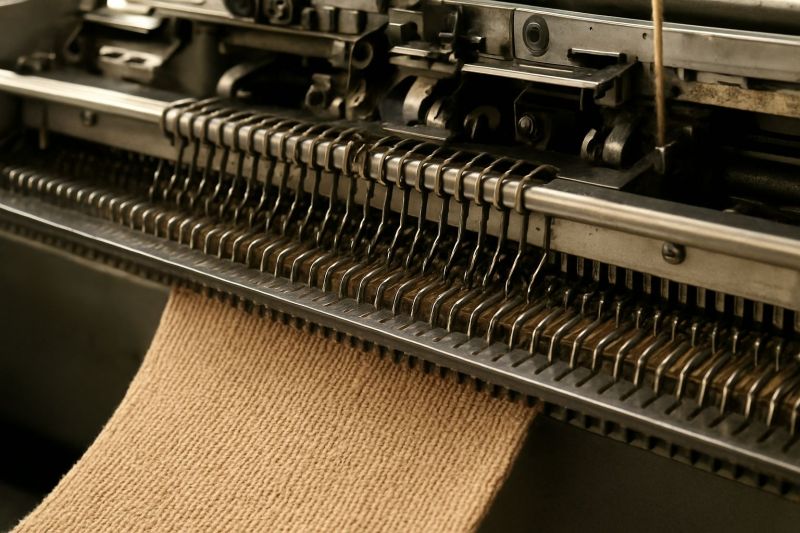
The knitting stage for a cardigan can take from under an hour per panel group in simpler commercial programs to many hours of combined machine time in more complex or heavier knitwear. A lightweight plain cardigan usually knits faster than a textured, cable, or heavy-gauge cardigan.
A cardigan often includes separate left and right front panels, a back panel, sleeves, ribs, and plackets. These parts may be knitted quickly in fine-gauge programs or much more slowly in heavier, more detailed structures. The machine also needs time to produce stable panel dimensions and correct edge behavior.
At Fusionknits, knitting time is usually estimated by panel complexity rather than by category name alone.
What affects knitting time most
- Gauge level
- Stitch pattern complexity
- Panel size
- Yarn behavior
- Machine speed
- Number of knitted components
Why some cardigans knit faster than others
Fine-gauge plain knits are usually smoother to run
They often follow more efficient machine paths with less visual texture.
Heavy-gauge cardigans move slower
Thicker yarn and denser knit structures usually reduce machine speed.
Decorative stitches add programming and production time
Cables, pointelle, textured ribs, and complex fronts usually slow the process.
Knitting-time guide
| Cardigan type | Knitting time tendency |
|---|---|
| Fine-gauge plain cardigan | Faster |
| Medium-gauge commercial cardigan | Moderate |
| Cable or textured cardigan | Slower |
| Chunky heavy-gauge cardigan | Slowest among common types |
That is why knitting time alone can vary widely even before assembly begins.
How much time does linking or sewing add to cardigan production?
After knitting, the cardigan still needs to be assembled. This stage is often called linking in better knitwear production, although some programs use sewing methods depending on the factory and product level.
Linking or sewing adds meaningful time to cardigan production because the front panels, back panel, sleeves, ribs, collar, and plackets must be joined accurately. A cardigan with more details, finer finish, or stronger front-structure expectations usually takes longer in assembly than a basic pullover.
A cardigan needs more careful front-body work than many sweaters because it includes a split front, not a closed front body. That means the opening must stay aligned, the placket must sit correctly, and the closure zones must be stable.
At Fusionknits, assembly time is often one of the most important labor stages in cardigan production because this is where garment refinement becomes visible.
Assembly operations that add time
- Shoulder joining
- Side seam joining
- Sleeve attachment
- Collar or neck trim joining
- Front placket attachment
- Pocket application if required
- Button band alignment
Why cardigan assembly often takes longer than expected
The front opening increases control requirements
The garment must sit evenly on both sides.
More pieces may be involved
Separate plackets, ribs, and trim components add work.
Quality level changes speed
Cleaner linking and more refined construction often require slower, more precise work.
Assembly-time overview
| Assembly factor | Effect on time |
|---|---|
| Basic seam joining | Standard |
| Placket and front structure | More time |
| Pockets or trims | More time |
| Finer linking quality | More time, better finish |
This is why the cardigan assembly stage can be as important as knitting in total hour planning.
Yes. These details may look small in the final garment, but they can significantly increase both labor time and quality-control pressure.
Yes, buttons, zippers, buttonholes, and plackets make cardigan production slower because they add more front-body construction, more trim application, and more alignment checks. A cardigan with a strong front structure usually takes more total time than a very simple open-front design.
A placket must lie flat and remain stable. Buttonholes must be placed consistently. Zippers must not pull the front body. Even a simple button-front cardigan can require careful trim spacing and stronger front-balance control than a pullover.
At Fusionknits, these details are treated as product-value points, but also as production-time multipliers.
Front-detail features that add production time
- Button plackets
- Buttonholes
- Zipper insertion
- Reinforced front bands
- Belt loops or ties
- Decorative front trims
Why these operations affect the timeline
They create more labor stages
Each trim step adds handling time.
They increase inspection pressure
Misplaced buttons or uneven front bands are highly visible defects.
They can slow the line if alignment is weak
Front detail errors are harder to hide than side seam issues.
Trim-time comparison
| Front feature | Effect on production speed |
|---|---|
| Open front | Faster |
| Button front | Moderate added time |
| Zip front | Moderate to higher added time |
| Decorative front detailing | Higher added time |
So yes, cardigan closures and plackets can add real time even when they look visually simple.
How much time do washing and finishing add?
Washing and finishing are often underestimated when people think about cardigan production. But in knitwear, these stages are often essential to achieve the final approved look and feel.
Washing and finishing can add several more production hours, and sometimes longer factory process time, because the cardigan may need washing, drying, settling, steaming, shaping, trimming, and visual correction before it is ready for inspection. In many knitwear programs, this stage is not optional. It is part of the real manufacturing process.
From a product-quality perspective, a cardigan before finishing may not fully represent the final commercial product. The wash may soften the hand feel, settle the stitch, and reveal whether the measurements remain stable. Steaming and shaping are also important to create a clean final appearance.
At Fusionknits, finishing is one of the most important quality stages because cardigan performance becomes visible here.
Finishing operations that affect total time
- Washing
- Drying
- Relaxation time
- Steaming
- Shaping
- Thread trimming
- Surface cleaning or brushing
Why finishing can extend total process time
Knitwear changes after washing
The real garment shape often becomes clear only after finishing.
Drying and settling take time
The garment should not move forward before it is stable.
Final appearance matters in knitwear
A cardigan should not only be correct in size. It should also look refined and balanced.
Finishing-time overview
| Finishing stage | Effect on total time |
|---|---|
| Washing | Adds process time, improves feel |
| Drying | Adds necessary waiting and control |
| Steaming | Improves final appearance |
| Final shaping | Supports retail-ready finish |
That is why washing and finishing are major parts of the real cardigan timeline.
How many total hours does a simple cardigan usually take?
A simple cardigan still needs multiple stages, but it is usually the fastest version of the category. This kind of product often uses simpler stitch structure, fewer decorative details, and more efficient construction methods.
A simple cardigan may take only a few direct production hours across knitting, assembly, and finishing when the structure is straightforward and the factory setup is efficient. However, the total factory process time can still extend beyond that because garments move through washing, drying, shaping, inspection, and packing stages.
A basic fine-gauge or medium-gauge commercial cardigan with a plain stitch, no pockets, and a relatively simple front may move through production much faster than a more premium product. But even a simple cardigan is still more complex than many basic jersey tops.
At Fusionknits, simple cardigan timing is usually estimated as a full route, not as one continuous labor block.
Features of a faster cardigan style
- Plain stitch
- Standard gauge
- No complex texture
- No pockets
- Cleaner front structure
- Standard button application or open front
Why even simple cardigans still need time
Multiple panels are still involved
The cardigan still includes separate fronts, back, sleeves, and ribs.
The front structure still needs control
Even simple cardigans must stay balanced when worn open or closed.
Finishing is still necessary
A cardigan should still be washed, shaped, and inspected properly.
Simple-cardigan production guide
| Cardigan type | Total time tendency |
|---|---|
| Basic open-front cardigan | Faster |
| Basic button-front cardigan | Moderate |
| Fine-gauge clean cardigan | Efficient if well organized |
| Poorly planned simple cardigan | Slower than expected |
So a simple cardigan may be relatively fast, but it is still a multi-stage knitwear product.
A complex cardigan usually needs more time in nearly every stage. The stitch may be slower to knit, the assembly may require cleaner linking, and the finishing may demand more precision.
A complex or premium cardigan can take significantly longer than a simple commercial cardigan because it usually involves slower knitting, more detailed assembly, more trim or texture handling, and more careful finishing. A textured, cable, chunky, or luxury-yarn cardigan may require many more production hours across the full route.
Premium cardigans often use better yarns, finer finishing expectations, and more visible craftsmanship. That means the production line cannot always prioritize speed. Instead, it must prioritize control.
At Fusionknits, premium cardigan programs are scheduled with more realistic time allowances because visual softness and quality still depend on technical discipline.
Features that make a cardigan slower to produce
- Cable or textured stitches
- Heavy-gauge knitting
- Complex placket construction
- Premium yarn sensitivity
- Pockets or decorative trims
- Better finishing standard
- Cleaner linking requirement
Better quality takes slower handling
High-value knitwear should not move through the line with low control.
Complex stitches slow machine time
The garment body itself may already take longer to create.
Finishing expectations are higher
Premium cardigans usually require a stronger final appearance and better hand feel.
Premium-cardigan time guide
| Cardigan direction | Total time tendency |
|---|---|
| Cable knit cardigan | Higher |
| Chunky cardigan | Higher |
| Cashmere-blend cardigan | Higher due to care and finishing |
| Premium tailored cardigan | Higher due to accuracy and refinement |
That is why premium cardigan production should always be timed differently from basic commercial knitwear.
Does factory efficiency change how long a cardigan takes to make?
Yes. Two factories can make the same cardigan with very different total timing because equipment, workflow discipline, and worker skill affect the result significantly.
Yes, factory efficiency strongly changes cardigan production time. Better machines, stronger line organization, more skilled operators, and cleaner process control can reduce production hours and improve stability at the same time. A weak factory may take much longer even on a simple cardigan.
From a manufacturing standpoint, cardigan time is not only about the garment. It is also about the system producing it. Delays often come from poor panel flow, slow trim handling, weak finishing coordination, or inconsistent inspection standards.
At Fusionknits, production timing is always linked to workflow design because strong organization protects both lead time and quality.
Factory factors that change cardigan timing
- Knitting machine quality
- Line balancing
- Linking or sewing skill
- Finishing capacity
- Inspection speed
- Internal communication
- Production planning accuracy
Why stronger factories save time
Better workflow reduces waiting
The cardigan moves more smoothly from stage to stage.
Better operators reduce mistakes
Less rework usually means faster final completion.
Better planning supports stability
A cardigan should not lose time through avoidable process confusion.
Efficiency overview
| Factory condition | Timing effect |
|---|---|
| Strong equipment and workflow | Faster and cleaner production |
| Weak line control | Slower total process |
| More rework | Significant time increase |
| Better planning | More stable lead times |
That is why cardigan timing should never be judged only by garment design. Factory capability is part of the answer.
So how should buyers understand cardigan production time realistically?
The strongest way to understand cardigan timing is to separate direct work time from full factory timeline. A cardigan may only need a limited number of active labor and machine hours, but the full journey through the factory will usually be longer.
Buyers should understand cardigan production time as a combination of direct knitting and assembly hours plus finishing, inspection, and factory process time. A simple cardigan may move through production in a relatively short direct labor window, while a more complex cardigan may require many more hours across the full route. The real answer always depends on product complexity and factory efficiency.
At Fusionknits, cardigan timing is always discussed through realistic production stages rather than through one oversimplified number. That approach creates better expectations, better planning, and fewer sourcing misunderstandings.
Conclusion
The number of hours it takes to make a cardigan depends on the cardigan itself and on the factory making it. A simple cardigan may require only a few direct production hours across knitting, assembly, and finishing, while a more complex or premium cardigan may take much longer because of slower knitting, more detailed plackets, heavier trims, higher finishing standards, and stricter inspection. The full factory process also includes washing, drying, shaping, and packing, so total production time should never be judged by one operation alone.
At Fusionknits, cardigan production is understood as a complete knitwear system rather than a single labor step. A good cardigan takes time in yarn planning, panel knitting, assembly, finishing, and quality control.
When buyers understand the full route instead of only the visible garment stage, cardigan lead times become much easier to evaluate accurately, and product expectations become much more realistic.