Pilling is one of the most common complaints in knitwear, especially in cardigans that are worn often and layered through multiple seasons. Many buyers think pilling only comes from poor material, but in reality, it is usually the result of several factors working together, including fiber type, yarn quality, knit structure, garment friction, washing method, and daily wear conditions.
To keep cardigans from pilling, the most effective approach is to combine better material selection, stronger yarn construction, lower-friction wear habits, gentler washing methods, and correct garment storage. Pilling cannot always be eliminated completely in knitwear, but it can be greatly reduced when the cardigan is developed, worn, and maintained properly.
At Fusionknits, pilling is treated as both a material issue and a product-performance issue. A cardigan does not start pilling only because of one mistake. It pills when fiber quality, garment friction, and care behavior are not controlled well enough. That is why preventing pilling requires attention from both the manufacturer and the end user.
Why do cardigans pill in the first place?
Pilling happens when loose fibers rise to the surface of the fabric and begin to twist together under friction. Once those fibers collect on the garment surface, they form the small balls that customers describe as pills.
Cardigans pill because surface fibers loosen during wear, rubbing, washing, or repeated contact, and then gather into small fiber balls. This happens more easily when the yarn contains shorter fibers, weaker spinning, softer fuzzy surfaces, or when the cardigan experiences high friction from movement, layering, or improper care.
From a manufacturing perspective, pilling is not limited to low-end products. Even premium knitwear can pill if the fiber is very soft or delicate. The difference is usually in the degree of pilling, the speed at which it appears, and how well the garment can recover its surface appearance over time.
At Fusionknits, the first step in reducing pilling is identifying where the surface stress is coming from. It may come from the yarn. It may come from brushing during finishing. It may come from underarm friction, bag straps, desk contact, or aggressive washing.
Common reasons cardigans pill
- Short or weak fibers in the yarn
- Low yarn twist or unstable spinning
- Fuzzy surface finishes
- Friction from arms, bags, or seat belts
- Frequent washing with rough garments
- Drying methods that over-stress the fabric
Why this matters in product development
Pilling is usually a friction problem
The garment surface changes because fibers are pulled outward by repeated contact.
Softer does not always mean more stable
A very soft cardigan may feel luxurious but still need more careful pilling control.
Material alone is not the whole answer
Wear conditions and washing behavior can make even a better cardigan pill faster.
A simple pilling view
| Cause | Effect on cardigan surface |
|---|---|
| Loose surface fibers | More pills form quickly |
| Repeated friction | Faster fiber entangling |
| Weak yarn construction | Lower resistance to wear |
| Aggressive washing | More surface disturbance |
That is why pilling should be understood as a combined material, construction, and care issue.
Which cardigan materials are more likely to pill?
Some fibers naturally pill more than others. This does not always mean they are low quality, but it does mean they need more careful product engineering and maintenance.

Cardigans made from short-staple fibers, soft acrylics, loosely spun wool, fuzzy blends, or very brushed yarns are usually more likely to pill. Fibers with longer staple length, stronger spinning, smoother surfaces, and better recovery usually resist pilling more effectively.
In commercial knitwear, acrylic-rich sweaters often pill because the surface fibers can break free and collect quickly. Some wool cardigans also pill, especially in the early stage of wear, because natural loose fibers rise to the surface before the fabric stabilizes. Cashmere and softer luxury fibers can be especially sensitive because softness and delicacy often come together.
At Fusionknits, pilling risk is always evaluated together with the target product story. A soft brushed cardigan may be worth developing, but the expected care level must match that product direction.
Materials that often pill more easily
- Low-grade acrylic
- Short-staple wool
- Cashmere-rich or very soft luxury blends
- Brushed yarns
- Loosely spun blends
- Fuzzy surface knitwear
Materials that often resist pilling better
Longer-staple fibers
These create stronger yarn cohesion.
Better yarn twist
This reduces loose fiber movement on the surface.
Compact smoother yarns
These usually create cleaner, more stable knit surfaces.
Material guide
| Material direction | Pilling tendency |
|---|---|
| Brushed acrylic blend | Higher |
| Soft loose wool blend | Moderate to higher |
| Fine compact merino | Lower to moderate |
| Strong long-staple cotton blend | Lower |
This is why fiber selection is one of the most important starting points in anti-pilling strategy.
How can manufacturers reduce pilling during cardigan development?
The strongest anti-pilling work often begins long before the cardigan reaches the customer. Material engineering, yarn quality, knit structure, and finishing decisions all affect the final result.
Manufacturers can reduce pilling by choosing stronger fibers, using better yarn spinning, controlling surface fuzz, selecting the right gauge, reducing unstable brushing effects, and testing the cardigan under realistic wear conditions before production approval.
From a factory standpoint, anti-pilling performance is never just a finishing issue. If the yarn quality is unstable, surface brushing is too aggressive, or the knit tension is poorly controlled, the cardigan may already be at risk before it enters the market.
At Fusionknits, pilling reduction usually begins with yarn review, then moves into test knitting, wash trials, surface evaluation, and garment-level friction assessment.
Key manufacturing strategies to reduce pilling
- Choose longer-staple or stronger fibers
- Use better yarn twist and spinning quality
- Avoid unnecessary surface fuzz
- Match gauge correctly to the yarn
- Apply controlled finishing methods
- Conduct anti-pilling testing during development
Why these steps matter
Better yarn holds together better
Fiber cohesion reduces loose surface shedding.
Surface control protects appearance
Too much brushing can create a softer hand feel but also increase pilling risk.
Testing reveals future problems early
A cardigan should be evaluated under realistic friction conditions before bulk production.
Development guide
| Manufacturing choice | Anti-pilling effect |
|---|---|
| Better yarn spinning | Stronger surface stability |
| Controlled brushing | Less loose fiber exposure |
| Correct gauge | Better stitch support |
| Fabric testing | Earlier risk identification |
That is why professional anti-pilling work starts at the development stage, not after complaints appear.
How should cardigans be worn to reduce pilling?
Even a well-made cardigan can pill if it is worn under constant friction. Daily use habits matter more than many consumers realize.
To reduce pilling during wear, cardigans should be protected from repeated rubbing against rough surfaces, heavy bag straps, desk edges, seat belts, and tight outer layers. Lower-friction wear habits help preserve the knit surface and slow down fiber breakage.
The underarm area, side seams, cuffs, and front panels often pill first because these areas receive the most movement and contact. A cardigan worn every day under a rough coat or with the same shoulder bag may show wear quickly even if the fiber itself is not poor.
At Fusionknits, real wear analysis is part of understanding knitwear performance. A cardigan may test well in the lab and still pill under real customer use if friction exposure is too high.
Wear habits that reduce pilling
- Rotate cardigans instead of wearing one daily
- Limit friction from rough crossbody bags
- Avoid constant rubbing on hard desk edges
- Choose smoother outer layers over delicate knitwear
- Remove jewelry or accessories that scrape the surface
High-friction areas to watch
Underarms
Natural arm movement creates constant rubbing.
Side body and hip area
Bag contact and body movement often stress these zones.
Cuffs and sleeve edges
Desks, tables, and coat sleeves increase wear here.
Friction-risk overview
| Wear habit | Surface effect |
|---|---|
| Daily repeated use | Faster pilling |
| Heavy shoulder bag | More friction damage |
| Smoother layering | Lower surface stress |
| Garment rotation | Better longevity |
That is why anti-pilling care should include smarter wearing habits, not only better washing.
What is the best way to wash a cardigan without causing pilling?
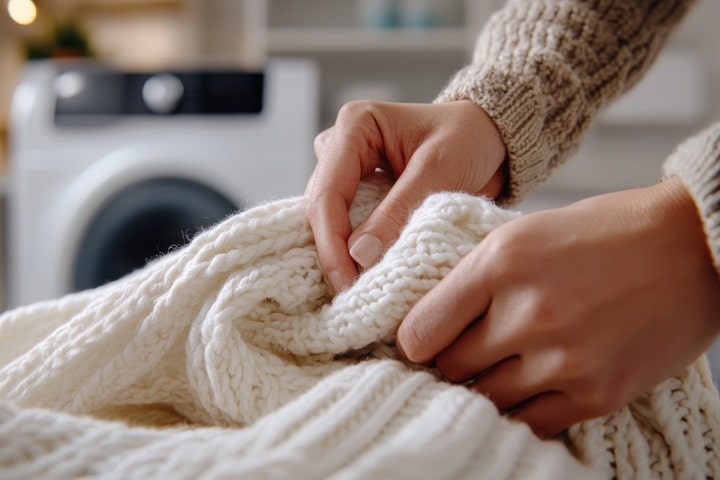
Washing is one of the most common reasons a cardigan starts to look tired too quickly. Even if the cardigan survives the first few wears well, rough washing can disturb the surface and pull more fibers loose.
The best way to wash a cardigan without causing pilling is to wash it less often, use a gentle cycle or hand wash method, turn it inside out, separate it from rough garments, use mild detergent, and avoid high agitation or high heat. Gentle care protects the yarn surface and slows fiber entangling.
Many knitwear problems come from treating a cardigan like a T-shirt. Cardigans should not usually be washed with denim, garments with zippers, or rough woven pieces. The more the cardigan rubs during washing, the higher the pilling risk becomes.
At Fusionknits, care guidance is treated as part of product performance because even a well-developed cardigan can lose value quickly under the wrong washing conditions.
Best washing practices for anti-pilling care
- Wash only when necessary
- Turn the cardigan inside out
- Use cold or cool water
- Use a wool-safe or gentle detergent
- Wash separately from rough garments
- Use a delicate bag when needed
- Choose hand wash or delicate cycle
- Dry flat instead of tumble drying
Why these methods work
Less agitation means less fiber release
The garment surface stays more stable.
Inside-out washing protects the visible face
The main outer surface receives less direct abrasion.
Flat drying protects the knit structure
Heat and movement in a dryer increase wear and stress.
Washing guide
| Washing habit | Result |
|---|---|
| Gentle hand wash | Lowest stress on surface |
| Cold delicate cycle | Lower pilling risk |
| Mixed load with rough garments | Higher pilling risk |
| Tumble drying | Higher surface wear |
That is why anti-pilling cardigan care should always begin with lower-stress washing.
How should cardigans be stored to prevent pilling?
Storage does not cause pilling as aggressively as wear or washing, but poor storage can still create surface stress, especially when cardigans rub against rough shelving, sharp accessories, or overly crowded wardrobe spaces.

To prevent pilling during storage, cardigans should be folded neatly instead of hung when possible, kept away from rough surfaces, stored with enough space to reduce rubbing, and separated from accessories or garments that can scrape or catch the knit surface.
Hanging some knitwear for too long can stretch the shoulders and increase overall fabric stress. Overcrowded shelves can also rub cardigan surfaces together repeatedly whenever garments are pulled in and out.
At Fusionknits, correct storage is treated as part of long-term knitwear maintenance because surface life depends not only on wear, but also on how the garment rests between wears.
Better cardigan storage habits
- Fold instead of hang for softer knitwear
- Avoid overpacking shelves
- Keep rough items away from delicate knits
- Store clean garments only
- Separate cardigans from sharp trims or heavy accessories
Why storage still matters
Surface rubbing continues in the wardrobe
Garments can wear each other down in tight spaces.
Shape protection improves overall garment life
A better-kept cardigan usually performs better through more seasons.
Cleaner storage reduces stress
A calm storage environment helps preserve texture and finish.
Storage guide
| Storage habit | Effect |
|---|---|
| Folded flat | Lower shape stress |
| Overcrowded shelf | More fabric rubbing |
| Separated delicate knits | Better surface protection |
| Hanging soft heavy knitwear | Possible stretching |
That is why anti-pilling care should continue even when the cardigan is not being worn.
Can existing pills be removed without damaging the cardigan?
Yes, but they should be removed carefully. Once pilling appears, the goal is to clean the surface without cutting or weakening the knit structure underneath.
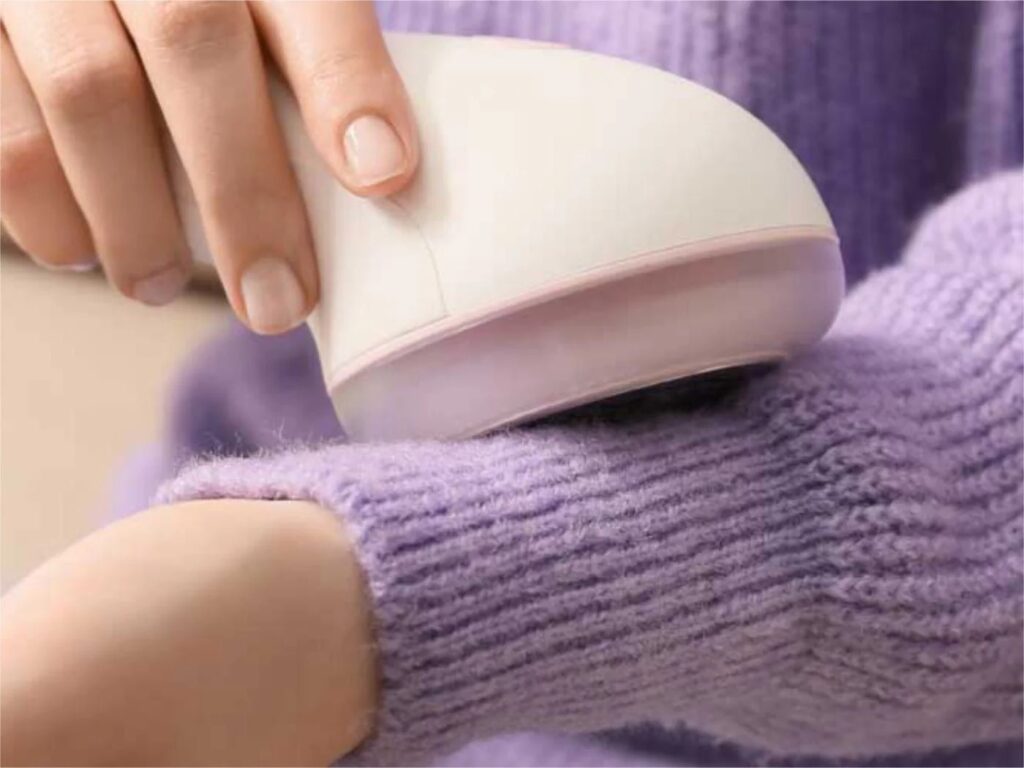
Yes, existing pills can be removed carefully by using a fabric shaver, sweater comb, or gentle de-pilling tool designed for knitwear. Pills should not be pulled off by hand because that can damage the yarn and make the garment surface weaker over time.
Removing pills does not stop future pilling by itself, but it does improve appearance and can help extend the useful visual life of the cardigan. The tool choice should match the yarn delicacy. Some garments handle electric fabric shavers well, while others need a softer manual approach.
At Fusionknits, surface recovery is treated carefully because aggressive de-pilling can turn one problem into another if the knit face becomes thinned or snagged.
Safe ways to remove pills
- Use a sweater stone or comb for suitable knits
- Use a fabric shaver carefully on stable surfaces
- Work slowly and lightly
- Test a hidden area first
- Avoid pulling pills by hand
What to avoid
Pulling pills off manually
This may stretch or break the yarn.
Using sharp blades without control
This can cut the knit surface.
Over-shaving delicate knitwear
Too much surface removal can weaken the garment.
De-pilling overview
| Removal method | Best use |
|---|---|
| Fabric shaver | Efficient for stable knit surfaces |
| Sweater comb | Good for gentler manual control |
| Hand pulling | Not recommended |
| Careful light passes | Best surface protection |
That is why pill removal should always be controlled, gentle, and matched to the cardigan’s material type.
What should buyers and brands do if anti-pilling performance matters commercially?
For brands and buyers, pilling is not only a care issue. It is a quality and reputation issue. A cardigan that pills too quickly can damage customer trust even if the style and fit are strong.
If anti-pilling performance matters commercially, buyers and brands should prioritize yarn testing, anti-pilling development reviews, clear care labeling, realistic wear trials, and fiber choices that support stronger surface stability. Pilling prevention should be treated as part of the product brief, not as a secondary afterthought.
At Fusionknits, the strongest commercial anti-pilling strategy combines better materials, better finishing control, and honest product positioning. Not every soft cardigan can behave like a highly durable workwear knit, so the product promise must match the fiber reality.
Better commercial anti-pilling practices
- Request anti-pilling test results
- Review fiber type and yarn construction carefully
- Match softness goals with realistic performance
- Add clear care instructions
- Build wear trials into sampling approval
- Avoid over-promising on delicate luxury fibers
Why this matters for business
Surface quality affects repeat purchase confidence
Customers notice visible wear quickly.
Better testing reduces complaint risk
Problems should be found before bulk production.
Product honesty improves brand trust
A delicate cardigan can still be valuable if care expectations are clearly communicated.
Commercial guide
| Brand action | Benefit |
|---|---|
| Anti-pilling testing | Better product confidence |
| Clear care guidance | Fewer avoidable complaints |
| Better yarn selection | Stronger surface stability |
| Realistic product claims | Higher customer trust |
That is how anti-pilling performance becomes a stronger commercial advantage rather than only a post-sale concern.
Conclusion
To keep cardigans from pilling, the best approach is to control the full chain of risk: choose stronger fibers and better yarns, reduce unnecessary surface fuzz, avoid constant friction during wear, wash gently and less often, store the garment carefully, and remove early pills with the right tools instead of by hand. Pilling cannot always be prevented completely in knitwear, especially in softer or more delicate yarn categories, but it can be reduced significantly through better manufacturing and better care.
At Fusionknits, pilling is treated as a performance issue that begins at material selection and continues through garment development, wear use, and maintenance guidance.
A cardigan stays visually strong for longer when the fiber system, knit structure, finishing, and care method all work together. When brands, buyers, and consumers understand pilling in this full way, they protect both the product surface and the long-term value of the knitwear.