Pilling is one of the most common quality complaints in knitwear and soft apparel. Many buyers look for one perfect fabric that never pills, but in real garment manufacturing, that expectation is too simple. Pilling is not caused by fabric name alone. It is influenced by fiber length, yarn twist, fabric structure, surface finishing, friction level, washing method, and how the garment is used.
No fabric can guarantee zero pilling in every condition, but some fabrics are much less likely to pill than others. Long-staple cotton, tightly woven fabrics, high-quality filament fibers, compact wool constructions, and stronger yarn structures usually resist pilling better than fuzzy, loosely spun, brushed, or short-staple fabrics. The real goal is not finding a fabric that never pills. It is choosing a fabric system that minimizes surface fiber breakage and friction.
At Fusionknits, pilling is treated as a full product-performance issue, not just a fabric issue. A fabric may test well in theory and still pill in actual wear if the yarn is weak, the finish is too fuzzy, or the garment is exposed to constant friction. That is why the strongest answer always includes both material selection and garment engineering.
Why is there no fabric that is completely pill-proof?
Many people want a simple answer, but pilling does not work like a basic yes-or-no material problem. It happens when loose surface fibers break free, rise to the face of the fabric, and twist together under repeated friction.
There is no fabric that is completely pill-proof because pilling depends on more than fiber type. Even a stronger fabric can pill if it is brushed too heavily, rubbed repeatedly, washed aggressively, or made with unstable yarn construction. Some fabrics pill much less, but no apparel fabric is fully immune under all wear conditions.
From a manufacturing perspective, this matters because the buyer may focus too much on the fabric label and not enough on the actual product structure. For example, a compact long-staple cotton jersey may resist pilling well, but if the garment is washed with rough items or constantly rubbed by a bag strap, surface damage can still appear. In the same way, a premium wool can still show early pilling if it is developed with a soft fuzzy finish that releases loose fibers easily.
At Fusionknits, anti-pilling work always starts with realistic expectations. The right question is not “Which fabric never pills?” The stronger question is “Which fabric gives the best resistance for this product category and this wear condition?”
Why all fabrics still face some pilling risk
- Surface friction exists in daily wear
- Washing causes mechanical stress
- Soft finishes can release loose fibers
- Weak yarn construction increases fiber movement
- Layering creates repeated rubbing
Why this matters in fabric selection
Fabric name alone is not enough
A cotton fabric and another cotton fabric can perform very differently if the yarn and finish are different.
Surface finishing changes behavior
A brushed soft hand feel may raise pilling risk even in a better base fiber.
Garment use changes results
A cardigan worn under constant bag friction may pill faster than the same fabric in a low-friction garment.
A simple pilling logic view
| Cause | Pilling effect |
|---|---|
| Loose surface fibers | Faster pilling |
| Repeated friction | More fiber entangling |
| Weak yarn twist | Lower surface stability |
| Aggressive washing | Higher fabric stress |
That is why the search for a completely pill-proof fabric usually leads to the wrong conclusion.
Which fabric types usually resist pilling best?
Some fabric groups are known for stronger surface stability because they use smoother yarns, longer fibers, tighter structures, or filament-based construction.
Fabric types that usually resist pilling best include tightly woven fabrics, long-staple cotton fabrics, compact high-twist knits, filament-based synthetic fabrics, and smoother low-fuzz wool constructions. These fabrics tend to hold fibers more securely and create less loose surface shedding under friction.
From a product development angle, these fabrics usually perform better because they start with stronger yarn integrity. The fewer loose ends that rise to the surface, the lower the chance of pill formation. This does not mean they are always the softest or the most luxurious-looking, but it does mean they often stay cleaner in appearance for longer.
At Fusionknits, fabrics with stronger anti-pilling performance usually come from a combination of better raw material and cleaner construction rather than from softness alone.
Fabric groups that often pill less
- Long-staple cotton jersey with compact spinning
- Tightly woven cotton poplin or twill
- Smooth ponte or dense knit structures
- Filament polyester or nylon constructions
- Fine compact merino with controlled surface finish
Why these fabrics perform better
They have less loose fiber on the surface
A smoother face reduces the chance of pills forming quickly.
They hold yarn structure more firmly
Better cohesion means less fiber movement during wear.
They often receive less fuzzy finishing
A cleaner finish protects surface stability.
Fabric-performance overview
| Fabric direction | General pilling resistance |
|---|---|
| Compact long-staple cotton | Higher |
| Dense woven fabric | Higher |
| Filament synthetic fabric | Higher |
| Brushed fuzzy knit | Lower |
| Loose short-staple knit | Lower |
That is why fabric structure is often just as important as fiber composition.
Is long-staple cotton one of the best anti-pilling fabrics?
Yes, in many apparel categories, long-staple cotton is one of the most reliable choices for reducing pilling. It is especially useful in better jerseys, knits, and lightweight layering products where softness and surface stability need to work together.
Yes, long-staple cotton is one of the best anti-pilling fabric directions because longer fibers create smoother, stronger yarns with fewer loose fiber ends on the surface. This usually results in cleaner fabric appearance, better durability, and lower pilling risk than short-staple cotton fabrics.
Long-staple cotton works well because the yarn can be spun more compactly and more evenly. This improves both the hand feel and the surface stability. By contrast, short-staple cotton often releases more small fiber ends, which can rise to the fabric face and form pills more easily.
At Fusionknits, long-staple cotton is often preferred in products where the customer expects both softness and cleaner long-term appearance.
Why long-staple cotton performs well
- Smoother yarn formation
- Better fiber cohesion
- Less surface fuzz
- Cleaner fabric face
- Better durability in daily use
Why cotton quality matters so much
Not all cotton behaves the same way
Short-staple and long-staple cotton can perform very differently.
Yarn compactness changes the result
A better cotton fiber still needs strong spinning quality.
Finishing still matters
Even strong cotton can lose anti-pilling value under weak processing.
Cotton guide
| Cotton type | Pilling tendency |
|---|---|
| Long-staple compact cotton | Lower |
| Standard cotton with good spinning | Moderate |
| Short-staple loose cotton | Higher |
That is why long-staple cotton remains one of the strongest answers when buyers ask for better anti-pilling performance.
Do woven fabrics pill less than knit fabrics?
In general, yes. Woven fabrics often resist pilling better than knit fabrics because their structure holds the yarns more firmly and creates less surface movement.
Yes, woven fabrics usually pill less than knit fabrics because the interlaced structure is tighter and more stable than the looped construction of knit fabric. Knits are naturally more flexible and softer, but that same flexibility often increases the chance of surface friction and fiber release.
This does not mean all woven fabrics resist pilling equally, and it does not mean all knits pill badly. But from a structure standpoint, woven fabrics usually offer an advantage in surface stability. That is one reason why sweaters and cardigans are more often associated with pilling than woven shirts or trousers.
At Fusionknits, this distinction is important when setting customer expectations. A soft cardigan and a woven overshirt should not be evaluated by the same surface-wear assumptions.
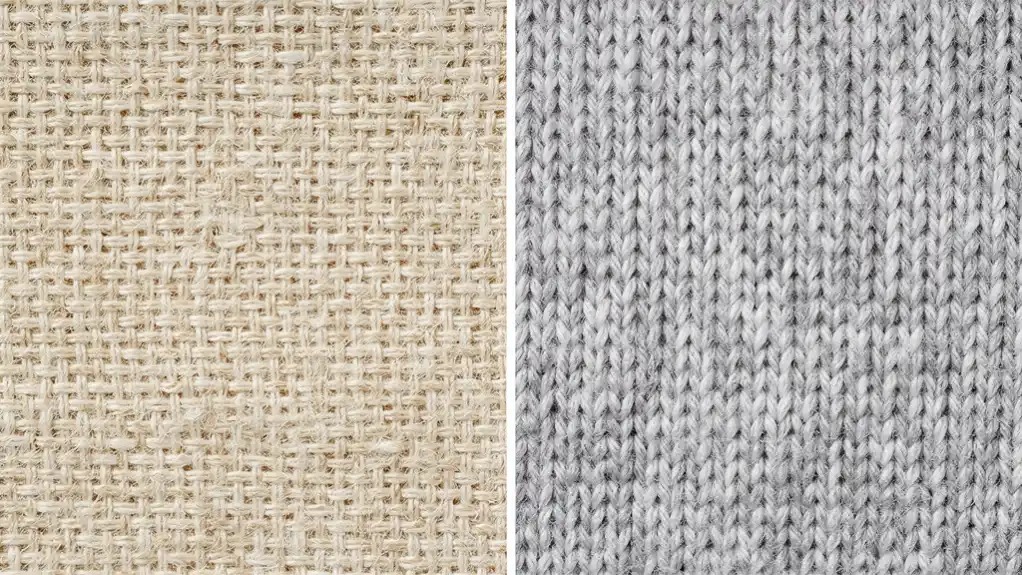
Why woven fabrics usually pill less
- Tighter yarn anchoring
- Lower loop movement
- Stronger surface stability
- Less stretch-based friction
- Often smoother outer face
Why knits are more vulnerable
Looped structure moves more
This increases friction and surface stress.
Softness often comes with openness
Knits often prioritize comfort over rigidity.
Knitwear is used differently
Sweaters and cardigans experience more rubbing at underarms, bags, and outer layers.
Fabric-structure comparison
| Fabric structure | Pilling tendency |
|---|---|
| Dense woven | Lower |
| Stable ponte knit | Moderate to lower |
| Fine compact knit | Moderate |
| Soft brushed knit | Higher |
That is why woven fabrics often lead in anti-pilling performance, even though knits remain more comfortable in many apparel categories.
Are synthetic fabrics better or worse for pilling?
This depends on the type of synthetic fiber and how it is used. Some synthetic fabrics resist pilling well, while others can create pills that are small, tight, and very noticeable.
Synthetic fabrics can be either better or worse for pilling depending on the fiber construction. Filament synthetics such as smooth filament polyester or nylon often resist pilling better because they have fewer loose fiber ends. However, lower-quality synthetic blends or fuzzy acrylic-rich fabrics may pill badly and can be harder to clean because the pills stay attached strongly.
This is one of the most misunderstood areas in textile sourcing. Buyers often assume “synthetic” means either automatically bad or automatically durable. In reality, a smooth filament polyester can outperform many natural fibers in anti-pilling behavior, while a fuzzy acrylic sweater can pill quickly and visibly.
At Fusionknits, synthetic fiber evaluation always depends on the exact fabric construction, not just the word “polyester” or “nylon.”
Synthetic directions that often resist pilling better
- Filament polyester
- Filament nylon
- Dense synthetic woven structures
- Compact performance knits
Synthetic directions that often pill more
- Low-grade acrylic
- Brushed synthetic sweaters
- Loosely spun poly-blends
- Fuzzy commercial knits
Why synthetic behavior varies so much
Filament fibers are smoother
They often create fewer loose ends on the surface.
Staple synthetics can behave differently
Shorter cut fibers may act more like natural staple fibers in pilling behavior.
Pills may stay attached longer
Some synthetic pills are tougher and more visible because the fibers are stronger.
Synthetic guide
| Synthetic fabric type | Pilling tendency |
|---|---|
| Filament polyester woven | Lower |
| Dense nylon blend | Lower |
| Acrylic-rich fuzzy knit | Higher |
| Loose synthetic staple blend | Moderate to higher |
That is why synthetic fabric should never be judged by category alone. The exact yarn format matters.
Which fabrics should buyers avoid if anti-pilling is a priority?
If anti-pilling performance is a top commercial requirement, some fabric directions should be approached more carefully. These are usually fabrics with soft, loose, fuzzy, or unstable surfaces.

If anti-pilling is a priority, buyers should be cautious with brushed knits, fuzzy acrylic blends, loose short-staple fabrics, heavily raised surfaces, very soft low-twist yarns, and unstable lightweight knits with high friction exposure. These fabrics may still be useful in certain products, but they usually carry higher pilling risk.
This does not mean these fabrics are always bad choices. Some of them are intentionally selected for softness, warmth, or visual comfort. But when the priority is keeping the surface clean-looking for longer, these directions require more testing, more honest product positioning, and stronger care communication.
At Fusionknits, high-risk pilling fabrics are not rejected automatically. They are developed only when the product story justifies the tradeoff.
Fabric directions with higher pilling risk
- Brushed sweater knits
- Fuzzy acrylic blends
- Short-staple cotton knits
- Loose low-twist yarn structures
- Raised or fluffy finishes
- Delicate soft luxury blends
Why these fabrics pill more easily
The surface already contains exposed fibers
This creates a faster path to pill formation.
Softness often comes from fiber freedom
The looser the surface, the easier it is for friction to pull fibers out.
High-friction garments make the problem worse
Cardigans, sweaters, and underarm zones are especially vulnerable.
Risk overview
| Fabric direction | Anti-pilling reliability |
|---|---|
| Brushed fuzzy knit | Lower |
| Loose short-staple knit | Lower |
| Delicate luxury blend | Moderate to lower |
| Dense compact construction | Higher |
That is why fabric selection should always be matched to the performance goal rather than to softness alone.
How do yarn and finishing affect whether a fabric pills?
Even the same fiber can behave very differently depending on how the yarn is spun and how the fabric is finished. This is why fabric composition alone cannot predict pilling accurately.
Yarn and finishing strongly affect pilling because tighter spinning, better fiber cohesion, and cleaner surface finishing reduce loose surface fibers. By contrast, low-twist yarns, brushed finishes, and aggressive softening treatments can increase the chance of pilling, even in better base materials.
From a manufacturing standpoint, this is one of the most important lessons in anti-pilling development. A buyer may ask for more softness, and the finishing team may respond with brushing or raising. The hand feel improves, but the surface becomes more vulnerable. In the same way, low-twist yarn may feel softer at first touch but can become less stable in wear.
At Fusionknits, anti-pilling work is often a balance between comfort and control.
Key yarn and finish factors
- Fiber cohesion
- Yarn twist level
- Compactness of spinning
- Brushing intensity
- Surface softening treatment
- Fabric density after finishing
Why these details matter
Better yarn twist improves stability
The fibers stay more securely inside the yarn body.
Brushing increases exposure
Raised fibers create a softer look and feel but higher pilling risk.
Over-softening can weaken the surface
A pleasant hand feel does not always mean stronger performance.
Yarn-and-finish guide
| Technical factor | Pilling effect |
|---|---|
| Compact high-twist yarn | Lower risk |
| Low-twist soft yarn | Higher risk |
| Smooth finish | Better surface stability |
| Brushed finish | Higher risk |
That is why anti-pilling performance should always be judged through full fabric engineering, not just fabric content.
How should buyers choose fabrics if they want less pilling?
The strongest buying decision usually comes from matching fabric performance to product purpose. A fabric that resists pilling well for one category may not be ideal for another if the hand feel or drape no longer fits the design.
If buyers want less pilling, they should look for longer-staple fibers, stronger yarn twist, compact knit or woven construction, smoother surfaces, realistic wear testing, and clear anti-pilling standards during development. They should also match the fabric to the garment’s actual friction exposure rather than relying on composition labels alone.
At Fusionknits, the best anti-pilling fabric decisions usually begin with a practical review: What is the garment? How often will it be worn? Where will it rub? Should softness or durability lead the product? The stronger the answers to those questions, the better the fabric choice becomes.
Better anti-pilling buying questions
- Is the fiber long-staple or short-staple?
- Is the yarn compact and stable?
- Is the surface smooth or brushed?
- Is the garment high-friction or low-friction?
- Has the fabric passed anti-pilling testing?
- Does the care method support the fabric structure?
Why this approach works
It improves real performance
The fabric is chosen for actual garment life, not just sample feel.
It reduces return risk
Customers notice pilling quickly, especially in knitwear.
It supports better product honesty
Some soft fabrics are still worth using, but only with realistic expectations.
Buyer guide
| Buyer priority | Better fabric direction |
|---|---|
| Lowest possible pilling | Dense woven or compact knit |
| Softness plus control | Long-staple cotton or compact merino |
| Commercial easy care | Stable synthetic filament-based fabric |
| Fashion softness | Use carefully, test heavily |
That is how anti-pilling fabric selection becomes more accurate and more commercially effective.
Conclusion
No fabric can promise zero pilling in every situation, but some fabrics are much less likely to pill than others. Long-staple cotton, dense woven fabrics, compact high-twist knits, smooth filament synthetics, and controlled low-fuzz wool constructions usually offer better resistance because they hold fibers more securely and reduce surface shedding. By contrast, brushed knits, fuzzy acrylic blends, loose low-twist yarns, and short-staple constructions usually carry higher pilling risk.
At Fusionknits, the strongest anti-pilling strategy is never based on fiber name alone. It comes from the full fabric system: raw material quality, yarn compactness, surface finishing, fabric construction, garment use, and care guidance.
When buyers understand pilling this way, they choose fabrics more intelligently, build products with better long-term appearance, and create knitwear and apparel that hold value more effectively through repeated wear.