A jogger can look good on a product page and still fail in real wear if the material is wrong. In this category, fabric controls almost everything that customers notice after purchase: softness, stretch, shape retention, weight, pilling, wash stability, and daily comfort. That is why jogger quality is never only about silhouette. It begins with the material system behind the garment.
Good quality joggers are usually made from strong cotton blends, quality polyester blends, nylon blends, fleece-backed knits, ponte, French terry, or stretch performance fabrics depending on the product purpose. The best material is not one single fiber. It is the material that matches the jogger’s intended use in comfort, durability, recovery, breathability, and visual finish.
At Fusionknits, jogger material is selected according to product role first. A lounge jogger, a running jogger, a premium everyday jogger, and a winter fleece jogger should not all use the same fabric logic. A good quality jogger begins when the fabric, fit, and end use are aligned from the beginning.
Why does material matter so much in jogger quality?
Joggers are worn in ways that expose fabric weaknesses very quickly. Customers sit, walk, bend, travel, train, wash, and repeat-wear them heavily. If the fabric pills too fast, loses shape, feels heavy, or traps too much heat, the garment loses value even when the styling looked strong at first.
Material matters so much in jogger quality because it controls hand feel, weight, stretch, recovery, breathability, durability, and wash performance. A weak jogger fabric may look acceptable at first but can quickly become baggy, rough, faded, or unstable after repeated wear.
From a manufacturing perspective, joggers are especially sensitive to fabric choice because they sit between comfortwear and performancewear. Some customers expect softness like loungewear. Others expect structure like activewear. Many expect both at the same time. That is why material selection has to be more precise than in many simpler apparel categories.
At Fusionknits, jogger quality is evaluated through real garment behavior, not only through a fabric swatch. The fabric must support the waistband, seat, knee movement, hem shape, and long-term recovery if the jogger is expected to perform well.
Why material changes the full jogger result
- It affects softness and comfort
- It affects stretch and movement
- It changes how the jogger hangs on the body
- It controls heat and moisture response
- It influences pilling and abrasion
- It affects long-term shape retention
Why this matters in development
Joggers need repeated movement support
The fabric has to perform through bending, sitting, and walking without distortion.
The category is high-contact
Joggers receive stress at the knee, seat, thigh, waistband, and cuff.
Customers judge comfort quickly
If the material feels wrong, the garment usually fails fast in daily use.
A simple quality view
| Material factor | Effect on jogger quality |
|---|---|
| Better stretch recovery | Better shape retention |
| Better hand feel | Better wear comfort |
| Better durability | Longer garment life |
| Better weight control | More balanced performance |
That is why jogger quality begins with the right fabric decision.
Is cotton a good quality material for joggers?
Yes, cotton can be an excellent jogger material when it is developed correctly. It remains one of the most trusted and commercially successful directions in casual jogger production because it is soft, breathable, and familiar to wear.

Yes, cotton is a good quality material for joggers when it uses better yarns and the right fabric construction. Cotton joggers are especially strong in everyday casualwear, lounge categories, and premium basics because they offer comfort, natural hand feel, and broad wearability.
Cotton works best when the garment goal is softness, easy casual use, and all-day comfort rather than high-output technical performance. Long-staple cotton and compact spinning usually create better surface quality than short-staple alternatives. French terry and brushed fleece made with stronger cotton blends are especially common in high-quality casual joggers.
At Fusionknits, cotton is often selected for joggers that need softness, broad market appeal, and dependable comfort without looking overly technical.
Why cotton works well in good joggers
- Soft natural hand feel
- Good breathability
- Strong comfort for long wear
- Easy acceptance in casual markets
- Suitable for fleece and French terry constructions
What improves cotton jogger quality
Better cotton fiber
Long-staple cotton usually creates smoother and stronger fabric.
Better fabric build
French terry and stable brushed fleece often perform better than weak jersey-only bottoms.
Better blend strategy
Cotton often performs even better when paired with a small support fiber.
Cotton guide
| Cotton direction | Best jogger use |
|---|---|
| Long-staple cotton terry | Premium casual joggers |
| Cotton fleece | Soft lounge and winter joggers |
| Cotton jersey blend | Lighter casual joggers |
| Weak short-staple cotton | Lower long-term quality |
That is why cotton remains one of the strongest materials in quality everyday joggers.
Are cotton blends better than 100% cotton for many joggers?
In many cases, yes. Pure cotton can feel excellent, but blends often improve the garment where cotton is weaker, especially in recovery, durability, and shape control.
Yes, cotton blends are often better than 100% cotton for many joggers because they can improve stretch recovery, reduce bagging at the knees, enhance durability, and support better long-term shape retention. Cotton-polyester and cotton-elastane blends are especially common in quality jogger development.
Pure cotton joggers can feel soft and natural, but they may become heavier with moisture, lose shape more easily, or recover more slowly after repeated movement. Adding polyester can improve structure and wash durability. Adding elastane can improve movement and recovery.
At Fusionknits, cotton blends are often preferred in joggers because they give a better balance between natural comfort and real-life performance.
Why cotton blends often outperform pure cotton
- Better recovery after stretching
- Better resistance to knee bagging
- Better wash stability
- Better durability in repeated wear
- Better support for slim or tapered jogger silhouettes
Common blend directions
Cotton-polyester
Useful for stable fleece and durable casual joggers.
Cotton-elastane
Useful when softness and movement support are both needed.
Cotton-poly-elastane
Often one of the most balanced all-around jogger blends.
Blend guide
| Blend type | Main advantage |
|---|---|
| Cotton-poly | Better structure and durability |
| Cotton-elastane | Better movement and recovery |
| Cotton-poly-elastane | Broadest balance of comfort and function |
That is why many good quality joggers are built from better cotton blends rather than from pure cotton alone.
Is polyester a good quality material for joggers?
Yes, especially when the jogger is designed for activewear, travelwear, or easy-care casualwear. Polyester performs strongly when the product needs lower moisture retention, quicker drying, and stronger shape control.
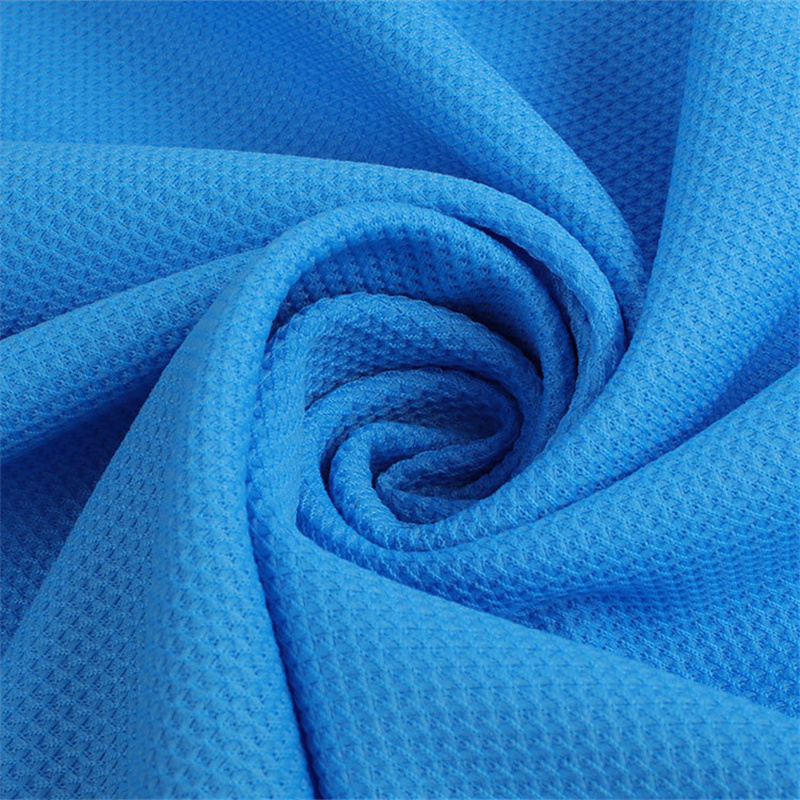
Yes, polyester is a good quality material for joggers when it is engineered correctly. Polyester joggers are especially strong in performance, travel, and athletic-inspired categories because they can dry faster, hold shape well, and remain lighter during movement than many natural-fiber alternatives.
Polyester sometimes has a weaker reputation only because low-grade polyester can feel synthetic or less breathable. But high-quality polyester constructions can perform very well, especially in performance joggers and technical casualwear. The final result depends on yarn quality, finishing, and blend balance.
At Fusionknits, polyester is usually selected when the jogger needs better moisture behavior, easier care, and stronger repeat performance in active or hybrid use.
Why polyester works well in joggers
- Quick drying
- Better moisture management
- Strong shape retention
- Good color durability
- Strong wash performance
- Lower fabric weight in activewear categories
When polyester is strongest
In running and training joggers
It handles movement and sweat better than most cotton systems.
In travel joggers
It stays lighter and often wrinkles less.
In modern easy-care casualwear
It supports cleaner, more stable garment behavior.
Polyester guide
| Polyester direction | Best jogger use |
|---|---|
| Polyester-elastane knit | Running and active joggers |
| Polyester-cotton blend | Hybrid casual-performance joggers |
| Weak low-grade poly | Lower comfort perception |
That is why polyester can absolutely be part of a good quality jogger when the product purpose supports it.
Yes, in many activewear and elevated casualwear programs, nylon is considered one of the strongest premium fabric directions because it often feels smoother and more refined than polyester.
Yes, nylon is a premium material for joggers in many cases because it offers a smooth hand feel, strong durability, good stretch support in blends, and a cleaner technical appearance. Nylon joggers are especially strong in premium athleisure, running, travel, and sleek minimal sportswear categories.
Nylon often performs well when the brand wants a more elevated activewear finish. It can feel softer and more polished while still supporting durability and movement. When blended with elastane, it becomes particularly strong in fitted or tapered joggers that need both comfort and body control.
At Fusionknits, nylon is often selected when the jogger needs a cleaner premium feel and a more technical but refined fabric identity.
- Smooth surface feel
- Strong abrasion resistance
- Good support in stretch blends
- Cleaner visual finish
- Strong activewear value
Why nylon is not always the only answer
Cost may be higher
Not every commercial jogger program requires a premium nylon base.
Product purpose still decides
A soft fleece jogger may need cotton comfort more than technical nylon.
Fabric engineering still matters
A weak nylon build can still underperform if the finish or stretch balance is wrong.
Nylon guide
| Nylon direction | Best jogger use |
|---|---|
| Nylon-elastane | Premium active and travel joggers |
| Nylon blend ponte | Structured lifestyle joggers |
| Technical nylon knit | Performance-led clean joggers |
That is why nylon is often one of the strongest premium directions in jogger development.
What fabric structures are strongest for quality joggers?
Fiber content matters, but structure matters just as much. The same fiber can behave very differently depending on whether it is built into fleece, French terry, ponte, jersey, or woven stretch.

The strongest fabric structures for quality joggers usually include French terry, brushed fleece, ponte, double-knit, stable jersey blends, and woven stretch constructions depending on the intended use. The best structure is the one that supports the jogger’s purpose in softness, recovery, weight, and silhouette.
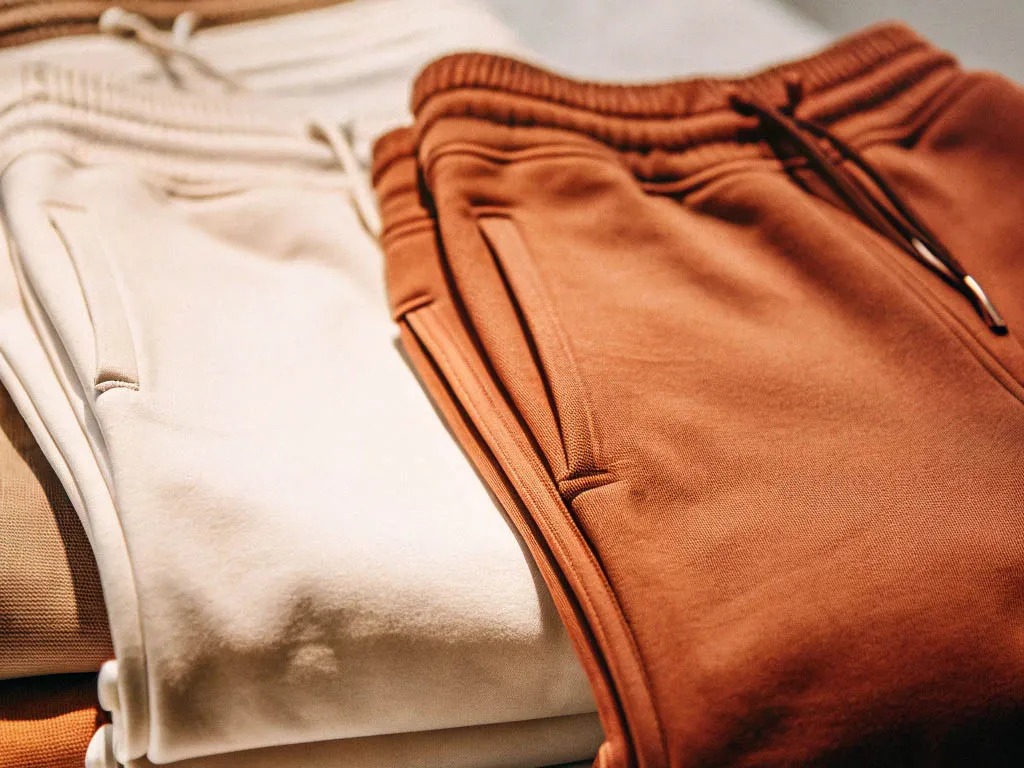
French terry works well for premium casual joggers because it balances comfort and seasonality. Brushed fleece works well for softer cold-weather categories. Ponte and double-knit structures can create a cleaner and more elevated appearance. Woven stretch works especially well in running and travel joggers.
At Fusionknits, structure selection is always tied to category logic. A lounge jogger and a running jogger should not share the same fabric expectations.
Common quality jogger fabric structures
- French terry
- Brushed fleece
- Double-knit
- Ponte
- Compact stretch jersey
- Woven stretch performance fabric
Why structure matters so much
It affects drape
The jogger should sit correctly through the hip, thigh, and knee.
It affects weight
Too soft or too heavy can both weaken the category.
It affects garment identity
Fabric structure often decides whether the jogger feels like loungewear, activewear, or premium casualwear.
Structure guide
| Fabric structure | Best jogger role |
|---|---|
| French terry | Everyday premium casual jogger |
| Fleece | Warm comfort jogger |
| Ponte | Cleaner elevated jogger |
| Stretch woven | Running and travel jogger |
That is why good quality joggers are usually defined by both fiber and fabric construction.
What materials should buyers avoid in lower-quality joggers?
Strong jogger development also means knowing what often causes weak performance. Some materials look acceptable at first but lose value very quickly once the garment enters real wear.
Buyers should be cautious with weak short-staple cotton, low-grade polyester, unstable acrylic-heavy blends, thin low-recovery jersey, and fabrics with poor stretch recovery or weak brushing control. These materials may lower cost, but they often lead to pilling, knee bagging, roughness, shape loss, or poor wash performance.
A jogger is one of the easiest garments for customers to judge after purchase because it is worn repeatedly and casually. Weak materials become visible fast. Bagged knees, twisted legs, faded color, and rough surface texture usually reduce trust in the garment immediately.
At Fusionknits, material screening always includes recovery, pilling, wash behavior, and long-term shape control because joggers are a repeat-use category.
Lower-quality material risks in joggers
- Knee bagging
- Pilling
- Weak waistband recovery
- Color fading
- Rough hand feel after washing
- Distorted lower leg shape
Common weaker fabric directions
Thin low-recovery jersey
Often too weak for structured jogger use.
Poor fleece quality
May feel soft at first but age badly.
Low-grade synthetic blends
Can feel harsh and wear out visibly.
Risk guide
| Material issue | Common garment problem |
|---|---|
| Weak recovery | Baggy knees and shape loss |
| Low-grade fleece | Surface wear and pilling |
| Thin unstable knit | Poor silhouette control |
| Weak blend quality | Faster overall aging |
That is why good jogger quality depends as much on avoiding weak materials as on choosing strong ones.
How should brands choose the best material for different jogger categories?
There is no single material that works best for every jogger. The right answer depends on product function. Brands usually make stronger decisions when they define the jogger role first.
Brands should choose jogger material by matching fabric to category use. Cotton-rich French terry and fleece work well for casual and lounge joggers, polyester or nylon blends work well for running and active joggers, and ponte or structured blends work well for premium lifestyle joggers. The best quality material is always the one that fits the garment’s real purpose.
At Fusionknits, the jogger material decision usually begins with a practical product question: Is this jogger for comfort, performance, travel, premium casualwear, or cold-weather softness? Once that is clear, the material path becomes much more accurate.
Better material choices by jogger type
- Lounge jogger: cotton fleece or soft French terry
- Everyday casual jogger: cotton-poly-elastane or compact terry
- Running jogger: polyester-elastane or nylon-elastane
- Travel jogger: smooth technical blend or stretch woven
- Premium minimal jogger: ponte or structured double-knit blend
Why purpose-led material choice works better
It improves customer satisfaction
The jogger behaves the way the customer expects.
It strengthens product clarity
The garment has a more believable and useful identity.
It reduces over-design mistakes
Not every jogger needs premium activewear fabric, and not every jogger should feel like loungewear.
Material-by-category guide
| Jogger category | Better material direction |
|---|---|
| Loungewear | Cotton fleece or terry |
| Casual everyday | Cotton blend with recovery |
| Running | Polyester or nylon stretch blend |
| Travel | Light technical stretch fabric |
| Premium casual | Ponte or refined double-knit |
That is how brands can make better quality decisions instead of treating all joggers as one category.
What makes a jogger material truly high quality in the long term?
High quality is not just the first hand feel. It is how the garment behaves after repeated movement, repeated washing, and repeated wear. A material that stays stable through that cycle is much more valuable than one that only performs well at first touch.
A jogger material is truly high quality in the long term when it keeps its softness, shape, stretch recovery, surface stability, and appearance after repeated use. Better materials usually show stronger recovery at the knees, lower pilling, better waistband support, more consistent color, and better comfort across seasons and wash cycles.
At Fusionknits, long-term material quality is always reviewed through full garment behavior, not only fabric description. Joggers need real-life performance more than many more occasional garments.
Conclusion
Good quality joggers are usually made from strong cotton blends, quality polyester blends, nylon blends, French terry, fleece, ponte, double-knit, or stretch performance fabrics depending on the intended product role. Cotton is excellent for soft casual and lounge joggers. Cotton blends often improve recovery and durability. Polyester blends work strongly in performance and easy-care categories. Nylon blends often bring a smoother premium activewear finish. Fabric structure matters just as much as fiber, because the same fiber can perform very differently in fleece, terry, ponte, or woven stretch constructions.
At Fusionknits, the best jogger material is always chosen through product logic. A strong jogger begins with the correct balance of comfort, durability, recovery, and end use.
When brands match the material to the jogger category clearly, they build garments that feel better, wear longer, and create stronger value in both performance and commercial quality.