Joggers look simple, but the material behind them changes almost everything in the final product. A jogger can feel soft and relaxed, clean and premium, or light and performance-driven depending on the fiber, knit structure, stretch support, and finishing method. That is why two joggers with a similar silhouette can behave very differently in real wear.
Joggers are usually made of cotton, polyester, nylon, elastane, or different blended fabric systems such as cotton-polyester, cotton-elastane, polyester-spandex, or nylon-elastane. The exact material depends on whether the jogger is designed for lounging, everyday casualwear, travel, training, or premium lifestyle use.
At Fusionknits, joggers are never developed from fabric label alone. A strong jogger begins with a full material system. That system includes the right fiber, the right fabric structure, the right stretch balance, and the right finishing approach. When those parts work together, the jogger becomes more comfortable, more durable, and more reliable after repeated wear and washing.
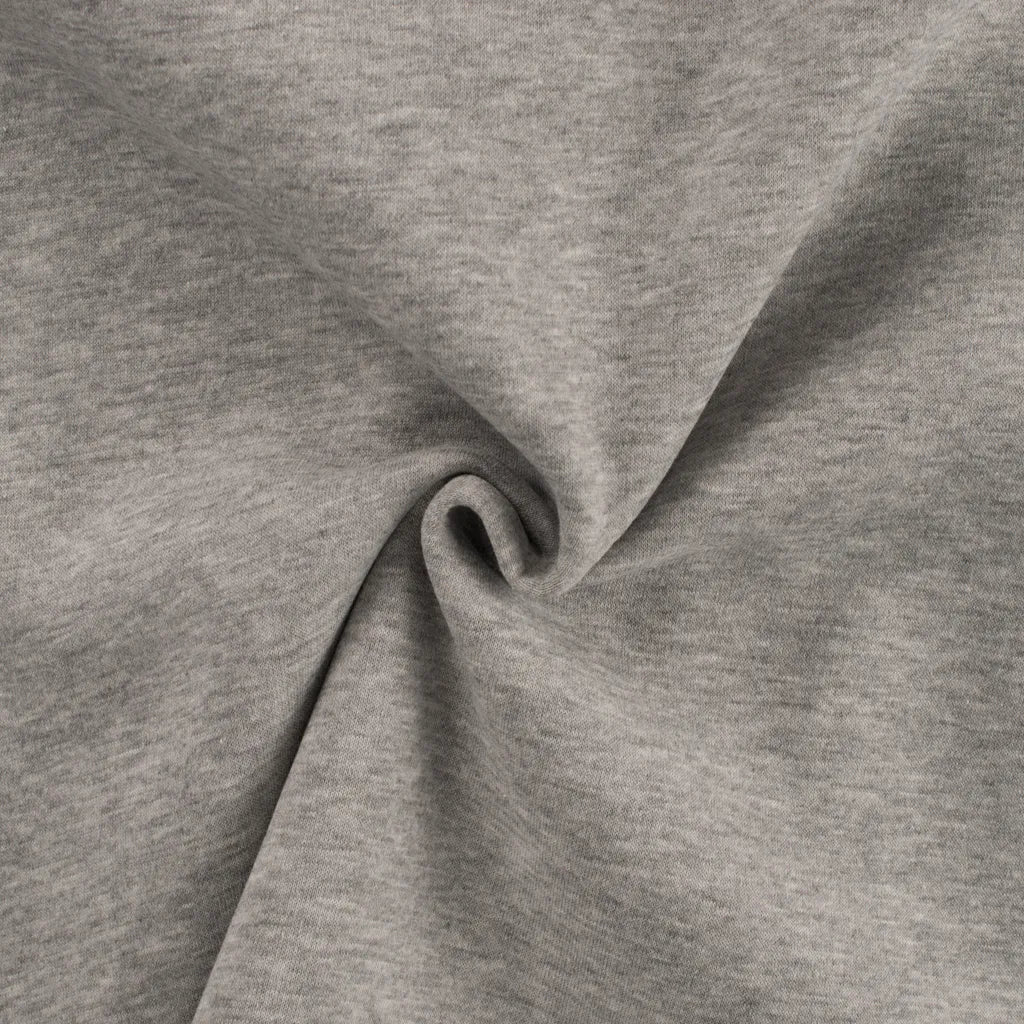
Why does material matter so much in joggers?
Joggers are one of the most repeat-wear products in modern apparel. Customers sit, walk, stretch, travel, lounge, wash, and rewear them often. Because of that, weak material decisions become visible very quickly.
Material matters so much in joggers because it controls softness, stretch, recovery, weight, breathability, pilling, wash stability, and long-term shape retention. A weak material may feel acceptable at first, but it often loses quality quickly once the jogger enters real daily use.
From a manufacturing perspective, joggers sit between comfortwear and performancewear. Some customers expect a soft homewear feel. Others expect a cleaner streetwear silhouette. Others want travel function or athletic movement support. Since the category covers so many use cases, the material decision becomes much more important than many buyers first assume.
At Fusionknits, the first material question is always linked to product purpose. A lounge jogger, a running jogger, and a premium casual jogger should not all be made from the same fabric logic.
Why material changes the whole jogger result
- It affects skin feel
- It affects how the jogger moves
- It changes the visual weight of the garment
- It affects knee recovery and seat stability
- It controls moisture and heat response
- It influences how premium or casual the jogger feels
Why this matters in development
Joggers are movement-heavy garments
The material has to support daily motion without distorting too quickly.
The category depends on repeated comfort
A jogger that feels wrong after two washes usually loses customer trust quickly.
The same silhouette can perform very differently
Material often matters more than design sketch in this category.
A simple material-performance view
| Material factor | Effect on joggers |
|---|---|
| Better softness | Better wear comfort |
| Better stretch recovery | Better shape retention |
| Better durability | Longer garment life |
| Better weight control | Better movement and drape |
That is why jogger quality usually begins with material logic before anything else.
Are joggers usually made from cotton?
Yes. Cotton remains one of the most common jogger materials, especially in casualwear, lounge categories, and premium basics. It is one of the easiest fibers for customers to trust because it feels familiar, soft, and breathable.

Yes, joggers are very often made from cotton or cotton-rich fabric systems. Cotton is widely used because it offers natural softness, broad comfort, good breathability, and strong acceptance in everyday casual and loungewear categories.
Cotton works especially well in French terry, brushed fleece, and soft knit joggers meant for home use, travel, or daily casual styling. However, pure cotton is not always the best option for every jogger. In some cases, it may lose shape faster or recover less effectively than blended alternatives.
At Fusionknits, cotton is often chosen when the jogger needs broad commercial appeal and easy all-day comfort. The key is choosing the right cotton quality and the right structure, not only the word “cotton” on the label.
Why cotton is so common in joggers
- Soft natural hand feel
- Broad consumer acceptance
- Good casual comfort
- Strong performance in fleece and terry
- Easy integration into everyday wardrobes
What changes cotton quality in joggers
Fiber length matters
Long-staple cotton usually performs better than short-staple cotton.
Fabric build matters
French terry and fleece can behave very differently from thin jersey.
Recovery still matters
A soft cotton jogger can still fail if the structure is weak.
Cotton guide
| Cotton direction | Typical jogger result |
|---|---|
| Cotton French terry | Everyday comfort jogger |
| Cotton fleece | Soft winter or lounge jogger |
| Thin cotton jersey | Lighter use, lower structure |
| Better cotton blend | More balanced performance |
That is why cotton remains one of the core answers when people ask what joggers are made of.
Are joggers made from cotton blends more often than 100% cotton?
In many cases, yes. Pure cotton is common, but blended cotton fabrics often perform better in areas such as recovery, shape retention, wash durability, and lower-knee bagging. That is why many commercially strong joggers are built from blends rather than pure fiber.
Yes, joggers are often made from cotton blends more often than 100% cotton in many product categories because cotton blends can improve recovery, reduce shape loss, support better durability, and give more balanced wear performance. Common examples include cotton-polyester blends and cotton-elastane blends.
A cotton-polyester blend can improve structural stability and reduce shrink-related problems. A cotton-elastane blend can improve movement and help the jogger return to shape better after wear. A cotton-poly-elastane blend often becomes one of the most versatile directions in everyday jogger development.
At Fusionknits, blends are often preferred when the product needs the softness of cotton with better long-term behavior.
Why cotton blends are so common
- Better recovery
- Better wash stability
- Lower risk of knee bagging
- Better shape control
- More flexibility in fit development
Common cotton-based jogger blends
Cotton-polyester
Useful for durability and broad commercial stability.
Cotton-elastane
Useful for comfort plus movement support.
Cotton-poly-elastane
Often one of the strongest all-around solutions.
Cotton-blend overview
| Blend type | Main benefit in joggers |
|---|---|
| Cotton-poly | Better structure |
| Cotton-elastane | Better stretch and recovery |
| Cotton-poly-elastane | Balanced comfort and durability |
That is why many good joggers are made from cotton blends instead of pure cotton alone.
Are performance joggers usually made of polyester?
Yes, very often. Polyester is one of the most widely used fibers in performance joggers because it handles sweat, drying speed, and shape control more effectively than many natural fibers in activewear use.
Performance joggers are usually made of polyester or polyester blends because polyester offers quick drying, lower moisture retention, good shape stability, and light weight during movement. When blended with elastane or spandex, polyester becomes especially effective for running, training, and active-use joggers.
Polyester is especially valuable in joggers designed for exercise, commuting, travel, or hybrid athleisure wear. It tends to dry more quickly than cotton and usually stays lighter during sweat-producing activity. This makes it a strong choice for more technical categories.
At Fusionknits, polyester is selected when performance and easier care matter more than pure natural-fiber hand feel.
Why polyester is common in performance joggers
- Faster drying
- Better moisture management
- Lower fabric weight in activity
- Better shape retention
- Good durability through repeated washing
Why polyester is not the same in every jogger
Yarn quality matters
A better polyester fabric feels very different from a low-grade one.
Finish matters
The final hand feel can be sporty, premium, or harsh depending on processing.
Blend support matters
Polyester usually performs best when paired with some stretch or structure support.
Polyester guide
| Polyester direction | Best use |
|---|---|
| Polyester-elastane knit | Running and training joggers |
| Polyester-cotton blend | Casual-performance crossover |
| Technical polyester woven | Travel and active joggers |
That is why polyester is one of the most common materials in performance-led joggers.
In many cases, yes. Nylon is often used in more premium activewear and elevated casual jogger categories because it can feel smoother, stronger, and more refined than standard polyester constructions.
Yes, nylon joggers are often considered more premium because nylon can offer a smoother hand feel, good durability, and a cleaner, more elevated finish. Nylon is especially common in premium athleisure, sleek running joggers, and travel joggers that need both comfort and structure.
Nylon usually works very well in stretch fabrics and technical blends. It can support a clean tapered silhouette while still feeling soft and smooth against the skin. This makes it particularly useful in modern active-lifestyle products where the jogger needs to look more polished.
At Fusionknits, nylon is often chosen when the jogger needs a better technical feel and a more premium visual finish.
Why nylon feels more elevated in some joggers
- Smoother surface
- Strong durability
- Better abrasion resistance
- Clean activewear appearance
- Strong support in stretch blends
Why nylon is not always the only answer
Cost may be higher
This makes it more suitable for premium categories than for all broad-market basics.
Product purpose still decides
A cotton terry jogger may still be better for homewear comfort.
Blend engineering matters
Nylon performs best when supported by the right stretch and weight balance.
Nylon guide
| Nylon direction | Typical jogger role |
|---|---|
| Nylon-elastane | Premium active jogger |
| Nylon blend ponte | Structured lifestyle jogger |
| Technical nylon knit | Sleek travel or running jogger |
That is why nylon often appears in more premium jogger programs.
Why do so many joggers contain elastane or spandex?
Elastane, also called spandex in many markets, is one of the most important support fibers in jogger development. Even a small amount can change how the garment feels and performs.

Many joggers contain elastane or spandex because these fibers add stretch, flexibility, and recovery. This helps the jogger move more naturally with the body and return to shape more effectively after sitting, bending, and repeated wear.
Joggers often need to handle movement in the waistband, seat, thigh, and knee. Without some stretch support, the garment may feel rigid or lose shape too quickly. Elastane helps solve that problem, especially in slimmer or more tapered jogger silhouettes.
At Fusionknits, elastane is usually treated as a support component rather than a main headline fiber. Its value often comes from improving the full fabric system rather than drawing attention to itself.
Why stretch support matters in joggers
- Better movement comfort
- Less restriction through the thigh and knee
- Better recovery after long wear
- Better fit stability in tapered styles
- Better comfort during travel and sitting
Why elastane still needs balance
Too much stretch can weaken support
The jogger should feel stable, not overly elastic.
Recovery matters as much as flexibility
A fabric that stretches but bags easily still underperforms.
Category use changes the needed level
A lounge jogger and a running jogger may need different stretch percentages.
Stretch-support guide
| Support fiber use | Jogger benefit |
|---|---|
| Cotton-elastane | Better everyday comfort |
| Polyester-spandex | Better performance movement |
| Nylon-elastane | Premium stretch support |
That is why elastane or spandex appears in many joggers even when it is only a small percentage of the total composition.
What fabric structures are joggers usually made in?
Fiber composition is only part of the answer. Joggers are also defined by fabric structure. The same fibers can create very different joggers depending on whether the fabric is fleece, terry, jersey, ponte, double-knit, or woven stretch.
Joggers are usually made in fabric structures such as French terry, brushed fleece, jersey blends, double-knit, ponte, and stretch woven fabrics. The structure changes the softness, weight, warmth, drape, and category identity of the jogger.
French terry is common in everyday joggers because it is soft and breathable. Fleece is common in warm comfort joggers. Ponte and double-knit are often used in cleaner premium joggers. Stretch woven fabrics are often used in active and travel joggers.
At Fusionknits, structure selection always follows category logic. A lounge jogger should not be built like a running jogger, and a premium city jogger should not always use the same structure as a homewear fleece pant.
Common jogger fabric structures
- French terry
- Brushed fleece
- Single jersey blends
- Double-knit
- Ponte
- Stretch woven fabrics
Why structure matters as much as fiber
It changes comfort
A fleece jogger feels very different from a woven jogger even if the fiber family overlaps.
It changes silhouette
Some structures support cleaner taper and more premium lines.
It changes seasonality
Heavy brushed fabrics and lighter technical fabrics solve different product needs.
Structure guide
| Fabric structure | Typical jogger use |
|---|---|
| French terry | Everyday casual jogger |
| Brushed fleece | Warm lounge jogger |
| Ponte | Premium structured jogger |
| Stretch woven | Running or travel jogger |
That is why joggers should be understood through both fiber and fabric construction.
Are joggers made from woven fabric or knit fabric?
Both are possible, but knit fabrics are more common in casual and lounge joggers, while woven fabrics often appear in technical, travel, or performance-driven joggers.
Joggers can be made from both knit and woven fabrics, but knit fabrics are more common in comfort-led casual joggers because they offer softness and flexibility. Woven stretch fabrics are often used in performance or travel joggers because they create a lighter, cleaner, and more technical feel.
Knit fabrics are especially common in fleece, French terry, and jersey joggers. Woven stretch fabrics are more likely to appear in running joggers, commuter joggers, or modern utility-inspired designs. The structure changes not only the feel of the fabric, but also the silhouette of the finished garment.
At Fusionknits, this choice is always linked to the jogger’s intended role. The category should begin with use, then move to structure.
Why knit fabrics are more common
- Softer hand feel
- Better casual comfort
- More familiar in lounge and sweats categories
- Easier relaxed movement
Why woven joggers still matter
Cleaner technical appearance
They often feel more refined and more active.
Lower visual bulk
This helps in travel and performance silhouettes.
Better structure in some categories
A woven jogger may hold shape differently from a knit jogger.
Knit versus woven guide
| Structure type | Main jogger role |
|---|---|
| Knit | Casual, lounge, comfort jogger |
| Woven | Performance, travel, technical jogger |
That is why both structures exist in the category, even though knits remain more common overall.
What materials are weaker choices for low-quality joggers?
Not every jogger material performs well in repeated use. Some lower-cost directions may feel soft in the beginning but weaken quickly once the garment is worn and washed.
Lower-quality joggers are often made from weak short-staple cotton, low-grade polyester, unstable acrylic-heavy blends, poor fleece constructions, or fabrics with weak stretch recovery. These materials may lower cost, but they often lead to pilling, knee bagging, shape loss, roughness, or unstable waist and cuff behavior.
The biggest problem is that low-quality jogger materials often look acceptable in a first fitting. Customers only discover the weakness later, after movement, laundering, and repeated daily wear. That is why true jogger quality must be judged over time, not only by initial softness.
At Fusionknits, low-grade fabric risks are usually screened early because joggers are a repeat-use product with very visible wear patterns.
Common weaker jogger material directions
- Short-staple cotton with weak spinning
- Low-grade polyester with poor hand feel
- Thin unstable jersey
- Weak fleece with low surface durability
- Low-recovery stretch blends
What these materials often cause
More pilling
The garment surface ages quickly.
More knee bagging
The silhouette loses control after wear.
Less comfort after washing
The jogger becomes rougher or weaker over time.
Weak-material guide
| Material issue | Common jogger problem |
|---|---|
| Poor recovery | Shape loss |
| Weak surface quality | Pilling |
| Low-grade fleece | Fast visual aging |
| Thin unstable knit | Poor drape and comfort |
That is why strong joggers depend not only on what they are made of, but also on how well those materials are built.
How should buyers understand jogger materials professionally?
The strongest way to understand jogger materials is to stop asking only what fiber is used and start asking what the full product is meant to do. Good jogger material is always purpose-led.
Buyers should understand jogger materials by looking at fiber composition, fabric structure, stretch support, surface quality, recovery, weight, and intended use together. A good jogger material is not one fixed answer. It is the material system that best supports the category’s real wear purpose.
At Fusionknits, the most useful jogger material decisions begin with practical questions. Is this jogger for lounging, commuting, travel, running, or premium everyday wear? Once the use is clear, the best fabric direction becomes much easier to identify.
Better buyer questions for jogger materials
- Is the jogger meant for comfort or performance?
- Does the fabric have enough recovery?
- Is the hand feel right for the category?
- Will the fabric pill too quickly?
- Is the weight appropriate for the season?
- Does the structure support the intended silhouette?
Why this approach works better
It improves category clarity
The material starts to match the garment role more accurately.
It reduces product mistakes
A better fabric choice often prevents later complaints.
It supports stronger collections
Purpose-led material planning creates better assortment logic.
Buyer guide
| Product goal | Better material direction |
|---|---|
| Lounge jogger | Cotton fleece or terry |
| Everyday jogger | Cotton blend with recovery |
| Running jogger | Polyester or nylon stretch blend |
| Premium jogger | Ponte, double-knit, or smooth technical blend |
That is how buyers can understand jogger materials in a more professional and more useful way.
Conclusion
Joggers are usually made of cotton, polyester, nylon, elastane, or different blend systems such as cotton-polyester, cotton-elastane, polyester-spandex, and nylon-elastane. The exact material depends on the product role. Cotton and cotton blends are especially common in casual, lounge, and everyday joggers. Polyester and nylon blends are more common in performance, travel, and technical joggers. Elastane or spandex is often added for stretch and recovery, while the final fabric structure may be French terry, brushed fleece, ponte, jersey, double-knit, or woven stretch depending on the desired result.
At Fusionknits, joggers are understood as a material-driven product category. The best jogger is never defined by one fiber name alone.
It is built through the right combination of raw fiber, structure, stretch, weight, and end-use logic. When those material choices are made correctly, the jogger becomes more comfortable, more durable, more stable in shape, and much more dependable in real daily wear.