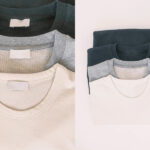
100% cotton sounds like an easy selling point, especially in casualwear. Many buyers and consumers immediately connect cotton with softness, breathability, and natural comfort. But in jogger development, the answer is more complex. Cotton can feel excellent in the right product, yet it can also underperform if the jogger needs stronger recovery, better moisture handling, or more shape retention.
Yes, 100% cotton can be good for joggers, especially for lounge, casual, and everyday comfort styles. It offers softness, breathability, and a natural hand feel that many customers like. However, it is not always the best choice for every jogger category because pure cotton may recover less effectively, hold more moisture, and bag more easily at the knees than well-engineered blends.
At Fusionknits, 100% cotton is treated as a useful jogger material, but not as a universal answer. A strong cotton jogger depends on fiber quality, fabric structure, garment fit, and intended use. When these factors are aligned, cotton joggers can be comfortable, commercially strong, and easy to wear. When they are not, the product may feel soft at first but lose value too quickly in real use.
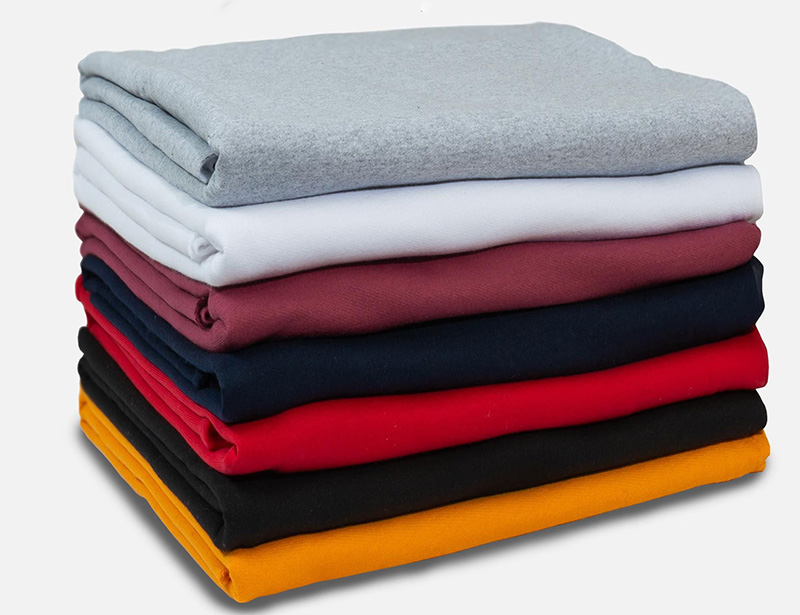
Why do so many buyers ask if 100% cotton is good for joggers?
Cotton is one of the most familiar fibers in apparel, so buyers often see it as a safe choice. In joggers, that question comes up even more often because the category is closely linked to comfort, softness, and daily wear.
Many buyers ask if 100% cotton is good for joggers because cotton has a strong reputation for comfort, softness, and natural feel. Since joggers are often worn for long hours, customers naturally want a fabric that feels easy on the skin and reliable in repeated casual use.
From a product development perspective, this question is important because joggers are not only casual garments. They are repeat-use garments. A customer may wear them at home, outside, while traveling, or throughout an entire day. That means the fabric has to do more than feel soft. It also has to recover, hold shape, and remain presentable.
At Fusionknits, the cotton question usually leads to a more useful one: what kind of jogger is being made? The answer changes the material recommendation immediately.
Why cotton gets so much attention in joggers
- It feels natural and familiar
- It has strong casualwear credibility
- It is associated with softness
- It works well in fleece and terry
- It appeals to buyers who prefer non-synthetic materials
Why the question needs a deeper answer
Joggers are not one single category
A lounge jogger and a running jogger should not use the same material logic.
Cotton comfort is real, but so are its limits
A fabric can feel good in hand and still underperform in recovery or moisture management.
The final garment matters more than the fiber label alone
A better cotton structure can outperform a weak cotton fabric, and a better blend can outperform weak pure cotton.
A simple cotton-question view
| Buyer assumption | Better product question |
|---|---|
| Cotton is comfortable | Comfortable for what kind of jogger use? |
| Cotton is natural | Does the fabric still recover well? |
| Cotton is safe | Is it the best fit for the category? |
That is why 100% cotton deserves a more complete answer than a simple yes or no.
What makes 100% cotton feel good in joggers?
Cotton remains popular for a reason. When it is used well, it gives joggers a comfort level that feels natural and easy from the first wear. This is one of the strongest reasons it remains a core casualwear fabric.

100% cotton feels good in joggers because it is soft, breathable, skin-friendly, and naturally comfortable for long periods of wear. It usually performs especially well in casual and lounge categories where softness, warmth balance, and easy daily comfort matter more than technical athletic performance.
Cotton works especially well in French terry and fleece because these structures help translate the fiber’s comfort into a fuller garment experience. A strong cotton jogger often feels approachable, relaxed, and familiar. That emotional comfort matters commercially because customers often trust the product more quickly.
At Fusionknits, cotton joggers are often strongest when the brief is simple: make the garment easy to live in.
Why cotton feels so comfortable
- Soft natural hand feel
- Good breathability
- Strong skin comfort
- Broad acceptance across markets
- Comfortable in home and casual settings
Why customers respond well to cotton
It feels less technical
Many consumers prefer a fabric that does not feel overly synthetic or sporty.
It supports all-day casual wear
Cotton can feel relaxed without looking too performance-driven.
It has emotional familiarity
Customers already know what cotton usually feels like.
Cotton-comfort guide
| Cotton strength | Jogger benefit |
|---|---|
| Softness | Better first-touch comfort |
| Breathability | Better daily wear feel |
| Familiarity | Easier market acceptance |
| Natural hand feel | Strong casualwear positioning |
That is why 100% cotton continues to be such a strong comfort fabric in joggers.
Is 100% cotton best for lounge joggers and casual joggers?
Yes, in many cases. This is where cotton usually performs best because the garment goal is everyday comfort rather than technical output. In these categories, the strengths of cotton matter more than its limits.
Yes, 100% cotton is often best for lounge joggers and casual joggers because these categories prioritize softness, comfort, easy movement, and relaxed wear rather than maximum moisture control or high-performance recovery. Cotton works especially well in homewear, off-duty casualwear, and comfort-led everyday joggers.
A lounge jogger does not need to behave like a running jogger. It needs to feel easy, warm enough when needed, and pleasant over long periods of sitting and walking. Cotton supports that use case very well, especially in brushed fleece and quality French terry.
At Fusionknits, 100% cotton is often a strong choice when the jogger is meant for slower, softer, daily life rather than for training or heat-heavy movement.
Why cotton is strong in lounge and casual joggers
- Better relaxed comfort
- Good softness in fleece and terry
- Strong for home and travel downtime
- Broad compatibility with sweatshirts and hoodies
- Strong emotional comfort value
Best casual-use categories for 100% cotton joggers
Lounge joggers
Softness matters more than high technical function here.
Homewear joggers
A natural, comfortable fabric supports long wear.
Easy weekend joggers
Cotton works well when the product is meant for relaxed casual dressing.
Use-case guide
| Jogger category | 100% cotton suitability |
|---|---|
| Lounge jogger | Strong |
| Casual everyday jogger | Strong |
| Winter fleece jogger | Strong |
| Running jogger | Weaker |
| Performance training jogger | Weaker |
That is why 100% cotton is often one of the best material choices in comfort-led jogger categories.
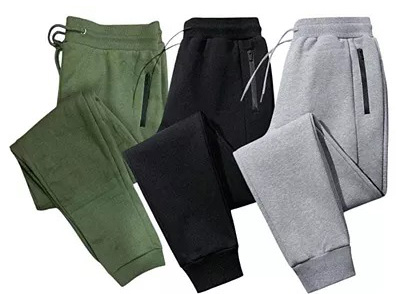
What are the weak points of 100% cotton in joggers?
Cotton has clear strengths, but it also has clear limitations. These do not automatically make it a bad choice, but they do matter in product planning. A jogger that looks soft and relaxed at first can start to lose quality if the material is not well matched to the category.
The weak points of 100% cotton in joggers are usually lower stretch recovery, higher moisture absorption, greater risk of knee bagging, and slower drying compared with better blends or technical fabrics. These issues become more visible when the jogger is used heavily, washed often, or expected to perform like activewear.
One of the most common cotton jogger problems is knee bagging. Repeated movement and sitting can stress the fabric, and if the structure is not strong enough, the garment may lose visual sharpness faster than a blend. Cotton also holds moisture more than polyester or nylon, which makes it less ideal in sweat-heavy or very active categories.
At Fusionknits, these weak points are not treated as automatic disqualifiers. They are treated as category limits that need to be understood honestly.
Common limitations of 100% cotton joggers
- Slower drying
- Lower moisture management
- More shape loss after repeated wear
- Higher chance of knee bagging
- Less support in slim technical silhouettes
Why these limits matter
Daily wear creates pressure zones
The knee, seat, and waistband areas reveal weak recovery quickly.
Customers often wear joggers repeatedly
The more often the garment is used, the more important shape retention becomes.
Cotton does not solve performance needs by itself
Once the jogger enters sport or technical use, the fabric often needs help.
Limitation guide
| Cotton weakness | Jogger effect |
|---|---|
| Higher moisture absorption | Heavier feel during sweat |
| Weaker recovery | More knee bagging |
| Slower drying | Less useful in active categories |
| Lower technical support | Less suited to performance joggers |
That is why 100% cotton is good in the right category, but not ideal in every category.
Does 100% cotton bag at the knees more easily?
Yes, in many cases it does. This is one of the main technical concerns with pure cotton joggers, especially if the garment is fitted too closely or used heavily without enough structural support.
Yes, 100% cotton joggers usually bag at the knees more easily than cotton blends or technical fabrics because pure cotton has less recovery. Once the fabric is stressed through sitting, bending, and repeated movement, it may not return to shape as effectively as a fabric with support fibers like polyester or elastane.
This does not mean every cotton jogger will look weak immediately. Better cotton quality, better fabric density, and better pattern balance can help a lot. But the risk is still real, especially in thinner fabrics or tighter silhouettes.
At Fusionknits, knee behavior is one of the first areas checked during jogger review because it strongly affects long-term customer satisfaction.
Why knees become a problem in pure cotton joggers
- Cotton recovers less than stretch-supported blends
- Repeated sitting stresses the knee zone
- Thinner fabrics show shape loss faster
- Slim fits increase fabric strain
How brands can reduce this issue
Use better fabric density
A stronger build often helps the knee area stay more controlled.
Avoid over-tight fit
A little more ease reduces stress on the fabric.
Match cotton to the right use level
A lounge jogger and a fitted street jogger should not always share the same material plan.
Knee-recovery guide
| Jogger type | Knee-bagging risk in 100% cotton |
|---|---|
| Relaxed lounge jogger | Moderate |
| Slim everyday jogger | Higher |
| Heavy fleece cotton jogger | Lower to moderate |
| Lightweight cotton jogger | Higher |
That is why 100% cotton can work, but knee recovery should always be reviewed seriously.
Is 100% cotton good for performance or running joggers?
Usually no, not as the strongest option. Cotton can still be used in very light casual jogging or athleisure crossover products, but it is generally not the best material when the jogger is expected to manage heat, sweat, and repeated athletic movement.

No, 100% cotton is usually not the best choice for performance or running joggers because it absorbs more moisture, dries more slowly, and can feel heavier during activity. Performance joggers are usually stronger in polyester blends, nylon blends, or stretch technical fabrics that manage sweat and recovery more effectively.
The problem is not that cotton is uncomfortable at rest. It is that the fabric behavior changes too much under more active conditions. Once the body begins producing more heat and sweat, cotton often becomes a weaker technical solution than engineered synthetics or support blends.
At Fusionknits, 100% cotton is rarely the first recommendation when the jogger brief includes running, training, or technical movement support.
Why pure cotton is weaker in active joggers
- Holds more moisture
- Dries more slowly
- Feels heavier during sweat
- Recovers less effectively
- Less supportive in slimmer active cuts
Better alternatives for active joggers
Polyester-elastane
Strong for moisture control and movement.
Nylon-elastane
Strong for smoother premium technical feel.
Cotton-blend crossover fabrics
Better if the product needs some natural hand feel with technical support.
Activewear suitability guide
| Jogger use | 100% cotton suitability |
|---|---|
| Lounge and recovery | Strong |
| Casual errands | Strong |
| Light warm-up use | Moderate |
| Running | Weak |
| Training | Weak |
That is why 100% cotton is better understood as a comfort material than a true performance material.
Does cotton quality change whether 100% cotton joggers perform well?
Absolutely. Not all cotton behaves the same way. This is one of the most important points in the whole category. A weak 100% cotton fabric and a strong 100% cotton fabric can perform like two completely different products.
Yes, cotton quality strongly changes whether 100% cotton joggers perform well. Long-staple cotton, compact yarn spinning, stronger fabric density, and better finishing usually produce a much better jogger than weak short-staple cotton with unstable construction. The label may still say 100% cotton, but the final quality can differ significantly.
This matters because many buyers judge cotton only by fiber name. In reality, better fiber length, better yarn cohesion, and better structure can improve softness, reduce pilling, and help the garment keep its shape longer.
At Fusionknits, 100% cotton is only a starting point. The real review begins when the yarn, structure, and garment performance are tested together.
What improves 100% cotton jogger quality
- Long-staple cotton fiber
- Better yarn spinning
- Stronger French terry or fleece structure
- Controlled brushing in fleece
- Better wash finishing
- Balanced pattern engineering
Why cotton quality matters so much
Better yarn makes cleaner fabric
The jogger feels and behaves better in use.
Better structure improves durability
The garment resists collapse more effectively.
Better finishing supports long-term comfort
The fabric keeps more value after repeated washing.
Cotton-quality guide
| Cotton quality factor | Jogger result |
|---|---|
| Long-staple fiber | Better softness and stability |
| Better spinning | Cleaner surface and stronger yarn |
| Better structure | Better shape control |
| Weak cotton build | Faster quality drop |
That is why the question is not only “Is it 100% cotton?” but “How good is the cotton system?”
Are 100% cotton fleece joggers better than 100% cotton jersey joggers?
In many casualwear categories, yes. The structure makes a major difference. Fleece and French terry usually give cotton more body and category support than a thin jersey construction.
Yes, 100% cotton fleece joggers are usually better than 100% cotton jersey joggers for comfort-led categories because fleece creates more warmth, softness, and body, while cotton jersey is often too light and less stable for a strong jogger silhouette. French terry is also often stronger than plain jersey in everyday jogger development.
Cotton jersey can work in lightweight joggers, but it often lacks the body needed to keep the garment looking stable over time. Fleece and terry usually perform better because they give the jogger more structure without losing the natural comfort of cotton.
At Fusionknits, 100% cotton is usually strongest in joggers when it is built into French terry or fleece rather than into a weaker lightweight knit.
Why fleece and terry usually perform better
- More body in the garment
- Better comfort feel
- Better category identity
- Stronger casualwear appearance
- Better support for cuffs and waistband behavior
Why jersey often underperforms in joggers
Too light for stable silhouette
The jogger may collapse visually too fast.
Lower support at stress points
The knee and seat may weaken more quickly.
The product may feel more basic than intended.
Structure comparison
| 100% cotton structure | Jogger performance |
|---|---|
| Fleece | Strong for comfort and warmth |
| French terry | Strong for everyday balance |
| Jersey | Weaker for structured joggers |
That is why structure matters just as much as fiber content in cotton joggers.
When is a cotton blend better than 100% cotton?
This is the key commercial question. Pure cotton can be excellent in the right jogger, but blended fabrics often solve the areas where cotton is weaker. That makes them a stronger answer for many broad-market products.
A cotton blend is better than 100% cotton when the jogger needs stronger shape retention, lower knee bagging, more stretch, faster drying, or better long-term durability. Cotton-polyester and cotton-elastane blends are often stronger choices for slim, active, or repeat-wear joggers.
The goal is not to replace cotton’s comfort. It is to support it. A little polyester can improve stability. A little elastane can improve movement and recovery. The result often feels more complete in daily wear.
At Fusionknits, cotton blends are often recommended when a buyer wants the comfort story of cotton with fewer complaints about shape loss and performance.
When a blend usually performs better
- Slim joggers
- Travel joggers
- Daily repeat-wear joggers
- Joggers needing better wash stability
- Joggers needing more stretch support
Why blends often win commercially
They reduce cotton’s weak points
Recovery and durability usually improve.
They support broader use
The jogger can move more easily between lounge and active casualwear.
They keep enough cotton comfort
The garment still feels approachable and familiar.
Blend comparison
| Fabric type | Strongest use case |
|---|---|
| 100% cotton fleece | Lounge and comfort joggers |
| Cotton-poly blend | Everyday durable joggers |
| Cotton-elastane blend | Comfort plus movement support |
| Cotton-poly-elastane | Broadest commercial balance |
That is why a blend is often the stronger answer when the category demands more than softness alone.
How should buyers decide whether 100% cotton is the right choice?
The strongest decision comes from matching the fabric to the jogger’s real use. A buyer should not start with fiber preference only. The better starting point is the category role of the garment.
Buyers should choose 100% cotton for joggers when the goal is softness, casual comfort, lounge use, or relaxed everyday wear. If the product needs stronger recovery, better technical performance, or more shape retention, a well-engineered blend is usually the better option.
At Fusionknits, the cotton decision usually begins with simple questions. Is the jogger meant for homewear, travel, errands, winter comfort, or active use? How slim is the fit? How important is recovery after sitting and movement? Once those questions are answered, the material path becomes much clearer.
Better buyer questions
- Is the jogger meant for comfort or technical use?
- Will the customer wear it mostly at home or outside?
- Does the silhouette need strong shape retention?
- Is knee recovery important?
- Does the category need moisture management?
Why this approach works better
It improves material accuracy
The fabric matches the actual product role.
It reduces avoidable complaints
The jogger performs more honestly in real use.
It builds stronger collections
The material strategy becomes more purposeful.
Buyer decision guide
| Product goal | Better material choice |
|---|---|
| Lounge comfort | 100% cotton fleece or terry |
| Everyday casual | 100% cotton or cotton blend |
| Travel and repeat wear | Cotton blend |
| Running or training | Performance blend, not pure cotton |
That is how buyers can decide whether 100% cotton is a strong answer or only a partial one.
Conclusion
100% cotton can be very good for joggers when the category is built around comfort, casualwear, lounging, or relaxed everyday use. It offers softness, breathability, and a natural hand feel that many customers continue to value. It works especially well in French terry and fleece structures, where the fabric can support a more complete comfort-led garment. However, 100% cotton is not always the best answer for every jogger type. It usually recovers less effectively than strong blends, may bag more easily at the knees, and is weaker in moisture-heavy or performance-oriented use.
At Fusionknits, 100% cotton is treated as a strong category material when the product purpose supports it. The best cotton joggers are built from better cotton quality, stronger structure, and the right fit logic.
When those elements are in place, cotton joggers can be comfortable, commercially reliable, and highly wearable. When the product needs more technical performance, stronger recovery, or better long-term shape retention, a cotton blend is often the smarter solution.