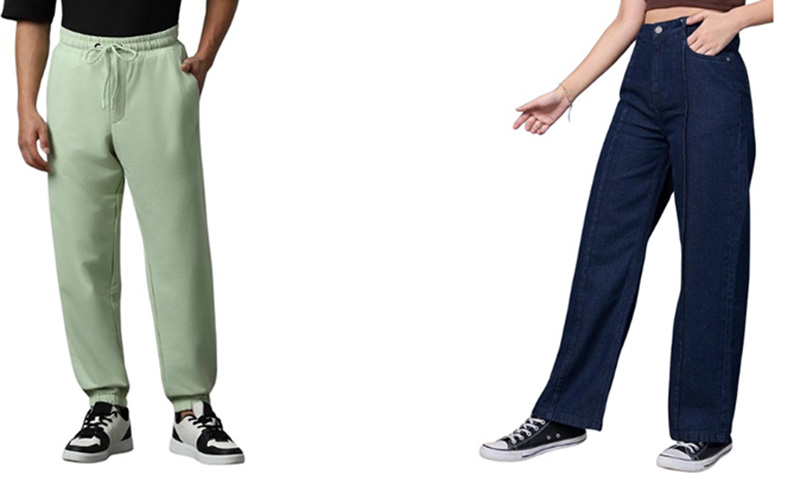
Jeans and joggers are both essential in modern wardrobes, but they solve very different product needs. One offers structure, durability, and timeless styling. The other offers comfort, flexibility, and relaxed daily wear. That is why the better option is not universal. It depends on use, environment, fabric expectation, and the kind of customer the garment is designed for.
Neither jeans nor joggers are universally better. Jeans are usually better for structure, durability, and broader smart-casual styling, while joggers are usually better for comfort, movement, and relaxed daily wear. The better choice depends on whether the priority is shape and versatility in styling, or softness and ease in wear.
At Fusionknits, this question matters because buyers often compare categories that serve different functions. A strong product decision does not come from asking which garment is better in general. It comes from asking which garment is better for the intended market, season, and wearing situation. Once that is clear, the answer becomes much more useful.
Why is it hard to compare jeans and joggers directly?
Jeans and joggers are often placed in the same wardrobe because they are both everyday bottoms, but they are built on very different product logic. One comes from woven denim structure. The other usually comes from knit comfortwear or stretch performancewear.
It is hard to compare jeans and joggers directly because they are designed for different priorities. Jeans are built around structure, abrasion resistance, and style durability, while joggers are built around comfort, flexibility, and ease of movement. They may compete in daily wardrobes, but they do not begin from the same design purpose.
From a manufacturing perspective, jeans rely heavily on denim quality, washing process, seam durability, and silhouette shape. Joggers rely more on fabric softness, stretch recovery, waistband engineering, cuff stability, and movement comfort. These are two very different product systems, even when both garments are used casually.
At Fusionknits, category comparison works best when the product purpose is defined first. The more clearly the use case is understood, the easier it becomes to explain where jeans are stronger and where joggers are stronger.
Why the comparison is not simple
- The fabrics are different
- The comfort expectations are different
- The styling roles are different
- The movement demands are different
- The customer may use them in different settings
- The maintenance and wear patterns are different
Why brands should compare them carefully
They answer different wardrobe needs
A casual garment and a comfort garment may overlap, but not fully replace each other.
The customer expectation changes by situation
The same person may want jeans on one day and joggers on another for very good reasons.
Product strategy becomes clearer
A brand can position both categories more effectively when the differences are respected.
A simple category comparison
| Category factor | Jeans | Joggers |
|---|---|---|
| Base material logic | Woven denim | Knit or stretch comfort fabric |
| Main product priority | Structure and durability | Comfort and mobility |
| Typical wear mood | More styled and stable | More relaxed and easy |
That is why jeans and joggers should be compared by use, not only by popularity.
Are jeans better for structure and long-term style value?
In many cases, yes. Jeans remain one of the strongest categories in apparel because they offer visual stability, durable wear, and broad styling range across years, not just seasons.

Yes, jeans are usually better for structure and long-term style value because denim holds shape more clearly, creates a stronger silhouette, and works across more smart-casual and style-driven outfits. Good jeans often remain relevant longer than trend-based comfort bottoms because the category has strong timeless value.
Jeans carry weight and visual presence. That makes them useful in wardrobes where the customer wants a more intentional outfit without moving into formalwear. A strong pair of jeans can work with T-shirts, knitwear, shirts, jackets, boots, and sneakers. This broad range gives jeans an advantage in wardrobe longevity.
At Fusionknits, structured garments are always important in collection planning because they create a more stable visual foundation. Jeans do this especially well in many casual and lifestyle markets.
Why jeans feel stronger in wardrobe structure
- Denim holds shape clearly
- The silhouette usually stays defined
- The category is highly familiar
- The styling range is broad
- The garment often ages with character
Why jeans carry stronger long-term value
The category is timeless
Jeans return again and again across generations.
The fabric feels durable
Customers often expect jeans to last through repeated wear.
The garment supports more outfit types
Jeans can move closer to polished casual dressing more easily than joggers.
Jeans-strength guide
| Advantage | Product effect |
|---|---|
| Denim structure | Cleaner silhouette |
| Broad styling range | More wardrobe use cases |
| Strong category history | Higher long-term relevance |
| Durable visual identity | Better style permanence |
That is why jeans are often the stronger answer when structure and long-term styling matter most.
Are joggers better for comfort and daily movement?
Yes, in most cases. Joggers were built around comfort, and that remains their greatest advantage. When the customer wants softness, lower pressure, and easier movement, joggers usually lead.
Yes, joggers are usually better for comfort and daily movement because they offer a softer fabric experience, more flexible waist construction, easier stretch or ease through the thigh and knee, and less physical restriction than denim. In categories focused on relaxation, commuting, travel, or homewear, joggers are often the more comfortable option.
Joggers work especially well when the wearer expects to sit for long periods, move frequently, or stay in the same garment across different parts of the day. The softer fabric, easier waistband, and movement-friendly fit often create a more forgiving product experience than jeans.
At Fusionknits, comfort-led categories are always developed with movement in mind. Joggers succeed because they solve real daily wear problems with less tension and less stiffness.
Why joggers win on comfort
- Softer fabrics
- More flexible waist construction
- Easier knee movement
- Less overall body pressure
- Better home and travel wearability
Why comfort changes product preference quickly
Customers feel it immediately
Comfort is usually understood from the first fitting.
Daily wear favors easy garments
Products that feel easier often get worn more often.
Softness supports repeat use
The category becomes part of the customer’s routine faster.
Jogger-comfort guide
| Advantage | Product effect |
|---|---|
| Soft fabric | Better body feel |
| Elastic waistband | More flexible fit |
| Easier movement | Better long-wear comfort |
| Relaxed structure | Less fatigue during use |
That is why joggers are often the better answer when comfort is the first priority.
Which is better for casual everyday wear?
This is where the answer becomes more balanced. Both jeans and joggers can work very well in everyday wardrobes, but they create different kinds of casualwear.
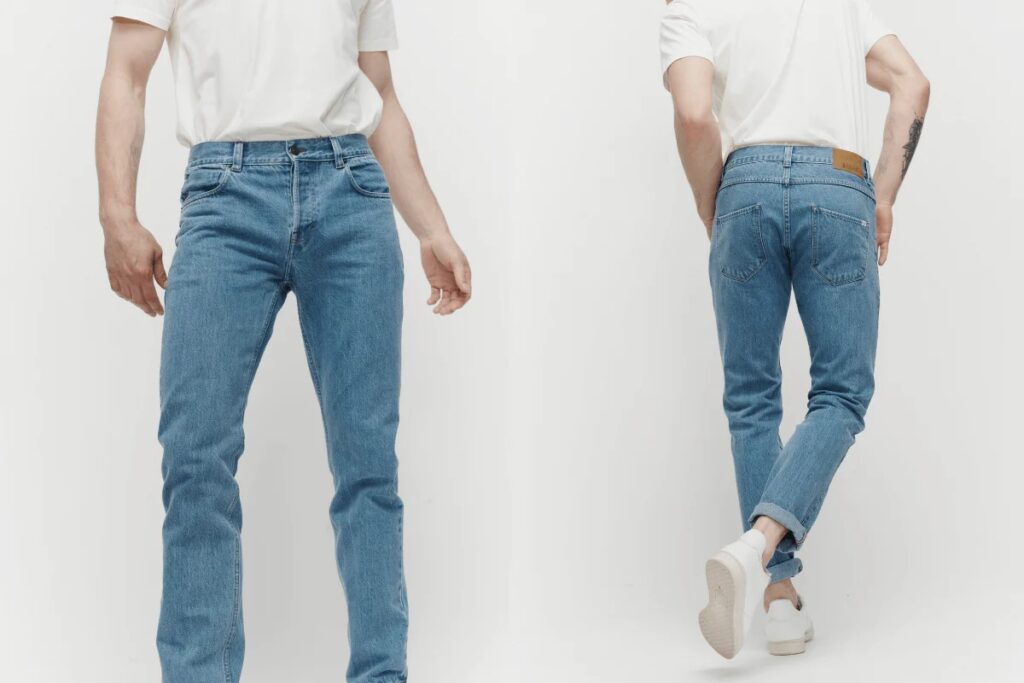
For casual everyday wear, the better option depends on the customer’s lifestyle. Jeans are better when the goal is a more put-together casual look with stronger outfit structure. Joggers are better when the goal is lower-effort comfort, softer movement, and more relaxed all-day wear.
A customer who commutes, meets people casually, and wants a cleaner everyday look may prefer jeans. A customer who prioritizes ease, errands, home-office flexibility, or comfort-led dressing may prefer joggers. This does not make one category stronger in all cases. It simply means they solve different versions of casualwear.
At Fusionknits, everyday products are usually strongest when their category role is clear. A casual basic should not try to be everything at once.
Why jeans work well in everyday casualwear
- More structured visual presence
- Better with shirts, knitwear, and jackets
- Strong casual-to-smart-casual range
Why joggers work well in everyday casualwear
Easier all-day comfort
The customer feels less restricted.
Better for relaxed routines
Joggers suit flexible daily schedules well.
Stronger in athleisure and comfort-driven wardrobes
They fit casual modern dressing naturally.
Everyday-wear guide
| Daily-wear goal | Better category |
|---|---|
| More polished casualwear | Jeans |
| Comfort-first daily use | Joggers |
| Travel and home flexibility | Joggers |
| Casual social dressing | Jeans |
That is why the better everyday choice depends on what kind of everyday life the customer is actually living.
Which is better for styling versatility?
Jeans usually lead in broad styling range because they move more easily across tops, shoes, and outerwear types. Joggers are versatile too, but in a narrower visual direction.
Jeans are usually better for styling versatility because they can pair easily with casual, smart-casual, and even some elevated casual outfits. Joggers are versatile within relaxed, sporty, and lifestyle-driven wardrobes, but they generally do not move as easily into cleaner or sharper styling spaces as jeans do.
This matters because a versatile garment usually creates more repeat use. Jeans work with boots, loafers, sneakers, T-shirts, hoodies, blazers, and heavier outerwear. Joggers work very well with hoodies, tees, sweats, trainers, bombers, and some knitwear, but they usually remain inside a more relaxed style zone.
At Fusionknits, versatility is always measured by category reach. Jeans usually have a wider outfit range. Joggers usually have a deeper comfortwear range.
Why jeans usually style more broadly
- They work with more shoe categories
- They pair well with structured outerwear
- They fit both sharp and relaxed tops
- They carry stronger visual polish
Why joggers are still versatile in their own space
They fit many casual tops
T-shirts, sweatshirts, hoodies, and active layers work naturally.
They match sneakers especially well
This strengthens the modern casual wardrobe.
They support athleisure styling clearly
The product works best where comfort-led outfits dominate.
Styling-range guide
| Styling goal | Better category |
|---|---|
| Broad wardrobe mixing | Jeans |
| Relaxed modern comfortwear | Joggers |
| Smart-casual layering | Jeans |
| Athleisure and soft casualwear | Joggers |
That is why jeans usually lead in total styling versatility, even though joggers remain highly useful in their own category space.
Which is better for travel and long wear hours?
In most cases, joggers lead here. Travel clothing usually performs best when it supports comfort, movement, and lower body pressure over long periods.

Joggers are usually better for travel and long wear hours because they provide a more flexible waistband, softer body feel, and less restriction during sitting, walking, and long transitions. Jeans can still work for travel, but they usually feel less forgiving over extended periods, especially in rigid denim constructions.
Travel reveals garment weaknesses quickly. A waistband that feels fine for one hour may become uncomfortable after six. A stiffer leg shape may feel less natural after sitting repeatedly. Joggers usually perform better here because they are built for ease rather than structure.
At Fusionknits, travelwear logic often overlaps with jogger logic because both prioritize movement, comfort, and practical repeat wear.
Why joggers are stronger for travel
- Easier sitting comfort
- Better flexibility through the waist and thigh
- Softer fabrics during long wear
- Better movement through airports, cars, and daily transitions
Why jeans can feel weaker over long hours
Denim structure creates more pressure
Especially in rigid or heavier jeans.
The waistband usually gives less
This becomes noticeable in seated wear.
Recovery comfort is lower
The product may feel less forgiving during repeated movement.
Travel-wear guide
| Travel priority | Better category |
|---|---|
| Comfort and mobility | Joggers |
| More polished airport style | Jeans or premium joggers |
| Long seated wear | Joggers |
| Low-maintenance structure | Depends on fabric and fit |
That is why joggers are often the better answer for travel-focused customers.
Which is better for durability and repeat wear?
This depends on the fabric quality and category level, but jeans often lead in perceived durability because denim is built for abrasion and long-term wear. Joggers can still be durable, but the category varies more by fabric.
Jeans are usually better for durability and long-term abrasion resistance because denim is a tougher woven fabric that handles repeated wear very well. Joggers can also be durable, especially in quality blends or technical constructions, but many comfort-led joggers are more vulnerable to pilling, knee bagging, or surface wear than strong denim.
Denim has a natural advantage in structural resilience. Joggers can still be excellent in durability if they use stronger fabrics like quality cotton blends, ponte, or technical performance structures, but lower-end joggers often show weakness faster than jeans.
At Fusionknits, durability is always linked to material and use. A premium jogger can outperform poor denim, but category-for-category, jeans usually carry the stronger durability reputation.
Why jeans usually lead in durability
- Denim resists abrasion well
- The structure holds shape visually
- The category is designed for repeated hard wear
- Surface aging often remains acceptable or desirable
Why jogger durability varies more
Fabric softness changes wear resistance
The softer the category, the more surface risk often appears.
Knit structures can age faster
Especially in low-grade comfort fabrics.
Recovery becomes part of durability
A jogger may still look worn out even when the seams remain intact.
Durability guide
| Durability goal | Better category |
|---|---|
| Abrasion resistance | Jeans |
| Long-term shape stability | Often jeans |
| Soft comfort durability | Quality joggers |
| Technical active repeat wear | Performance joggers |
That is why jeans usually lead in classic durability, while joggers depend more heavily on fabric engineering.
Which is better for modern lifestyle trends?
This answer depends on the market. In recent years, comfort-driven dressing has become much stronger, which has helped joggers rise. But jeans remain too deeply established to disappear.
For modern lifestyle trends, joggers are often better in comfort-led, flexible, athleisure, and hybrid daily routines, while jeans remain better in timeless casualwear and broader fashion stability. Joggers fit current comfort-first dressing more directly, but jeans still hold stronger long-term category authority.
This is why brands usually need both. Joggers answer the modern demand for ease. Jeans answer the long-standing demand for structure and broad outfit value. Neither category fully replaces the other because each one reflects a different side of modern dressing.
At Fusionknits, this dual relevance is important in collection planning. The strongest assortments often use joggers and jeans to serve different customer moods rather than forcing one to dominate every use case.
Why joggers are strong in current lifestyle trends
- Comfort-first dressing is stronger
- Hybrid routines support softer clothing
- Athleisure still influences daily wardrobes
- Travel and casual movement remain important
Why jeans still remain central
They resist trend fatigue
Jeans remain useful across style changes.
They support more outfit structure
This keeps them relevant beyond comfort cycles.
They remain a wardrobe anchor
Customers still rely on denim as a basic foundation.
Trend-position guide
| Lifestyle direction | Better category |
|---|---|
| Comfort-first routines | Joggers |
| Timeless casualwear | Jeans |
| Athleisure influence | Joggers |
| Long-term wardrobe core | Jeans |
That is why the modern answer is not about replacement. It is about category roles.
So, which is actually better for most customers?
The most honest answer is that most customers need both, but they may value one more depending on how they live. The stronger category is the one that fits the customer’s real routine.
For most customers, jeans are better when they want a more structured, versatile, and long-term casualwear staple, while joggers are better when they want comfort, flexibility, and easy daily movement. If the customer values outfit structure and wider styling use, jeans usually win. If the customer values comfort and ease above all, joggers usually win.
At Fusionknits, the best product advice always starts with wear context. A customer who works from home, travels often, or prioritizes comfort may choose joggers more often. A customer who wants sharper casualwear and broader outfit options may rely more on jeans. The better garment is the one that supports the actual life of the wearer, not the one that only wins in general theory.
Which customer usually prefers jeans
- Customers who want stronger silhouette
- Customers who dress more smart-casually
- Customers who want one stable wardrobe basic
Which customer usually prefers joggers
Comfort-first dressers
They value ease and movement more highly.
Travel-heavy users
They need all-day wear comfort.
Athleisure and relaxed-style buyers
Their wardrobe already supports the jogger category naturally.
Final comparison guide
| Customer priority | Better choice |
|---|---|
| Style structure | Jeans |
| Daily comfort | Joggers |
| Broad outfit versatility | Jeans |
| Travel and relaxed wear | Joggers |
That is why the better choice is never only about trend. It is about lifestyle fit.
Conclusion
Jeans and joggers are both strong categories, but they are better at different things. Jeans are usually better for structure, durability, sharper casual styling, and broader wardrobe versatility. Joggers are usually better for comfort, movement, travel, and relaxed daily wear. The better option depends on what the customer needs most from the garment: visual structure and timeless styling, or softness and easy wearability.
At Fusionknits, this comparison is most useful when it leads to clearer product positioning. Jeans should not try to replace joggers, and joggers should not try to replace jeans in every role.
The strongest collections usually include both because modern customers need both comfort and structure in different parts of their lives. When brands understand that difference clearly, they build better assortments and create products that feel more relevant, more wearable, and more commercially dependable.