Joggers are one of the most common products in modern casualwear and activewear, but many buyers still ask a basic material question before development starts. They want to know what jogger material is actually called. The answer is not just one fabric name. In manufacturing, joggers can be made from several fabric types, and each one creates a different product result.
Jogger material is not called one single thing. In apparel manufacturing, joggers are usually made from fabrics such as French terry, brushed fleece, jersey knit, ponte, double-knit, or stretch woven fabric. The exact material name depends on the jogger’s purpose, fiber content, weight, and construction.
At Fusionknits, this question matters because many buyers use the word “jogger” as if it already explains the fabric. It does not. Jogger describes the garment category, not the fabric itself. A jogger can be made in cotton terry, polyester performance knit, nylon stretch woven, or many other structures depending on whether the product is built for lounging, running, travel, or premium casualwear.
Is “jogger material” one specific fabric name?
Many people expect jogger material to have one standard textile name, but that is not how the category works. Joggers are a garment type, not a single fabric family. The fabric name changes depending on the product goal.
No, “jogger material” is not one specific fabric name. Joggers are made from different fabrics depending on the end use, so the correct material name could be French terry, fleece, jersey, ponte, interlock, or stretch woven fabric rather than one universal fabric term.
This is one of the most important distinctions in product development. When a buyer says “jogger material,” the factory still has to ask more questions. Is the jogger meant to feel soft and cozy? Is it meant to perform in active movement? Is it meant to look refined in streetwear or premium casualwear? The answers to those questions change the material name.
At Fusionknits, the best way to define jogger material is to separate garment category from fabric category. Jogger tells us what the product is. The fabric tells us how it behaves.
Why “jogger material” is not a single term
- Jogger describes a garment silhouette
- Different joggers serve different uses
- Fabric changes with product purpose
- Knit joggers and woven joggers are both common
- Fiber content does not define the whole structure
Why this matters in manufacturing
Buyers need clearer communication
If a brand asks only for “jogger fabric,” the development team still does not know the exact direction.
The same silhouette can use very different materials
A running jogger and a lounge jogger should not start from the same material logic.
Material naming affects costing and sampling
The wrong fabric direction changes fit, performance, and production feasibility.
A simple category view
| Term | What it describes |
|---|---|
| Jogger | Garment type |
| French terry | Fabric structure |
| Fleece | Fabric structure |
| Jersey | Fabric structure |
| Cotton-poly blend | Fiber content direction |
That is why jogger material should always be defined more precisely than just “jogger fabric.”
Is French terry the most common jogger material?
In many casualwear and everyday jogger categories, yes. French terry is one of the most widely used and commercially successful jogger fabrics because it balances softness, structure, and broad daily wearability.

Yes, French terry is one of the most common jogger materials, especially in casual and everyday joggers. It is a knit fabric with a smooth outer face and looped inner surface, and it is widely used because it offers softness, breathability, and enough body for comfortable daily wear.
French terry is especially popular because it sits in the middle of the comfort spectrum. It is softer and more substantial than thin jersey, but usually lighter and more breathable than heavy brushed fleece. This makes it one of the safest and most flexible material directions for broad-market joggers.
At Fusionknits, French terry is often the first fabric considered when the jogger needs to feel casual, wearable, and commercially broad.
Why French terry is so common in joggers
- Comfortable for repeated wear
- Breathable for everyday use
- Good visual body
- Soft but not too heavy
- Strong fit for casual and premium casual joggers
What French terry usually looks like in product specs
Cotton French terry
Used in natural-feel casual joggers.
Cotton-poly terry
Used when better recovery and durability are needed.
Stretch terry
Used when movement and fit support matter more.
French terry overview
| Fabric name | Typical jogger use |
|---|---|
| French terry | Everyday casual jogger |
| Stretch French terry | Fitted or movement-led jogger |
| Cotton-poly terry | Broader commercial jogger |
That is why French terry is often the first real answer when someone asks what jogger material is called.
Is fleece another common jogger material name?
Yes. Fleece is one of the most recognized jogger materials, especially in colder-weather products and lounge-focused categories. Many customers identify fleece joggers immediately because of the soft brushed inside feel.
Yes, fleece is another common jogger material name. In jogger development, fleece usually refers to a knit fabric with a brushed inner surface that gives extra softness and warmth, making it especially popular in winter joggers, lounge joggers, and comfort-focused sweatpants.
Fleece is not always the same weight or finish. Some fleece joggers are lightweight and easy for transitional use. Others are thick and warm for cold weather. The common idea behind fleece is that the inside is brushed for softness and insulation.
At Fusionknits, fleece is usually selected when the jogger needs to feel warmer, softer, and more comfort-driven than a standard terry jogger.
Why fleece is such a common jogger fabric
- Very soft inside hand feel
- Strong warmth value
- Broad use in loungewear
- Strong sportswear identity
- Easy customer recognition
Brushed fleece jogger
The most common comfort-led term.
Cotton fleece jogger
Used in more natural casualwear lines.
Poly-cotton fleece jogger
Used in broad commercial programs for stability and softness balance.
Fleece guide
| Fabric name | Typical result |
|---|---|
| Brushed fleece | Warm and cozy jogger |
| Cotton fleece | Softer natural-feel jogger |
| Poly-cotton fleece | Broad commercial comfort jogger |
That is why fleece is one of the most common and most recognizable jogger material names.
Are joggers also made from jersey fabric?
Yes, but jersey is usually a lighter and less structured direction. It can work in joggers, but it creates a different result from terry or fleece. Not every jogger performs equally well in jersey.
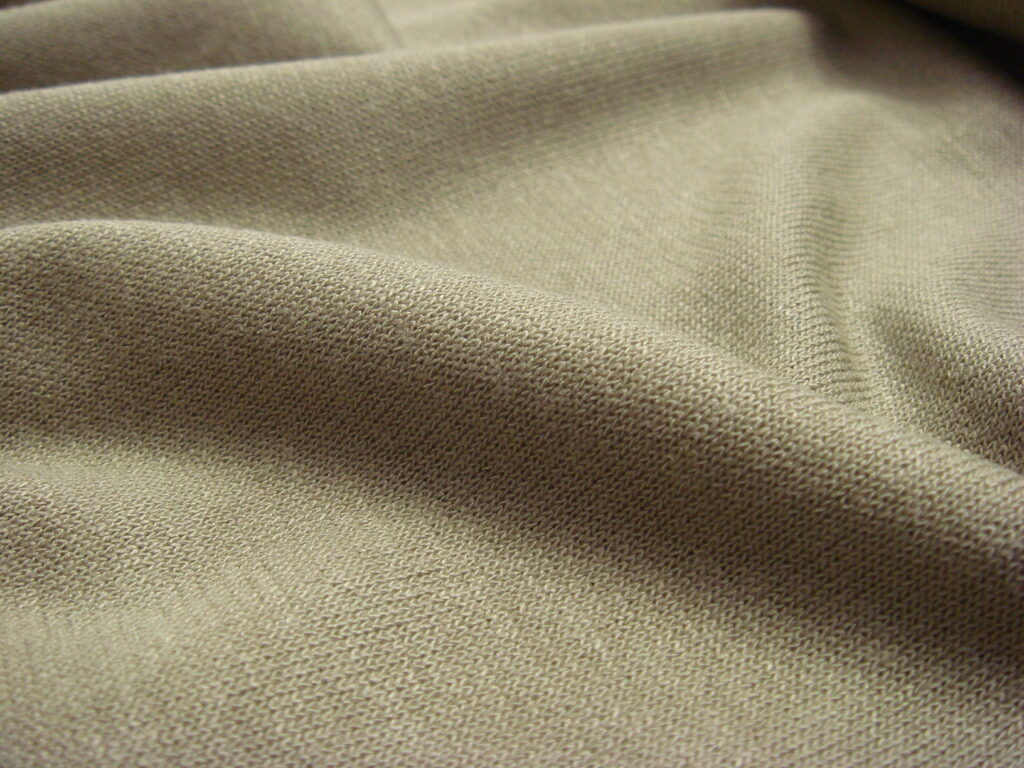
Yes, joggers can be made from jersey fabric, especially when the product is lightweight, soft, and casual. Jersey is a knit fabric that usually has a smooth face and a softer drape, but it often gives less body and structure than French terry or fleece.
Jersey joggers are often lighter, softer, and less bulky. This can be useful in warm-weather or low-weight categories. But jersey can also be weaker in shape control, especially if the fabric is too thin or lacks enough recovery. That is why jersey works best when the jogger is meant to be light and soft rather than highly structured.
At Fusionknits, jersey is used carefully in joggers because it needs the right weight and the right fit logic to perform well.
When jersey is used in joggers
- Lightweight casual joggers
- Soft summer joggers
- Lower-weight homewear joggers
- Stretch-supported easy joggers
Why jersey is not always the strongest jogger fabric
Less body
The silhouette may feel weaker than terry or ponte.
More shape sensitivity
Thin jersey can bag or collapse faster.
The jogger may look more basic if the fabric is not strong enough.
Jersey overview
| Fabric name | Typical jogger role |
|---|---|
| Single jersey | Light casual jogger |
| Stretch jersey | Soft easy-movement jogger |
| Heavy jersey | Better for more stable jogger use |
That is why jersey can be a jogger material, but it is usually a lighter and less structured one.
Is jogger material sometimes called ponte or double-knit?
Yes, especially in cleaner premium joggers and modern lifestyle categories. Ponte and double-knit fabrics are often used when the jogger needs more structure, smoother surface appearance, and a more refined silhouette.
Yes, jogger material is sometimes called ponte or double-knit when the product is made for premium casualwear, travelwear, or elevated streetwear. These fabrics usually provide more body, cleaner drape, and stronger silhouette control than softer lounge-oriented knit fabrics.
Ponte is often associated with a cleaner, denser knit structure. It usually offers a smoother and more polished appearance than terry or fleece. Double-knit constructions can also help a jogger feel more stable, less casual, and more elevated. These fabrics are less about plush comfort and more about clean structure with movement support.
At Fusionknits, ponte and double-knit are often selected when the jogger must look premium, minimal, or city-ready rather than like a standard lounge bottom.
Why ponte and double-knit matter in joggers
- Cleaner outer surface
- Better body and drape
- Stronger shape control
- More premium category feel
- Good in refined casualwear
When these names are used most
Premium joggers
The product needs a more polished identity.
Travel joggers
The fabric should stay cleaner in silhouette.
Lifestyle performance joggers
The garment sits between comfortwear and refined daily wear.
Ponte and double-knit guide
| Fabric name | Typical jogger use |
|---|---|
| Ponte | Premium structured jogger |
| Double-knit | Cleaner everyday premium jogger |
| Stretch ponte blend | Refined movement-led jogger |
That is why ponte and double-knit are important jogger material names in higher-end development.
Are running joggers made from a different kind of material?
Yes, usually very different. Running joggers are often built from technical fabrics rather than comfort-led sweat fabrics. This is where jogger material naming shifts from soft casualwear language into activewear language.

Yes, running joggers are usually made from different materials such as polyester-elastane knit, nylon-elastane knit, or stretch woven technical fabric. These fabrics are chosen because they support moisture control, quicker drying, lighter weight, and better movement in active use.
This matters because a lounge jogger and a running jogger should not be described with the same fabric vocabulary. One may be called fleece. The other may be called stretch woven performance fabric. Both are still joggers, but the material names and technical expectations are completely different.
At Fusionknits, technical joggers are always developed with a more performance-focused material system than casual joggers.
Common material names in running joggers
- Polyester-spandex knit
- Nylon-elastane knit
- Stretch woven performance fabric
- Interlock performance knit
- Lightweight technical jersey
Why running joggers need different material names
The use is different
Running creates sweat, motion, and higher physical demand.
The fabric performance is different
Quick dry and stretch recovery become much more important.
The customer expectation is different
A performance jogger is judged by movement and temperature control.
Performance-fabric guide
| Fabric name | Best jogger role |
|---|---|
| Polyester-elastane | Running or training jogger |
| Nylon-elastane | Premium performance jogger |
| Stretch woven technical fabric | Lightweight running jogger |
That is why active jogger material names are usually more technical than lounge jogger material names.
Is jogger material named by fiber content or by fabric structure?
In professional development, both are important, but they do different jobs. Fiber content tells what the fabric is made from. Fabric structure tells how it is built. A complete jogger material description often needs both.
Jogger material can be named by fiber content or by fabric structure, but the strongest technical description usually includes both. For example, “cotton-polyester French terry” or “nylon-elastane stretch woven” gives much more useful information than just saying “cotton” or “jogger fabric.”
This difference matters because fiber content alone does not explain how the garment will behave. A cotton jersey jogger is very different from a cotton fleece jogger. A polyester woven jogger is very different from a polyester knit jogger. That is why material naming needs more than one layer of information.
At Fusionknits, full material naming is important because it improves sampling accuracy and buyer communication.
What fiber content tells us
- Cotton, polyester, nylon, elastane, and similar fiber identity
- Basic comfort and performance direction
- General natural or synthetic balance
What fabric structure tells us
Surface and body
Whether the fabric is terry, fleece, jersey, ponte, or woven.
Performance
How the fabric may drape, stretch, or recover.
Category fit
Whether the jogger feels lounge, active, or premium.
Naming guide
| Description type | Example |
|---|---|
| Fiber-only name | Cotton blend |
| Structure-only name | French terry |
| Full technical name | Cotton-polyester French terry |
That is why the best material naming always combines both fiber and structure when possible.
What is the most professional way to describe jogger material?
The strongest professional answer is always the most complete one. A good technical description should tell the buyer, factory, or development team both what the fabric is and how it is built.
The most professional way to describe jogger material is to name the fiber composition and the fabric structure together, such as cotton French terry, cotton-polyester fleece, polyester-elastane performance knit, or nylon-elastane stretch woven. This gives a much clearer picture of how the jogger will feel and perform.
A phrase like “soft jogger fabric” is too vague. Even “cotton jogger material” is incomplete. But “100% cotton French terry” or “polyester-spandex interlock” gives the development team a much more useful starting point.
At Fusionknits, material descriptions are always strongest when they combine composition, structure, and intended use. That is what turns a broad category idea into a workable product brief.
Strong examples of professional jogger material naming
- 100% cotton French terry
- Cotton-poly brushed fleece
- Cotton-elastane jersey
- Polyester-spandex interlock
- Nylon-elastane stretch woven
Why this helps development
Better tech packs
The supplier understands the product direction more quickly.
Better costing
The fabric type becomes easier to quote correctly.
Better sample accuracy
The risk of receiving the wrong fabric drops significantly.
Professional naming guide
| Weak description | Better description |
|---|---|
| Jogger material | Cotton French terry |
| Soft jogger fabric | Cotton-poly brushed fleece |
| Running jogger fabric | Nylon-elastane stretch woven |
That is why the most professional jogger material name is always a complete fabric description, not a vague category phrase.
How should buyers ask about jogger material when sourcing?
The strongest sourcing questions are specific. Buyers should not ask only what joggers are made of. They should ask which fabric structure, which fiber content, and which performance level the supplier recommends for the intended category.
When sourcing joggers, buyers should ask for the exact fiber composition, fabric structure, fabric weight, stretch level, and intended use category. Instead of asking only for “jogger material,” they should request more precise options such as cotton French terry for casualwear, fleece for loungewear, or nylon-elastane stretch woven for running joggers.
At Fusionknits, better sourcing usually begins when the category is defined clearly. Once the buyer explains whether the jogger is for homewear, everyday wear, premium casualwear, or active use, the material conversation becomes much more efficient.
Better sourcing questions for jogger material
- What is the exact fabric name?
- What is the fiber composition?
- Is the structure terry, fleece, jersey, ponte, or woven?
- What is the fabric weight?
- Does the fabric have elastane or spandex?
- Is it meant for lounge, casual, or active use?
Why this sourcing approach works better
It reduces confusion
The supplier understands the intended category more clearly.
It improves sample accuracy
The first development round has a better starting point.
It supports better cost control
More exact material requests reduce unnecessary changes later.
Sourcing guide
| Better question | Why it helps |
|---|---|
| What fabric structure is used? | Defines garment behavior |
| What is the blend ratio? | Defines comfort and performance |
| What use is this fabric best for? | Aligns material with product role |
That is how buyers can ask about jogger material more professionally and get more useful answers.
Conclusion
Jogger material is not called one single thing because joggers are a garment category, not a single fabric type. The material can be called French terry, brushed fleece, jersey, ponte, double-knit, interlock, or stretch woven fabric depending on the product’s purpose. In professional development, the most accurate material name usually includes both fiber content and structure, such as cotton French terry, cotton-poly fleece, polyester-spandex performance knit, or nylon-elastane stretch woven. These names are much more useful than general phrases like “jogger fabric.”
At Fusionknits, the best way to understand jogger material is to separate garment type from fabric type. Jogger tells us the silhouette and category role.
The fabric name tells us how the product will feel, move, recover, and perform. When buyers use more complete material descriptions, they communicate more clearly, source more accurately, and build jogger collections with stronger quality and better category control.