A cardigan may look simple on the hanger, but the product behind it is technically more complex than many buyers expect. Yarn choice, gauge setting, stitch structure, front opening, placket balance, linking quality, washing control, and final finishing all affect the result. If one of these stages is handled poorly, the cardigan can lose shape, feel rough, twist, or fail in fit consistency.
A cardigan is made through a knitwear manufacturing process that usually includes yarn selection, stitch and gauge planning, panel knitting or fabric preparation, front-opening construction, linking or sewing, washing and finishing, quality inspection, and packing. What makes cardigan production different from many other garments is that the product depends heavily on knit structure, yarn behavior, and front-balance control.
At Fusionknits, a cardigan is not treated as just a soft front-opening sweater. It is developed as a knitwear product that must be built with technical control from the first yarn decision to the final packing stage. A good cardigan depends on both material quality and process discipline.
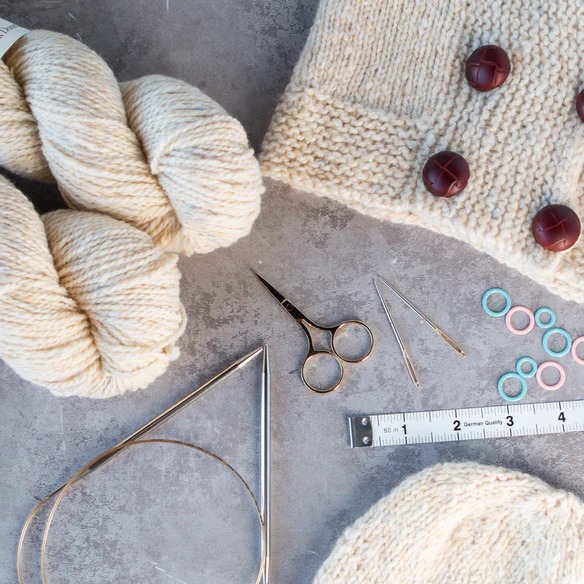
Why is cardigan manufacturing different from basic cut-and-sew garments?
Many people think cardigan production works like standard T-shirt production, but that is not how knitwear development usually works. A cardigan is often created through yarn-based construction, not only through cutting pre-made fabric and sewing it together.
Cardigan manufacturing is different from basic cut-and-sew garments because it relies more heavily on yarn behavior, gauge control, stitch development, front-opening balance, and knit finishing. In many cardigan programs, the fabric is not simply bought and cut like jersey. Instead, the product is shaped through knitting itself.
From a factory point of view, this difference changes the whole production route. A cardigan may begin from yarn cones, machine gauge decisions, and stitch programming rather than from ready-made fabric rolls. Even when cardigan production uses cut-and-sew knit fabric in some lower-complexity programs, the garment still requires more attention to front structure and edge finishing than many basic tops.
At Fusionknits, cardigan development is usually treated as knitwear engineering first and garment assembly second.
Why cardigan production needs more technical control
- The yarn affects the whole garment feel
- The gauge changes weight and drape
- The front opening must stay balanced
- The hem and cuffs need recovery
- Washing can change size and surface appearance
Why this matters in manufacturing
Knitwear shape is more sensitive
Small changes in tension, stitch, or finishing can alter the final garment.
The cardigan is a layered product
It must function well when open, closed, or partly buttoned.
Visual softness still needs structure
A cardigan should feel comfortable, but it must still hold a clear body shape.
A simple production comparison
| Product type | Main production logic |
|---|---|
| T-shirt | Fabric cutting and sewing |
| Woven shirt | Fabric cutting, sewing, pressing |
| Cardigan | Yarn, knitting, linking, finishing, front-balance control |
That is why cardigan manufacturing is usually more technical than it first appears.
What is the first step in making a cardigan?
The first step is usually not sewing. It is product definition and yarn planning. A cardigan cannot be made correctly if the manufacturer has not first defined the fiber, gauge, hand feel, silhouette, and stitch direction.
The first step in making a cardigan is usually product planning, especially yarn selection, gauge decision, and stitch structure development. Before knitting begins, the manufacturer needs to confirm what kind of cardigan is being made, what the customer expects in hand feel and fit, and how the knitwear should perform in use.
From a professional manufacturing point of view, this first step decides much of the final outcome. A cotton cardigan, a viscose-blend cardigan, an acrylic cardigan, and a wool-blend cardigan may all follow the same general category, but they do not follow the same production behavior.
At Fusionknits, early cardigan development usually begins with a technical review of five core points: yarn, gauge, silhouette, front structure, and finishing expectation.
Core decisions made before production starts
- Fiber composition
- Yarn count or yarn thickness
- Gauge selection
- Stitch type
- Cardigan silhouette
- Closure type
- Rib or edge structure
- Target hand feel
Why this first step is so important
Yarn defines the product feel
The material affects softness, warmth, drape, pilling risk, and cost.
Gauge defines product category
Fine gauge and chunky gauge do not create the same cardigan.
Stitch structure defines surface character
A plain knit, rib knit, cable, pointelle, or textured stitch all change the result.
Pre-production planning overview
| Planning point | Why it matters |
|---|---|
| Yarn | Defines feel, cost, and performance |
| Gauge | Defines density and category level |
| Stitch | Defines texture and visual identity |
| Front design | Defines cardigan function |
A strong cardigan begins with a strong knitwear plan before machines start running.
How is yarn selected for cardigan production?
Yarn is one of the most important parts of cardigan manufacturing because it controls both the technical and commercial identity of the product. The yarn decides much of the softness, warmth, durability, and product price.
Yarn is selected for cardigan production by matching fiber composition, yarn count, softness, durability, seasonality, and target price to the intended product. Manufacturers usually choose between options such as cotton, acrylic blends, viscose blends, wool blends, or cashmere blends depending on the cardigan’s market position and function.
A lightweight spring cardigan often needs a different yarn from a winter cardigan. A clean office cardigan may require smoother yarn and finer gauge. A casual chunky cardigan may need thicker yarn and more visible texture.
At Fusionknits, yarn selection is never treated as a simple sourcing step. It is treated as the material foundation of the full cardigan.
Common yarn directions used in cardigans
- Cotton yarn
- Cotton-acrylic blend
- Acrylic blend
- Viscose-nylon blend
- Wool blend
- Cashmere blend
- Recycled fiber blend
What manufacturers look for in cardigan yarn
Softness and hand feel
The cardigan should match the comfort expectation of the market.
Stability and recovery
The yarn should support shape retention after wear and finishing.
Cost and scalability
The yarn must fit both the product target and the production plan.
Yarn-selection guide
| Yarn type | Typical cardigan use |
|---|---|
| Cotton | Breathable and trans-seasonal |
| Acrylic blend | Commercial and cost-effective |
| Viscose blend | Smooth and softer drape |
| Wool blend | Warmer and more seasonal |
| Cashmere blend | Premium knitwear direction |
The yarn is not only the material. It is the starting identity of the cardigan.
How is the cardigan body actually knitted?
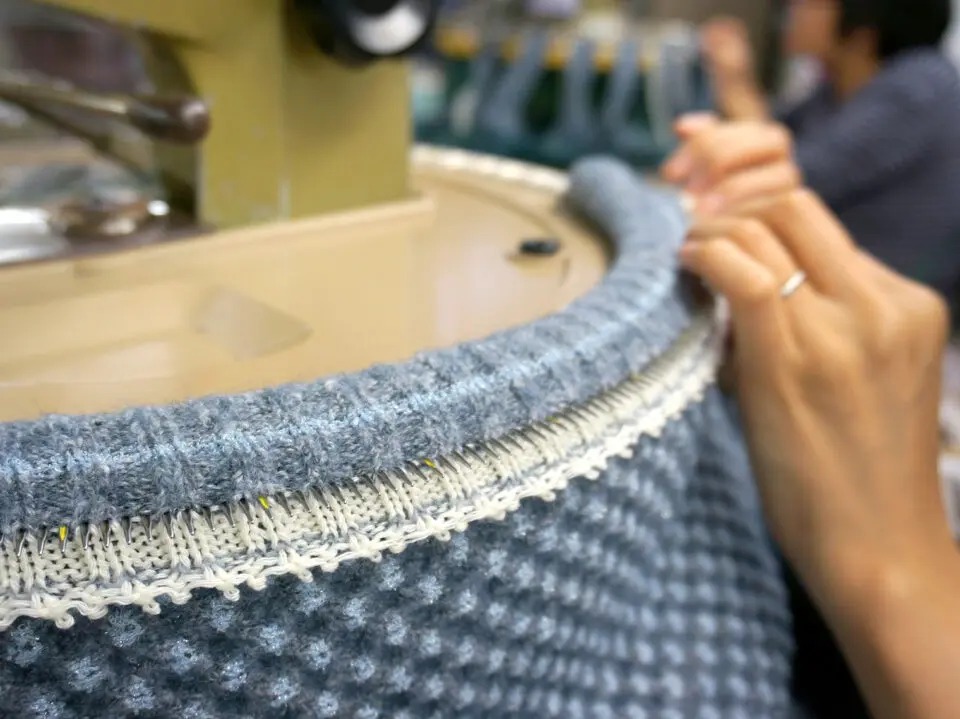
After yarn and gauge are confirmed, the cardigan body is usually formed through knitting. In many sweater factories, front panels, back panels, sleeves, collars, and ribs are knitted separately rather than cut from ready-made fabric.
The cardigan body is usually knitted panel by panel using flat knitting machines or similar knitwear equipment. The manufacturer programs the machine according to the required gauge, stitch, shape, and measurement so the cardigan parts are produced with the intended structure before assembly begins.
This stage is one of the most technically important in cardigan manufacturing. The factory must control panel size, stitch consistency, edge behavior, and front symmetry. Unlike a pullover, a cardigan includes left and right front panels, which means front balance becomes especially important.
At Fusionknits, knitting accuracy is one of the key control points because later finishing cannot fully correct weak panel knitting.
Common knitted cardigan components
- Left front panel
- Right front panel
- Back panel
- Sleeves
- Collar or neck trim
- Front placket or button band
- Bottom rib
- Cuff ribs
Why panel knitting needs precision
Front balance matters
The two front sides must align correctly once assembled.
Edges need stability
The front opening should not wave, twist, or collapse.
Panel measurements affect the final fit
Even small size errors early in knitting can create a larger fit problem later.
Knitting-stage overview
| Component | Why it matters |
|---|---|
| Front panels | Define opening and silhouette |
| Back panel | Supports body balance |
| Sleeves | Control comfort and shape |
| Rib parts | Support recovery and finish |
This is the stage where the cardigan begins to become a real garment rather than only a design idea.
How are the cardigan parts joined together?
After the panels are knitted, they still need to be assembled. This stage is often called linking or garment assembly depending on the knitting system and factory setup.
The cardigan parts are usually joined together through linking or sewing, depending on the knitwear construction method. In higher-quality knitwear, linking is often used because it creates a cleaner and more refined seam, while some more commercial programs may use sewing methods that are faster or more cost-efficient.
From a manufacturing point of view, assembly is where the cardigan starts to show its real quality level. Weak joining can make the cardigan feel rough, uneven, or poorly aligned. Strong linking or sewing creates better comfort and cleaner garment lines.
At Fusionknits, cardigan assembly is reviewed carefully because seam finish strongly affects how premium or commercial the product feels.
Common assembly stages in cardigan production
- Shoulder joining
- Side seam joining
- Sleeve joining
- Sleeve set or armhole joining
- Collar or neckline attachment
- Button band or placket joining
- Pocket attachment where needed
Why assembly quality matters so much
Seams affect comfort
Poorly joined seams can feel bulky or uneven on the body.
Seams affect appearance
A cardigan with twisted or weak seams will not look polished.
Seams affect durability
Good joining helps the cardigan survive repeated wear and washing.
Assembly comparison
| Assembly method | Typical product effect |
|---|---|
| Fine linking | Cleaner and more refined |
| Standard sewing | Practical and more commercial |
| Weak assembly | Lower comfort and weaker shape |
The joining stage is where knit panels turn into a true cardigan garment.
How is the front opening made and stabilized?
The front opening is one of the most important parts of cardigan production because it is the feature that defines the category. If the opening is weak, the whole product can fail visually.
The front opening is made by knitting or attaching front plackets, bands, or edge finishes and then stabilizing them through rib structure, stitch control, or added closure support. The manufacturer must ensure that the opening lies flat, stays balanced, and performs properly whether the cardigan is worn open or closed.
From a product engineering point of view, this is one of the most technical parts of the cardigan. A placket that stretches too much can wave. A weak button band can distort. A poorly balanced zip front can pull. The front edge must look smooth and function correctly.
At Fusionknits, the front-opening stage is treated as one of the signature quality points in cardigan manufacturing.
Front-opening elements often used in cardigans
- Button placket
- Zip-front band
- Open-front edge finishing
- Ribbed front band
- Knitted facing
- Reinforcement zones for buttonholes or closures
Why this stage is so important
It defines the cardigan visually
The front opening is usually the first structure people notice.
It affects wear function
The cardigan should open and close cleanly.
It affects garment shape
Weak plackets can distort the whole front body.
Front-opening guide
| Front detail | Key requirement |
|---|---|
| Button band | Flat and stable |
| Zip front | Smooth and balanced |
| Open front edge | Clean drape and controlled recovery |
| Buttonhole area | Strong enough to resist pulling |
A good cardigan usually shows its quality clearly in the front-opening construction.
Once the cardigan structure is assembled, the trims and closures are added. These details may look small, but they strongly influence the finished quality and commercial value.
Buttonholes, buttons, zippers, labels, and other trims are added after the main cardigan body is assembled and stabilized. This stage includes closure placement, trim attachment, label sewing, and detail checking so the cardigan becomes ready for final finishing and inspection.
From a manufacturing viewpoint, trim placement must be accurate. A button line that shifts slightly can affect the whole front balance. Button size, button spacing, zipper strength, and label location all influence whether the cardigan feels basic, premium, or poorly controlled.
At Fusionknits, trim application is not treated as a minor stage. It is part of the product identity.
Common trims added to cardigans
- Buttons
- Zippers
- Main labels
- Care labels
- Size labels
- Drawcords or belts in selected styles
- Decorative trims in fashion programs
Why trim control matters
It affects visual polish
Good trim placement makes the garment look more finished.
It affects function
Buttons and zippers must work smoothly in daily use.
It affects brand perception
Even a strong knit body can feel weak if the trims are poor.
Trim-stage overview
| Trim | Why it matters |
|---|---|
| Buttons | Function and visual identity |
| Zipper | Structure and ease of wear |
| Labels | Branding and care information |
| Belt or tie | Styling and silhouette support |
This stage helps move the cardigan from technical build to market-ready product.
Why are washing and finishing so important in cardigan manufacturing?
Many people think the cardigan is finished once the garment is assembled, but that is not true. Washing and finishing are often the stages that decide the real hand feel, size stability, and surface quality.
Washing and finishing are extremely important because they help set the cardigan’s final hand feel, measurement stability, softness, and overall appearance. In knitwear, the garment often changes after washing, steaming, or finishing, so these stages are essential for reaching the approved standard.
From a manufacturing perspective, a cardigan before finishing and a cardigan after finishing may feel like two different products. The wash can soften the yarn, settle the stitches, and reveal whether the dimensions are correct. Pressing and shaping also affect how polished the garment looks.
At Fusionknits, finishing is one of the most important quality stages in cardigan production because knitwear performance becomes visible here.
Common finishing stages in cardigan production
- Washing
- Steaming
- Shaping
- Drying
- Thread trimming
- Surface brushing where needed
- Final appearance correction
Why finishing changes the product so much
It reveals size reality
A cardigan may measure differently after the finishing process.
It improves feel
Softness and drape often depend on finishing control.
It improves visual quality
The garment needs a clean final appearance before inspection.
Finishing guide
| Finishing stage | Main effect |
|---|---|
| Washing | Softness and settling |
| Steaming | Shape and appearance |
| Drying | Stability and recovery |
| Final shaping | Better presentation |
This is why finishing is not optional detail work. It is part of making the cardigan truly wearable and saleable.
How is the finished cardigan checked before packing?
Before a cardigan is packed, it must pass inspection. Knitwear quality control is essential because even a visually attractive cardigan can still fail in measurements, front balance, trim accuracy, or surface finish.
The finished cardigan is checked through quality inspection that usually includes measurement review, front-opening balance check, seam and trim inspection, surface quality control, and packing accuracy. Only after these checkpoints are passed should the cardigan move into final folding and packing.
From a professional manufacturing view, inspection is where the factory confirms whether the cardigan meets the approved standard. This includes checking the body length, chest width, sleeve length, placket alignment, button position, label correctness, and overall appearance.
At Fusionknits, cardigan inspection is especially important because knitwear is sensitive to shape and finishing variation.
Main cardigan inspection points
- Measurement accuracy
- Front-opening symmetry
- Button or zip placement
- Label correctness
- Surface cleanliness
- Seams and joining quality
- Rib recovery
- Final folding and packing standard
Why inspection matters so much
Knitwear variation must be controlled
A cardigan should match the approved sample, not just look acceptable.
Packing quality affects customer impression
A poorly folded cardigan reduces perceived value immediately.
Final defects are easier to catch here
This stage protects both the factory and the buyer.
Inspection overview
| Inspection point | Why it matters |
|---|---|
| Measurements | Fit consistency |
| Front balance | Visual quality |
| Trims | Function and branding |
| Surface quality | Retail readiness |
A cardigan is only complete when it passes final inspection and is packed to the required standard.
Conclusion
A cardigan is made through a knitwear manufacturing process that usually begins with yarn selection, gauge planning, and stitch development, then moves into panel knitting, linking or sewing, front-opening construction, trim attachment, washing, finishing, inspection, and packing. What makes cardigan production different from simpler garments is that the final quality depends heavily on yarn behavior, knit structure, front balance, and finishing control.
At Fusionknits, a good cardigan is never the result of one stage only. It is the result of a full technical system working correctly from the first yarn decision to the last packing step.
When yarn, knitting, assembly, finishing, and inspection are aligned properly, the cardigan becomes more than a soft knit layer. It becomes a well-built product with stable fit, strong appearance, and long-term commercial value.