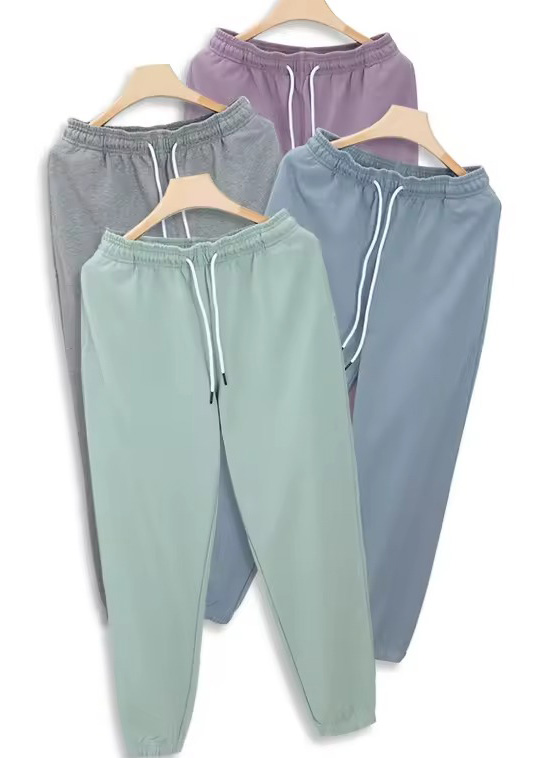
Joggers can look like a simple product because the silhouette is familiar and the construction seems less formal than tailored pants. But in real apparel manufacturing, joggers are not as easy as they first appear. A jogger has to balance comfort, fit, movement, waistband stability, pocket construction, cuff shape, sewing consistency, and fabric behavior at the same time. If one of these points is handled poorly, the garment can twist, bag at the knees, feel restrictive, or lose shape after washing.
Making joggers is not extremely difficult compared with some highly technical garments, but it is not as easy as many people think. A good jogger requires correct fabric selection, pattern balance, waistband engineering, cuff control, sewing precision, and wash-tested shape retention. Basic joggers are easier to produce than premium, performance, or highly fitted joggers, but all good joggers still depend on disciplined product development.
At Fusionknits, joggers are treated as a serious product category because they are worn often and judged quickly by customers. A jogger that looks acceptable in a first sample can still fail in real wear if the fabric is unstable, the rise is wrong, or the lower leg loses control after washing. That is why jogger manufacturing is less about visual simplicity and more about technical consistency.
Why do joggers look easier to make than they really are?
Joggers often appear easy because they are casual garments with soft fabrics, elastic waists, and familiar shapes. People compare them to formal trousers or highly technical jackets and assume the product must be much simpler. In reality, the category has its own manufacturing risks.
Joggers look easier to make because the construction seems casual and the styling is familiar, but the product still requires careful control of fit, stretch, recovery, seam behavior, waistband performance, and fabric stability. Their simplicity is often visual, not technical.
From a factory perspective, casual garments can sometimes be more deceptive than formal ones. Tailored garments clearly show that they are technical. Joggers hide their complexity behind softness and ease. But customers still expect a jogger to perform well in movement, washing, daily wear, and repeated use. If the rise is too shallow, the waistband twists, or the cuff grips unevenly, the problem becomes visible very quickly.
At Fusionknits, joggers are often easier to oversimplify than to truly execute well. The category only looks easy when the hidden fit and fabric problems are not being measured carefully.
Why joggers are often underestimated
- The silhouette looks familiar
- The garment appears casual
- The waistband seems simple
- The pattern pieces look less formal than trousers
- The customer expects comfort more than structure
- The category is often confused with basic loungewear
Why the product is still technically demanding
The jogger must move well
A casual garment still needs strong body balance.
The category depends on comfort and shape together
If one works and the other fails, the product usually disappoints.
Daily wear exposes problems quickly
Joggers are worn often, so weak construction becomes visible fast.
A simple product reality view
| Visual impression | Technical reality |
|---|---|
| Simple casual pant | Multi-zone comfort and fit product |
| Soft easy garment | Recovery and movement-sensitive item |
| Basic waistband pant | Elastic engineering still required |
That is why joggers look easy on the outside but still require careful manufacturing inside.
What are the first technical steps in making joggers?
The first step is not sewing. It is product definition. Before any cutting or stitching begins, the factory or brand has to define what kind of jogger is being made and what it needs to do in real wear.

The first technical steps in making joggers are defining the product category, selecting the correct fabric, choosing the target fit, deciding the waistband and cuff construction, and building a pattern that supports movement and shape retention. Before production starts, the garment’s real use must be clear.
A lounge jogger, a running jogger, and a premium everyday jogger may all look related, but they do not follow the same development logic. A running jogger may need lighter stretch fabric and stronger taper control. A lounge jogger may need softer fleece and more relaxed ease. A premium jogger may need cleaner seams, smoother surface appearance, and better lower-leg balance.
At Fusionknits, the strongest jogger programs usually begin by defining category role clearly. Once that role is clear, the material, fit, and construction decisions become much easier to align.
First steps in jogger development
- Define the target use
- Choose the fabric direction
- Confirm fit category
- Decide waistband construction
- Decide cuff or hem finish
- Build the first pattern block
- Review wash and recovery expectations
Why this stage matters so much
Product use decides everything else
A jogger for lounging and a jogger for running should not begin from the same technical assumptions.
Pattern depends on fabric
Stretch fabrics and stable knits do not behave the same way.
Early clarity reduces later corrections
A weak start usually leads to repeated fit and sampling problems.
Development-stage overview
| First decision | Why it matters |
|---|---|
| Product purpose | Defines category logic |
| Fabric type | Defines comfort and behavior |
| Fit direction | Defines silhouette and movement |
| Waist and cuff method | Defines construction path |
That is why jogger production begins with planning, not only with sewing.
Is the fabric choice one of the hardest parts of making joggers?
Yes, in many cases it is. The fabric does more than create the look of the garment. It decides how the jogger stretches, recovers, drapes, and survives washing. Many jogger failures begin with fabric mistakes.
Yes, fabric choice is one of the hardest parts of making joggers because the wrong fabric can ruin fit, comfort, shape retention, pilling resistance, moisture behavior, or long-term appearance. A fabric that feels good in a swatch may still fail in a finished jogger if it is too heavy, too weak, too unstable, or too low in recovery.
Fabric selection is especially important because joggers sit between comfortwear and performancewear. Some need softness and warmth. Some need movement and quicker drying. Some need premium visual cleanliness. Each of those goals pushes fabric selection in a different direction.
At Fusionknits, jogger fabric is never selected only by hand feel. It is selected by how it behaves in the full garment after movement, stitching, waistband assembly, cuff shaping, and washing.
Why fabric choice is so important
- It affects comfort
- It affects movement
- It affects recovery at the knee and seat
- It affects pilling behavior
- It affects weight and drape
- It affects cuff and waistband performance
Common fabric directions for joggers
French terry
Strong for everyday comfort joggers.
Brushed fleece
Strong for soft winter and lounge joggers.
Cotton-poly-elastane blends
Strong for all-around casualwear and recovery.
Nylon or polyester stretch blends
Strong for performance or technical joggers.
Fabric-risk guide
| Fabric issue | Common jogger problem |
|---|---|
| Weak recovery | Baggy knees |
| Too much weight | Heavy movement feel |
| Poor surface quality | Faster pilling |
| Wrong stretch balance | Weak silhouette control |
That is why fabric selection is often one of the most technical parts of jogger development.
Is it difficult to get the jogger fit right?
Yes. Fit is one of the main reasons joggers are harder than they seem. A jogger needs to feel relaxed, but not shapeless. It needs to look clean, but not restrictive. That balance is difficult to achieve consistently.
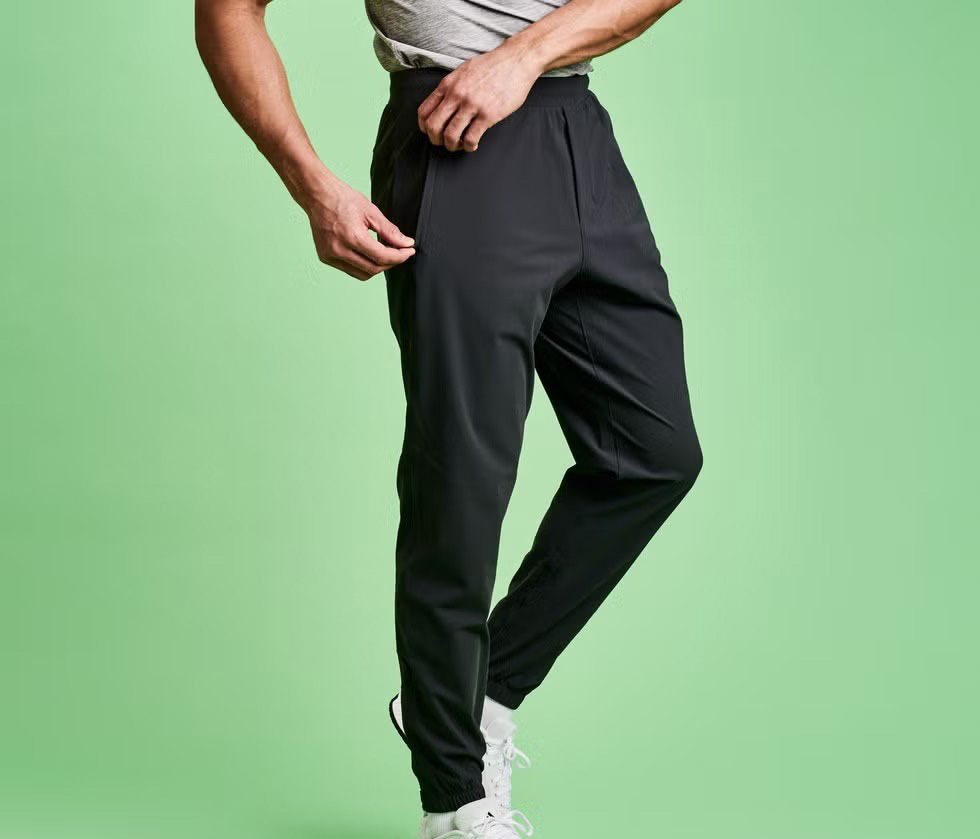
Getting the jogger fit right is difficult because the garment must balance seat ease, thigh comfort, rise depth, knee movement, and lower-leg taper at the same time. If one area is too tight or too loose, the jogger quickly loses either comfort or silhouette.
The upper body of the jogger usually needs more room than the lower leg, but that transition must be controlled. The waistband must sit correctly without over-compressing. The rise must allow sitting and movement. The taper below the knee must feel modern without gripping too hard.
At Fusionknits, jogger fit is usually tested in motion because static fitting alone is not enough. A jogger that looks right on a mannequin can still fail badly during walking, sitting, and bending.
Key fit zones that make joggers harder
- Waist
- Rise
- Seat
- Thigh
- Knee
- Calf
- Cuff opening
Why fit problems show up quickly
Joggers are movement-heavy garments
Any imbalance becomes obvious fast.
Customers expect comfort immediately
The category has a lower tolerance for discomfort than formal trousers.
Shape still matters
A comfortable jogger that looks collapsed still feels weak as a product.
Fit-risk guide
| Fit area | Common problem |
|---|---|
| Waist | Too tight or unstable |
| Rise | Pulling or discomfort while sitting |
| Thigh | Restriction or excess bulk |
| Lower leg | Weak taper or over-tight finish |
That is why jogger fit is one of the most important and most sensitive parts of the process.
Is the waistband harder to make than it looks?
Yes. The waistband is one of the most underestimated parts of jogger construction. It looks simple because it is common, but the wrong waistband quickly lowers the comfort and quality of the full garment.
Yes, the waistband is harder to make than it looks because it must hold the garment securely, distribute pressure evenly, recover after repeated wear, and stay stable through washing. A waistband that twists, rolls, over-compresses, or loses elasticity can ruin the entire jogger experience.
The waistband needs the right elastic, the right width, the right attachment method, and the right relationship with the body of the jogger. If the waistband fabric is too soft, it may collapse. If the elastic is too strong, it becomes uncomfortable. If the drawcord area is poorly built, the finish feels cheap and unstable.
At Fusionknits, waistband engineering is always treated as a core quality point because joggers are often worn for long periods. The waistband cannot only look acceptable. It has to feel right over time.
Why waistband construction is more technical than it seems
- Elastic recovery must be correct
- Pressure must feel balanced
- Stitching must stay stable
- The inside finish affects comfort
- Drawcord construction must remain clean
- Washing must not distort the waistband body
Common waistband problems
Twisting
The waistband loses shape and feels unstable.
Over-tightness
The jogger feels uncomfortable in daily use.
Weak recovery
The garment slips or loses support too easily.
Waistband guide
| Waistband issue | Result |
|---|---|
| Weak elastic | Lower stability |
| Too much compression | Lower comfort |
| Poor construction | Twisting or rolling |
| Good engineered waistband | Better full-garment performance |
That is why the waistband is often one of the most important hidden challenges in making joggers well.
Are cuffs and lower-leg finishing difficult in joggers?
Yes, especially when the product uses a tapered shape. The cuff area decides whether the jogger looks modern and controlled or weak and unbalanced. This area is often much more important than customers realize.
Yes, cuffs and lower-leg finishing can be difficult because they affect silhouette, comfort, and category identity at the same time. The cuff must hold the lower leg cleanly without squeezing too hard, and it must stay stable after movement and washing.
A weak cuff can make the jogger look more like a loose sweatpant. An overly tight cuff can make it uncomfortable and reduce mobility. If the cuff fabric loses recovery or the opening is cut incorrectly, the full lower-leg proportion starts to fail.
At Fusionknits, cuff development is always linked to fabric and fit together. The lower-leg finish should not be developed as an isolated detail. It must match the taper and the total garment proportion.
Why cuffs are such an important technical point
- They define the lower-leg line
- They affect sneaker pairing
- They influence movement comfort
- They control category clarity
- They affect how modern the jogger looks
Too tight
The jogger feels restrictive and uncomfortable.
Too loose
The lower leg loses control and visual shape.
Poor recovery
The cuff stretches out after wear.
Lower-leg guide
| Cuff result | Product effect |
|---|---|
| Balanced and stable | Strong jogger silhouette |
| Too tight | Lower comfort |
| Too loose | Weaker category identity |
That is why lower-leg finishing is one of the most important details in jogger production.
Is sewing joggers easy once the pattern is ready?
Not completely. Pattern approval helps, but sewing still requires consistency because joggers often use stretch fabrics, elastic elements, pocket construction, and shape-sensitive seams. Basic joggers are easier than highly technical pants, but the process still needs control.
Sewing joggers is easier than making some highly structured garments, but it is not automatically easy. Once the pattern is ready, the factory still has to manage stretch fabric handling, waistband insertion, pocket stability, seam consistency, and cuff attachment without distorting the garment.
Stretch fabrics can shift during sewing. Waistband areas can become bulky. Pocket openings can distort if not stabilized well. Needle tension, seam type, and handling discipline all affect the final shape. If the sewing process is inconsistent, the jogger may twist, pucker, or lose fit accuracy.
At Fusionknits, sewing quality is especially important in joggers because customers often notice seam behavior quickly through repeated movement and washing.
Why jogger sewing still needs good control
- Stretch fabrics can shift
- Pocket areas can distort
- Waist and cuff zones create bulk
- Seam type affects movement comfort
- Tapered shapes show sewing mistakes clearly
Sewing areas that need extra attention
Pocket construction
The pocket should stay flat and usable without pulling the front body out of shape.
Inner-leg seams
These seams must support movement and comfort.
Waist attachment
This area needs clean alignment and stable recovery.
Sewing guide
| Sewing challenge | Common risk |
|---|---|
| Stretch handling | Distortion or puckering |
| Pocket attachment | Front-shape disruption |
| Elastic insertion | Uneven waist behavior |
| Cuff joining | Weak lower-leg finish |
That is why sewing joggers is manageable, but still not something that should be treated casually.
Yes, usually much harder. A simple lounge jogger can be straightforward in comparison, but once the product becomes more premium, more fitted, or more performance-driven, the technical demands rise quickly.
Yes, premium and performance joggers are harder to make than basic joggers because they require better fabric control, cleaner fit balance, stronger recovery, more accurate taper, lower seam bulk, and often more demanding wash and wear performance. The higher the product standard, the less room there is for construction mistakes.
A performance jogger may need lightweight stretch woven construction, moisture-focused fabric behavior, and cleaner mobility zones. A premium jogger may need smoother fabric, cleaner silhouette, and more refined stitching. Both are harder than a basic fleece jogger built mainly for relaxed comfort.
At Fusionknits, the difficulty level of jogger manufacturing changes sharply once the product brief moves beyond basic homewear.
Why advanced joggers are harder to make
- Fabric standards are higher
- Fit tolerances are tighter
- Recovery expectations are stronger
- Surface appearance matters more
- Category positioning is more precise
- Customer expectations are less forgiving
Examples of harder jogger categories
Performance running jogger
Needs mobility, lightness, and shape control.
Premium travel jogger
Needs comfort and refined appearance together.
Needs very careful fit and recovery balance.
Difficulty comparison
| Jogger type | Relative manufacturing difficulty |
|---|---|
| Basic lounge jogger | Lower |
| Everyday casual jogger | Moderate |
| Premium casual jogger | Higher |
| Performance jogger | Higher |
| Technical travel jogger | Higher |
That is why the answer to “Is it easy?” depends strongly on which type of jogger is being made.
What usually makes jogger production fail?
Joggers usually fail when brands or factories assume the product is too simple to need deeper development. Most major problems begin with shortcuts in fabric, fit, recovery, or finishing.
Jogger production usually fails because of wrong fabric choice, weak recovery, poor waistband engineering, unbalanced fit, unstable cuffs, or insufficient wash testing. The garment may still look acceptable in a first sample, but these hidden weaknesses appear quickly after wear.
Some common failures include knee bagging, waist twisting, thigh restriction, pilling, hem instability, color loss, and poor post-wash shape. These problems often come from rushing development or underestimating how much daily stress joggers receive.
At Fusionknits, the strongest protection against failure is disciplined sampling, movement-based fit review, and realistic wash testing before bulk approval.
Common jogger failure points
- Weak fabric recovery
- Wrong rise balance
- Poor waistband stability
- Over-tight lower leg
- Pilling-prone surface
- Distorted pockets after wash
- Poor seam durability
Why these failures happen
The category is over-simplified
People assume casual products do not need careful engineering.
Real wear is demanding
Joggers are used hard and often.
Comfort hides technical problems at first
A soft hand feel can cover deeper weaknesses in early samples.
Failure-risk guide
| Weakness | Likely customer complaint |
|---|---|
| Poor recovery | Baggy knees |
| Poor waistband | Uncomfortable fit |
| Poor fabric choice | Pilling or heat buildup |
| Poor taper balance | Weak silhouette |
That is why jogger success usually depends on respecting the category rather than treating it as basic.
Is it easy to make joggers well?
The strongest honest answer is that making basic joggers is manageable, but making good joggers well requires real discipline. Joggers are easier to start than some categories, but harder to perfect than they look.
It is not extremely hard to make basic joggers, but it is not easy to make good joggers well. Strong joggers require the right material, the right pattern, the right waistband and cuff engineering, controlled sewing, and proper wash and wear testing. The category becomes harder as quality level, fit precision, and performance expectations rise.
At Fusionknits, jogger development works best when the garment is treated as a repeat-use product with real performance demands. Customers expect joggers to be comfortable immediately, wear well repeatedly, and keep their shape after washing. Meeting all of those expectations is what makes the category more technical than it first appears.
Conclusion
Joggers are not impossible to make, but they are not as easy as they look. A basic jogger can be relatively straightforward, yet a good jogger still depends on strong fabric choice, fit accuracy, waistband engineering, cuff stability, sewing control, and proper wash testing. The product becomes more difficult when it moves into premium, performance, or more fitted categories, where comfort and silhouette have to work together at a higher level.
At Fusionknits, joggers are treated as a technically important casualwear category because they are worn often and judged quickly by customers.
The best joggers are not the ones that only look simple. They are the ones that feel easy, move naturally, recover well, and keep their shape over time. That is why making joggers is manageable, but making them well always requires serious product discipline.