The word “T-shirt” sounds simple, but many people never stop to ask where the name actually comes from. In apparel manufacturing, even a basic garment name often reflects structure, function, and product history.
The “T” in a T-shirt stands for the shirt’s T-shaped form when it is laid flat. The body creates the vertical line, and the sleeves create the horizontal line. That simple shape is the reason the garment came to be called a T-shirt.
At Fusionknits, we see this question as more than a language detail. It opens the door to a bigger discussion about garment construction, product evolution, and why the T-shirt remains one of the most important items in modern apparel manufacturing.
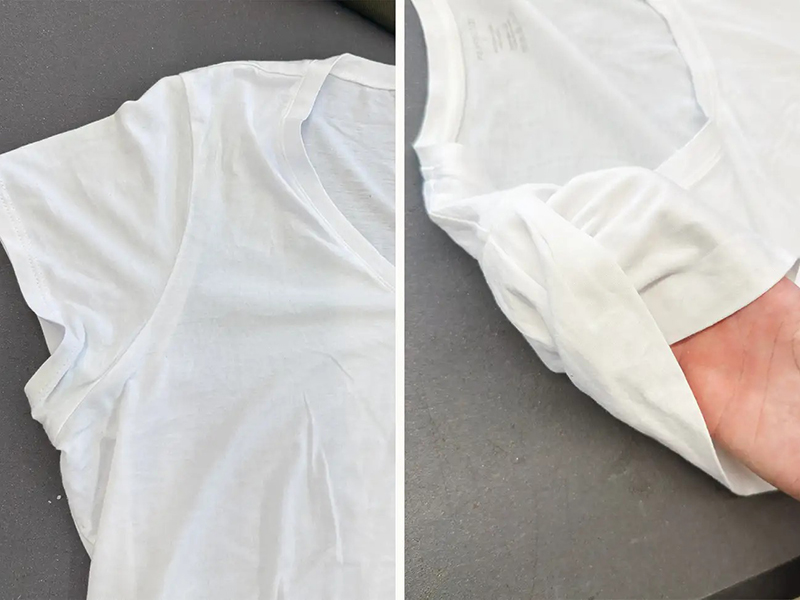
Why is it called a T-shirt in the first place?
The name “T-shirt” comes from visual shape, not from a fabric type, a technical process, or a brand name. It is one of the clearest examples of a garment being named after its silhouette.
It is called a T-shirt because the garment looks like the letter “T” when laid flat. The torso forms the long center line, and the sleeves extend outward like the top bar of the letter.
This naming logic is simple, but it is also useful. In the apparel industry, shape often helps define a garment category. A T-shirt is not just any soft top. It usually refers to a pull-on upper-body garment with short sleeves, a simple body shape, and a casual construction standard.
At Fusionknits, we often remind buyers that product naming matters because names shape expectations. When a product is called a T-shirt, buyers usually expect a certain type of silhouette, neckline, comfort level, and everyday use.
What makes the “T” shape easy to recognize
- Straight body section
- Sleeves extending left and right
- Simple upper-body silhouette
- No need for complex tailoring
- Clear visual identity when laid flat
Why that shape matters in apparel language
It makes the product easy to classify
The name quickly tells people what basic garment type they are dealing with.
It reflects garment simplicity
A T-shirt is known for direct and practical construction.
It supports mass recognition
The shape is so familiar that the name feels natural across markets.
Basic visual logic behind the term
| Garment feature | Relation to the “T” name |
|---|---|
| Torso panel | Forms the vertical line |
| Sleeves | Form the top cross line |
| Straight layout | Makes the shape easy to read |
| Simple construction | Supports the identity of the garment |
So even though the answer sounds simple, the name reflects one of the most recognizable shapes in clothing.
How did the T-shirt become such a common clothing term?
A garment name usually becomes standard only after the product becomes widely used. The T-shirt followed that path as it moved from practical underlayer to global everyday essential.

The term “T-shirt” became common as the garment became more widely used in everyday life. What began as a simple undershirt later developed into a casual outerwear staple, and the name stayed with it because the form remained easy to identify.
The history of the T-shirt is important because it explains why such a basic item carries such strong cultural weight today. The garment was not originally seen as a fashion centerpiece. It was valued for comfort, ease, and function.
At Fusionknits, we think this is one reason the T-shirt has remained so strong in the global apparel business. It began as a practical garment, and it still succeeds because practicality remains part of its identity.
Why the term became widely accepted
- The shape was easy to describe
- The garment was easy to wear
- The product spread across many consumer groups
- The construction stayed simple over time
- The T-shirt moved from underwear to visible daily wear
What helped its name remain stable
The product category stayed clear
Even when colors, fits, and prints changed, the garment still kept the same basic structure.
The silhouette remained familiar
The public did not need a technical term. The visual name was enough.
The garment expanded without losing identity
A T-shirt could become heavier, looser, fitted, printed, or premium, but it still remained a T-shirt.
Product identity over time
| Development stage | What stayed the same |
|---|---|
| Undershirt stage | Basic upper-body shape |
| Casualwear stage | Pull-on simple structure |
| Fashion stage | Recognizable T-like silhouette |
| Modern retail stage | Clear category identity |
That consistency is one reason the term still feels natural today, even across very different product levels.
What features make a garment a real T-shirt?
Not every casual top is a T-shirt. In manufacturing, small design changes can move a garment into a different product category.
A real T-shirt is usually defined by a simple body shape, short sleeves, a pull-on design, and a basic neckline such as a crew neck or similar casual opening. It is typically made for comfort, easy wear, and repeat use.
From a factory view, category definition matters. A T-shirt is different from a polo shirt, a woven shirt, a sweatshirt, or a structured knit top. The silhouette may overlap in some cases, but the construction logic is different.
At Fusionknits, we look at the T-shirt as a core apparel category with a few clear structural traits. These traits help guide product development, fabric selection, sewing sequence, and quality control.
Common T-shirt features
- Soft body construction
- Usually short sleeves
- Pull-over design
- Casual neckline
- Lightweight or medium-weight fabric
- Knitted material in most cases
Features that support the classic T-shirt category
Knitted fabric
Most T-shirts use jersey or similar knit fabric because it supports comfort and flexibility.
Straightforward body pattern
The pattern is usually less structured than a woven shirt or jacket.
Easy everyday use
A T-shirt is designed for frequent wear and broad styling use.
Common neckline options in T-shirts
| Neckline type | Typical use |
|---|---|
| Crew neck | Most common classic T-shirt style |
| V-neck | Slightly more styled casual use |
| Rib neckband | Standard for shape retention |
| Bound neckline | Used in some fashion or performance styles |
These details help explain why the T-shirt remains such a stable and distinct product category in apparel manufacturing.
How is a T-shirt different from other types of shirts?
The word “shirt” covers many garment categories. The T-shirt is only one of them, but it is one of the most recognizable because of its shape and simplicity.
A T-shirt differs from other shirts because it is usually softer, simpler, knitted rather than woven, and designed without the structured details found in dress shirts or button-up shirts. Its name also comes from shape, which is unusual for many other shirt categories.
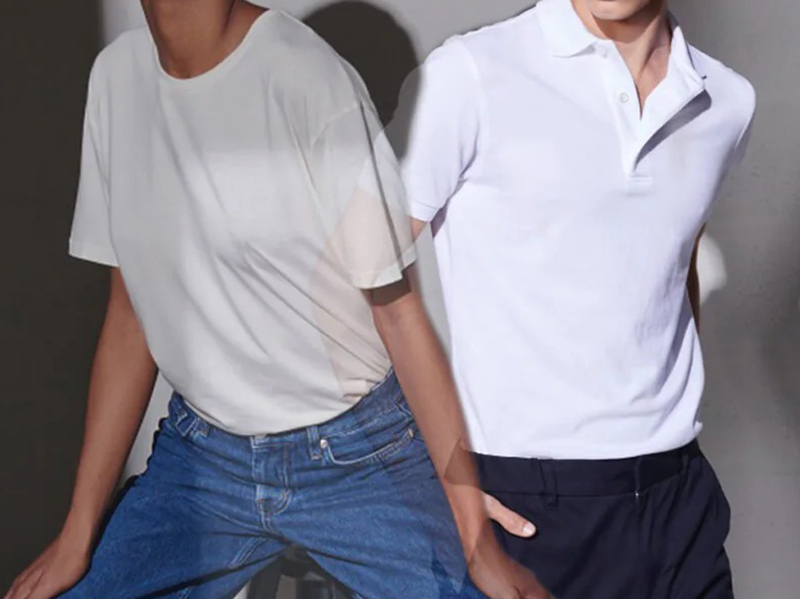
Many buyers use “shirt” as a broad word, but from a manufacturing perspective, the differences matter. A dress shirt usually uses woven fabric, more shaping, button closure, collar construction, and more complex sewing operations. A polo shirt has a collar and placket. A sweatshirt has heavier knit construction and a different use position in the wardrobe.
At Fusionknits, we believe these differences are important because the product category affects the whole production route.
Main differences between a T-shirt and other shirts
- T-shirts usually use knit fabric
- T-shirts often have no front opening
- T-shirts usually have simpler sewing construction
- T-shirts are often more casual in use
- T-shirts rely more on comfort and repeat wear
Comparison with common shirt categories
T-shirt vs. dress shirt
A dress shirt is more structured and formal. A T-shirt is more relaxed and direct.
T-shirt vs. polo shirt
A polo shirt often includes a collar and placket. A T-shirt usually does not.
T-shirt vs. sweatshirt
A sweatshirt is usually heavier and warmer, with different fabric and use purpose.
Product comparison table
| Garment type | Main fabric type | Main construction style | Typical use |
|---|---|---|---|
| T-shirt | Knit | Simple pull-on | Casual everyday wear |
| Dress shirt | Woven | Structured with buttons | Formal or business wear |
| Polo shirt | Knit | Collar and placket | Smart casual |
| Sweatshirt | Heavy knit | Pullover, heavier build | Casual layering |
This is why the T-shirt is both simple and technically distinct. Its construction, fabric, and shape all support the identity in its name.
Why does the T-shirt shape matter in manufacturing?
The T-shirt’s shape is not only a naming detail. It also influences how the garment is developed, cut, sewn, and scaled in bulk production.
The T-shirt shape matters in manufacturing because it supports efficient pattern making, fabric utilization, repeatable sewing operations, and large-scale production. Its simple form is one reason it became one of the most widely produced garments in the apparel industry.
The more standardized a garment shape is, the easier it usually becomes to develop stable production systems around it. This does not mean all T-shirts are identical. It means the basic structure is production-friendly.
At Fusionknits, we see the T-shirt as one of the clearest examples of how a simple silhouette can support both product versatility and manufacturing efficiency.
Why the T-shirt shape works well in factories
- Simple panel structure
- Efficient pattern layout
- Clear sleeve-to-body relationship
- Easy grading across sizes
- Repeatable sewing sequence
Manufacturing advantages of the classic T shape
Better cutting efficiency
Simple garment panels often support cleaner marker planning.
Stable production flow
The sewing sequence is easier to standardize across bulk orders.
Easier fit development
A basic T-shirt block can be adapted into many silhouettes.
Production stages influenced by shape
| Production stage | Effect of T-shirt shape |
|---|---|
| Pattern making | Simpler block development |
| Grading | Easier size scaling |
| Cutting | Better fabric efficiency |
| Sewing | Standardized operation flow |
| Quality control | Easier measurement comparison |
This is one reason the T-shirt is so important in wholesale manufacturing. Its shape makes it commercially flexible and operationally efficient at the same time.
How has the meaning of T-shirt changed in modern fashion?
The original naming logic has stayed the same, but the T-shirt itself has grown far beyond its most basic form. Today, it can exist in many quality levels and style positions.

The meaning of T-shirt has expanded in modern fashion from a basic undershirt category to a broad apparel category that includes essentials, streetwear pieces, premium blanks, printed garments, oversized fits, and performance tops. The name remains the same because the core shape is still recognizable.
A modern T-shirt may be made from lightweight cotton jersey, heavyweight compact cotton, blended activewear fabric, or premium fashion knit. It may be basic and blank, or it may be highly branded. But even with these changes, the category remains easy to understand.
At Fusionknits, we see this as a good example of how strong garment categories evolve. The core structure stays familiar, while the product level, fabric, and market use expand.
Modern directions in T-shirt development
- Oversized silhouettes
- Premium heavyweight cotton
- Fashion-washed surfaces
- Performance knit variations
- Luxury branding and decoration
- Minimalist essentials collections
Why the name still works
The visual shape remains familiar
Even when the fit changes, the garment still reads as a T-shirt.
The category is highly adaptable
The T-shirt can move across price points and markets without losing identity.
The product remains useful
Its daily wear value keeps it relevant in both basic and fashion-driven wardrobes.
How the category has expanded
| Older view of T-shirt | Modern view of T-shirt |
|---|---|
| Basic undershirt | Core fashion and basics category |
| One standard fit | Multiple silhouettes and weights |
| Low-cost essential | Entry-level to premium product |
| Pure utility item | Functional and branding platform |
This is why the T-shirt remains one of the strongest garment categories in the market. It is simple, but it is not limited.
What can buyers and brands learn from the name T-shirt?
A basic garment name can still reveal a lot about how products are understood and sold. The T-shirt is a strong example of product naming that connects form, function, and market identity.
Buyers and brands can learn from the name T-shirt that simple product identity often creates stronger category clarity. A garment that is easy to recognize, easy to describe, and easy to wear can also become easier to develop, sell, and scale.
At Fusionknits, we think there is a practical lesson here. The strongest apparel products often do not depend on complicated design language. They depend on clear shape, clear use, and consistent manufacturing standards.
What product developers can learn
- Shape matters in product identity
- Simplicity supports category strength
- Clear naming helps product communication
- Repeatable silhouettes support better scaling
What brands can learn
Strong basics have long-term value
A T-shirt remains commercially strong because it serves real daily use.
Category clarity helps customers
Consumers understand the product quickly.
Better basics still need strong execution
A simple product still depends on fabric quality, fit control, and construction accuracy.
Commercial lessons from the T-shirt category
| Lesson | Why it matters |
|---|---|
| Clear shape creates recognition | Easier product communication |
| Familiar use creates repeat demand | Stronger long-term category value |
| Simple design supports scalability | Better manufacturing efficiency |
| Basic products still need quality | Stronger brand trust |
So the “T” in T-shirt may come from shape, but the success of the product comes from much more than shape alone.
Conclusion
The “T” in T-shirt stands for the garment’s T-shaped form when it is laid flat, with the body forming the vertical line and the sleeves forming the horizontal line. The name is simple, but it reflects one of the clearest and most recognizable silhouettes in clothing.
From a professional apparel point of view, that shape also helps explain why the T-shirt became such an important product category. It is easy to identify, easy to wear, and highly efficient to manufacture at scale.
At Fusionknits, we see the T-shirt as a strong example of how simple garment design can create long-term value, both in consumer wardrobes and in industrial apparel production.