The phrase “100% wool” sounds simple, but in professional apparel manufacturing, it refers to a very specific material story. Buyers often use the term as if it only means warmth, yet wool quality depends on much more than that. Fiber origin, diameter, staple length, spinning quality, yarn structure, and finishing all affect what the final wool garment really becomes.
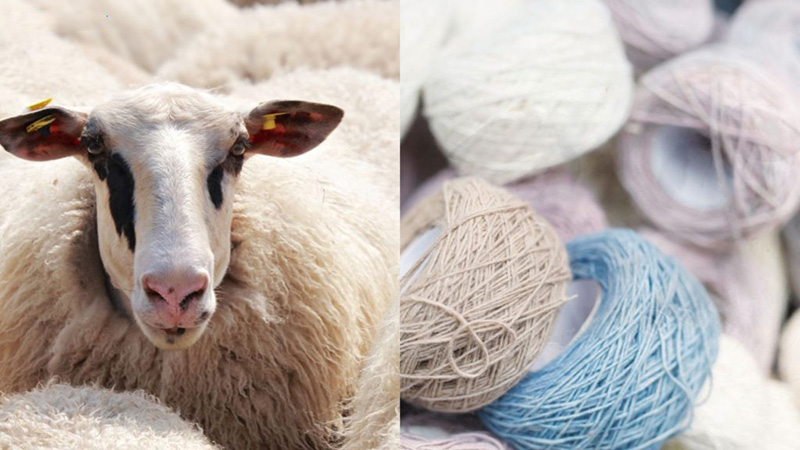
100% wool is made entirely from animal wool fibers, most commonly sheep’s wool, without blending in other fibers such as cotton, polyester, acrylic, or nylon. In garment production, this means the yarn content is fully wool-based, but the final performance still depends on the type of wool, how it is processed, and how it is knitted or woven into fabric.
At Fusionknits, wool is never treated as a generic raw material. A 100% wool cardigan or sweater may still vary greatly in softness, warmth, pilling behavior, drape, and price depending on the source and construction. That is why understanding what 100% wool is made of is important not only for consumers, but also for buyers, designers, and product developers.
What does “100% wool” actually mean in apparel manufacturing?
In the simplest sense, 100% wool means the fiber content is fully wool. But in manufacturing, that statement is only the starting point. It identifies fiber composition, not automatically fiber quality.
In apparel manufacturing, “100% wool” means the fabric or yarn is made entirely from wool fibers, with no other textile fibers blended into the composition. However, it does not automatically mean the wool is fine, soft, premium, or luxury-grade. It only confirms that the fiber content is fully wool-based.
This distinction matters because two garments can both be labeled 100% wool and still feel completely different. One may be soft merino with a smooth premium finish. Another may be coarser wool with a heavier and rougher hand feel. The label tells the buyer the fiber family, but not the whole quality level.
At Fusionknits, fiber labeling is always separated from product evaluation. The content tells one part of the truth. The yarn quality, knitting gauge, and finishing tell the rest.
What 100% wool confirms
- The product contains only wool fibers
- No cotton is blended in
- No acrylic is blended in
- No polyester or nylon is blended in
- The base yarn system is fully wool-based
What 100% wool does not confirm
It does not confirm softness
Some wool is much finer than other wool.
A lower-grade wool and a luxury merino can both be 100% wool.
It does not confirm garment performance by itself
Spinning, knitting, and finishing still shape the final result.
A simple labeling view
| Label term | What it means |
|---|---|
| 100% wool | Fiber content is fully wool |
| Wool blend | Wool mixed with other fibers |
| 100% merino wool | Fiber content is fully merino wool |
| Cashmere blend | Mixed fiber with some cashmere content |
That is why 100% wool is a clear composition statement, but not a complete quality statement.
Is 100% wool usually made from sheep?
Yes. In most apparel products, 100% wool refers to sheep’s wool. That is the most common commercial understanding of the term in sweater and cardigan development.
Yes, 100% wool is usually made from sheep’s wool. In the textile industry, the word “wool” on its own most commonly refers to sheep fiber, while fibers from animals such as goats, alpacas, or camels are usually named more specifically, such as cashmere, mohair, alpaca, or camel hair.
This matters because many buyers confuse “wool” with all animal fibers. In real sourcing language, those categories are related but not identical. Sheep’s wool is the standard base when the label simply says wool.
At Fusionknits, correct fiber naming is important because different animal fibers require different yarn development, finishing control, and market positioning.
Why sheep’s wool is the default meaning
- It is the most common commercial wool fiber
- It is widely available for textile production
- It supports many yarn counts and knit structures
- It works across both mass and premium markets
Why the distinction matters
Not all animal fibers are labeled as wool in the same way
Cashmere and mohair are usually named directly, not grouped under general wool labeling.
Material performance changes by animal source
Fiber diameter, softness, and resilience differ significantly across animal fibers.
Buyers need correct fiber expectations
A customer expecting cashmere softness should not assume all wool behaves that way.
Animal-fiber overview
| Fiber name | Common source |
|---|---|
| Wool | Usually sheep |
| Cashmere | Cashmere goat |
| Mohair | Angora goat |
| Alpaca | Alpaca |
| Camel hair | Camel |
So in most cases, 100% wool means 100% sheep’s wool unless the label states something more specific.
What is wool fiber physically made of?
To understand wool properly, it helps to look at its physical structure. Wool is a natural protein fiber, not a plant fiber and not a synthetic polymer like polyester.
Wool fiber is physically made of natural protein, mainly keratin, which is the same basic structural protein family found in human hair and nails. This protein-based structure gives wool its elasticity, resilience, warmth, and natural crimp.
From a manufacturing perspective, this protein structure is one of the main reasons wool behaves differently from cotton or synthetics. It bends differently, responds differently to moisture, and recovers differently after wear. Wool’s surface also has natural scales, which affect softness, friction, and felting behavior.
At Fusionknits, fiber structure is one of the reasons wool is such a valuable knitwear material. Its natural resilience supports both comfort and shape retention when the wool quality is managed correctly.
Main physical characteristics of wool fiber
- Protein-based structure
- Natural crimp
- Surface scales
- Elastic recovery
- Air-trapping ability
Why the protein structure matters
It supports warmth
The crimp traps air, and trapped air helps insulation.
It supports resilience
Wool tends to recover better than many plant fibers.
It affects finishing behavior
Wool reacts strongly to heat, moisture, and agitation.
Fiber-structure comparison
| Fiber type | Basic structure |
|---|---|
| Wool | Natural protein fiber |
| Cotton | Natural cellulose fiber |
| Polyester | Synthetic polymer fiber |
| Nylon | Synthetic polymer fiber |
That is why 100% wool is not only a label about origin. It also describes a very specific material behavior.
Are all 100% wool fabrics made from the same kind of wool?
No. This is one of the most important points in wool sourcing. 100% wool is a broad category, and there are many quality levels inside it.
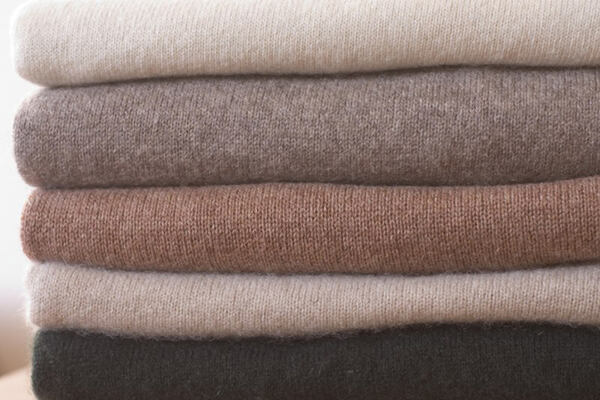
No, all 100% wool fabrics are not made from the same kind of wool. Wool quality can vary by sheep breed, fiber diameter, staple length, spinning quality, and finishing process. This means one 100% wool fabric may feel smooth and soft, while another may feel coarse, dense, or more rugged.
For example, fine merino wool is usually smoother and softer than coarser general wool. Some wool is selected for tailored suiting. Some is selected for blankets or heavy outerwear. Some is designed for knitwear with softness and skin comfort in mind.
At Fusionknits, wool sourcing always begins with the intended product use. A cardigan, a fine sweater, and a structured knit jacket should not all begin with the same wool quality assumptions.
What changes wool quality inside the 100% wool category
- Fiber diameter
- Staple length
- Breed source
- Spinning method
- Yarn count
- Surface finishing
Why this matters in garment development
Softness changes dramatically
Finer fibers usually feel better against the skin.
Product identity changes
One wool may support premium knitwear, another may suit heavier rustic garments.
Cost changes too
Better wool usually carries a higher raw material price.
Wool-quality overview
| Wool factor | Product effect |
|---|---|
| Finer fiber diameter | Softer hand feel |
| Longer staple length | Better yarn strength and smoothness |
| Coarser wool | Heavier, rougher, or more rugged feel |
| Better finishing | Cleaner and softer final surface |
That is why 100% wool should never be treated as one single quality level.
How is raw wool turned into yarn for garments?
Raw wool does not move directly from the animal into a sweater. It must go through multiple preparation steps before it becomes usable yarn.
Raw wool is turned into garment yarn through a process that usually includes shearing, sorting, cleaning, carding or combing, spinning, and sometimes dyeing before knitting or weaving begins. Each stage affects the final hand feel, strength, and appearance of the wool yarn.
In manufacturing, these early steps are extremely important. Poor cleaning may leave impurities. Weak sorting may mix inconsistent fibers. Low spinning quality may lead to unstable yarn and more pilling. The best garments usually begin with better yarn preparation.
At Fusionknits, yarn quality is treated as a core product foundation. Once the yarn is weak, later knitting and finishing cannot fully correct it.
Main wool-to-yarn process steps
- Shearing
- Sorting and grading
- Cleaning or scouring
- Carding or combing
- Spinning
- Dyeing if needed
- Cone winding for knitting or weaving use
Why yarn preparation matters so much
It affects softness
Better preparation helps create cleaner, smoother yarn.
It affects durability
Well-spun yarn usually performs better in garments.
It affects consistency
Uniform fiber grading supports more stable final production.
Wool-processing overview
| Process stage | Main purpose |
|---|---|
| Shearing | Collect raw fleece |
| Sorting | Separate by quality |
| Scouring | Clean the fiber |
| Carding/combing | Align fibers |
| Spinning | Create yarn |
So 100% wool garments are not made from raw fleece alone. They are made from processed wool yarn shaped through careful textile steps.
How does 100% wool become fabric or knitwear?
Once the yarn is ready, it must be transformed into textile structure. In sweaters and cardigans, this usually means knitting rather than weaving.
100% wool becomes fabric or knitwear when the wool yarn is knitted or woven into structure. For sweaters and cardigans, the wool is usually knitted into panels or full garment sections, and then assembled, washed, finished, and inspected to become the final product.
In knitwear manufacturing, this is where wool content becomes a real garment. The same 100% wool yarn may behave differently in fine-gauge plain knit, cable knit, rib knit, or heavier winter structures. Knit density and finishing can strongly affect the final warmth and feel.
At Fusionknits, wool knitwear development always combines fiber logic with structure logic. Wool alone is not enough. The fabric architecture must also be correct.
Common ways 100% wool is turned into product
- Fine-gauge sweaters
- Ribbed knit cardigans
- Chunky winter knits
- Woven wool coatings or suiting
- Structured knitwear layers
Why the textile structure matters
It changes warmth
A denser knit traps warmth differently from a lighter knit.
It changes drape
Fine knits fall differently from chunky ones.
It changes wear comfort
The same wool fiber can feel softer or harsher depending on knit or weave construction.
Structure overview
| Wool structure | Typical result |
|---|---|
| Fine knit | Lighter and smoother |
| Rib knit | More elasticity and texture |
| Chunky knit | More volume and insulation |
| Woven wool | More structured and formal |
That is why 100% wool garments should be understood as both fiber products and construction products.
Does 100% wool always mean high quality?
No. This is one of the most common misunderstandings in apparel buying. 100% wool can be excellent, but it can also be average or even disappointing if the fiber and process quality are weak.
No, 100% wool does not always mean high quality. It means the material is fully wool-based, but the final quality still depends on the grade of the wool, the spinning quality, the knitting or weaving method, and the finishing process.
A rough, itchy, loosely spun 100% wool sweater is still 100% wool. A soft, clean, fine merino sweater is also 100% wool. The label alone does not separate them.
At Fusionknits, real product quality is always judged through a full material and construction review, not only by composition percentage.
What actually determines high quality in 100% wool garments
- Fine fiber selection
- Good yarn spinning
- Controlled gauge and construction
- Proper finishing
- Stable measurements
- Strong seam and trim quality
Why buyers should look beyond the label
Composition is only one factor
Good content does not guarantee good execution.
Finishing changes everything
A better finish can transform the hand feel significantly.
Construction affects performance
Even good wool can underperform in weak garment engineering.
Quality overview
| Product factor | Why it matters |
|---|---|
| 100% wool label | Confirms composition |
| Fiber grade | Affects softness and value |
| Yarn quality | Affects stability and pilling |
| Garment finishing | Affects final performance |
So 100% wool is a meaningful statement, but it is not the full story of quality.
How should buyers understand 100% wool correctly?
The strongest way to understand 100% wool is to treat it as a composition category that still requires deeper evaluation. Buyers should ask not only what the garment is made of, but also what kind of wool it is and how it was built.
Buyers should understand 100% wool as a material category, not a complete quality judgment. To evaluate it correctly, they should also review wool type, softness, yarn quality, gauge, finishing, and intended use.
At Fusionknits, the most useful wool discussions usually go beyond the fiber label and move quickly into practical product questions. Is the wool fine enough for next-to-skin wear? Is the yarn stable enough for long-term performance? Is the finish suitable for the market level?
Better questions buyers should ask
- What type of wool is used?
- How soft is the final hand feel?
- What gauge is the garment?
- How stable is the yarn?
- How was it finished?
- What season and market is it designed for?
Why this approach works better
It improves sourcing accuracy
The buyer gets closer to the real product quality.
It improves product matching
The wool choice better fits the intended use.
It reduces disappointment
The buyer does not rely on the fiber label alone.
Buyer evaluation guide
| Question | Why it helps |
|---|---|
| Is it 100% wool? | Confirms composition |
| What kind of wool? | Confirms quality direction |
| How does it feel? | Confirms usability |
| How is it made? | Confirms garment performance |
That is the strongest way to understand 100% wool in real apparel development.
Conclusion
100% wool is made entirely from wool fibers, most commonly sheep’s wool, without blending in cotton, polyester, acrylic, nylon, or other textile fibers. Physically, wool is a natural protein fiber made mainly of keratin, and that structure gives it warmth, elasticity, air-trapping ability, and resilience. However, 100% wool is a composition statement, not a complete quality statement. The final product still depends on fiber grade, yarn spinning, textile construction, and finishing quality.
At Fusionknits, 100% wool is understood as a valuable material category that requires technical control at every stage. A strong wool garment begins with the right wool source, moves through better yarn development, and reaches its full value only through correct knitting, finishing, and inspection.
When buyers understand 100% wool in this full way, they make better sourcing decisions, develop better products, and build knitwear that performs more reliably in both quality and market value.