A men’s cardigan is often treated as a simple layering piece, but in professional knitwear development, it is a much more specific product category. The yarn, gauge, front opening, collar shape, fit, and finishing all determine whether the cardigan feels classic, modern, casual, refined, or utility-driven. That is why a men’s cardigan can work as a soft office layer, a winter knit essential, or a more structured alternative to a light jacket.
A cardigan for men is a front-opening knitwear garment designed for the male market, usually worn as a layering piece over T-shirts, shirts, or lightweight tops. It can feature buttons, a zipper, or an open front, and it is developed in different fits, weights, and constructions to suit casualwear, business casual, seasonal knitwear, and more structured outer-layer uses.
At Fusionknits, a men’s cardigan is not defined only by gender styling. It is defined by product logic. Men’s cardigans usually require different fit balance, shoulder proportion, front construction, yarn direction, and market positioning from women’s cardigan lines. Understanding that difference is important for better sampling, better collection planning, and better sourcing decisions.
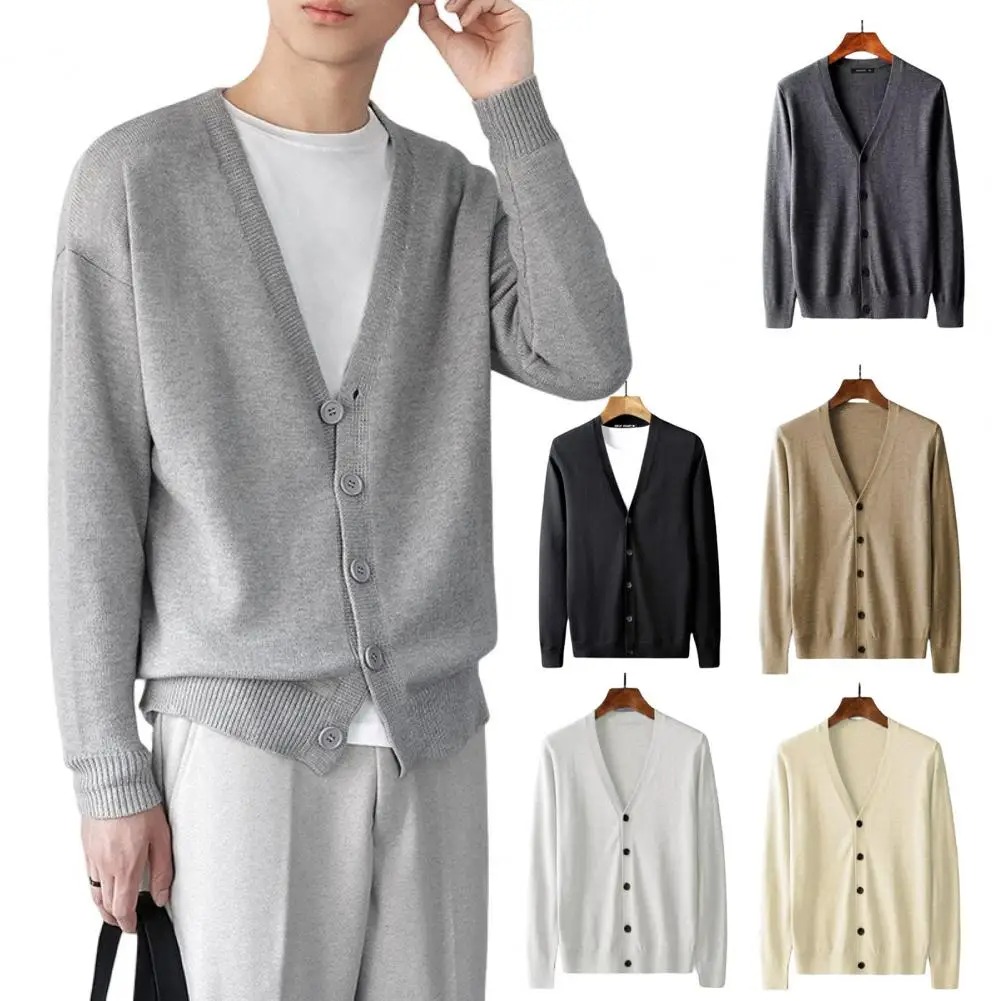
Why is a men’s cardigan considered a separate knitwear category?
A cardigan for men belongs to the broader cardigan family, but it usually follows a different product language from women’s knitwear. The difference is not only visual. It is also technical. Fit, shoulder line, body length, gauge selection, and front detailing are often developed in a different way for men’s markets.
A men’s cardigan is considered a separate knitwear category because it is developed with different fit proportions, market expectations, and styling functions. Compared with many women’s cardigans, men’s cardigans more often emphasize shoulder balance, cleaner front lines, practical layering, and stronger structure in the silhouette.
From a manufacturing point of view, this difference matters because the product cannot simply be resized from another cardigan base and expected to perform well. A men’s cardigan often needs its own block, its own fit review, and in many cases its own yarn and trim logic.
At Fusionknits, men’s cardigan development usually begins with product role first. Is the garment meant to feel classic and polished, soft and casual, or more like a knit jacket? The answer shapes everything that follows.
Why men’s cardigans need their own development logic
- The shoulder line is usually different
- The body shape is usually straighter
- The length balance often changes
- The market styling is often less decorative
- The closure and trim choices may be more functional
- The product may overlap more strongly with smart casualwear
Why this matters in real production
Fit expectations are different
A men’s cardigan often needs more control in shoulder width, sleeve shape, and torso balance.
Styling expectations are different
Men’s knitwear often leans more strongly toward versatility, layering, and understated design.
Market use is different
Many men’s cardigans are expected to move between officewear, weekend wear, and outer-layer use.
A simple category view
| Product factor | Men’s cardigan effect |
|---|---|
| Shoulder line | More structured importance |
| Body shape | Straighter silhouette |
| Styling direction | Often cleaner and more practical |
| Closure choice | Often more functional or minimal |
That is why a men’s cardigan should be treated as a distinct knitwear product type rather than just a shared category label.
What does a men’s cardigan usually look like?
A men’s cardigan can take many forms, but most of them are built around clean front-opening knitwear design. Compared with more decorative knitwear directions, men’s cardigans usually lean toward simpler and more controlled visual language.
A men’s cardigan usually looks like a front-opening knitted garment with a clean silhouette, balanced shoulder line, and practical closure such as buttons or a zipper. It often features V-necks, shawl collars, stand collars, or simple ribbed necklines, depending on whether the product is more classic, casual, or structured.
Some men’s cardigans are very minimal, with fine gauge, neutral color, and a clean button front. Others are chunkier, more textured, and closer to a soft jacket in feel. The category includes many directions, but most successful men’s cardigans avoid unnecessary detail and keep the structure easy to wear.
At Fusionknits, strong men’s cardigan design usually depends on restraint. The product should feel intentional, but not overloaded.
Common visual features in men’s cardigans
- Front-opening construction
- Button or zip closure
- Neutral or classic color direction
- Clean rib hem and cuff finish
- Balanced, easy layering silhouette
- Controlled neckline and collar details
Typical neckline or front options
V-neck cardigan
One of the most classic men’s cardigan forms.
Shawl-collar cardigan
Often richer and more winter-oriented.
Zip cardigan
Often more modern or utility-influenced.
Open-front knit layer
Less common, but possible in softer lifestyle categories.
Men’s cardigan overview
| Design element | Typical result |
|---|---|
| Button front | Classic and versatile |
| Zip front | More modern or sporty |
| Shawl collar | Richer and more substantial |
| Fine gauge | Cleaner and more refined |
| Chunky texture | Warmer and more casual |
That is the basic visual language of most men’s cardigan development.
What is the purpose of a cardigan for men?
A men’s cardigan is not only a style item. It is also a functional garment. It sits between light knitwear and flexible layering, which makes it one of the most adaptable pieces in many men’s wardrobes.
The purpose of a cardigan for men is to provide layering, comfort, temperature control, and style flexibility. It can function as a light substitute for a jacket, a polished office layer, a casual weekend knit, or a seasonal outer layer depending on the yarn weight, construction, and fit.
This flexibility is one reason the men’s cardigan remains commercially important. A good cardigan can move across dress codes more easily than many other knitwear pieces. Worn over a shirt, it can look refined. Worn over a T-shirt, it becomes casual and approachable. In heavier constructions, it can even replace a jacket indoors or in mild weather.
At Fusionknits, the most successful men’s cardigans usually combine function and versatility in one product direction.
Common functions of a men’s cardigan
- Easy layering over base garments
- Added warmth without heavy outerwear
- Smart casual outfit finishing
- Office or travel wardrobe support
- Transitional seasonal wear
- Softer alternative to a blazer or jacket
Why men’s cardigans remain useful
They adapt easily
One cardigan can work in multiple styling environments.
They improve wardrobe flexibility
They layer well with shirts, tees, polos, and light tops.
They offer comfort without losing structure
A cardigan often feels softer than a jacket but cleaner than a sweatshirt.
Function overview
| Main function | Product benefit |
|---|---|
| Layering | Easy outfit building |
| Temperature control | Practical daily use |
| Smart casual styling | Broad market relevance |
| Light outer-layer use | Higher versatility |
That is why the men’s cardigan is usually best understood as a functional knitwear layer with strong styling range.
What are the most common types of cardigans for men?
Men’s cardigans are not all the same. Different types serve different markets and product needs. Some are more classic and office-friendly. Others are more casual, textured, or seasonal.
The most common types of cardigans for men include button-front cardigans, zip-up cardigans, shawl-collar cardigans, fine-gauge cardigans, chunky cardigans, textured cardigans, and knit-jacket-style cardigans. Each type supports a different level of warmth, structure, and styling purpose.
From a product development perspective, these types differ not only in appearance, but also in manufacturing requirements. A fine-gauge cardigan may need cleaner yarn and more delicate knitting control. A chunky shawl-collar cardigan may need heavier gauge, stronger edge stability, and more substantial finishing.
At Fusionknits, men’s cardigan collections usually perform better when they mix core types rather than repeating one silhouette across every style.
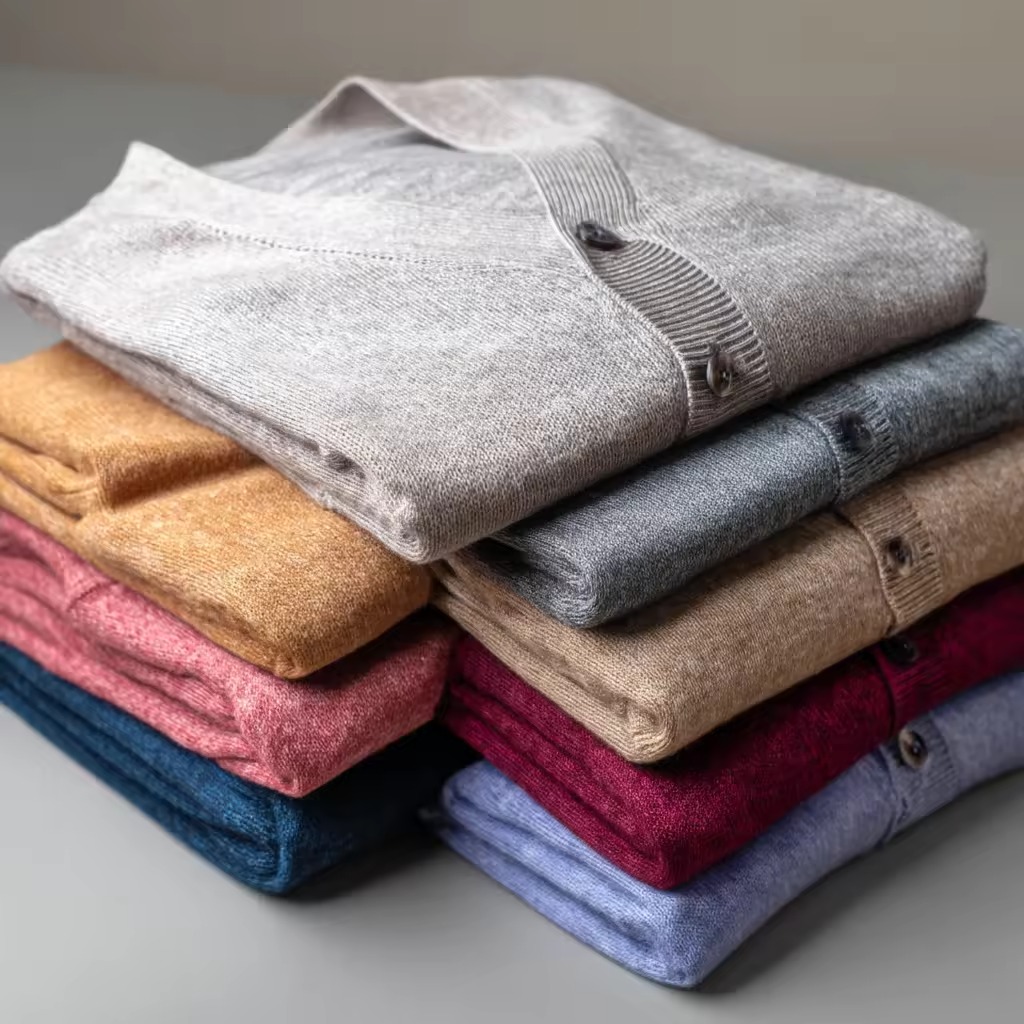
Common men’s cardigan types
- Classic button-front cardigan
- Fine-gauge V-neck cardigan
- Zip-up cardigan
- Shawl-collar cardigan
- Chunky cardigan
- Ribbed or textured cardigan
- Knit jacket cardigan
Why type variation matters
It helps seasonal assortment planning
Not every cardigan should solve the same weather need.
It widens styling use
A zip cardigan and a fine-gauge V-neck serve different customer situations.
It improves collection depth
Type variety creates stronger category development.
Type comparison
| Cardigan type | Typical use |
|---|---|
| Fine-gauge button cardigan | Smart casual and officewear |
| Zip-up cardigan | Modern casual and utility-inspired wear |
| Shawl-collar cardigan | Winter and richer styling |
| Chunky cardigan | Warmer casual layering |
| Knit-jacket cardigan | Structured soft outer layer |
That is how the men’s cardigan category becomes commercially broad and visually useful.
What materials are best for a men’s cardigan?
Material selection strongly affects what kind of men’s cardigan the final product becomes. The same silhouette can feel polished, rugged, soft, or commercial depending on the yarn.
The best materials for a men’s cardigan usually include cotton, wool, wool blends, merino, cotton-acrylic blends, and selected synthetic support blends depending on the season, target price, and product direction. The right material should match the cardigan’s intended use in warmth, hand feel, recovery, and styling level.
A spring cardigan often works well in cotton or cotton blends. A winter shawl-collar cardigan may need wool or wool-blend yarn. A modern commercial cardigan may use blended yarn to balance softness, durability, and cost. A refined office cardigan may rely on fine merino or smoother compact yarns.
At Fusionknits, yarn selection is always connected to market use. A men’s cardigan for clean officewear should not feel like a bulky rustic knit unless that is the deliberate product story.
Common materials used in men’s cardigans
- Cotton
- Fine merino wool
- Wool blends
- Cotton-acrylic blends
- Acrylic-wool commercial blends
- Viscose or nylon support blends in some styles
Why material choice matters so much
It affects comfort
A men’s cardigan should feel right over both shirts and lighter base layers.
It affects silhouette
The yarn changes drape, bulk, and body shape.
It affects market position
Material often decides whether the cardigan feels premium, commercial, or seasonal.
Material-direction overview
| Material | Typical cardigan role |
|---|---|
| Cotton | Light, versatile, trans-seasonal |
| Merino | Fine, refined, polished |
| Wool blend | Warm, seasonal, structured |
| Cotton-acrylic blend | Practical and broadly commercial |
| Chunky wool yarn | Casual winter layering |
That is why material direction is one of the most important decisions in men’s cardigan development.
How should a men’s cardigan fit?
Fit is one of the most important reasons one men’s cardigan feels premium and another feels weak. A cardigan should not be oversized by accident or fitted too tightly without purpose. The fit should support layering and silhouette at the same time.
A men’s cardigan should usually fit with balanced shoulders, clean sleeve length, comfortable chest ease, and a body shape that supports layering without looking overly loose or restrictive. The exact fit can be classic, fitted, relaxed, or oversized, but it should always feel intentional and proportionate.
In many men’s markets, the safest and strongest cardigan fit is often a clean regular fit with enough room for a shirt or T-shirt underneath. Oversized fits can work, but they usually require more careful proportion control. Fitted cardigans can also work well in finer-gauge and smarter categories.
At Fusionknits, fit development is treated as a key product-quality issue because knitwear can quickly lose its value if the body balance is weak.
Important fit points in men’s cardigans
- Shoulder balance
- Chest ease
- Sleeve proportion
- Body length
- Hem control
- Layering room
Why fit matters so much
It affects versatility
A cardigan that layers well gets worn more often.
It affects visual quality
Weak fit can make even good yarn look less valuable.
It affects category identity
A fitted merino cardigan and an oversized chunky cardigan should not share the same fit logic.
Fit guide
| Fit type | Best use |
|---|---|
| Classic fit | Broadest commercial use |
| Fitted fit | Cleaner and more polished styling |
| Relaxed fit | Casual comfort |
| Oversized fit | More trend-led and selective |
That is why fit should always be defined clearly before production begins.
How is a men’s cardigan different from a sweater or a jacket?
A men’s cardigan often overlaps visually with both sweaters and jackets, which is why the category can sometimes be misunderstood. The key difference is structure and use.
A men’s cardigan differs from a sweater because it opens in the front, and it differs from a jacket because it remains part of the knitwear family rather than becoming fully outerwear. It usually sits between these two categories, offering more flexibility than a pullover and more softness than a traditional jacket.
This middle position is what makes the cardigan so useful. A pullover cannot open for easy temperature control. A jacket may feel heavier or more formal. The cardigan solves both of those limitations in a softer way.
At Fusionknits, this in-between role is one of the strongest reasons men’s cardigans remain important in knitwear collections.
Key category differences
- Sweater: usually pulls over the head
- Cardigan: opens in the front
- Jacket: usually more structured and more outerwear-driven
- Cardigan: softer and more knitwear-based than a jacket
Why this matters in product planning
It clarifies use
A cardigan is built for layering in a different way from a pullover.
It changes construction
Front-opening design affects plackets, trims, and front balance.
It improves assortment logic
Cardigans fill a different wardrobe role than sweaters and jackets.
Category overview
| Garment type | Main difference |
|---|---|
| Pullover sweater | No front opening |
| Cardigan | Front-opening knitwear layer |
| Jacket | More structured outerwear category |
That is why the men’s cardigan should be treated as its own product space between sweater and jacket.
How should buyers choose the right men’s cardigan styles?
A good men’s cardigan range should not rely on one shape only. Different customer groups need different cardigan types depending on climate, dress code, and styling habits.
Buyers should choose men’s cardigan styles by balancing fit, gauge, closure type, seasonality, and market use. A strong collection usually includes at least one classic core cardigan, one more casual or textured option, and one more structured or modern silhouette to broaden the category.
A fine-gauge button-front cardigan may support business casual programs. A zip-up cardigan may strengthen modern everyday categories. A chunky shawl-collar cardigan may add winter visual interest. The strongest assortment is usually one that separates these roles clearly.
At Fusionknits, men’s cardigan planning works best when each style is given a clear function rather than trying to make every cardigan solve every need.
Useful questions for buyers
- Is the cardigan for officewear, casualwear, or winter layering?
- Does the collection need more structure or more softness?
- Should the front opening be buttoned, zipped, or open?
- Is the market more classic or more trend-driven?
- Does the yarn match the customer’s real seasonal use?
Why this approach improves collections
It reduces duplication
Different cardigan roles create stronger assortment logic.
It improves sell-through potential
Customers can understand the purpose of each style more easily.
It supports better sourcing
Clearer product intent leads to better yarn and construction decisions.
Collection-planning guide
| Product role | Best cardigan direction |
|---|---|
| Smart casual basic | Fine-gauge button-front cardigan |
| Everyday modern layer | Zip cardigan or classic V-neck |
| Winter casual knitwear | Chunky or shawl-collar cardigan |
| Softer lifestyle category | Relaxed open-front or textured cardigan |
That is how a men’s cardigan range becomes more balanced, useful, and commercially effective.
Conclusion
A cardigan for men is a front-opening knitwear garment designed to provide layering, comfort, and style flexibility across many different situations. It can be classic, refined, chunky, structured, casual, or modern depending on the yarn, fit, closure, and gauge. Common men’s cardigan types include button-front cardigans, zip-up cardigans, shawl-collar cardigans, fine-gauge cardigans, chunky cardigans, and knit-jacket-style cardigans. Each one serves a different purpose in styling, seasonality, and market positioning.
At Fusionknits, a men’s cardigan is developed as a serious knitwear product with clear technical and commercial logic. The strongest styles begin with the right material, the right fit, and the right role in the collection.
When buyers understand what a men’s cardigan really is and how different cardigan types function, they build stronger assortments, make more accurate sourcing decisions, and develop garments that are easier to wear, easier to sell, and more dependable in long-term market performance.