Many buyers use the phrase “tight T-shirt,” but that description is still too broad for real product development. In apparel manufacturing, a shirt can feel tight because of its fit, its fabric stretch, its intended use, or its styling category. If the name is not clear, the wrong sample can be developed very quickly.
A tight T-shirt is usually called a fitted T-shirt or a slim fit T-shirt. In some cases, it may also be called a bodycon T-shirt, muscle fit T-shirt, or compression shirt, depending on how closely it fits the body and what function it is designed for.
At Fusionknits, this question matters because product naming affects fit development, pattern making, fabric choice, and the final market position of the garment. A buyer may say “tight T-shirt,” but the factory still needs to know whether the target is a fashion-fitted tee, a stretch body-hugging top, or a performance compression garment.
Is “fitted T-shirt” the most common name for a tight T-shirt?
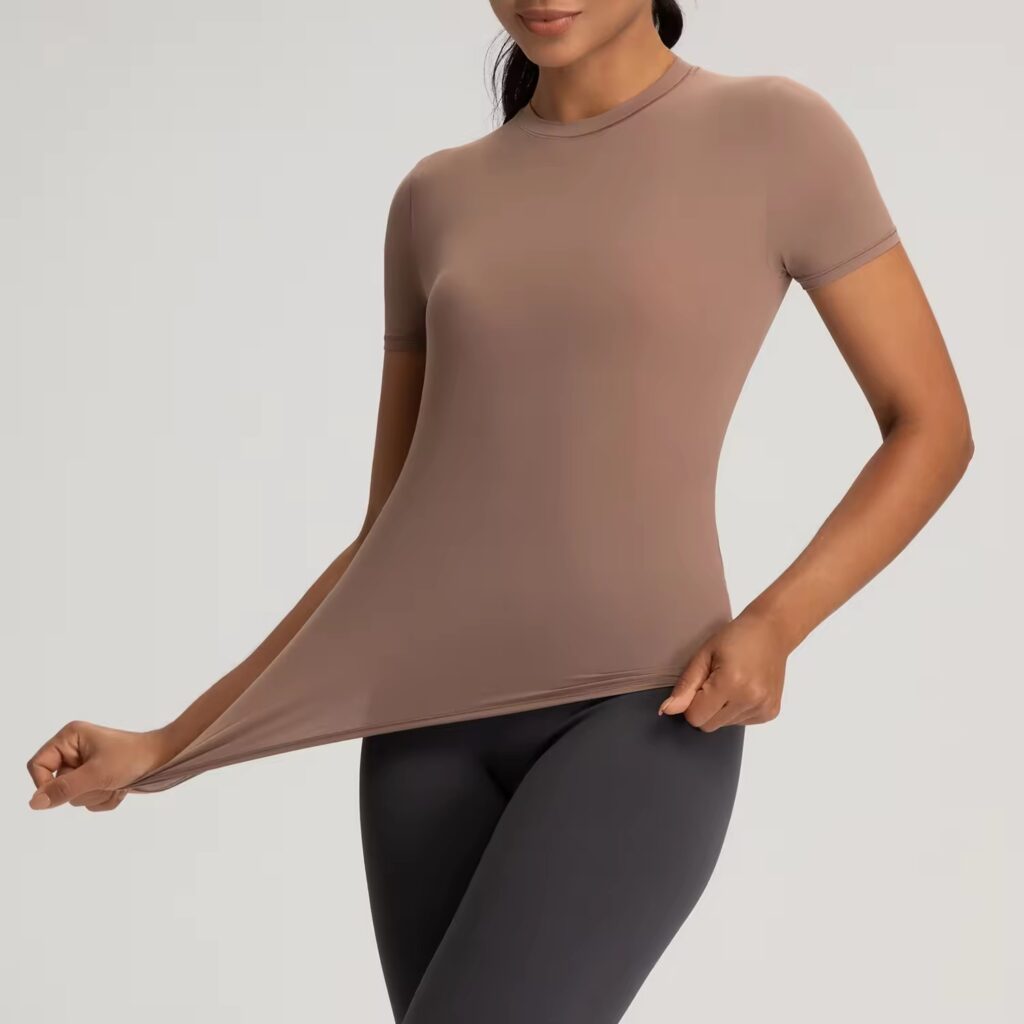
In most retail and manufacturing conversations, yes. “Fitted T-shirt” is one of the most common and safest ways to describe a T-shirt that follows the body more closely than a regular fit.
Yes, “fitted T-shirt” is one of the most common names for a tight T-shirt because it clearly describes a shirt that is cut closer to the body than a standard or relaxed fit. In many markets, “slim fit T-shirt” is also used in a very similar way.
From a product development point of view, “fitted” is useful because it suggests a general body-following silhouette without automatically pushing the garment into a more technical or more extreme category. It can work in men’s basics, women’s casualwear, and fashion-focused jersey tops.
At Fusionknits, “fitted T-shirt” is often one of the clearest terms when the buyer wants a closer silhouette but not an athletic compression effect or a very dramatic bodycon shape.
Why “fitted T-shirt” is so commonly used
- It is easy to understand
- It works across retail categories
- It is less extreme than some fashion-specific terms
- It fits both men’s and women’s product language
- It helps guide pattern shaping clearly
Why the term is commercially useful
It gives enough fit direction
The factory understands that the body shape should be closer than a regular fit.
It avoids unnecessary confusion
It does not automatically suggest shapewear, sports compression, or formalwear.
It works across many fabric types
A fitted tee can be made in cotton jersey, stretch jersey, rib knit, or blended materials.
A simple naming view
| Term | Typical meaning |
|---|---|
| Regular fit T-shirt | Standard body shape |
| Fitted T-shirt | Closer body-following shape |
| Relaxed T-shirt | Looser casual shape |
That is why “fitted T-shirt” is usually one of the best and most commercially stable names for a tight T-shirt.
Is “slim fit T-shirt” the same as a fitted T-shirt?
In many cases, these two terms overlap. But depending on the market, “slim fit” may sound slightly more tailored or more menswear-driven, while “fitted” can feel broader and more general.

A slim fit T-shirt is often very similar to a fitted T-shirt. In most apparel use, both terms describe a shirt with a narrower body shape than a regular fit. However, “slim fit” often sounds more standardized, while “fitted” can sound slightly more flexible or style-based.
From a manufacturing angle, the difference is often not absolute. The actual garment still depends on measurements, fabric stretch, shoulder balance, sleeve opening, and body taper. A buyer may ask for slim fit, but the factory still needs the size chart or reference sample to understand the exact silhouette.
At Fusionknits, both terms are used often, but “slim fit” is especially common when the product is part of a more standard menswear or basics range.
Why “slim fit” is so common in apparel
- It fits standard retail language
- It sounds more technical than casual
- It is often used in menswear and unisex programs
- It helps position the shirt between regular and very tight fits
Why slim fit and fitted are not always identical
“Slim fit” can sound more structured
It often suggests a cleaner, narrower silhouette without necessarily becoming body-hugging.
“Fitted” can sound more flexible
It can describe a broader range of body-close shapes depending on styling and fabric.
Actual measurements still matter most
The name helps, but the pattern and grading define the real result.
Term comparison
| Term | Typical commercial impression |
|---|---|
| Fitted T-shirt | Body-following, broad use |
| Slim fit T-shirt | Narrower, more standardized fit |
| Body-hugging tee | Tighter and more fashion-led |
So yes, a slim fit T-shirt is often another correct name for a tight T-shirt, especially when the garment is intended to be clean, narrow, and close to the body without becoming an activewear compression item.
When is a tight T-shirt called a muscle fit T-shirt?
A tight T-shirt is not always just “fitted.” In some menswear categories, a more specific term is used when the shirt is shaped to emphasize the upper body.
A tight T-shirt is often called a muscle fit T-shirt when it is designed to fit closely across the chest, shoulders, and arms while still keeping a clean taper through the torso. This term is most common in menswear and physique-focused styling.
A muscle fit T-shirt is usually not simply a smaller shirt. It is normally cut to highlight upper-body shape more intentionally. That means the chest and sleeve areas may be more defined, while the waist remains controlled but still wearable.
At Fusionknits, this term is important because it changes the fit logic. A muscle fit tee is usually not the same as a standard slim fit tee. The pattern often needs more attention in the shoulder, bicep, and chest area.
What makes a muscle fit T-shirt different
- Stronger chest shaping
- Closer sleeve fit
- More defined shoulder line
- Narrower body without looking loose
- Often made with stretch fabric or stretch-friendly jersey
Why this term matters in development
It changes pattern balance
The upper body usually needs to look shaped without pulling badly across the chest.
It affects fabric choice
A non-stretch fabric may not support the intended fit comfortably.
It changes the target market
The term is more specific than “fitted” and usually targets a narrower customer group.
Fit category comparison
| Fit term | Typical shape direction |
|---|---|
| Slim fit | Narrower overall shape |
| Fitted | General body-close fit |
| Muscle fit | Emphasized upper-body shape |
So when the T-shirt is tight in a way that highlights shoulders, chest, and arms, “muscle fit T-shirt” is often the more accurate name.
Is a bodycon T-shirt the same as a tight T-shirt?
In some cases, yes, but the term “bodycon” is usually more specific and more fashion-oriented. It is not the most general name for a tight tee.
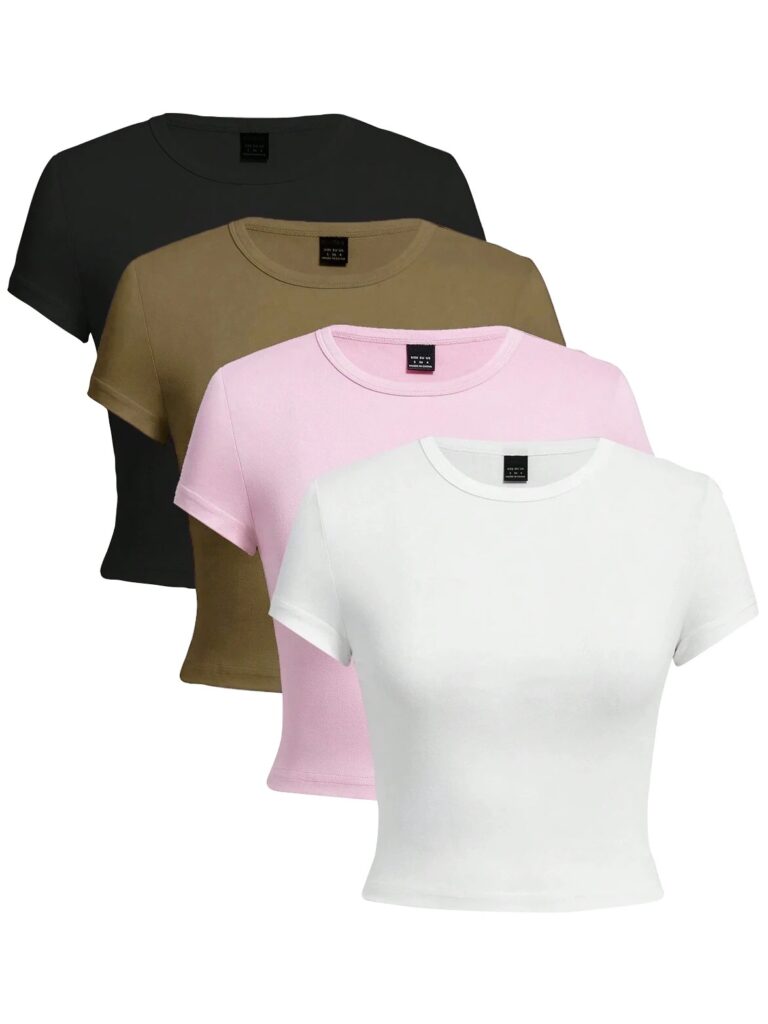
A bodycon T-shirt is a very body-hugging T-shirt that closely follows the shape of the torso. It is usually a more fashion-specific term than “fitted” or “slim fit,” and it is often associated more with women’s apparel or trend-led styling.
From a manufacturing perspective, bodycon garments usually rely more heavily on stretch fabric, higher body tension, and a fit that is intentionally close through the bust, waist, and hips. This is different from a slim fit basic T-shirt, which may still leave more ease.
At Fusionknits, the term “bodycon” should be used carefully because it suggests a more specific fashion category rather than a general tight T-shirt for all markets.
What “bodycon” usually implies
- Strong body-hugging shape
- Higher stretch dependence
- Fashion-led silhouette
- More contouring than a standard fitted tee
- Usually intended as visible body-shaping casualwear
Why bodycon is not always the best general term
It is more specific
Not every tight T-shirt is intended to contour the body that strongly.
It is more fashion-coded
The term usually belongs more to a fashion segment than to broad basics.
It changes the fit expectation
A buyer asking for a bodycon tee usually expects a much tighter finished shape.
Category comparison
| Term | Typical tightness level |
|---|---|
| Fitted T-shirt | Moderate body-close fit |
| Slim fit T-shirt | Narrower standard fit |
| Bodycon T-shirt | Strong body-hugging fit |
So a bodycon T-shirt can be a type of tight T-shirt, but it is usually not the most general name unless the garment is intentionally very close and contour-focused.
When is a tight T-shirt called a compression shirt?
This is where product naming becomes more technical. A compression shirt is not just a tight casual T-shirt. It belongs more clearly to a performance or functional apparel category.
A tight T-shirt is called a compression shirt when it is designed to fit very closely to the body for athletic or performance purposes. Compression shirts usually use high-stretch fabric and are intended for training, support, layering, or activewear use rather than standard casual fashion.
From a manufacturing point of view, a compression shirt usually belongs in sportswear, not in casual basics. The fabric content often includes significant elastane or spandex, and the fit is much tighter and more performance-driven than a normal fitted tee.
At Fusionknits, this distinction matters because a compression shirt and a casual slim T-shirt may look similar at first, but they require different material logic, fit standards, and production planning.
What usually defines a compression shirt
- High-stretch performance fabric
- Very close body fit
- Athletic purpose
- Functional support or layering use
- Technical rather than casual product logic
Why the term should not be used casually
It suggests function, not only shape
The shirt is meant to perform physically, not only look close-fitting.
It changes material requirements
Basic cotton jersey usually does not support true compression use.
It changes category expectations
A customer expecting compression will judge the garment differently from a customer expecting a fashion tee.
Tight tee vs compression shirt
| Garment type | Main purpose |
|---|---|
| Fitted T-shirt | Casual or fashion wear |
| Slim fit T-shirt | Everyday close fit |
| Compression shirt | Athletic support and performance |
So if the shirt is tight because it is designed for sport and functional body support, “compression shirt” is the more accurate name.
How should manufacturers understand the phrase “tight T-shirt”?
This is one of the most important parts of the topic. The phrase itself is too vague for real production. A factory should not build a sample from that description alone.

Manufacturers should understand “tight T-shirt” as a general fit direction, not as a complete product description. The factory still needs to know whether the intended product is fitted, slim fit, muscle fit, bodycon, or compression, because each category changes pattern, fabric, and market position.
A tight shirt can come from different causes. It may be a narrow silhouette. It may be a stretch fabric with strong body grip. It may be a fashion tee or a gym garment. These are not the same product even if they all feel close on the body.
At Fusionknits, fit communication is always translated into technical language before development moves forward. A vague fit request is usually one of the biggest reasons early samples go wrong.
What factories should clarify when hearing “tight T-shirt”
- Is the fit slim or body-hugging?
- Is the shirt for fashion or performance?
- Is stretch fabric required?
- How close should the sleeve fit be?
- Should the chest be shaped more than the waist?
- Is there a reference sample or size chart?
Why this clarification matters
It affects pattern making
A fitted basic tee and a compression top do not use the same fit logic.
It affects fabric sourcing
The material must match the intended tightness and comfort level.
It affects sample approval
Without clear expectations, the buyer may reject the fit even if the sewing is good.
Communication guide
| Buyer phrase | What the factory should confirm |
|---|---|
| Tight T-shirt | Ask for actual fit category |
| Fitted tee | Confirm measurement standard |
| Slim fit tee | Confirm silhouette and ease |
| Compression shirt | Confirm technical function and fabric |
The strongest product development usually begins when a vague fit description is translated into a real product category.
What should buyers say instead of just “tight T-shirt”?
Buyers usually get better results when they describe the product more precisely. A stronger fit term helps the factory understand both the garment and the intended customer.
Instead of saying only “tight T-shirt,” buyers should usually use clearer terms such as fitted T-shirt, slim fit T-shirt, muscle fit T-shirt, bodycon T-shirt, or compression shirt, depending on the real product intention. The more accurate the term is, the easier it becomes to develop the correct sample.
At Fusionknits, the best communication usually combines naming and measurements. The product term gives direction, but the size chart and fit references make that direction usable in real manufacturing.
Better phrases buyers can use
- Fitted T-shirt
- Slim fit T-shirt
- Muscle fit tee
- Bodycon tee
- Compression shirt
- Stretch fitted tee
- Body-hugging cotton tee
Why better wording improves development
It reduces factory assumptions
The supplier does not need to guess what kind of tightness is expected.
It improves sample accuracy
The pattern team can choose a better base block.
It improves costing and material planning
The right fit term often points toward the right fabric structure too.
A practical term guide
| Buyer intention | Better term to use |
|---|---|
| Close everyday fit | Fitted T-shirt |
| Narrow standard fit | Slim fit T-shirt |
| Chest-and-arm emphasis | Muscle fit T-shirt |
| Strong fashion body-hugging fit | Bodycon T-shirt |
| Performance athletic fit | Compression shirt |
This is why better naming usually leads to better samples, fewer revisions, and stronger product consistency.
Conclusion
A tight T-shirt is usually called a fitted T-shirt or slim fit T-shirt. In more specific categories, it may also be called a muscle fit T-shirt, bodycon T-shirt, or compression shirt, depending on how closely it fits the body and what purpose it is designed to serve. These terms are related, but they do not all mean exactly the same thing.
From a professional apparel manufacturing perspective, the best term depends on the real product goal. At Fusionknits, “fitted T-shirt” is usually the strongest general answer when the buyer wants a closer body shape without moving into a highly specialized category.
Once the shirt becomes more fashion-specific or performance-specific, more precise names such as bodycon or compression become more appropriate. In real development, the strongest result comes from combining the correct fit term with clear measurements, fabric direction, and sample references.