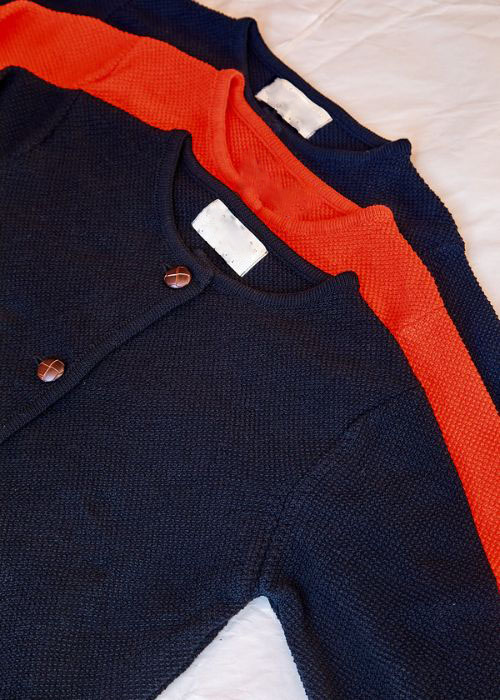
A cardigan may look like a simple layering piece, but its material determines almost everything that matters in the final product. Softness, warmth, drape, pilling, recovery, wash behavior, and price all begin with fiber choice. A cardigan with the right silhouette can still fail if the yarn is wrong for the season, the market, or the intended level of quality.
The best material for a cardigan depends on the product goal, season, target customer, and price level. In most cases, cotton, wool, cashmere, acrylic, and blended yarns are the most common and most effective cardigan materials. The strongest choice is not always the most expensive fiber. It is the one that best balances comfort, durability, hand feel, structure, care needs, and commercial value.
At Fusionknits, cardigan material selection is treated as one of the most important technical and commercial decisions in knitwear development. A cardigan is not defined only by its shape, buttons, or fashion direction. It is defined by the fiber system behind it. When the material is chosen correctly, the cardigan becomes easier to develop, easier to wear, and easier to position successfully in the market.
Why does cardigan material matter so much?
A cardigan is a knitwear product, so the material is not just a surface choice. The fiber affects the whole garment from the first touch to the last wash. It changes how the cardigan hangs on the body, how warm it feels, how well it keeps shape, and how customers judge its value.
Cardigan material matters because it controls softness, drape, warmth, breathability, structure, recovery, durability, and care requirements. In knitwear, fiber choice affects both product performance and market perception at the same time.
From a manufacturing standpoint, a cotton cardigan does not behave like a wool cardigan, and an acrylic cardigan does not perform like a cashmere blend. The same silhouette can feel light and breathable in one yarn, warm and rich in another, or soft and commercially practical in a blend. That is why two cardigans that look similar on a hanger may belong to completely different product levels.
At Fusionknits, material is usually the first serious conversation in cardigan development because it affects both technical execution and final customer experience.
Why fiber choice changes the whole cardigan
- It affects hand feel and softness
- It changes warmth and seasonality
- It influences drape and body shape
- It affects pilling and wear life
- It changes care expectations
- It influences final price and market position
Why this matters in real production
Material affects knitting behavior
Some yarns create cleaner stitches, some feel denser, and some need more finishing control.
Material affects customer expectation
A customer buying a spring cardigan expects a different experience from a customer buying a winter layering piece.
Material affects product identity
The same cardigan can feel casual, premium, soft, refined, cozy, or budget-driven depending on the yarn.
A simple material view
| Material factor | Why it matters |
|---|---|
| Softness | Shapes first impression |
| Weight | Changes comfort and drape |
| Recovery | Affects long-term shape |
| Warmth | Defines seasonality |
| Cost | Shapes market positioning |
That is why cardigan material is one of the strongest product decisions in knitwear manufacturing.
Is cotton one of the best materials for a cardigan?
Yes, in many cases. Cotton is one of the strongest cardigan materials for breathable, versatile, everyday knitwear. It is especially useful in lighter layers and trans-seasonal products.

Cotton is one of the best materials for a cardigan when the goal is breathability, comfort, softness, and broad wearability. Cotton cardigans are especially strong in spring, autumn, indoor layering, and clean casualwear collections.
Cotton works because it feels familiar and easy to wear. It supports a natural hand feel and works well in many fashion levels, from simple basics to cleaner premium casual programs. It also takes dye well, making it useful for broad color development. The main limitation is that cotton alone may not always offer the same warmth or recovery as wool or certain blends.
At Fusionknits, cotton is often selected when the product needs broad market appeal, everyday comfort, and reliable styling flexibility.
Why cotton performs well in cardigans
- Breathable and skin-friendly
- Good for lighter layers
- Familiar to most customers
- Suitable for many color directions
- Strong in casual and clean wardrobe programs
Where cotton performs best
Trans-seasonal cardigans
Cotton works very well for spring and autumn because it feels lighter than winter-focused fibers.
Indoor layering products
Office cardigans and easy daily knits often benefit from cotton’s comfort.
Everyday market categories
Cotton supports repeat wear and broad customer acceptance.
Cotton cardigan overview
| Cotton strength | Product result |
|---|---|
| Breathability | Better everyday layering |
| Natural hand feel | Strong comfort value |
| Color versatility | Broad commercial range |
| Lower winter warmth | Better for mild seasons |
Cotton is not the answer for every cardigan, but it is one of the best all-around materials in many everyday knitwear programs.
Is wool the best material for colder-season cardigans?
In many cases, yes. Wool is one of the strongest cardigan materials for warmth, resilience, and richer knitwear identity. It remains a key fiber in autumn and winter cardigan development.
Wool is often the best material for colder-season cardigans because it provides natural warmth, elasticity, better seasonal performance, and a richer knitwear feel. Wool and wool blends are especially strong for winter layering and higher-value knitwear programs.
Wool creates a different cardigan experience from cotton. It feels warmer, more seasonal, and often more elevated. Fine merino wool can create smooth, polished cardigans, while chunkier wool yarns create more textured, casual winter products. Pure wool may sit at a higher price point, which is why blends are often used to balance performance and cost.
At Fusionknits, wool is usually selected when the cardigan needs stronger cold-weather function, a more premium feel, or a richer product identity.
Why wool is so strong in cardigans
- Natural warmth
- Good elasticity and recovery
- Strong winter relevance
- Richer tactile identity
- Better premium perception
Why wool blends are often used
Better commercial balance
A blend can reduce cost while maintaining warmth and knitwear value.
Better structure or comfort
Some blended yarns improve stability, softness, or daily wear practicality.
Wider market fit
A wool-blend cardigan is often easier to price and easier to scale commercially.
Wool cardigan guide
| Wool direction | Typical cardigan use |
|---|---|
| Fine merino | Smooth, polished seasonal knitwear |
| Wool blend | Balanced winter commercial cardigan |
| Chunkier wool yarn | Cozy and more casual cold-weather knit |
For colder seasons, wool is one of the strongest material directions available.
Is cashmere the best material if the goal is luxury?
Cashmere is one of the most premium cardigan materials in the market. It is known for softness, light warmth, and luxury appeal. But that does not automatically make it the best for every cardigan.
Cashmere is one of the best materials for a cardigan when the goal is premium softness, light warmth, and luxury positioning. However, it is not always the best commercial choice for every market because it comes with higher cost, more delicate care needs, and a narrower product position.
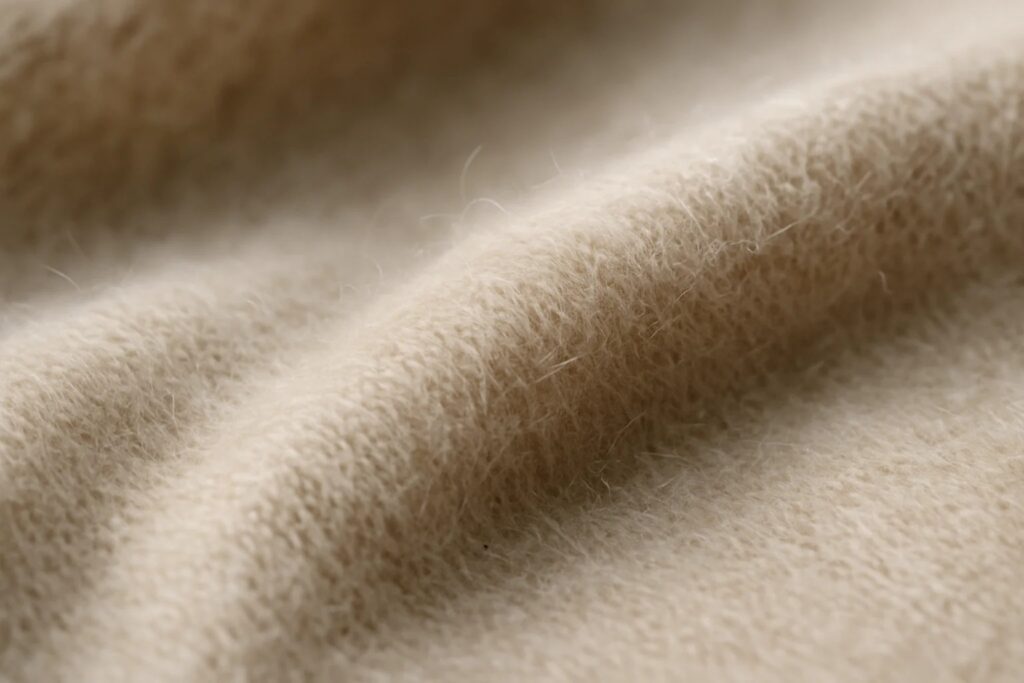
Cashmere creates a very specific cardigan category. It is chosen not because it is universally practical, but because it gives the product a higher level of softness and a more elevated market identity. Many premium cardigans use cashmere blends rather than pure cashmere in order to balance softness, durability, and production practicality.
At Fusionknits, cashmere and cashmere-blend cardigan programs are usually developed for more premium collections where material story and tactile value are central to the product.
Why cashmere is valued so highly
- Exceptional softness
- Lightweight warmth
- Elegant drape
- Luxury customer appeal
- High-end brand positioning
Why cashmere is not always the universal best answer
It costs much more
That changes product pricing and target market immediately.
It needs more careful handling
Care, finishing, and customer use all require more discipline.
It serves a narrower commercial role
Not every cardigan program needs luxury-level fiber.
Cashmere cardigan overview
| Cashmere quality | Product result |
|---|---|
| Extreme softness | Strong premium perception |
| Light insulation | Comfortable luxury layering |
| Higher price | Narrower market reach |
| More delicate care | Less universal practicality |
Cashmere is one of the best materials in the luxury segment, but not always the best all-purpose solution.
Is acrylic a good material for a cardigan?
Yes, especially in large-scale commercial production. Acrylic is widely used in cardigans because it offers cost efficiency, good color performance, and a sweater-like appearance at a more accessible price.
Acrylic is a good cardigan material when the goal is affordability, softness, visual sweater identity, and commercial scalability. It is especially common in value-driven and broad-market cardigan programs.
Acrylic plays an important role in knitwear because it helps brands develop accessible sweaters without moving too high in cost. A good acrylic cardigan can still feel soft and visually appealing. The quality depends heavily on yarn grade, knitting quality, and finishing. A weaker acrylic cardigan may feel more synthetic or age faster, but a stronger acrylic or acrylic blend can perform well in the right market.
At Fusionknits, acrylic is often selected when the cardigan needs broader price accessibility and larger-volume commercial viability.
Why acrylic is so common in cardigans
- Lower cost
- Easy color development
- Soft sweater-like look
- Good for volume programs
- Suitable for many commercial categories
Where acrylic works best
Value-driven retail programs
Acrylic helps keep price points more accessible.
Everyday commercial knitwear
It works well in broad-market cardigan categories.
Blended yarn systems
Acrylic often performs even better when balanced with natural or support fibers.
Acrylic cardigan guide
| Acrylic strength | Product role |
|---|---|
| Cost efficiency | Better commercial pricing |
| Sweater appearance | Strong visual category fit |
| Broad market use | Good for scalable production |
| Less natural feel than wool or cotton | Requires quality control |
Acrylic is not always the most premium answer, but it is often one of the most practical.
Why are blended yarns often the best material choice?
In real manufacturing, blended yarns are often the most useful cardigan solution because they combine the strengths of different fibers. This gives brands more control over hand feel, structure, price, and performance.

Blended yarns are often the best material choice for a cardigan because they balance softness, warmth, structure, durability, and cost more effectively than many pure fibers. Cotton-acrylic, wool-nylon, viscose-nylon, and cashmere blends are common examples of this strategy.
A pure cotton cardigan may feel breathable but need more support in recovery. A pure wool cardigan may feel rich but be too expensive for some targets. A pure acrylic cardigan may be affordable but less refined in feel. A well-engineered blend helps solve these pressures more effectively.
At Fusionknits, blended yarns are often the strongest commercial answer because they give better product balance in real production and real wear.
Why blends perform so well
- Better cost-performance balance
- Better softness control
- Better structure and recovery
- Better seasonal flexibility
- Better commercial fit across market levels
Common cardigan blends
Cotton-acrylic
Good for soft commercial cardigans with broader price access.
Wool-nylon
Strong for warmth, shape retention, and winter performance.
Viscose-nylon
Useful for smoother drape and refined surface feel.
Cashmere blends
Useful for premium softness with better durability and lower cost than pure cashmere.
Blend-benefit overview
| Blend type | Main advantage |
|---|---|
| Cotton-acrylic | Softness plus practicality |
| Wool-nylon | Warmth plus structure |
| Viscose-nylon | Smooth drape plus support |
| Cashmere blend | Luxury feel plus better balance |
That is why blended yarns are so often the best real-world answer in cardigan development.
How should buyers decide what the best cardigan material is?
The strongest answer depends on the product goal. There is no one universal best material for every cardigan because different cardigan categories need different things.
Buyers should decide the best cardigan material by matching fiber choice to product use, season, fit direction, care expectation, and target price. The best material is the one that supports the cardigan’s actual purpose instead of simply carrying the highest reputation.
A spring office cardigan, a cozy winter cardigan, a premium luxury cardigan, and a mass-market value cardigan should not all use the same fiber logic. Material choice should support the intended customer and the intended market, not just a general idea of what sounds best.
At Fusionknits, the strongest material decisions usually come from asking practical development questions first.
Questions buyers should ask
- Is the cardigan for warm or cool weather?
- Should it feel light, warm, soft, or structured?
- Does the customer want easy care or luxury feel?
- Is the cardigan meant for value retail or premium positioning?
- Does the product need stronger durability or stronger softness?
Why this approach works better
It protects product clarity
The cardigan feels more aligned with its real purpose.
It improves manufacturing accuracy
The yarn choice supports the right gauge, stitch, and finishing direction.
It improves customer satisfaction
The final product performs closer to expectation.
Buyer decision guide
| Product goal | Strong material direction |
|---|---|
| Lightweight everyday cardigan | Cotton or cotton blend |
| Winter layering cardigan | Wool or wool blend |
| Premium soft cardigan | Cashmere blend or fine merino |
| Value-driven commercial cardigan | Acrylic or commercial blend |
| Balanced broad-market cardigan | Blended yarn |
The best material is usually the one that fits the full product strategy, not the one with the strongest name alone.
Conclusion
The best material for a cardigan depends on what the cardigan is meant to do. Cotton is one of the strongest choices for breathable, versatile, everyday layering. Wool is one of the best for warmth, resilience, and cold-season knitwear. Cashmere is highly effective in premium soft cardigans, but it serves a more specialized luxury category. Acrylic remains important in commercial cardigan production because it supports affordability and scale. In many real manufacturing programs, blended yarns are often the best overall solution because they balance softness, structure, durability, and cost more effectively than many single-fiber options.
At Fusionknits, the best cardigan material is never chosen by reputation alone. It is selected by matching fiber behavior to season, fit, market level, hand feel, and commercial purpose. A successful cardigan needs the right softness, the right drape, the right recovery, and the right price structure at the same time.
That is why strong cardigan development always begins with material logic. When the yarn system is chosen correctly, the cardigan becomes easier to knit, easier to finish, easier to wear, and much more dependable in both product performance and market value.