T-shirts look simple, but the material behind them affects almost everything. It changes the hand feel, breathability, print result, durability, shrinkage, and even the product’s market position.
The most common material for T-shirts is cotton. It is widely used because it is soft, breathable, easy to wear, and suitable for many kinds of T-shirt products. In industrial production, cotton is also often blended with polyester, viscose, or elastane to improve cost, stability, stretch, or performance.
At Fusionknits, we see cotton as the foundation of T-shirt manufacturing. It remains the most common material in the market, but it is not the only material that matters. In real factory production, the best material choice depends on the product goal, target customer, and price level.
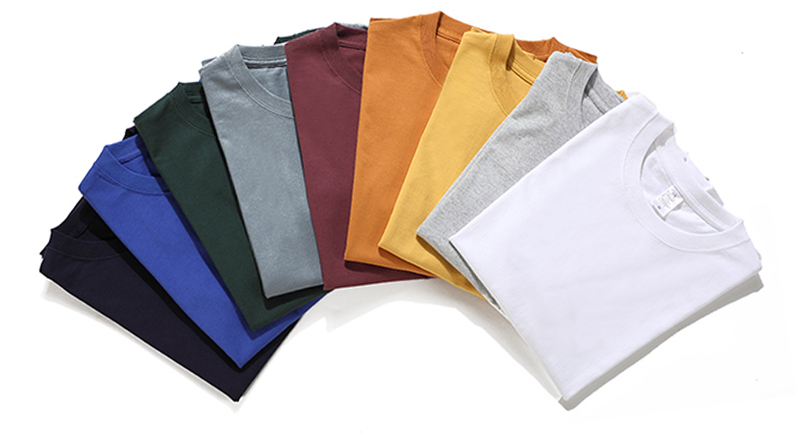
Why is cotton the most common material for T-shirts?
Cotton has remained the leading T-shirt material for a long time because it fits the basic purpose of a T-shirt very well. It is comfortable, familiar, and accepted in nearly every market.
Cotton is the most common material for T-shirts because it offers a strong balance of softness, breathability, skin comfort, and broad market appeal. It also works well for casualwear, fashion basics, promotional products, and many retail programs.
A T-shirt is usually expected to feel easy, soft, and natural on the body. Cotton supports that expectation better than many other materials. It also accepts dye and print well, which makes it useful across a wide range of colors and branding programs.
At Fusionknits, we often see buyers begin with cotton because it is easy to position. A cotton T-shirt can serve as a budget basic, a mid-range retail product, or a more premium style depending on the yarn quality, GSM, and finishing.
Main reasons cotton stays so common
- Soft and natural hand feel
- Good breathability
- Comfortable for daily wear
- Easy to dye and print
- Strong acceptance across different markets
- Flexible use in many product categories
Why cotton works well in T-shirt production
It matches the idea of everyday comfort
Most consumers expect a T-shirt to feel soft and wearable for long hours.
It supports many price levels
Cotton can be developed into both entry-level and premium products.
It is easy to commercialize
Brands, wholesalers, and buyers all understand cotton clearly.
Why cotton remains the standard
| Cotton strength | Why it matters for T-shirts |
|---|---|
| Natural touch | Supports daily comfort |
| Breathability | Helps in warm-weather and casual use |
| Print compatibility | Good for logos and graphics |
| Market familiarity | Easier for brands and buyers to sell |
| Product flexibility | Works in many quality levels |
This is why cotton is still the starting point in many T-shirt development programs.
What types of cotton are commonly used in T-shirt manufacturing?
Not all cotton is the same. A T-shirt made from basic cotton can feel very different from one made from better cotton yarn and better finishing.

The types of cotton commonly used in T-shirt manufacturing include carded cotton, combed cotton, ring-spun cotton, organic cotton, and extra-long-staple cotton. Each option changes the softness, surface appearance, quality level, and cost of the final garment.
When people say a T-shirt is made of cotton, that still leaves many technical questions unanswered. The quality of the cotton fiber, the yarn spinning method, and the finishing process all affect the result.
At Fusionknits, we usually explain cotton quality in levels. Some cotton fabrics are designed for cost efficiency. Others are developed for smoother hand feel, cleaner appearance, and stronger retail value.
Common cotton options in T-shirt production
- Carded cotton
- Combed cotton
- Ring-spun cotton
- Organic cotton
- Extra-long-staple cotton
What each cotton type usually means
Carded cotton
This is often used for more cost-sensitive products. It can work well in basic programs, but the surface is usually less smooth.
Combed cotton
This cotton goes through extra processing to remove more short fibers. The result is usually softer and cleaner.
Ring-spun cotton
Ring-spun yarn often creates a softer and stronger fabric with a more refined surface.
Organic cotton
Organic cotton is chosen more for sourcing and sustainability positioning, but its quality can still vary depending on fiber and yarn standards.
Extra-long-staple cotton
This is often used in more premium T-shirts because it can create a smoother and softer result.
A simple cotton quality comparison
| Cotton type | Common result | Typical product level |
|---|---|---|
| Carded cotton | Basic surface and feel | Entry-level T-shirts |
| Combed cotton | Cleaner and softer | Mid-range retail |
| Ring-spun cotton | Better softness and strength | Better-quality basics |
| Organic cotton | Sustainability-driven positioning | Mid to premium |
| Extra-long-staple cotton | Premium softness and smoothness | Premium T-shirts |
So while cotton is the most common material, the actual cotton choice still changes the value of the product in a major way.
Why are cotton blends also so common in T-shirt production?
Even though cotton is the most common T-shirt material, many factories and brands use cotton blends instead of 100% cotton. This is because blended fabrics often solve practical production or performance needs.
Cotton blends are common in T-shirt production because they combine the comfort of cotton with the added benefits of other fibers, such as better durability, lower cost, improved shape retention, stretch, or moisture management.
A 100% cotton T-shirt is a strong product in many cases, but it is not always the best option for every market. Some buyers want lower shrinkage. Some want better wrinkle resistance. Some want more stretch. Some want a more competitive price. This is where blends become important.
At Fusionknits, we often recommend blends when the product needs more than natural comfort alone. Blends can help balance function and cost more effectively.
Common cotton blends used in T-shirts
- Cotton-polyester
- Cotton-viscose
- Cotton-modal
- Cotton-lyocell
- Cotton-elastane
- Cotton-polyester-elastane
Why factories use these blends
Better stability
Some blended fabrics hold shape better after washing.
Better cost control
Blends can create a more competitive price in certain product programs.
Better softness or drape
Modal, lyocell, or viscose can improve the hand feel and flow of the fabric.
Better stretch
Elastane can help fitted or active styles.
Common blend uses
| Blend type | Main benefit | Typical use |
|---|---|---|
| Cotton-polyester | Better durability and cost balance | Basics, promotions, uniforms |
| Cotton-viscose | Softer drape | Fashion tees |
| Cotton-modal | Softer premium feel | Upgraded basics |
| Cotton-lyocell | Smoothness and better drape | Premium casualwear |
| Cotton-elastane | Better stretch and recovery | Fitted T-shirts |
This is why cotton remains the base of many T-shirt materials, even when it is not used alone.
How does cotton compare with polyester for T-shirts?
Cotton may be the most common T-shirt material, but polyester is also widely used, especially in activewear and more technical products. Comparing these two helps explain why cotton still leads in everyday T-shirts.
Cotton compares favorably with polyester for everyday T-shirts because it feels more natural, breathable, and comfortable for many consumers. Polyester performs better in areas such as moisture management, shape retention, and quick drying, which is why it is more common in sports and performance products.
This difference is important in product development. A casual lifestyle T-shirt and a performance gym T-shirt may look similar from a distance, but the material choice behind them is often very different.
At Fusionknits, we usually start by asking how the T-shirt will be used. If the product is for daily casual wear, cotton is often the stronger choice. If it is for training, uniforms, or quick-dry function, polyester may be more suitable.
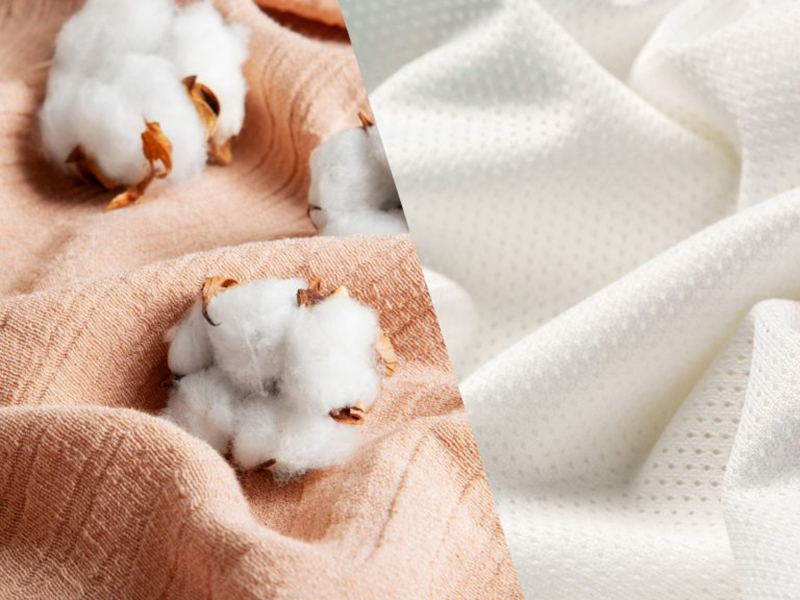
Cotton vs. polyester in T-shirt use
Cotton
Better for comfort, natural feel, and classic casualwear.
Polyester
Better for technical function, easy care, and performance-driven use.
A practical comparison
| Material | Main strength | Main limitation |
|---|---|---|
| Cotton | Soft, breathable, natural | Can shrink more and dry slower |
| Polyester | Durable, quick-dry, wrinkle-resistant | Less natural hand feel |
Why cotton still wins in common T-shirts
- More familiar for everyday wear
- Better accepted in classic casual markets
- Easier to position as a comfortable basic
- Stronger natural fiber image
This is why polyester is important, but cotton still remains the most common material for standard T-shirts.
What fabric construction is most common for cotton T-shirts?
The material of a T-shirt is not only about fiber. It is also about how the fabric is made. The most common T-shirt material and the most common T-shirt fabric structure usually work together.
The most common fabric construction for cotton T-shirts is single jersey knit. This structure is widely used because it is soft, flexible, efficient to produce, and well suited to classic T-shirt styling.
Many people talk about cotton as if fiber alone defines the product. But in manufacturing, the knit structure is also part of the material story. Single jersey is the classic choice because it supports comfort, movement, and a familiar T-shirt appearance.
At Fusionknits, single jersey remains one of the most widely used structures in T-shirt production because it works well across many weights and market levels.
Common knit structures in T-shirt production
- Single jersey
- Interlock
- Rib knit
- Stretch jersey
Why single jersey is so common
Soft and flexible
It matches the casual role of a T-shirt very well.
Efficient for production
It is widely available and supports bulk manufacturing.
Suitable for many styles
It works in light, medium, and heavier weights depending on the yarn and machine setup.
Common fabric structure comparison
| Knit structure | Common use | Main feature |
|---|---|---|
| Single jersey | Standard T-shirt body fabric | Soft and versatile |
| Interlock | More premium T-shirts | Fuller and smoother |
| Rib | Neckbands or special body styles | Better elasticity |
| Stretch jersey | Fitted or active styles | Improved recovery |
So when we talk about the most common T-shirt material, the most common fabric answer is often cotton single jersey.
What makes cotton a practical material for manufacturers and buyers?
Cotton is popular with end users, but it is also practical from a manufacturing and sourcing point of view. That is another reason it remains the most common T-shirt material.

Cotton is practical for manufacturers and buyers because it is widely available, easy to source, familiar to the market, suitable for printing and dyeing, and flexible across many quality levels and price points.
From a factory perspective, a material becomes common not only because it feels good, but also because it works well in development and production. Cotton performs strongly in that area. It can be dyed in many colors, printed with many decoration methods, and developed for a wide range of customers.
At Fusionknits, we see cotton as a strong base material because it supports both commercial efficiency and product versatility.
Why buyers keep choosing cotton
- Easy to understand
- Easy to sell in many markets
- Suitable for private label basics
- Good for wholesale programs
- Strong compatibility with printing
Why manufacturers like working with cotton
Broad raw material availability
Cotton-based T-shirt programs are easier to build at scale.
Flexible quality positioning
Factories can develop basic, mid-range, or premium products with cotton.
Good branding value
Many brands prefer to promote natural fiber stories.
Commercial strengths of cotton
| Commercial factor | Why cotton performs well |
|---|---|
| Sourcing familiarity | Easier supplier communication |
| Product recognition | Easier for customers to understand |
| Decoration compatibility | Good for screen print and other methods |
| Range of price levels | Suitable for many business models |
This is why cotton remains a strong choice not only in design, but also in large-scale production planning.
Are there situations where cotton is not the best T-shirt material?
Cotton is the most common material, but that does not mean it is the best choice in every situation. Product purpose still matters.
Cotton is not always the best T-shirt material when the product needs strong moisture management, very fast drying, wrinkle resistance, lower maintenance, or high-performance athletic function. In these cases, polyester or blended fabrics may be more suitable.
A good factory should not recommend cotton for every order automatically. A sports team shirt, a safety uniform base layer, or a travel shirt may need different material logic.
At Fusionknits, we believe the material should always follow the product goal. Cotton is strong, but it still has limits in specific use cases.
Situations where other materials may work better
- Activewear
- Quick-dry performance products
- Travel garments
- Easy-care uniforms
- Compression or stretch-focused tops
Why cotton may be less suitable in some products
Slower drying
Cotton usually holds moisture longer than polyester.
More shrinkage risk
Without proper control, cotton can change size more after washing.
Less technical function
It is not the first choice for high-performance apparel.
Material selection by product goal
| Product goal | Better material direction |
|---|---|
| Everyday casual T-shirt | Cotton |
| Sports performance T-shirt | Polyester or performance blend |
| Fitted stretch T-shirt | Cotton-elastane or technical blend |
| Low-maintenance workwear tee | Cotton-poly blend |
This is an important point for buyers. The most common material is not always the most suitable material for every product.
What should buyers ask before choosing a T-shirt material?
Many buyers start by asking for cotton because it is the most common T-shirt material. But better sourcing decisions usually require more detail than that.
Before choosing a T-shirt material, buyers should ask about fiber content, yarn quality, knit structure, fabric weight, shrinkage control, finishing, and target use. These details help determine whether cotton, a cotton blend, or another material is the best fit for the product.
At Fusionknits, we usually guide buyers to move from general material preference to technical material planning. This creates better sampling, stronger bulk production, and fewer quality surprises.
Useful questions buyers should ask
- Is 100% cotton the right choice for the target market?
- What cotton quality level is being used?
- Is the yarn combed or ring-spun?
- What GSM fits the product best?
- How is shrinkage controlled?
- Will the shirt be printed, dyed, or washed?
- Would a blend improve the product result?
Why these questions matter
They improve product accuracy
A better material match leads to a better final T-shirt.
They reduce production risk
Clear standards help avoid problems later.
They support better supplier comparison
Buyers can compare more than just price.
A practical decision guide
| Buyer question | Why it matters |
|---|---|
| Who will wear the T-shirt? | Defines comfort and function needs |
| What price level is required? | Affects fiber and yarn choice |
| Does the product need performance features? | Helps decide between cotton and blends |
| What quality image does the brand want? | Shapes the material direction |
The best T-shirt programs usually begin with better questions, not only with a familiar material name.
Conclusion
The most common material for T-shirts is cotton because it offers a strong combination of softness, breathability, comfort, market familiarity, and product flexibility. It works well across many categories, from basic casualwear to better retail programs, and it remains the standard starting point in T-shirt development.
At the same time, cotton is not the whole story. Different cotton qualities, knit structures, and blended materials can change the final result in important ways.
At Fusionknits, we believe the best T-shirt material choice comes from matching the right fabric solution to the product goal, customer expectation, and production standard. Cotton may be the most common material, but the best result still depends on how that material is selected, developed, and manufactured.