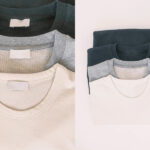
Pilling is one of the most common quality complaints in knitwear. Many buyers assume it is only a raw material problem, but sweater pilling is usually the result of fiber length, yarn twist, knit structure, surface finishing, garment friction, and wash conditions working together. That is why two sweaters with similar labels can perform very differently after a few weeks of wear.
The type of sweater that usually pills the least is one made from longer-staple fibers, compact high-twist yarns, smoother surfaces, and denser knit structures. Fine-gauge sweaters in compact cotton, tightly spun merino, stable blends, or smoother filament-supported constructions usually resist pilling better than fuzzy, brushed, chunky, or loosely spun sweaters.
At Fusionknits, anti-pilling performance is treated as a full product-development issue, not a single fabric issue. The sweater type matters because construction, texture, gauge, and expected wear conditions all influence how quickly the surface begins to break down. The strongest anti-pilling sweater is usually the one developed with surface stability as a priority from the start.
Why do some sweater types pill more than others?
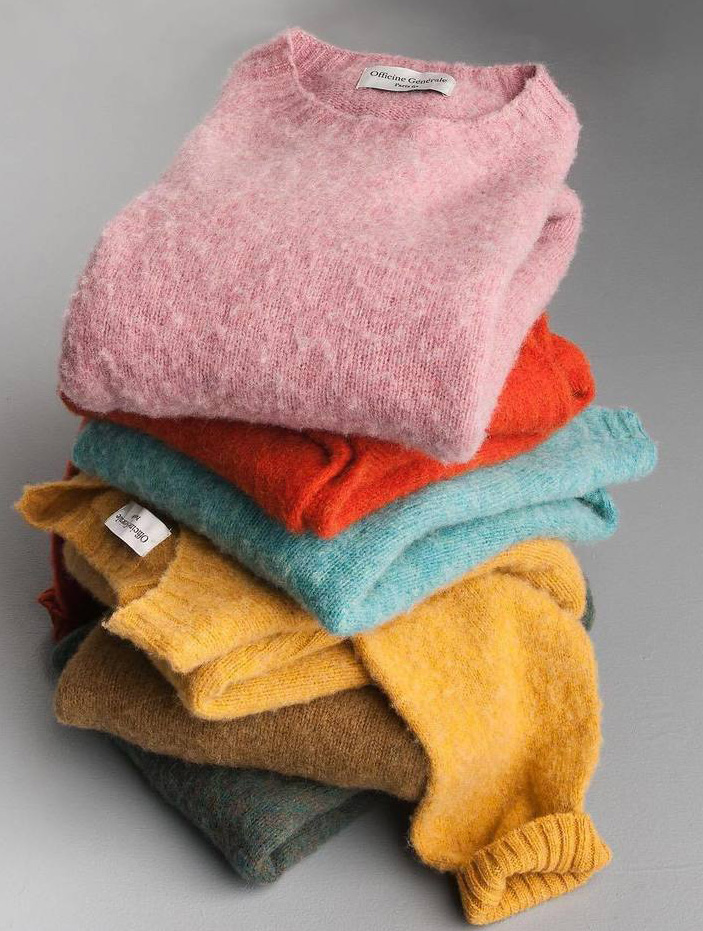
Not all sweaters pill at the same rate because not all sweaters place the same stress on the yarn surface. A soft brushed cardigan, a chunky loose-knit pullover, and a compact fine-gauge crew neck may all belong to knitwear, but they do not share the same pilling risk.
Some sweater types pill more than others because sweater construction changes how exposed the surface fibers are. Looser stitches, fuzzier finishes, softer low-twist yarns, and high-friction wear zones allow fibers to rise more easily, while compact knits and smoother yarns hold fibers in place more effectively.
From a manufacturing perspective, pilling begins when surface fibers loosen and twist together under rubbing. The more open, hairy, or unstable the sweater surface is, the faster this process usually begins. Sweaters that look very soft and fluffy at the sample stage may already carry more pilling risk than cleaner, smoother constructions.
At Fusionknits, the first anti-pilling question is usually not “Which fiber is this?” but “How stable is the whole sweater system under friction?”
Main reasons sweater types pill differently
- Fiber length is not the same
- Yarn twist is not equally strong
- Knit density changes fiber movement
- Surface finishing changes fiber exposure
- Sweater fit changes friction points
- Daily use conditions vary by style
Why sweater structure matters so much
Looser surfaces release fibers faster
A chunky airy knit usually exposes more loose fiber than a compact fine knit.
Softness can increase vulnerability
The softest-looking sweater is not always the most durable one.
The garment type changes friction zones
A cardigan under a bag strap behaves differently from a fine office pullover.
Basic pilling logic
| Product factor | Effect on pilling |
|---|---|
| Smooth compact surface | Lower pilling risk |
| Fuzzy or brushed surface | Higher pilling risk |
| Dense structure | Better surface stability |
| Loose structure | More fiber movement |
That is why sweater type matters just as much as fiber content in anti-pilling performance.
What sweater construction usually pills the least?
In most cases, smoother and denser sweater constructions perform better than bulky, hairy, or loosely structured ones. The knit architecture itself often decides how much friction the surface can handle.

The sweater construction that usually pills the least is a compact, fine-gauge or stable mid-gauge knit with a smooth surface and strong yarn cohesion. Fine jersey knits, tightly controlled rib structures, and cleaner knit faces usually outperform open, fluffy, or highly brushed sweater constructions in anti-pilling behavior.
A dense structure helps because it reduces yarn movement and holds fibers more securely inside the fabric. By contrast, open structures allow more movement, more snag risk, and more surface disruption during wear and washing.
At Fusionknits, compact construction is one of the most effective anti-pilling design tools because it improves stability without relying only on fiber reputation.
Sweater constructions that usually resist pilling better
- Fine-gauge jersey knit
- Compact rib-knit
- Dense interlock or stable double-knit directions
- Smooth mid-gauge sweater knits
- Cleaner technical knit structures with low surface fuzz
Sweater constructions with more pilling risk
Brushed knits
Brushing raises surface fibers and increases pill formation potential.
Chunky loose knits
These create more movement and more friction exposure.
Soft open knits
They often look attractive but need more careful wear.
Construction comparison
| Sweater construction | General pilling tendency |
|---|---|
| Fine compact knit | Lower |
| Stable mid-gauge knit | Lower to moderate |
| Chunky loose knit | Higher |
| Brushed fluffy knit | Higher |
That is why cleaner and denser sweater structures usually lead in anti-pilling performance.
Do fine-gauge sweaters pill less than chunky sweaters?
In many cases, yes. Fine-gauge sweaters often pill less because they are made with smoother yarns, tighter structures, and less bulky surface fiber exposure. However, fiber quality still matters.
Yes, fine-gauge sweaters usually pill less than chunky sweaters because the knit surface is smoother, the loops are smaller, and the yarn is often more compact. Chunky sweaters usually carry higher pilling risk because heavier yarns, open structure, and visible texture create more friction and more loose surface fiber movement.
This does not mean every fine-gauge sweater is automatically superior. A weak fine-gauge knit in low-quality yarn may still pill badly. But if the yarn quality is good, a fine-gauge sweater usually offers better anti-pilling behavior than a chunky fuzzy knit.
At Fusionknits, fine-gauge sweaters are often preferred when the product brief requires cleaner long-term appearance, especially in officewear, layering basics, and premium minimal collections.
Why fine-gauge sweaters often resist pilling better
- Smaller stitches create a tighter surface
- Smoother yarns are commonly used
- Less bulk means less fiber disruption
- The surface is often less fuzzy
- They usually receive cleaner finishing
Why chunky sweaters pill more easily
More texture means more surface friction
Large stitches and bulky yarns create more exposed contact points.
Heavier surfaces move more
This increases rubbing at underarms, sides, and cuffs.
Chunky yarn often emphasizes softness
That softness can come with more loose fiber.
Gauge guide
| Sweater gauge | Pilling tendency |
|---|---|
| Fine gauge | Lower |
| Mid gauge | Moderate |
| Chunky gauge | Moderate to higher |
| Brushed chunky knit | Higher |
That is why fine-gauge sweaters are often one of the safest choices when anti-pilling performance is important.
Which fiber types usually perform best in low-pilling sweaters?
Fiber type matters, but only when considered together with yarn construction and finishing. Still, some fiber directions are more reliable than others when the goal is cleaner surface wear.
Low-pilling sweaters usually perform best when they use long-staple cotton, fine compact merino, stronger cotton blends, smooth filament-supported constructions, or tightly spun stable yarns. These materials hold fibers together more effectively and create less surface shedding under friction.
Long-staple cotton can work very well in fine and mid-gauge sweaters because it creates smoother yarns. Fine merino can also perform well when the yarn is compact and the finish is controlled. Some blends with support fibers such as nylon can improve cohesion and reduce surface wear. On the other hand, fuzzy acrylic-rich yarns, very delicate cashmere-rich surfaces, and low-twist hairy wool blends often pill faster.
At Fusionknits, anti-pilling fiber selection is never based on softness alone. It is based on how securely the fiber can stay inside the yarn under real wear conditions.
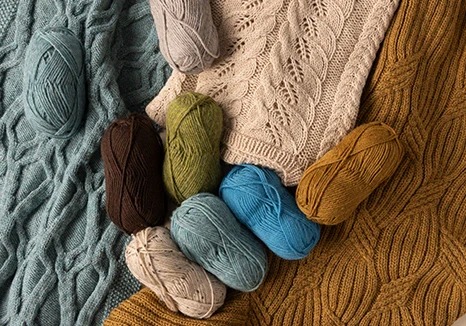
Fiber directions that often pill less
- Long-staple cotton
- Compact fine merino
- Cotton-nylon or wool-nylon support blends
- Filament-supported knit systems
- Better-quality smooth synthetic blends
Fiber directions that often pill more
Low-grade acrylic
This often creates visible pills quickly.
Delicate fuzzy luxury yarns
Softness and anti-pilling performance do not always move together.
Short-staple or loosely spun fibers
These release loose ends more easily.
Fiber guide
| Fiber direction | General pilling tendency |
|---|---|
| Long-staple cotton | Lower |
| Compact merino | Lower to moderate |
| Stable support blends | Lower to moderate |
| Fuzzy acrylic blend | Higher |
| Brushed soft luxury blend | Moderate to higher |
That is why the best low-pilling sweater usually begins with a stable fiber and yarn system.
Are cardigans or pullovers more likely to pill?
The answer depends on how the garment is worn. Cardigans often experience more front-body friction from bags, desks, layering, and movement, while pullovers may experience more underarm and side-body friction. The product role changes the stress pattern.
Cardigans are often more likely to show visible pilling in front-body areas because they are worn open or layered often and receive more rubbing from bags, desks, seat belts, and outerwear. Pullovers may pill less visibly overall, especially if they are fine-gauge and worn in lower-friction environments.
A classic fine crew neck sweater worn lightly in an office may maintain a cleaner surface for longer than a soft open-front cardigan worn daily with a shoulder bag. This does not make cardigans lower quality by definition. It simply means the garment category often faces more stress in visible zones.
At Fusionknits, anti-pilling expectations are always adjusted by garment type because surface exposure is not equal across all sweater families.
Why cardigans can pill more visibly
- Front panels receive more contact
- Bag straps rub directly over the surface
- Plackets and opening edges move more
- Layering creates more repeated friction
Why some pullovers may perform better
Fewer exposed front disruptions
The body surface may stay more stable.
Cleaner category use
Fine pullovers often live in lower-friction wardrobes.
Simpler front structure
No placket or trim interaction reduces localized wear.
Garment-type comparison
| Sweater type | Typical visible pilling risk |
|---|---|
| Fine pullover | Lower |
| Compact crew neck | Lower |
| Open-front cardigan | Moderate to higher |
| Chunky soft cardigan | Higher |
That is why garment type should always be included when judging pilling performance.
What sweater finishes should buyers avoid if anti-pilling matters?
Finishing strongly affects how the sweater surface behaves after the first few wears. Some finishes improve hand feel but also raise pilling risk because they pull more fibers outward.

If anti-pilling matters, buyers should be careful with heavily brushed finishes, fuzzy raised surfaces, over-softened knitwear, loose hair-like textures, and overly delicate hand-feel treatments that increase fiber exposure. These finishes may feel attractive at first touch, but they often weaken long-term surface stability.
From a commercial standpoint, this is one of the most important tradeoffs in knitwear. The market often wants softness immediately, but some softness comes from exposing more fiber on the surface. That can create a better sample feel and a weaker long-term appearance.
At Fusionknits, finish development is always balanced against wear performance because a sweater that feels excellent on day one but pills too fast will often disappoint the customer.
Finishes that often increase pilling risk
- Brushing
- Raising or fuzzy finishing
- Over-softening treatments
- Hairy hand-feel enhancement
- Delicate surface washing without enough structure control
Why these finishes increase risk
They expose more loose fibers
This gives friction more fiber to collect into pills.
They improve feel at the cost of stability
The hand feel may be stronger than the wear performance.
They can hide weak yarn structure
A very soft finish may distract from a less stable base fabric.
Finish guide
| Finish type | Pilling effect |
|---|---|
| Smooth compact finish | Lower risk |
| Light controlled softening | Moderate risk |
| Brushed finish | Higher risk |
| Raised fuzzy finish | Higher risk |
That is why finish selection should always match the performance goal of the sweater.
Which sweater type is usually the safest choice for low pilling?
When all the main product factors are considered together, some sweater types clearly offer better anti-pilling reliability than others. These are usually the styles built around cleaner structure and lower surface fuzz.
The safest sweater choice for low pilling is usually a fine-gauge or stable mid-gauge pullover made from compact long-staple cotton, tightly spun merino, or a stable support blend with a smooth finish. Classic crew neck and V-neck sweaters in cleaner knit constructions usually perform better than fuzzy cardigans, brushed knits, or chunky soft-texture sweaters.
This kind of sweater often works well because it avoids many of the biggest pilling triggers at once. It uses smoother yarn, lower surface exposure, cleaner silhouette, and often lower-friction styling use. It may not be the softest sweater in the showroom, but it is often one of the most reliable after repeated wear.
At Fusionknits, this type of sweater is often recommended when buyers want broad commercial performance with fewer appearance complaints.
Sweater types that are usually safest
- Fine-gauge crew neck sweater
- Fine or mid-gauge V-neck sweater
- Compact merino pullover
- Long-staple cotton knit sweater
- Stable smooth quarter-zip sweater
Why these styles work well
Cleaner structure
The knit surface is less exposed and more stable.
Lower fluff level
There are fewer loose fibers available to form pills.
Broader wear control
These sweaters often fit into cleaner lower-friction wardrobes.
Safe-choice guide
| Sweater type | Anti-pilling reliability |
|---|---|
| Fine-gauge crew neck | Strong |
| Fine-gauge V-neck | Strong |
| Stable mid-gauge pullover | Good |
| Chunky cable sweater | Moderate |
| Brushed fuzzy cardigan | Weaker |
That is why a fine or stable mid-gauge smooth sweater is often the best answer when pilling resistance is a top concern.
How should buyers and brands evaluate low-pilling sweaters professionally?
Choosing the right sweater type is only part of the process. A strong anti-pilling program also needs testing, product realism, and correct communication.
Buyers and brands should evaluate low-pilling sweaters by reviewing fiber quality, yarn construction, gauge, finish, abrasion exposure, and anti-pilling test results together. A low-pilling sweater should be approved not only because it feels good at sampling stage, but because it performs well after friction, wear, and wash evaluation.
At Fusionknits, this usually means combining raw material review with garment-level trials. The sweater should be tested in the form customers will actually wear, not just as a flat fabric concept.
Better professional review questions
- Is the fiber long-staple or stable enough?
- Is the yarn compact or too fuzzy?
- Is the finish smooth or brushed?
- Is the sweater high-friction or low-friction in use?
- Has anti-pilling testing been completed?
- Does the product claim match real durability?
Why this matters commercially
Pilling complaints appear quickly
Customers often notice surface change before many other quality issues.
Better testing protects brand trust
A more realistic development process reduces surprises.
Honest positioning improves satisfaction
A delicate luxury knit can still succeed if it is presented honestly.
Professional evaluation guide
| Review point | Why it matters |
|---|---|
| Yarn stability | Controls loose fiber release |
| Knit density | Controls surface movement |
| Finish type | Controls surface exposure |
| Wear testing | Predicts real product behavior |
That is how low-pilling sweater development becomes stronger, more reliable, and more commercially useful.
Conclusion
The type of sweater that usually pills the least is a fine-gauge or stable mid-gauge sweater made from smoother, stronger yarns and finished with a cleaner surface. Compact crew necks, fine V-necks, long-staple cotton sweaters, tightly spun merino pullovers, and stable support-blend knits usually perform better than chunky loose knits, fuzzy brushed sweaters, or soft high-hair surfaces. In most cases, smoother construction and stronger fiber cohesion matter more than softness alone.
At Fusionknits, anti-pilling performance is understood as a full product system built through fiber selection, yarn engineering, knit density, surface finishing, garment type, and realistic wear testing. The lowest-pilling sweater is rarely the fluffiest one or the softest one at first touch.
It is usually the sweater that balances comfort with structure and keeps the surface stable through real use. When buyers choose sweater types this way, they build knitwear ranges with better long-term appearance, better customer confidence, and stronger commercial value.