Softness is one of the first things people notice in a T-shirt. But in real manufacturing, softness is not created by one factor alone. Fiber choice, yarn quality, knit structure, dyeing, and finishing all shape how soft a T-shirt feels in the hand and on the body.
The softest T-shirt materials are usually modal, lyocell, high-quality cotton such as combed or extra-long-staple cotton, and soft blends that combine comfort with surface smoothness. In most cases, the softest result comes from the right combination of fiber, yarn, knit construction, and finishing.
At Fusionknits, we do not judge softness by fiber name alone. A fabric can sound premium on paper but still feel average if the yarn is weak or the finishing is poor. In T-shirt manufacturing, real softness comes from the full material system.
What material is usually considered the softest for T-shirts?
When buyers ask for the softest T-shirt material, they often expect one simple answer. In practice, softness depends on the product goal, but some materials are clearly known for a softer hand feel than others.
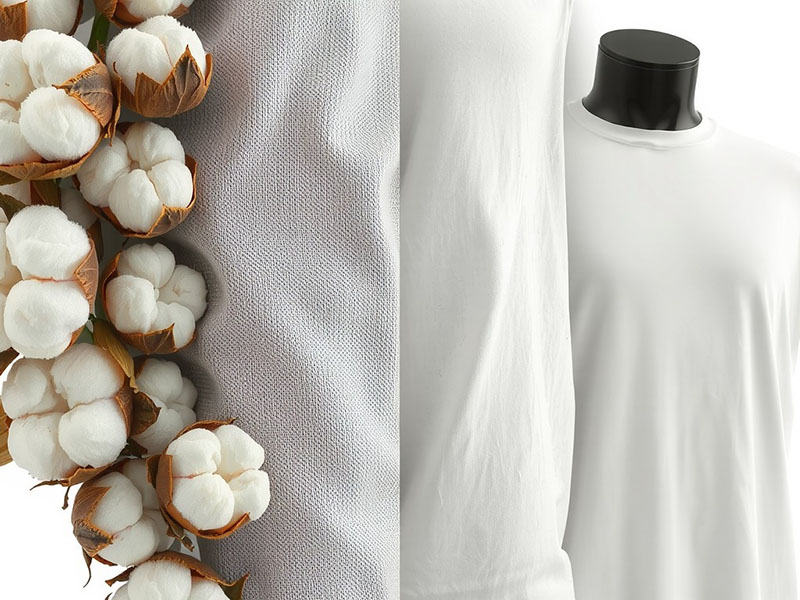
The softest T-shirt materials are usually modal, lyocell, and premium cotton, especially when they are made with fine yarns and clean knitting. Modal and lyocell often feel smoother and silkier, while premium cotton usually feels softer in a more natural and breathable way.
In commercial development, softness can mean different things. Some buyers want a silky, cool, smooth touch. Others want a soft but dry natural cotton feel. These are not exactly the same hand feel, even though both may be described as soft.
At Fusionknits, we usually separate softness into two categories. One is smooth softness, which often comes from cellulosic fibers such as modal and lyocell. The other is natural softness, which often comes from better cotton quality and better finishing.
Materials most often linked with soft T-shirts
- Modal
- Lyocell
- Combed cotton
- Ring-spun cotton
- Supima or other extra-long-staple cotton
- Cotton-modal blends
- Cotton-lyocell blends
- Bamboo viscose blends
Why these materials feel softer
Finer fiber surface
Smoother fibers usually create less roughness on the fabric surface.
Better yarn quality
Cleaner yarn often creates a softer and more even fabric.
Better drape
Some soft materials fall more smoothly and feel lighter against the skin.
A simple softness comparison
| Material | Hand feel style | Common result |
|---|---|---|
| Modal | Smooth and silky | Very soft everyday T-shirt |
| Lyocell | Clean, smooth, fluid | Soft premium knit |
| Premium cotton | Natural and soft | Comfortable classic T-shirt |
| Cotton-modal blend | Balanced softness | Soft and wearable |
| Cotton-poly blend | Depends on quality | Usually less soft than modal-rich fabrics |
So when the question is asked in manufacturing terms, the answer is usually not one fiber only. It is a group of materials known for producing a softer hand feel.
Why do modal and lyocell often feel softer than regular cotton?
Many people assume cotton is always the softest option because it is the most familiar. But in fabric development, modal and lyocell often feel softer on first touch.

Modal and lyocell often feel softer than regular cotton because they have a smoother fiber surface, finer drape, and a cleaner touch. They usually create fabrics that feel more fluid, less dry, and more polished than standard cotton jersey.
The difference becomes obvious when two fabrics are compared side by side. A regular cotton T-shirt often feels soft in a familiar way, but modal or lyocell usually feels smoother and more refined. The fabric may also feel cooler and less textured.
At Fusionknits, we often recommend modal-rich or lyocell-rich blends when the goal is a premium softness story. These materials work especially well for elevated basics, loungewear, and premium casualwear.
Why cellulosic fibers feel so soft
- Smooth fiber surface
- Less dry touch
- Better drape
- Clean fabric face
- Softer movement against the skin
What softness from modal or lyocell feels like
More fluid
The fabric often moves more easily and falls more naturally.
Less rough
The surface usually feels cleaner than standard cotton.
This helps the fabric create a stronger immediate impression.
Where these fibers perform well
| Product type | Why modal or lyocell works well |
|---|---|
| Premium T-shirts | Soft hand feel adds product value |
| Women’s basics | Better drape and smooth touch |
| Lounge products | Comfort is a key selling point |
| Fashion basics | Clean surface improves appearance |
These fibers are strong choices when softness is a main selling point. But softness is only part of the full product decision.
Even with the rise of modal and lyocell, high-quality cotton remains one of the most important materials in T-shirt manufacturing.
Yes, premium cotton is still one of the softest T-shirt materials, especially when it uses combed, ring-spun, or extra-long-staple fibers. High-quality cotton may feel less silky than modal, but it often delivers a soft, natural, breathable hand feel that many markets still prefer.
Not all cotton feels the same. A standard cotton T-shirt can feel basic and slightly dry. A better cotton T-shirt can feel smooth, soft, full, and much more refined. That difference usually comes from fiber length, spinning method, and finishing quality.
At Fusionknits, we often see premium cotton win in markets that want softness but also want the identity of natural fiber. This is especially true in classic basics, better retail programs, and brand collections that want a more authentic cotton story.
Cotton qualities that improve softness
- Combed cotton
- Ring-spun cotton
- Extra-long-staple cotton
- Better yarn evenness
- Cleaner finishing
Natural feel
Many customers prefer the touch of cotton over more fluid synthetic or regenerated fibers.
Good breathability
Softness feels better when the garment is comfortable over long wear.
Broad market acceptance
Cotton remains one of the easiest T-shirt materials to position and sell.
Cotton quality levels and softness
| Cotton type | Softness level | Typical product position |
|---|---|---|
| Basic carded cotton | Standard | Entry-level T-shirts |
| Combed cotton | Better | Mid-range retail basics |
| Ring-spun cotton | Better to high | Premium everyday T-shirts |
| Extra-long-staple cotton | High | Premium cotton T-shirts |
For many buyers, the softest T-shirt is not always the silkiest one. It is often the one that feels naturally soft and easy to wear every day. That is where premium cotton stays very strong.
How do blends change the softness of a T-shirt?
In many cases, the softest commercial T-shirts are not made from one fiber only. They are made from carefully balanced blends.
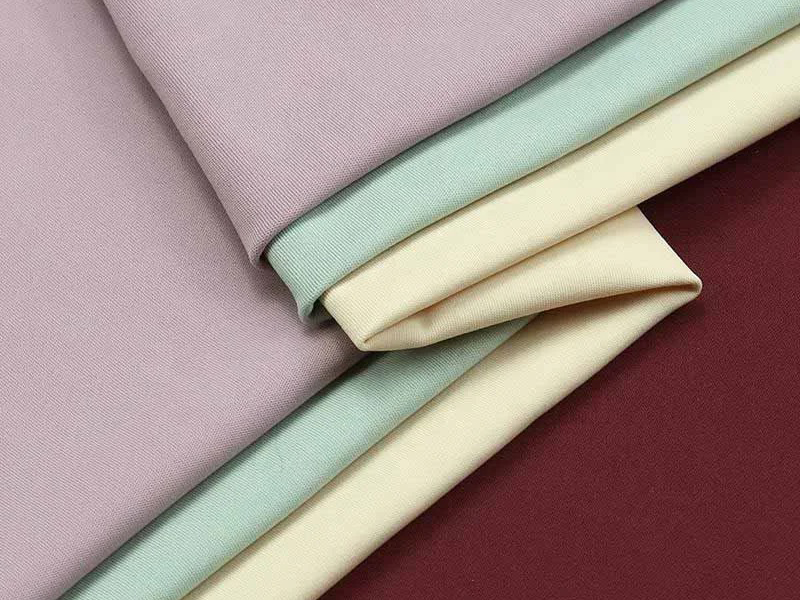
Blends change the softness of a T-shirt by combining the strengths of different fibers. A cotton-modal or cotton-lyocell blend can feel softer, smoother, and more fluid than regular cotton, while still keeping some of cotton’s familiar comfort and wearability.
Blends are common because they allow product developers to control softness, drape, durability, and cost at the same time. A 100% modal T-shirt may feel very soft, but a blend may give a more balanced result for daily use.
At Fusionknits, we often use blends when buyers want a softness upgrade without moving too far away from classic T-shirt performance.
T恤衫中常用的柔软面料混纺
- Cotton-modal
- Cotton-lyocell
- Cotton-viscose
- Modal-spandex blends
- Cotton-bamboo viscose blends
Why blends are useful in product development
They balance softness and structure
A very fluid fiber can be balanced with cotton for a more wearable result.
They help control cost
A blend can create a premium hand feel without making the product too expensive.
They improve market flexibility
The shirt can feel elevated while still fitting a broad customer base.
A simple blend comparison
| Blend type | Softness result | Common use |
|---|---|---|
| Cotton-modal | Soft and smooth | Premium basics |
| Cotton-lyocell | Smooth with clean drape | Fashion and upgraded casualwear |
| Cotton-viscose | Soft and fluid | Soft fashion tees |
| Modal-spandex | Very soft with stretch | Fitted and comfort-focused tops |
This is why many of the softest T-shirts in the market come from blends rather than single-fiber fabrics.
Does yarn quality matter as much as fiber choice?
Many people focus only on the fiber label, but in manufacturing, yarn quality has a major effect on softness.
Yes, yarn quality matters as much as fiber choice because soft fibers can still produce average fabric if the yarn is coarse, uneven, or poorly spun. Fine, clean, well-spun yarn usually creates a smoother and softer T-shirt surface.
A T-shirt made from good cotton can still feel ordinary if the yarn is low quality. In the same way, a modal blend can lose value if the yarn structure is unstable or hairy. Yarn is the bridge between fiber and fabric, so it strongly affects the final hand feel.
At Fusionknits, we always look beyond fiber content when softness is a key request. We check the yarn count, evenness, spinning method, and surface cleanliness.
Yarn factors that influence softness
- Yarn count
- Yarn evenness
- Hairiness level
- Spinning method
- Blend consistency
Yarn types often linked with softer T-shirts
Combed yarn
This usually creates a cleaner surface because more short fibers are removed.
Ring-spun yarn
Ring-spun yarn often improves softness and surface smoothness.
Fine-count yarn
Finer yarn can create a lighter and smoother fabric hand feel.
Why yarn quality changes the result
| Yarn factor | Effect on softness |
|---|---|
| Better evenness | Cleaner and smoother surface |
| Lower hairiness | Less rough touch |
| Better spinning | More refined hand feel |
| Finer count | Softer and lighter fabric |
This is one reason two T-shirts with the same fiber content can feel completely different in the hand.
How do knitting and finishing affect how soft a T-shirt feels?
A soft fiber and a good yarn still need the right fabric construction and finishing. Otherwise, the softness may never fully appear in the final garment.

Knitting and finishing affect softness by shaping the fabric surface, drape, density, and final hand feel. Single jersey, fine-gauge knitting, enzyme wash, softener treatment, and silicone finishing can all improve how soft a T-shirt feels.
This is where many softness differences are created. One fabric may use the same fiber as another but feel much softer because it was knitted more cleanly and finished more carefully. Finishing can make the hand feel smoother, fuller, or silkier depending on the target result.
At Fusionknits, softness development often happens at the finishing stage as much as at the raw material stage. This is especially true in premium basic programs.
Fabric and finishing elements that improve softness
- Fine single jersey construction
- Balanced fabric weight
- Enzyme wash
- Softener treatment
- Silicone finish
- Controlled compaction
- Clean dyeing process
Why finishing matters so much
Surface cleaning
A cleaner fabric surface often feels softer.
Hand feel adjustment
Finishing can make fabric feel smoother or fuller.
Better first impression
Soft finishing helps the product feel more premium at first touch.
| Finishing method | Softness effect |
|---|---|
| Enzyme wash | Cleaner and softer surface |
| Softener treatment | Improves hand feel |
| Silicone finish | Smooth and silky touch |
| Compacting | Improves fabric stability and feel |
For this reason, the softest T-shirt is usually the result of material choice and finishing working together.
What is the softest T-shirt material for different product goals?
The softest material is not always the same for every market. A premium fashion T-shirt, a basic retail T-shirt, and a performance comfort tee may each need a different softness strategy.
The softest T-shirt material depends on the product goal. Modal or lyocell blends often work best for silky softness, premium cotton works best for natural softness, and balanced blends work best for daily comfort, commercial stability, and repeat wear.
At Fusionknits, we usually match softness to market use rather than chase one universal answer. That gives better commercial results and more realistic product positioning.
Best softness directions by product type
Modal-rich or lyocell-rich blends are often the strongest choice.
Combed, ring-spun, or extra-long-staple cotton usually works best.
For balanced daily softness
Cotton-modal or cotton-lyocell blends often perform very well.
For stretch comfort
Modal-spandex or soft cotton-stretch blends are strong options.
A practical material guide
| Product goal | Soft material direction |
|---|---|
| Luxury-feel basic T-shirt | Modal or lyocell blend |
| Natural premium T-shirt | Extra-long-staple cotton |
| Everyday soft retail tee | Cotton-modal blend |
| Soft fitted tee | Modal-spandex blend |
| Soft casual essential | Combed ring-spun cotton |
This is why good T-shirt development begins with the actual use position of the product, not only with the word “soft.”
What should buyers ask for when they want a softer T-shirt?
Buyers often ask for “soft fabric,” but that request is still too broad for production. A factory needs more direction if softness is a real priority.
Buyers who want a softer T-shirt should ask about fiber type, yarn quality, knit construction, finishing method, and wash result. A softness target becomes much more reliable when these details are confirmed early in development.
At Fusionknits, we find that softness is easier to achieve when the buyer defines what kind of softness they want. Do they want silky softness, dry natural softness, washed softness, or stretch comfort softness? These are different goals.
Useful questions buyers should ask
- What fiber gives the target hand feel?
- Is the yarn combed or ring-spun?
- What knit structure is being used?
- What finishing method improves softness?
- How stable is the hand feel after washing?
- Does softness change with different GSM levels?
Why sample review matters
Touch is hard to judge from words alone
A fiber description is helpful, but real fabric review is still necessary.
Wash results matter
Some fabrics feel soft at first but lose quality after laundering.
Softness should match the market
A very fluid soft fabric is not always right for every brand or fit direction.
A simple softness evaluation table
| Question | Why it matters |
|---|---|
| What fiber is used? | Sets the base softness direction |
| What yarn quality is used? | Changes surface smoothness |
| What finish is applied? | Directly affects hand feel |
| How does it wash? | Protects long-term product value |
A softer T-shirt is easier to develop when the buyer and factory discuss softness as a technical target, not only as a general preference.
Conclusion
The softest T-shirt material is usually modal, lyocell, premium cotton, or a carefully designed blend that combines softness with stability and comfort. In most cases, modal- and lyocell-rich knits create the smoothest and silkiest hand feel, while premium cotton offers a softer natural touch that many markets still prefer.
From a manufacturing point of view, softness does not come from fiber name alone. It comes from the full combination of fiber, yarn, knitting, dyeing, and finishing. At Fusionknits, we believe the best soft T-shirt is not simply the one that feels soft for a moment. It is the one that delivers the right hand feel, wear comfort, and product consistency for the target market.