Many buyers ask where clothing is cheapest to manufacture, but this question often leads to the wrong sourcing decision. The country with the lowest labor cost is not always the country with the lowest total product cost. Fabric access, sampling speed, order quantity, defect risk, and delivery reliability can all change the real result. McKinsey also notes that brands are still recalibrating their sourcing footprints, with Bangladesh, India, and Vietnam standing out as major future sourcing hotspots rather than one single universal answer.
There is no single cheapest place to manufacture clothing in every case. Countries such as Bangladesh, Pakistan, India, and Cambodia are often associated with lower-cost apparel production, while China and Vietnam may not always be the cheapest on labor alone but can still be more cost-effective overall because of stronger supply chains, productivity, and manufacturing ecosystems. Bangladesh, India, and Vietnam are widely identified as key sourcing hubs in current industry analysis, while World Bank research also notes that even lower-cost locations can exist in labor terms, without automatically becoming the best full-package option.
At Fusionknits, clothing cost is never judged by labor alone. A strong sourcing decision should consider fabric access, workmanship, lead time, communication, defect control, and reorder stability together. The cheapest country on paper can become an expensive sourcing mistake if the total supply chain is weak.
Why is there no single cheapest country for clothing manufacturing?
Many buyers expect one country name as the answer, but apparel sourcing does not work that way. Clothing cost depends on the full production system, not on one input only.
There is no single cheapest country for clothing manufacturing because total cost depends on labor, fabric sourcing, trim availability, logistics, order size, tariffs, productivity, and defect risk. A lower wage base can reduce one part of the cost while increasing other risks or delays. McKinsey’s recent sourcing analysis highlights that brands are shifting sourcing based on broader operational pressures, not only simple wage comparisons.
From a manufacturing perspective, the wrong question is often “Which country is cheapest?” The better question is “Which country gives the best total cost for this product?” A basic cotton T-shirt, a structured woven shirt, a performance top, and a fashion-washed garment do not all belong in the same sourcing logic.
At Fusionknits, the real cost discussion usually starts with product type, target quality, and delivery expectations rather than with country ranking alone.
Why buyers often misread “cheap”
- They focus only on sewing labor
- They ignore fabric and trim sourcing
- They forget logistics and duty exposure
- They underestimate defect and delay risk
- They compare unlike products across countries
Why total cost matters more than labor cost
Productivity changes the real cost
A factory with higher wages but better efficiency can still produce a better final costing result.
Supply chain depth changes the real cost
A country with stronger fabric and trim access can reduce lead time, freight complexity, and rework pressure.
Failure cost is still cost
Late shipments, unstable sizing, weak print quality, or poor communication all reduce margin.
A simple cost reality check
| Cost factor | Why it affects the real answer |
|---|---|
| Labor cost | Important, but only one part |
| Fabric ecosystem | Strongly affects total cost |
| Productivity | Changes output efficiency |
| Freight and lead time | Changes landed cost |
| Quality stability | Reduces defect and return risk |
That is why the cheapest labor market is not always the cheapest sourcing destination.
Which countries are most often seen as low-cost clothing manufacturing bases?
Some countries are regularly discussed as lower-cost apparel sourcing locations, especially in labor-sensitive categories. But they should still be judged by product type and supply-chain strength.

Countries such as Bangladesh, Pakistan, India, and Cambodia are often viewed as lower-cost clothing manufacturing bases, especially for labor-intensive apparel categories. At the same time, Vietnam and China remain major sourcing countries because they combine strong manufacturing capacity with broader supply-chain advantages, even when they are not the cheapest on wage level alone. McKinsey identifies Bangladesh, India, and Vietnam as major sourcing hotspots, while World Bank research notes that lower-cost locations such as Cambodia and Ethiopia have also been discussed in the apparel sourcing context.
Bangladesh remains one of the most important countries in global apparel manufacturing, especially for high-volume basics. India offers a broad textile base and flexibility across categories. Pakistan can be attractive in cotton-based programs. Cambodia is often discussed in lower-cost manufacturing, although its ecosystem is narrower than larger sourcing countries. Vietnam is widely used for stronger capability and organization, even if it is not always the absolute lowest on labor. China remains essential in many categories because of its scale and integrated supply base.
Countries often associated with lower-cost sourcing
- Bangladesh
- Pakistan
- India
- Cambodia
Countries often chosen for stronger full-package value
- China
- Vietnam
- India in many categories
Why country lists are not enough by themselves
Product category matters
A country that is strong for knit basics may not be the best choice for structured fashion garments.
Supply chain depth matters
A country may be cheap in labor but dependent on imported fabric or trims.
Stability matters
A cheap quote is less valuable if delivery, communication, or infrastructure are weak.
A practical sourcing view
| Country direction | Typical sourcing logic |
|---|---|
| Bangladesh | High-volume basics and cost-sensitive apparel |
| India | Broad textile base and flexible category range |
| Pakistan | Cotton-based opportunities in some programs |
| Cambodia | Lower-cost labor focus in selected segments |
| Vietnam | Stronger organized sourcing and execution |
| China | Best-in-class ecosystem in many product types |
The right answer depends on the garment, not only the country label.
Is Bangladesh usually the cheapest place for apparel?
Bangladesh is often one of the first countries mentioned in cost-sensitive apparel sourcing, especially for large-scale basics. But even here, the answer still depends on what the buyer is making.
Bangladesh is often one of the most competitive countries for low-cost apparel manufacturing, especially in basic, labor-intensive categories. It is widely recognized as a major global garment sourcing base, but that does not mean it is automatically the cheapest or best option for every clothing product. McKinsey highlights Bangladesh as one of the main future sourcing hotspots, and World Bank analysis shows the country’s garment sector remains a major export engine while competing in a changing cost environment.
Bangladesh works especially well when the product is relatively standardized, the order quantity is strong, and the buyer wants competitive labor-sensitive production. But if the product needs highly flexible development, complex fashion execution, or a more diverse trim and fabric ecosystem, another country may become more practical.
At Fusionknits, Bangladesh is usually viewed as very strong in cost-focused large-volume sourcing, but not as a universal answer for every brand or every shirt program.
Why Bangladesh is often chosen
- Strong garment manufacturing base
- Competitive labor environment
- High-volume production strength
- Global sourcing familiarity
Where Bangladesh may be less ideal
More complex small-batch development
A brand with many style revisions may need more flexibility than a bulk-oriented setup offers.
Supply chain dependence in some materials
If imported materials are required, the real cost advantage may narrow.
Lead-time and execution fit
The country can be highly competitive, but it still needs to match the product route.
Bangladesh sourcing logic
| Strength | Commercial meaning |
|---|---|
| Cost competitiveness | Strong in basics and volume programs |
| Established apparel industry | Easier global sourcing recognition |
| Volume capability | Better for repeat and scaled orders |
| Not universal for every style | Product fit still matters |
Bangladesh is often one of the cheapest serious sourcing bases, but it should still be matched to the product correctly.
Is China still worth considering if the goal is low cost?
Many buyers assume China is no longer relevant if they want lower costs. That is often an oversimplified view.
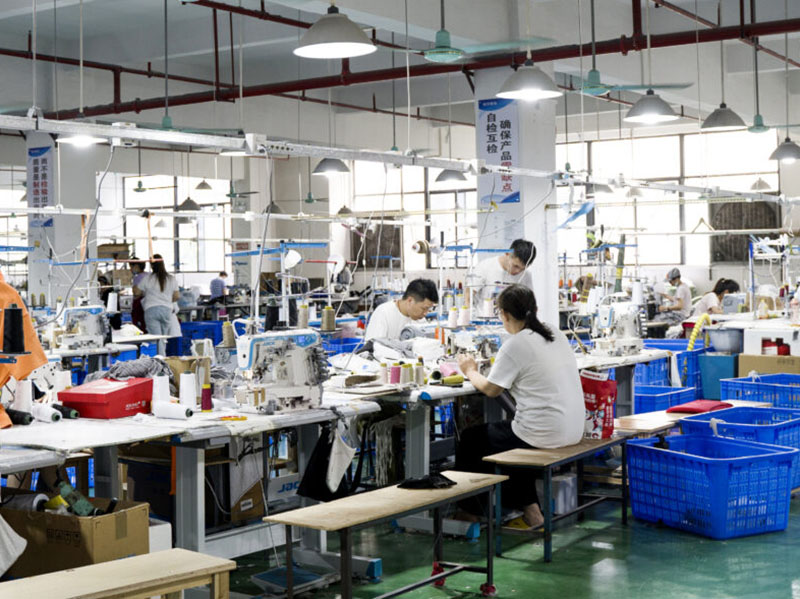
China is not always the cheapest country on labor cost, but it is still worth considering because its manufacturing ecosystem, speed, material access, and production efficiency can create better total value in many categories. In some cases, China is more cost-effective overall even when the sewing wage is higher. World Bank and McKinsey sources both continue to place China among the most important apparel sourcing countries, and industry analysis still describes it as indispensable in many supply chains.
China remains strong because it offers more than sewing. It offers fabric access, trim sourcing, faster development cycles, stronger machinery, and better integrated supply networks. This can reduce hidden costs, especially for products that need flexible development, more technical control, or shorter lead times.
At Fusionknits, China is often not positioned as the lowest-wage answer. It is positioned as one of the strongest total-value answers for many apparel categories.
Why China still matters in sourcing
- Deep material ecosystem
- Faster product development
- Better trim and accessory access
- Strong machinery and productivity
- Broad category capability
Why China can still be cost-effective
Higher productivity can offset higher wages
A more efficient factory can produce stable results faster.
Better local sourcing can reduce delays
A strong supply base reduces dependency on long material lead times.
Fewer disruptions can protect margin
When communication and execution are stronger, the total business cost often improves.
China cost logic
| China strength | Why it still matters |
|---|---|
| Integrated supply chain | Better speed and control |
| Productivity | Better output efficiency |
| Development support | Stronger for complex programs |
| Broad capability | Useful across product categories |
China may not be the cheapest by wage, but it can still be the cheapest by total sourcing result.
How do Vietnam and India compare when buyers want lower costs?
Vietnam and India are both major sourcing countries, but they solve different sourcing problems in different ways.
Vietnam and India are both strong sourcing options when buyers want competitive manufacturing with broader capability than a pure low-wage comparison provides. Vietnam is often valued for organized manufacturing and export readiness, while India is valued for its textile base, flexibility, and broad apparel capacity. McKinsey identifies both India and Vietnam as major future sourcing hubs, and OECD reporting highlights the strength of manufacturing investment in Vietnam.
Vietnam is often selected when buyers want structured execution, quality consistency, and better organization in export-oriented apparel manufacturing. India is often selected when buyers want fabric access, cotton-based options, development flexibility, and broad category range.
At Fusionknits, both countries are strong sourcing choices, but their value depends on what kind of brand or product is being developed.
Why Vietnam is often chosen
- Strong manufacturing organization
- Good export orientation
- Strong position in global apparel sourcing
- Suitable for many structured production programs
Why India is often chosen
- Broad textile and fabric access
- Strong cotton base
- Flexible product range
- Useful for both development and production
India vs Vietnam sourcing logic
| Country | Typical sourcing strength |
|---|---|
| Vietnam | Organized production and export execution |
| India | Textile depth and broader material flexibility |
Neither country is simply “the cheapest.” Both are strong because they balance cost with capability in different ways.
This is one of the most important questions in sourcing. A country may offer a lower sewing quote, but the total landed result may still be weak.

A cheap manufacturing country can become expensive when hidden costs such as longer lead times, imported materials, poor communication, rework, higher defect rates, shipping complexity, and missed delivery windows are added to the total cost. The lowest quote is not always the lowest landed cost.
From a manufacturing perspective, cost should always include more than FOB thinking. A delay can create markdowns. Poor quality can create returns. Weak communication can consume management time. A material ecosystem gap can increase freight and sourcing complexity.
At Fusionknits, these hidden costs are often the difference between a “cheap” order and a profitable order.
Hidden costs buyers often underestimate
- Fabric import dependence
- Development delays
- Defect and rework cost
- Communication friction
- Missed season timing
- Inspection and correction cost
- Logistics complexity
They reduce margin
A lower factory quote may still produce weaker real profitability.
They slow the business
Longer development and correction time create operational drag.
They damage repeat business
Poor first orders make reorders harder, even if the initial cost looked attractive.
Hidden-cost view
| Hidden cost type | Real business impact |
|---|---|
| Delay | Lost selling opportunity |
| Defect rate | Rework and returns |
| Weak communication | More management time |
| Material dependency | Longer lead times and complexity |
The cheapest country on paper can become the most expensive country in real operation if these costs are ignored.
So what should buyers optimize for instead of chasing the absolute cheapest?
The smartest sourcing strategies usually optimize for value, stability, and fit instead of chasing the absolute lowest labor market.
Buyers should optimize for total sourcing value rather than the absolute cheapest country. That means matching the product to the right ecosystem, balancing cost with quality and lead time, and choosing a country that supports repeat production and commercial stability. McKinsey’s recent sourcing work shows that brands are actively recalibrating their footprints based on resilience, tariffs, and operational advantages, not on one-dimensional labor-cost thinking.
At Fusionknits, the best sourcing result usually comes from asking the right commercial question: which country gives the best output for this product, this target market, and this production model?
Better sourcing priorities than “cheapest”
- Product-country fit
- Stable quality
- Reliable lead time
- Strong communication
- Reorder support
- Material access
- Scalable production
Why this approach works better
It protects the brand
Stable quality and timing matter more than a slightly lower quote.
It improves total margin
A stronger first-order result often creates better repeat economics.
It supports long-term sourcing
A business usually grows better with consistent partners than with constant supplier changes.
Better sourcing logic
| Priority | Why it matters |
|---|---|
| Total landed cost | More accurate than labor cost alone |
| Capability match | Improves product execution |
| Supply chain strength | Reduces risk |
| Repeatability | Supports long-term growth |
The best sourcing strategy usually wins through discipline, not through the lowest number on one quote sheet.
Conclusion
There is no single cheapest place to manufacture clothing for every brand and every product. Countries such as Bangladesh, Pakistan, India, and Cambodia are often associated with lower-cost apparel production, while Vietnam and China may deliver stronger total value through better manufacturing ecosystems, productivity, and supply-chain depth. The right answer depends on the garment type, quantity, fabric needs, and business priorities.
From a professional manufacturing perspective, the better sourcing question is not simply where labor is cheapest. The better question is which country can produce the right garment at the best total cost with acceptable quality, lead time, and reliability.
At Fusionknits, the strongest sourcing decisions are usually based on product fit, full supply-chain cost, and long-term production stability rather than one-dimensional wage comparisons. When those factors are aligned correctly, the business usually performs better than it would by chasing the absolute lowest-cost country alone.