Choosing the right T-shirt color is not only a design decision. In apparel manufacturing, color affects product positioning, print performance, market acceptance, and repeat order potential. A strong color choice can improve sell-through, while a poor one can make even a well-made T-shirt harder to move.
The best color for a T-shirt depends on the target market, product purpose, branding direction, and printing requirements. In most wholesale and retail programs, black, white, gray, and navy are the strongest options because they offer broad appeal, styling flexibility, and stable long-term demand.
At Fusionknits, T-shirt color is treated as both a commercial and technical decision. The right color should work well in the market, support the intended brand image, and remain practical in production and reordering.
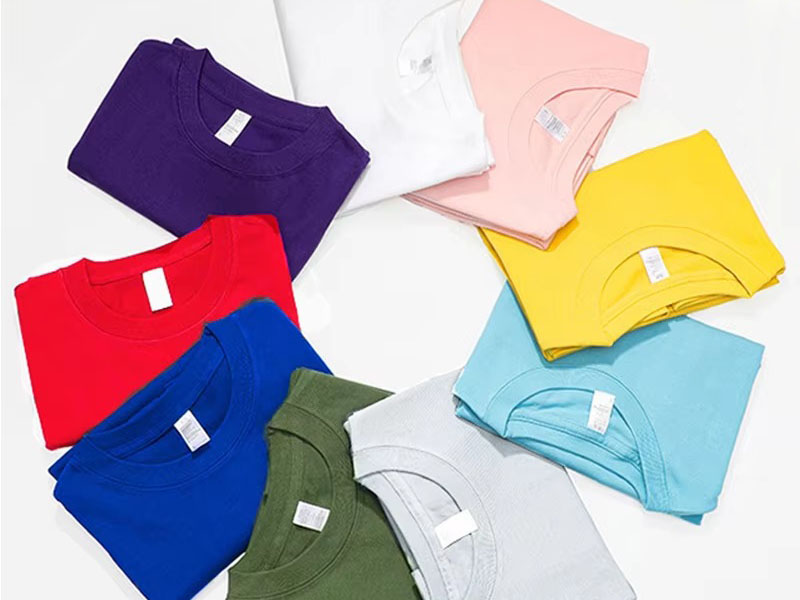
Why does T-shirt color matter so much in apparel manufacturing?
Color changes more than the appearance of a T-shirt. It also affects how the garment is merchandised, how easily it can be styled, and how well it performs in large-volume production.
T-shirt color matters because it influences first impression, customer preference, print visibility, dyeing consistency, and inventory risk. In manufacturing, color also affects shade control, fabric appearance, and reorder stability.
In product development, color is often one of the first decisions discussed. That is understandable, because it is the most visible part of the garment. But from a manufacturer’s perspective, color also influences technical control. Some shades are easier to reproduce consistently in bulk production, while others require tighter dyeing management.
At Fusionknits, color selection is usually reviewed from both sides: market demand and production practicality. A color may look attractive in a concept board, but it still needs to work in fabric dyeing, printing, sampling, and final bulk consistency.
Why color matters beyond visual style
- It affects how easy the product is to sell
- It changes how the T-shirt fits into everyday wardrobes
- It influences graphic and logo contrast
- It affects how premium or basic the garment appears
- It changes how easy the color is to reproduce consistently
- It can shape customer perception of the whole product line
Why color mistakes happen in product planning
Too much focus on trend
A color may attract attention for a short time but still perform weakly in repeat sales.
Too little focus on wearability
Some shades look good in campaign photos but are harder for real customers to wear.
Limited attention to production control
Certain colors create more risk in bulk shade consistency than others.
A simple view of how color affects product value
| Color factor | Why it matters |
|---|---|
| Styling flexibility | Helps the garment fit more wardrobes |
| Print compatibility | Supports logo and artwork visibility |
| Shade consistency | Improves bulk production control |
| Market familiarity | Increases broad customer acceptance |
| Product image | Shapes how premium, casual, or fashion-led the shirt feels |
For this reason, color should be treated as part of product strategy, not only as a styling choice.
Are black and white still the best T-shirt colors for most markets?
In many cases, yes. Black and white remain two of the strongest T-shirt colors because they are timeless, flexible, and widely accepted across different customer groups and sales channels.

Black and white are still among the best T-shirt colors for most markets because they are easy to style, easy to position, and highly adaptable for both blank and printed products. Black often feels more practical and premium, while white usually feels cleaner, fresher, and more universal.
Black is one of the most commercially reliable colors in the T-shirt category. It works well in streetwear, basics, fashion retail, private-label programs, and promotional products. It also tends to hide minor stains better than light colors, which increases practical value in daily use.
White remains essential because it represents the classic T-shirt idea in its purest form. It works across seasons, supports strong contrast in graphic printing, and fits minimalist, casual, and premium collections.
At Fusionknits, black and white remain core colors in many custom and wholesale programs because they provide both commercial safety and strong styling potential.
Why black performs so well
- Easy to coordinate with many outfits
- Works in both fashion and basic product lines
- Often feels sharper and more premium
- Supports strong graphic contrast
- Has broad appeal across age groups and markets
Why white remains important
- Creates a clean and simple product image
- Works especially well in summer and casual basics
- Supports colorful and high-contrast printing
- Fits both minimalist and graphic retail programs
- Has wide market acceptance
Black and white in product planning
| Color | Main strength | Main challenge |
|---|---|---|
| Black | Strong, practical, premium-looking | May show lint or fading over time |
| White | Clean, classic, highly versatile | Can show stains or transparency more easily |
These two colors remain important because they support a wide range of product uses without limiting the market too much.
Yes. In many collections, gray and navy can be stronger choices than black or white because they offer similar versatility with a softer visual effect.
Gray and navy are excellent T-shirt colors because they are versatile, commercially stable, and easy to integrate into everyday wardrobes. Navy usually gives a cleaner and more refined impression, while gray often feels practical, relaxed, and highly wearable.
In many casualwear and B2B programs, a buyer may want dependable neutral colors without using only black and white. Gray and navy perform well in those situations because they feel balanced and less extreme.
At Fusionknits, navy is often recommended when the product needs a timeless and polished look without the stronger visual weight of black. Gray is commonly used in basics, loungewear, sportswear, and layered casual collections because it supports repeat wear very well.
Refined appearance
Navy often feels slightly cleaner and more mature than black in casualwear.
Strong matching ability
It works well with denim, khaki, beige, white, gray, and many muted colors.
Stable market acceptance
It performs consistently in men’s, women’s, and unisex product lines.
Why gray works so well
Relaxed product image
Gray gives a softer and more casual feel than stronger dark tones.
Broad use in essentials
It is one of the most dependable colors in core basics programs.
Strong layering value
Gray blends easily into many wardrobe combinations.
| Color | Product impression | Best use direction |
|---|---|---|
| Navy | Clean, steady, refined | Casualwear, uniforms, premium basics |
| Gray | Relaxed, practical, wearable | Basics, sportswear, lounge and casualwear |
These colors perform especially well when a buyer wants a stable commercial base with slightly more softness than black or white.
Which T-shirt colors are easiest to sell in wholesale?
In wholesale, the best color is usually the one with the lowest risk and the broadest acceptance. That is why core neutrals continue to dominate.
The easiest T-shirt colors to sell in wholesale are black, white, heather gray, and navy, because they are easy to merchandise, easy to reorder, and broadly accepted across different markets. Beige, off-white, and olive can also work well in selected casualwear programs.
Wholesale buyers usually focus on volume, repeat demand, and inventory safety. A color that looks interesting but appeals to only a narrow audience will often create more stock risk than value. Neutral colors perform better because they fit more wardrobes, more private-label collections, and more printing plans.
At Fusionknits, wholesale color ranges usually begin with proven core shades before moving into secondary seasonal options.
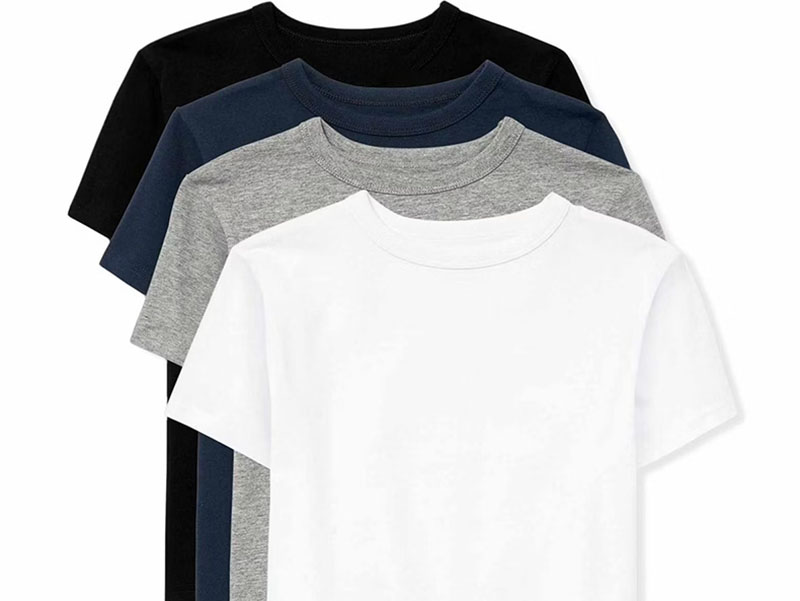
Most reliable wholesale T-shirt colors
- Black
- White
- Heather gray
- Navy
- Off-white
- Beige or olive in selected markets
Why core neutrals work best in wholesale
Lower inventory risk
They appeal to a broader customer base and move more steadily.
Better repeat potential
These colors stay relevant across seasons and trend cycles.
Better collection building
Neutral blanks can be used in multiple product directions and branding programs.
Wholesale value by color category
| Color category | Wholesale value |
|---|---|
| Core neutrals | Highest repeat demand |
| Soft muted tones | Good support for curated collections |
| Bright seasonal tones | Higher risk, shorter selling window |
| Statement colors | More limited market use |
This is why the most successful wholesale programs usually rely on a core neutral foundation.
Which T-shirt color works best for printing and branding?
The best blank color for a printed T-shirt depends on the artwork, contrast level, and the brand’s visual direction. A color that works well as a plain blank may not always be the strongest base for graphics.
The best T-shirt colors for printing and branding are usually black, white, heather gray, and navy, because they support strong contrast, clear logo visibility, and broad market appeal. The right choice depends on whether the print needs a bold, clean, or softer visual result.
Printed T-shirt development should always consider the relationship between the fabric color and the artwork. Some logos need bright contrast. Some need a softer background. Some premium brands use darker bases to create a more controlled visual presentation, while some lifestyle brands prefer light colors for openness and clarity.
At Fusionknits, print-based T-shirt development usually begins with the artwork direction first, then the garment color is selected to support it.
Strong base colors for printed T-shirts
White
Best for colorful graphics and clean brand presentation.
Black
Best for bold contrast, strong logo visibility, and fashion-led graphics.
Heather gray
Best for softer retail aesthetics and commercial casualwear.
Best for dark-based printing without using black.
Print base comparison
| T-shirt color | Best print effect |
|---|---|
| White | Bright and highly visible graphics |
| Black | Strong contrast and bold visual impact |
| Heather gray | Softer and more wearable printed result |
| Navy | Controlled and refined dark-base contrast |
The strongest printed T-shirt color is not always the most neutral one. It is the one that supports the artwork and brand image most effectively.
Are bright colors better for fashion-driven T-shirts?
In some cases, yes. Bright colors can create strong seasonal energy and help a product stand out. But they usually carry more market risk than core neutrals.

Bright colors can be strong choices for fashion-driven T-shirts when the goal is seasonal impact, youth appeal, or a bold brand identity. However, they are usually less stable than neutral colors in long-term sales and repeat-order programs.
Bright shades can work very well in youth collections, summer capsules, festival merchandise, streetwear drops, and limited-edition campaigns. In those cases, the visual impact is part of the product value. But in more mainstream wholesale and basics programs, these colors often have a shorter selling cycle.
At Fusionknits, bright colors are usually positioned as support colors rather than the main commercial base of a T-shirt range.
When bright colors work well
- Youth and trend-driven collections
- Summer programs
- Festival and event merchandise
- Streetwear capsules
- Short-term branded drops
Why bright colors are less stable commercially
Narrower matching ability
Not every customer wants a strong statement color in daily wear.
Shorter trend life
Bright shades often depend more on season and timing.
Higher inventory risk
They can appeal strongly to some customers and miss others completely.
Core colors vs. bright colors
| Color type | Commercial behavior |
|---|---|
| Core neutrals | Stable, repeatable, broad market use |
| Soft muted fashion tones | Moderate risk, good for curated lines |
| Bright statement colors | High attention, lower long-term stability |
Bright colors are useful for creating excitement, but they are rarely the safest answer for high-volume T-shirt programs.
How should buyers choose the best T-shirt color for their market?
The best color is not universal. It depends on who will wear the T-shirt, how the garment will be sold, and what role it plays in the collection.
Buyers should choose the best T-shirt color by evaluating target customer habits, product purpose, brand direction, print requirements, and reorder potential. In most cases, the strongest color strategy begins with reliable neutrals and then adds selected supporting shades.
At Fusionknits, color planning is usually approached in layers. A commercial base is built first with proven core colors, and then supporting shades are added based on the brand image, season, and target demographic.
Questions buyers should ask before finalizing T-shirt colors
- Is the T-shirt for basics, fashion, uniforms, or promotions?
- Will the garment be blank or printed?
- Does the customer prefer timeless or trend-driven color direction?
- Is the program intended for repeat orders or short-term campaigns?
- Does the color support the brand image clearly?
A practical color planning method
Start with commercial core colors
Black, white, gray, and navy usually form the strongest base.
Add supporting shades carefully
Beige, olive, muted blue, or washed earth tones can expand the range without increasing too much risk.
Use statement colors selectively
These should support the collection, not replace the commercial foundation.
A simple color planning guide
| Product goal | Best color direction |
|---|---|
| Core basics | Black, white, gray, navy |
| Premium casualwear | Navy, off-white, charcoal, muted earth tones |
| Graphic T-shirts | White, black, gray, navy |
| Youth or trend collections | Core neutrals plus selected bright accents |
| Wholesale programs | Mostly stable neutrals |
This type of structure usually creates a stronger and more flexible product range than chasing one “perfect” color.
Can one color really be called the best for a T-shirt?
From a technical and commercial point of view, no single color is perfect for every situation. But some colors clearly perform better than others across a wide range of uses.
No single color is best for every T-shirt, but black is often the strongest overall choice because it is versatile, practical, commercially safe, and widely accepted across markets. White, gray, and navy also remain top-performing colors because they support a wide range of product categories and customer needs.
For a summer basics collection, white may be the stronger lead color. For a graphic program, black or heather gray may be the better base. For a premium casual line, navy or off-white may create a more refined effect. That is why the strongest answer is usually not one color by itself, but a core neutral palette built with clear product logic.
Conclusion
The best color for a T-shirt depends on the target market, brand direction, product purpose, and printing needs. In most wholesale and retail programs, black, white, gray, and navy remain the strongest choices because they are easy to style, easy to merchandise, and highly reliable in long-term commercial performance. These colors also work well across blank basics, printed garments, premium essentials, and repeat-order programs.
From a professional manufacturing perspective, T-shirt color should be treated as both a design and product development decision. A successful color choice needs to support visual appeal, customer preference, production consistency, and market practicality at the same time.
At Fusionknits, the most effective approach is usually to build around strong core neutrals first, then add supporting shades that fit the season, brand identity, and target customer. In this way, color becomes more than decoration. It becomes part of a stronger and more dependable apparel strategy.