Vintage T-shirts often feel softer than new ones, making them highly desirable in fashion and casualwear. This softness is not just nostalgia—it comes from a combination of fiber breakdown, fabric treatments, and repeated wear.
Vintage T-shirts are softer because their fibers have naturally broken down over time, they have been washed multiple times, and their fabrics often contain worn-in cotton or cotton blends that become smoother and more flexible with age. Commercially, “vintage softness” is sometimes replicated with special finishing processes to achieve a similar hand feel in new garments.
At Fusionknits, we see vintage softness as a mix of material science and wear history. Understanding why older T-shirts feel softer can guide the development of premium softwear collections today.
What happens to cotton fibers over time?
Cotton is the most common fiber in T-shirts, and its behavior over time largely explains why vintage T-shirts feel softer.
Over time, cotton fibers naturally relax and break down. This reduces stiffness and removes residual tension from spinning and knitting, creating a softer, more supple fabric. Repeated washing and wearing accelerate this process.
Freshly manufactured cotton T-shirts often feel crisp because the fibers are relatively straight, and the yarn contains residual tension from spinning, weaving, or knitting. Each washing cycle causes micro-abrasion on the fiber surface, removing small hairs and softening the fabric. Over months or years, this cumulative effect produces the “worn-in” softness characteristic of vintage tees.
Fiber breakdown in detail
- Mechanical wear: Repeated friction from wearing and washing smooths the fiber surface.
- Fiber fibrillation: Tiny splits in the cotton surface make the yarn feel softer and more flexible.
- Tension release: Stress set in during knitting and spinning relaxes over time.
Comparison table: new vs vintage cotton
| Feature | New cotton T-shirt | Vintage cotton T-shirt |
|---|---|---|
| Fiber tension | High | Low |
| Surface smoothness | Moderate | High |
| Hand feel | Slightly crisp | Soft and supple |
| Drape | Less fluid | More fluid |
This natural aging of fibers is one of the key reasons vintage T-shirts are so appealing in the market.
How do repeated washes contribute to softness?
A crucial factor in vintage T-shirt softness is repeated washing. Each laundering cycle gently abrades the fibers and releases residual stiffness.

Repeated washing softens the fabric by breaking down fiber stiffness, smoothing yarn surfaces, and relaxing knit structure. Many vintage T-shirts were washed dozens or hundreds of times, resulting in a soft, worn-in hand feel.
At Fusionknits, we observe that washing not only improves softness but also enhances the drape of the garment. The knit becomes more flexible, allowing the T-shirt to conform naturally to the body.
Washing effects explained
- Mechanical friction: Softens yarn by tiny surface abrasion.
- Detergent action: Removes sizing or finish residues left from production.
- Fiber swelling: Water allows fibers to relax and fill gaps more evenly.
- Shrinkage cycles: Slight shrinkage after repeated washes can make the knit denser but softer to the touch.
Vintage hand feel vs factory soft T-shirts
| Factor | Vintage T-shirt | Factory soft T-shirt |
|---|---|---|
| Number of washes | Many | Few or one pre-wash |
| Surface smoothness | High | Medium, depends on finish |
| Knit flexibility | High | Medium, unless special finishing applied |
| Unique character | Present | Standardized |
This cumulative effect of washing and wear is hard to replicate exactly in new garments, which is why many brands create “vintage-soft” lines using specialized finishing processes.
What role does fiber quality play in softness?
Not all vintage T-shirts are equally soft. The fiber quality of the original fabric has a strong influence on how the shirt ages.
High-quality cotton, especially long-staple or ring-spun cotton, becomes softer and more supple with wear. Shorter fibers may pill and feel rougher even after repeated washing.
At Fusionknits, we note that premium vintage tees usually contain long-staple cotton like Pima or Supima. These fibers maintain integrity over decades, which allows the T-shirt to stay soft rather than breaking down unevenly or pilling excessively.
Fiber quality effects
- Long-staple cotton: Smooth surface, high strength, maintains softness over time.
- Short-staple cotton: Prone to fuzz, uneven wear, possible roughness.
- Cotton blends: Polyester or viscose blends may age differently; polyester adds durability but less softness evolution.
Quality comparison table
| Fiber type | Softness potential over time | Longevity of feel |
|---|---|---|
| Long-staple cotton | Very high | High |
| Standard cotton | Moderate | Medium |
| Cotton-poly blend | Medium | High for structure, moderate for softness |
| Polyester | Low | High for shape, minimal natural softness |
Thus, both fiber type and yarn quality are key factors in determining how soft a T-shirt can become over years of wear.
How does knit structure influence softness?
Knitting plays a crucial role in how a T-shirt feels initially and after years of wear.
Knitting affects the flexibility and surface texture of the fabric. Jersey knits, which are most common in T-shirts, tend to become softer over time because their looped structure allows more fiber relaxation during washes and wearing.
At Fusionknits, we consider knit structure when designing softwear lines that mimic vintage characteristics.
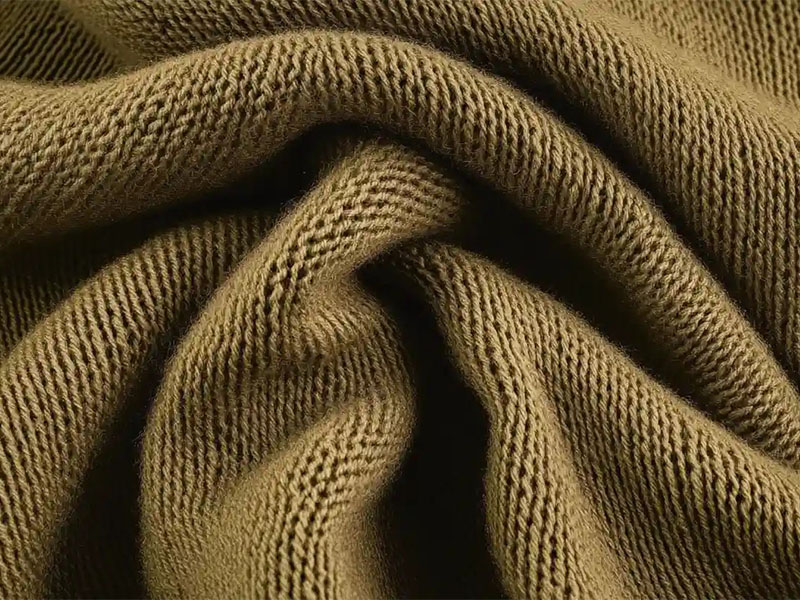
Knit structure and softness
- Single jersey: Classic T-shirt knit. Looser loops allow fiber movement and softening over time.
- Rib knit collars: Slightly denser; may retain shape but soften with repeated stretch.
- Interlock knit: Thicker, may feel firmer initially, softens more slowly.
Table: knit type vs aging effect
| Knit type | Initial feel | Softness after wear |
|---|---|---|
| Single jersey | Crisp to moderate | High, fluid drape |
| Rib knit | Firm | Moderate, slower softening |
| Interlock | Dense | Softens gradually, retains thickness |
The combination of high-quality cotton fibers and a softening-friendly knit structure explains why vintage T-shirts often feel uniquely comfortable.
Do chemical finishes and treatments affect vintage softness?
Modern factory finishing can mimic vintage softness, but real vintage T-shirts usually lack strong chemical finishes that can stiffen the fabric.
Vintage T-shirts are softer in part because they were not heavily treated with sizing, resin, or stiffening agents. Any residual finish has worn off over time, contributing to the soft, natural hand feel.
At Fusionknits, we use enzyme washes, garment washes, and softeners in new production to replicate some vintage characteristics, but the real “vintage feel” comes from decades of fiber relaxation and repeated wear.
Key finishing influences
- Minimal initial stiffening
- No synthetic hand additives in early production
- Natural fiber wear and washing lead to gradual, uneven softening
- Surface abrasion contributes to unique tactile character
Vintage vs modern soft T-shirt finishing
| Feature | Vintage T-shirt | Modern factory soft T-shirt |
|---|---|---|
| Finishing chemicals | Minimal | Softener or enzyme used |
| Fiber wear | Decades of natural breakdown | Few cycles of mechanical or chemical treatment |
| Texture | Uneven, lived-in | Controlled, consistent |
| Hand feel | Soft, natural, breathable | Soft, consistent, slightly artificial |
This is why many collectors and fashion enthusiasts seek true vintage pieces: the hand feel cannot be fully reproduced with new chemical processes alone.
How do repeated wear and storage patterns influence softness?
Vintage T-shirts soften not only through washing but also through general wear and storage habits.

Repeated wearing stretches fibers, causes minor abrasion, and helps relax the knit. Even folding and storing the garment contributes to a gentle break-in of the fabric, creating the vintage softness profile.
At Fusionknits, we sometimes simulate these effects with industrial washing and mechanical agitation in new production, but decades of use create subtle tactile characteristics that are hard to replicate fully.
Wear and storage factors
- Friction from skin contact or layering
- Gentle fiber flexing during movement
- Compression in drawers or storage over years
- Sunlight and environmental aging (minor UV exposure can soften cotton)
These factors combine to create a fabric that feels worn-in, smooth, and light, distinguishing vintage T-shirts from factory-fresh garments.
Can modern T-shirts replicate vintage softness?
Yes, to a degree, through finishing and yarn selection.
Modern manufacturers can mimic vintage softness by using pre-washed fabrics, enzyme or garment washing, softeners, lower-stiffness yarns, and certain knit choices. However, authentic vintage softness includes the subtle irregularities that decades of wear create.
At Fusionknits, we sometimes create “vintage-soft” lines that combine long-staple cotton, relaxed knits, and controlled washing to approximate the feel of a truly aged T-shirt, while ensuring durability and consistent sizing.
Factory techniques for vintage-style softness
- Enzyme wash to break down fibers slightly
- Garment wash for fabric relaxation
- Ring-spun or combed long-staple cotton yarns
- Slightly looser single-jersey knit
- Softening agents for smooth hand feel
Limitations of artificial vintage softness
| Modern method | Limitation |
|---|---|
| Enzyme wash | Does not replicate decades of natural fiber breakdown |
| Garment wash | Cannot create subtle wear variations |
| Softener | May feel artificial if over-applied |
| Yarn choice | Cannot reproduce vintage irregularity |
Even with advanced finishing, a true vintage T-shirt’s tactile character remains unique.
Conclusion
Vintage T-shirts are softer because cotton fibers naturally break down over time, repeated washing and wearing smooth the fabric, knit structures allow relaxation, and minimal finishing preserves natural fiber feel. High-quality cotton, long-staple yarns, and decades of gentle wear create the unique “worn-in” softness that makes vintage T-shirts highly valued.
Modern production can mimic some of these effects with enzyme washes, garment washes, and careful fiber selection, but authentic vintage softness is largely the product of time, use, and natural fiber behavior.
At Fusionknits, understanding this process helps us design new softwear collections that offer the comfort and feel associated with classic vintage T-shirts.