Many buyers assume lululemon shorts come from one country because the brand image feels so consistent. In reality, that is not how global performance apparel works. A brand can keep one product standard while producing across several countries through approved factory partners. That is why this question matters. If buyers do not understand the supply chain, they may confuse brand design with factory ownership.
At Fusionknits, we see lululemon shorts as products made through a global contract manufacturing network, not through one single in-house factory system. Based on lululemon’s public disclosures, the company does not own the facilities that make its products and instead works with independent manufacturers, with a large share of production concentrated in countries such as Vietnam, Cambodia, Sri Lanka, Indonesia, and Bangladesh.
As a professional clothing manufacturer, we think this is the correct way to frame the topic. The better question is not only where lululemon shorts are made, but how lululemon’s sourcing model works, why those countries matter, and what that means for quality, consistency, and buyer expectations.
Does lululemon make its shorts in its own factories?
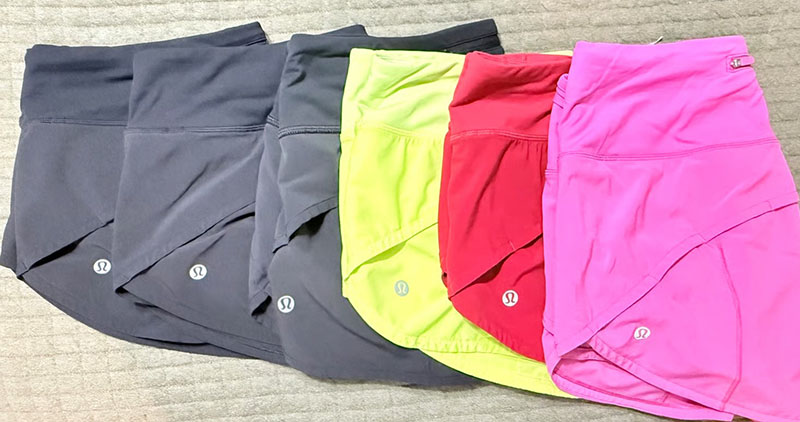
This is the first point buyers should understand clearly. lululemon is a design, sourcing, and retail brand, but it does not run its business through owned garment factories. That means its shorts are made by external manufacturing partners that follow lululemon’s product and compliance requirements rather than by lululemon-operated sewing plants.
At Fusionknits, we would not describe lululemon as a factory-owning manufacturer. We would describe it as a brand that develops technical athletic apparel and then works with a network of independent suppliers and manufacturers to produce those garments, including shorts.
This matters because many buyers still think premium brands usually make garments in their own facilities. In modern activewear, that is often not true. The brand controls fabric standards, fit, trims, testing, and quality expectations, while manufacturing is carried out by specialized supplier partners across multiple countries. That model is common in technical apparel because it gives the brand access to established expertise in stretch fabrics, performance sewing, and scalable production. This is especially relevant for shorts, where construction may include liners, bonded hems, gussets, waist systems, and lightweight technical fabrics.
Why this sourcing model is common
- It gives brands access to specialized activewear factories
- It allows flexible production by category and season
- It supports scale across global markets
- It helps brands source technical fabrics close to production hubs
Why this matters for lululemon shorts
The brand standard can stay global
A short made in one approved country can still follow the same fit and performance brief as a short made in another approved country.
Factory ownership is not the same as product control
The brand can still tightly control development without owning the building.
| Supply chain point | What it means |
|---|---|
| Brand does not own factories | Production is outsourced |
| Independent manufacturers | Specialized partners make the garments |
| Brand-led specifications | Fit and performance standards still come from lululemon |
lululemon’s own annual reporting gives a clear view of where much of its product volume is made. In its 2024 Annual Report, lululemon said that during 2024, about 40% of its products were manufactured in Vietnam, 17% in Cambodia, 11% in Sri Lanka, 11% in Indonesia, and 7% in Bangladesh, with the rest made in other regions. Those figures describe total product manufacturing, not shorts only, but they are the best official indicator of where lululemon shorts are most likely to come from.

At Fusionknits, this means buyers should expect many lululemon shorts to come from the same major sourcing countries that support lululemon’s overall apparel production, especially Vietnam and Cambodia, followed by Sri Lanka, Indonesia, and Bangladesh.
That does not mean every short is made in the same country. A running short, a training short, and a woven lifestyle short may come from different factories depending on construction, capacity, and fabric program. But the country mix gives buyers a realistic sourcing map. In practice, Vietnam stands out as the largest disclosed production base in lululemon’s current reporting, so it is one of the strongest answers when someone asks where lululemon shorts are made.
Officially disclosed major production countries
- Vietnam
- Cambodia
- Sri Lanka
- Indonesia
- Bangladesh
Why Vietnam matters so much
That makes it one of the most likely origins for a large number of lululemon garments.
It has strong activewear manufacturing capacity
That supports performance categories such as shorts, leggings, and tops.
| Country | Share of lululemon products in 2024 |
|---|---|
| Vietnam | 40% |
| Cambodia | 17% |
| Sri Lanka | 11% |
| Indonesia | 11% |
| Bangladesh | 7% |
Can lululemon shorts also be made in China?
Yes, they can. The broader active supplier disclosures show that lululemon works with facilities in China Mainland as part of its supply chain, including apparel-related suppliers and subcontractors, even though China is not listed among the top five product-manufacturing countries by share in the 2024 annual report. That means China is part of the network, but not the largest disclosed apparel origin by total share.
At Fusionknits, we would say China is part of lululemon’s wider supply chain and may appear on certain garment labels, including some shorts, but the brand’s own most recent country-share disclosure shows that the largest manufacturing concentration is elsewhere, especially in Vietnam.
This is an important distinction because many buyers ask the question in a simple yes-or-no form. The accurate answer is not “only China” and not “never China.” The accurate answer is that lululemon uses a multi-country sourcing system, and China can appear inside that wider network even though it is not the top disclosed origin in the company’s current annual country-share summary. Buyers should therefore expect variation by style and season.
Why buyers get confused here
- They may check one label and assume it applies to the whole brand
- They may confuse supplier presence with total volume share
- They may assume one country dominates every style
What a label really tells you
It tells you the origin of that specific garment
It does not necessarily tell you the sourcing profile of the whole brand.
It should be read at style level
Different shorts can come from different approved factories.
| Question | Better answer |
|---|---|
| Is lululemon made in China? | Sometimes, depending on the item |
| Is China the only source? | No |
| Is Vietnam a major source? | Yes, and the largest disclosed one in 2024 |
How do supplier lists help explain where lululemon shorts are made?
Supplier lists give a more detailed view than a country percentage alone. lululemon’s active supplier lists show many Tier 1 apparel factories and other supply chain partners across Asia, including facilities in Vietnam, Cambodia, Sri Lanka, Indonesia, Bangladesh, China Mainland, Taiwan, and more. These lists do not tell us which exact short style comes from which exact factory unless a specific label is checked, but they do show the depth of the network behind the brand.
At Fusionknits, supplier lists are useful because they show the real manufacturing ecosystem behind lululemon shorts. They confirm that the brand works through a broad multi-country factory base rather than one centralized apparel plant.
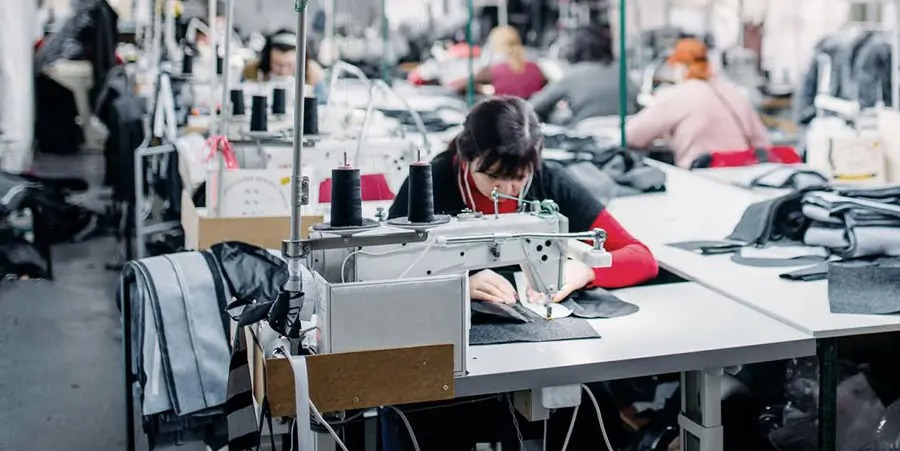
This is especially relevant for buyers and startup founders. A premium activewear brand usually depends on a chain of specialists, not one sewing room. Apparel factories, fabric mills, trim suppliers, and packaging suppliers all contribute. For shorts, the supply chain may also include elastic suppliers, liner fabric providers, mesh mills, heat-transfer vendors, and performance finishing partners. A supplier list makes that model much easier to understand.
What supplier lists can tell you
- Which countries are active in the network
- Which factories handle apparel
- Which suppliers support fabrics and trims
- How broad the sourcing base is
What supplier lists cannot tell you by themselves
They do not identify every short style directly
You still need the product label for the exact garment origin.
They do not prove all factories have the same product mix
Some may focus on bras, some on leggings, some on shorts.
| Source type | What it tells you |
|---|---|
| Annual report | Country share of overall production |
| Supplier list | Broader factory network |
| Garment label | Origin of one specific item |
Does where lululemon shorts are made affect quality?
It affects process capability, but it does not automatically decide quality by itself. A premium short is not defined only by country. It is defined by yarn quality, fabric development, waistband execution, stitching control, liner performance, pattern accuracy, finishing, and quality assurance. A skilled factory in one country can outperform a weak factory in another.
At Fusionknits, we believe country of origin matters less than factory capability, technical control, and brand quality systems. lululemon shorts can maintain consistent quality across multiple countries if the brand manages specifications, materials, audits, and production standards correctly.
This is the same principle we apply in professional manufacturing. If the product brief is precise, the materials are stable, and the quality process is strict, then multi-country production can still deliver a consistent consumer experience. For technical shorts, that means waistband recovery, anti-chafe seam execution, liner comfort, pocket function, and fabric hand feel all need to be controlled at factory level.
- Technical fabric consistency
- Pattern accuracy
- Trim and elastic control
- Construction precision
- Wash and wear testing
- Final inspection discipline
Why country alone is not enough
Factories inside the same country can differ a lot
Capability is not uniform across one nation.
Brand management is a major quality driver
A good quality system can standardize output across regions.
| Quality factor | More important than country? |
|---|---|
| Fabric quality | Yes |
| Pattern engineering | Yes |
| QC discipline | Yes |
| Country alone | No |
How should buyers check where a specific lululemon short was made?
The best method is still the simplest one: check the garment label on the exact item. Official corporate disclosures show the brand’s general sourcing structure, but the product label identifies the origin of that actual short. For buyers comparing several lululemon styles, each item should be checked individually.
At Fusionknits, we recommend using two levels of understanding. First, use lululemon’s official disclosures to understand the overall supply chain. Second, use the product label to confirm where the specific short you are holding was made.
This is especially important because activewear product lines are broad. A lined running short may come from one factory cluster, while a casual woven short may come from another. Buyers who want precision should not rely on assumptions from one previous purchase.
Best way to verify origin
- Read the inner care label
- Check the “Made in” statement on the exact garment
- Compare with official supplier and annual disclosures for broader context
Why this method is the most accurate
It works at SKU level
That is more precise than general brand discussion.
It avoids oversimplified claims
One label gives product truth, while company reports give supply-chain truth.
| Verification method | Accuracy level |
|---|---|
| Exact garment label | Highest for that item |
| Annual report | High for overall sourcing |
| General online guess | Low |
So, where are lululemon shorts made?
The most accurate answer is that lululemon shorts are made through a global network of independent manufacturers, not a single company-owned factory base. Based on lululemon’s official 2024 disclosure, a large share of its products were manufactured in Vietnam, Cambodia, Sri Lanka, Indonesia, and Bangladesh, with Vietnam as the largest disclosed country by share. Supplier lists also show a broader network that includes places such as China Mainland and Taiwan in the wider supply chain.
At Fusionknits, we would summarize it this way: many lululemon shorts are likely made in major activewear sourcing countries such as Vietnam and Cambodia, with additional production across other approved supplier countries. The exact origin of any specific short should be confirmed on its product label.
Conclusion
lululemon shorts are not made in one single place. They are produced through a global sourcing system built around independent manufacturing partners.
Official company reporting shows that Vietnam is the largest disclosed manufacturing country in lululemon’s 2024 product mix, followed by Cambodia, Sri Lanka, Indonesia, and Bangladesh, while supplier disclosures show a broader multi-country network that also includes facilities in places such as China Mainland. That means the correct answer is not one country name, but a sourcing model built across several experienced apparel regions.
At Fusionknits, we view this as a normal and professional activewear manufacturing structure. Premium shorts depend on technical fabrics, specialized sewing, and disciplined quality systems, and those capabilities are often spread across multiple factory partners rather than one owned plant. For buyers, the best approach is to understand the broader sourcing map through lululemon’s public disclosures and then verify the exact country of origin on the label of the specific short. That gives the clearest and most trustworthy answer.