Many buyers see “Made in China” on a polo label and immediately ask whether the product is genuine, lower quality, or unusual for a premium brand. That reaction is common, but it usually comes from a misunderstanding of how global apparel sourcing works. Premium brands do not rely on one country only. They use multi-country supplier networks and assign production based on factory capability, cost, fabric program, and delivery needs.
At Fusionknits, our answer is clear: yes, Ralph Lauren polos can be made in China, but China is only one part of Ralph Lauren’s wider global manufacturing network. Ralph Lauren states in its latest annual report that it does not own or operate manufacturing facilities and depends on independent third-party manufacturers, with about 96% of its products produced outside the United States in fiscal 2025, including roughly 12% sourced from China.
As a professional clothing manufacturer, we think the better question is not simply whether Ralph Lauren polos are made in China. The better question is how Ralph Lauren’s sourcing structure works, why China still appears in the brand’s supply chain, and what country of origin really means for polo quality, authenticity, and product positioning.
Does Ralph Lauren own the factories that make its polos?
This is the first issue buyers should understand. Ralph Lauren is not operating a vertically integrated garment factory model for most of its apparel. In its 2025 Form 10-K, the company says it does not own or operate any manufacturing facilities and depends exclusively on independent third parties for the manufacture of its products, most of which are located in foreign countries.
At Fusionknits, we would describe Ralph Lauren as a brand-led sourcing company rather than a factory-owning apparel manufacturer. The brand controls product standards, development direction, and quality requirements, while independent manufacturing partners in multiple countries produce the actual garments, including polo shirts.
This matters because many consumers still assume premium brands usually make products inside their own facilities. In reality, modern global fashion works differently. A brand can maintain a strong image and stable product quality while outsourcing production to approved specialist factories. In Ralph Lauren’s case, that outsourced structure is not hidden. The company states that it depends on independent third parties and that almost all of its products are manufactured by foreign suppliers.
Why this sourcing structure is common
- It allows access to specialist factories
- It supports production in multiple regions
- It improves sourcing flexibility
- It helps brands match product type to factory capability
Why this matters for polo shirts
Polo production is highly standardized
An experienced factory can follow the same fit, collar, placket, and fabric standards across different regions.
Brand control does not require factory ownership
The brand can still approve materials, trims, testing, and final quality expectations.
| Supply-chain point | What it means |
|---|---|
| Ralph Lauren does not own factories | Production is outsourced |
| Independent third parties make products | Manufacturing is partner-based |
| Most production is foreign | Global sourcing is normal for the brand |
Is China part of Ralph Lauren’s current sourcing network?
Yes. Ralph Lauren’s own annual report gives a direct answer. In fiscal 2025, about 96% of its products by dollar value were produced outside the United States, primarily in Asia, Europe, and Latin America, with about 20% sourced from Vietnam, 16% from Cambodia, and 12% from China. That means China remains a meaningful production country in Ralph Lauren’s sourcing structure.

At Fusionknits, this means a Ralph Lauren polo labeled “Made in China” is fully consistent with the company’s current public sourcing disclosures. China is not an unusual or suspicious origin for the brand. It is one of the officially disclosed sourcing countries in Ralph Lauren’s latest reporting.
That point is important because some buyers still think “premium” automatically means “made in Italy” or “made in the USA.” That is not how most global premium apparel businesses are structured today. Ralph Lauren’s scale, product variety, and international sales footprint require a diversified sourcing system. China is one part of that system, alongside countries such as Vietnam and Cambodia.
- Vietnam: about 20%
- Cambodia: about 16%
- China: about 12%
What this tells buyers
China is part of the official sourcing mix
A China-made Ralph Lauren polo can be genuine and expected.
China is not the only source
The brand uses a diversified production network.
| Country | Approximate share of products sourced in fiscal 2025 |
|---|---|
| Vietnam | 20% |
| Cambodia | 16% |
| China | 12% |
Does this mean all Ralph Lauren polos are made in China?
No. The official sourcing data makes that clear. China is one sourcing country, but it is not the only one and not even the largest disclosed one in fiscal 2025. Ralph Lauren’s product mix is spread across multiple countries, and the company also says its products are manufactured through arrangements with about 300 foreign manufacturers in various countries.
At Fusionknits, we would never tell a buyer that all Ralph Lauren polos come from China. The accurate answer is that some Ralph Lauren polos may be made in China, while others may come from countries such as Vietnam, Cambodia, or other approved sourcing locations within the company’s global manufacturing network.
Why not all polos come from one country
- Brands spread risk across suppliers
- Fabric programs may differ by factory
- Costs and trade conditions change
- Capacity is managed across regions
Why one label does not describe the whole brand
A label identifies one garment
It does not describe the brand’s entire supply chain.
Product sourcing changes over time
The same style family may shift between countries in different seasons.
| Buyer assumption | Better answer |
|---|---|
| All Ralph Lauren polos are made in China | No |
| No Ralph Lauren polos are made in China | Also no |
| Some are made in China within a wider global network | Yes |
How can buyers confirm where a specific Ralph Lauren polo was made?
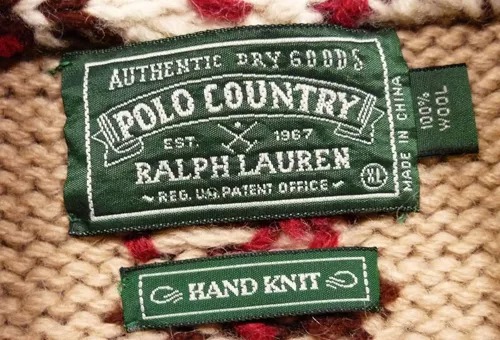
The most reliable answer is always on the garment label of the exact item. Corporate reporting explains the overall sourcing structure, but the country-of-origin label tells you where that specific polo was manufactured. This is the best method if a buyer wants certainty about a single product rather than the brand’s overall supply map.
At Fusionknits, we recommend using two levels of verification. First, use Ralph Lauren’s public disclosures to understand the sourcing system. Second, check the care and origin label on the exact polo you are buying to confirm the manufacturing country of that specific garment.
Best ways to verify origin
- Read the sewn-in country-of-origin label
- Check the care label on the exact item
- Use company disclosures for broader context
Why this matters
It avoids overgeneralization
One garment origin does not define the full brand.
It improves sourcing clarity
Buyers can separate individual product truth from company-wide sourcing truth.
| Verification method | Usefulness |
|---|---|
| Garment label | Best for one specific polo |
| Annual report | Best for overall sourcing structure |
| Internet guesswork | Least reliable |
Does “Made in China” mean the polo is lower quality?
No. Country of origin alone does not decide whether a polo shirt is high quality or low quality. Quality depends on the product brief, yarn selection, knit structure, collar construction, placket execution, dye control, washing performance, and final inspection process. A well-managed factory in China can produce premium polos if the brand sets and enforces strong specifications.
At Fusionknits, we do not judge polo quality by country alone. We judge it by factory capability, fabric consistency, workmanship, trim execution, and quality control. A Ralph Lauren polo made in China can absolutely meet premium expectations if it comes from an approved factory working to the brand’s standards.
This is an important message for buyers. Too many people treat country of origin like a shortcut for quality. In practice, that shortcut is unreliable. Within the same country, some factories are highly skilled and highly consistent, while others are weaker. The same is true across many sourcing regions. What matters most is not the country name by itself, but the technical controls around the garment. Ralph Lauren itself notes that it depends on manufacturers who can fulfill orders on time and to its specifications.
What really decides polo quality
- Yarn quality
- Pique or jersey knit quality
- Collar and cuff construction
- Colorfastness
- Fit consistency
- Final inspection discipline
Why country alone is not enough
Factories vary within one country
Not every factory in the same market has the same capabilities.
Brand standards shape the result
A disciplined quality system matters more than simple geography.
| Quality factor | More important than country? |
|---|---|
| Fabric quality | Yes |
| Construction quality | Yes |
| Factory management | Yes |
| Country name alone | No |
Why does Ralph Lauren still source from China if it is diversifying?
Because China still offers real strengths in apparel manufacturing, even as many brands diversify. The annual report shows that Ralph Lauren has spread sourcing across several countries, yet China still accounts for about 12% of products by dollar value in fiscal 2025. That suggests China remains commercially useful within the broader mix rather than disappearing from the system altogether.

At Fusionknits, we see China’s continued role in global sourcing as practical rather than surprising. China still offers mature supply-chain infrastructure, experienced apparel manufacturing, trim access, and production coordination, which is why large brands often reduce reliance on China without removing it entirely.
For a brand like Ralph Lauren, diversification does not mean abandoning every established sourcing country. It means reducing concentration risk and building flexibility. The company explicitly says it diversifies production among countries and suppliers and also notes exposure to tariffs, trade restrictions, logistics disruptions, and other sourcing pressures. In that context, keeping China as one part of a diversified supplier network is commercially logical.
Why brands keep multi-country sourcing
- To reduce risk concentration
- To manage tariffs and trade shifts
- To balance cost and capability
- To protect delivery timelines
Why China may still remain relevant
It has deep manufacturing infrastructure
That supports apparel categories at scale.
It can remain useful even after diversification
A brand can reduce dependency without exiting completely.
| Sourcing strategy | Practical meaning |
|---|---|
| Single-country sourcing | Higher risk concentration |
| Diversified sourcing | Better flexibility |
| China as part of the mix | Still commercially viable |
Can a China-made Ralph Lauren polo still be authentic?
Yes. A “Made in China” label does not make a Ralph Lauren polo fake. Authenticity depends on whether the product comes through the brand’s legitimate supply chain and approved manufacturing and distribution channels, not on the simple fact that China appears on the label. Ralph Lauren’s own disclosures confirm that China is part of its sourcing mix.
At Fusionknits, we would tell buyers this very directly: a Ralph Lauren polo made in China can be genuine, premium, and fully aligned with the brand’s current sourcing model. The country label alone should never be used as proof that the product is counterfeit.
A better authenticity check should look at authorized retail source, labeling quality, construction consistency, branding details, and overall product execution. Country of origin is part of the story, but it is not the final answer. In this case, the official corporate reporting already confirms that China is a valid production country within Ralph Lauren’s current manufacturing footprint.
Better authenticity signals
- Authorized point of purchase
- Correct labels and branding
- Consistent stitching and trims
- Proper fit and fabric execution
What should not be used alone
Country label by itself
It cannot prove fake versus authentic.
Price by itself
Low price can be suspicious, but it is still not enough alone.
| Buyer question | Better answer |
|---|---|
| Is “Made in China” automatically fake? | No |
| Can a real Ralph Lauren polo be made in China? | Yes |
| Should authenticity be judged by the whole product? | Yes |
So, are Ralph Lauren polos made in China?
Yes, some Ralph Lauren polos are made in China. Ralph Lauren’s 2025 annual report says the company does not own manufacturing facilities, relies on independent third-party manufacturers, and sourced about 12% of its products from China in fiscal 2025, while also sourcing substantial shares from Vietnam and Cambodia. That means China is part of the company’s legitimate current sourcing structure, but it is only one part of a broader global network.
At Fusionknits, the most accurate answer is this: yes, Ralph Lauren polos can be made in China, but not all of them are. China is one valid manufacturing origin within Ralph Lauren’s diversified supplier network, and a China-made polo can be fully authentic and fully premium if it comes through the brand’s approved sourcing system.
Conclusion
Ralph Lauren polos are not made in one country only. They are produced through a global supplier network managed by the brand, not through company-owned factories. Ralph Lauren states that it depends exclusively on independent third-party manufacturers, and in fiscal 2025 about 96% of its products were produced outside the United States, including about 12% sourced from China.
That means the answer to the headline question is yes: Ralph Lauren polos can be made in China, and that is consistent with the company’s current public disclosures.
At Fusionknits, we view this as normal for a global premium apparel brand. The real quality question is not the country name by itself. The real question is whether the factory, fabric, workmanship, and quality controls meet the brand standard. A China-made Ralph Lauren polo can still deliver premium quality and brand authenticity when it comes from the right manufacturing partner inside the brand’s approved global sourcing system.