Safety jackets are critical personal protective equipment (PPE) used in construction, road work, warehouse operations, and other high-risk environments. Understanding the materials used in safety jackets is essential for buyers, safety managers, and apparel brands that want to provide durable, visible, and compliant products. The right material impacts visibility, durability, comfort, and regulatory compliance.
Safety jackets are typically made from polyester, nylon, or blended synthetic fabrics that are lightweight, durable, and resistant to wear and tear. High-visibility jackets often incorporate reflective tapes made from PVC or glass bead materials to ensure worker safety under low-light conditions. Additional coatings or laminates can improve water resistance, flame resistance, or chemical resistance depending on the work environment.
At Fusionknits,Selecting the correct material is crucial not only for compliance with safety standards but also for ensuring comfort during extended wear.
What Defines a Safety Jacket?
Many people confuse safety jackets with regular outerwear. Understanding the difference is important for both buyers and end users.
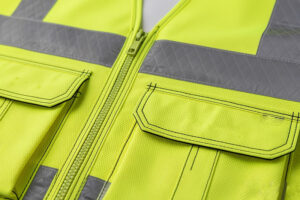
A safety jacket is a high-visibility garment designed to make the wearer easily seen in hazardous environments. These jackets must comply with visibility standards such as ANSI/ISEA 107 in North America or EN ISO 20471 in Europe.
Material, design, and reflective elements all contribute to the effectiveness of the jacket.
Common Features of Safety Jackets
- High-visibility fluorescent colors: neon yellow, orange, or green
- Reflective strips or tapes for low-light visibility
- Durable outer fabric to withstand workplace wear
- Water or flame-resistant treatments for specialized applications
- Multiple pockets and closures for functional use
The combination of these elements ensures both visibility and practicality.
Why Polyester Is Common in Safety Jackets
Polyester is the most widely used material for safety jackets.

Polyester is preferred because it is lightweight, strong, abrasion-resistant, and compatible with high-visibility dyes and reflective tape adhesion. It maintains structural integrity under demanding work conditions.
This fiber is easy to produce at scale, making it suitable for large workforces.
Advantages of Polyester
- Excellent strength-to-weight ratio
- Good color retention for high-visibility dyes
- Resists tearing and abrasion
- Holds reflective tape well
- Quick-drying when wet
Polyester can also be woven or knitted depending on the garment design.
Typical Constructions
| Fabric Construction | Key Benefit |
|---|---|
| Woven Polyester | Durable, tear-resistant, suitable for long-term use |
| Ripstop Polyester | Tear-resistant with reinforced grid pattern |
| Polyester Mesh | Lightweight, breathable for comfort |
| Laminated Polyester | Water-resistant, suitable for outdoor use |
Different constructions help manufacturers address diverse work environments.
The Role of Nylon in Safety Jackets
Nylon is also used in some safety jackets, particularly where additional strength or flexibility is required.
Nylon offers high tensile strength, flexibility, and abrasion resistance, making it suitable for jackets that will undergo frequent stress or movement.
It is often combined with polyester to improve durability and wear resistance.
Advantages of Nylon
- High tensile strength
- Lightweight and flexible
- Abrasion-resistant
- Compatible with coatings for water or flame resistance
Nylon blends are common in industrial and construction safety jackets.
Reflective Materials in Safety Jackets
High visibility is critical to safety. Reflective materials are a key component.
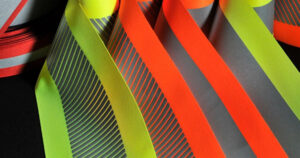
Most safety jackets incorporate reflective tapes or strips made from PVC, glass beads, or microprismatic materials. These materials reflect light, making the wearer visible in low-light conditions.
Reflective placement and quality are critical for compliance.
Common Reflective Materials
| Material | Description | Use |
|---|---|---|
| PVC-based Tape | Durable, bonded to fabric | General industrial jackets |
| Glass Bead Tape | Tiny glass spheres embedded in coating | High-intensity reflective performance |
| Microprismatic Tape | Micro-cornered prisms for stronger reflection | ANSI/EN ISO Class 2 & 3 jackets |
Reflective materials are often sewn or heat-bonded to ensure durability.
Coatings and Laminates for Specialized Safety Jackets
Some safety jackets require additional protection against environmental hazards.
Coatings such as polyurethane (PU) or polyvinyl chloride (PVC) can make jackets water-resistant or flame-retardant, while laminates improve durability and chemical resistance.
The choice depends on workplace conditions.
Water-Resistant Coatings
- PU coating for lightweight waterproofing
- PVC coating for full water repellency
- Laminate layers to prevent moisture penetration
Flame-Resistant Coatings
- Treated polyester or nylon fabrics
- Compliance with NFPA 70E or EN ISO 11612 standards
- Suitable for electrical or welding environments
Chemical-Resistant Coatings
- PVC or polyurethane layers
- Protection against oils, solvents, and acids
- Common in chemical or laboratory work environments
These coatings enhance safety in specific applications.
How Comfort and Breathability Are Addressed
Workers often wear safety jackets for extended periods. Comfort is a critical consideration.

Lightweight woven polyester, mesh panels, ventilation zippers, and moisture-wicking liners are used to improve comfort without compromising visibility or safety.
Balancing safety features with comfort ensures consistent use.
Common Comfort Enhancements
- Mesh ventilation under arms or back panels
- Breathable lining fabrics such as taffeta or mesh
- Adjustable cuffs and hems for better fit
- Lightweight polyester to reduce fatigue
Comfort improvements encourage compliance with safety standards.
Classification and Standards for Safety Jackets
Safety jackets must comply with regulatory standards.
In North America, ANSI/ISEA 107 sets visibility classes (Class 1, 2, 3). In Europe, EN ISO 20471 defines high-visibility clothing requirements. Materials and reflective placement are essential for compliance.
Correct classification ensures both safety and legal adherence.
Class Requirements Overview
| Class | High-Visibility Material | Reflective Material | Typical Use |
|---|---|---|---|
| Class 1 | Minimum coverage | Lower reflective tape | Low-risk environments |
| Class 2 | Greater fabric coverage | More reflective tape | Construction, roadside work |
| Class 3 | Maximum coverage | Multiple reflective stripes | High-risk areas with traffic |
Material selection must support these standards.
Care and Maintenance of Safety Jacket Materials
The long-term effectiveness of a safety jacket depends on proper maintenance.
Polyester and nylon fabrics are durable but must be cleaned according to manufacturer guidelines to preserve reflectivity, coatings, and structural integrity.
Neglect can reduce visibility and protective properties.
Maintenance Tips
- Machine wash cold with mild detergent
- Avoid bleach or fabric softeners that degrade reflective coatings
- Inspect reflective tape regularly
- Repair or replace damaged jackets promptly
Proper care maintains compliance and safety.
Emerging Materials in Safety Jackets
Recent trends include sustainable and advanced performance fabrics.
Recycled polyester, eco-friendly coatings, and advanced microfiber fabrics are being integrated into modern safety jackets. These materials reduce environmental impact while maintaining durability, visibility, and comfort.
Innovation continues to improve functionality.
Examples
- Recycled polyester from post-consumer PET bottles
- Water-based DWR treatments
- Lightweight ripstop fabrics for flexibility
- Breathable laminated composites
These materials balance performance with sustainability.
How Buyers Should Choose Safety Jacket Materials
Selecting the right material requires understanding the intended environment and user needs.
Buyers should evaluate fabric type, durability, water and flame resistance, reflective performance, comfort, and compliance with safety standards before sourcing jackets.
A holistic approach ensures effectiveness and compliance.
Questions Buyers Should Ask
- Is the jacket ANSI or EN ISO certified?
- What fiber and construction are used?
- Are coatings or laminates applied?
- Are reflective materials durable and compliant?
- Is the jacket suitable for the intended weather and work conditions?
Answering these questions reduces sourcing errors.
Recommended Material Selection
| Application | Suggested Materials |
|---|---|
| Roadwork or Traffic | Polyester with Class 2/3 reflective tape |
| Construction | Ripstop nylon/polyester blend with reinforced seams |
| Cold Weather | Insulated polyester with water-resistant coating |
| Flame-Retardant Work | Treated polyester or nylon with FR coating |
| Laboratory/Chemical | PVC-laminated or coated synthetic fabrics |
Matching materials to applications ensures safety and longevity.
Conclusion
Safety jackets are primarily made from polyester, nylon, or blended synthetic fabrics designed for durability, visibility, and comfort. High-visibility garments integrate reflective tapes made from PVC, glass beads, or microprismatic materials, while specialized coatings or laminates provide water, flame, or chemical resistance depending on the work environment.
A woven or knit base fabric alone does not guarantee protection—performance depends on the combination of material, coatings, reflective elements, and construction quality.Selecting the right safety jacket material requires balancing durability, visibility, comfort, and regulatory compliance. Proper maintenance preserves functionality over time.
At Fusionknits, we have found that high-quality synthetic fabrics, combined with reflective technology and functional coatings, consistently deliver safe, durable, and comfortable jackets for industrial, construction, and high-risk environments worldwide.