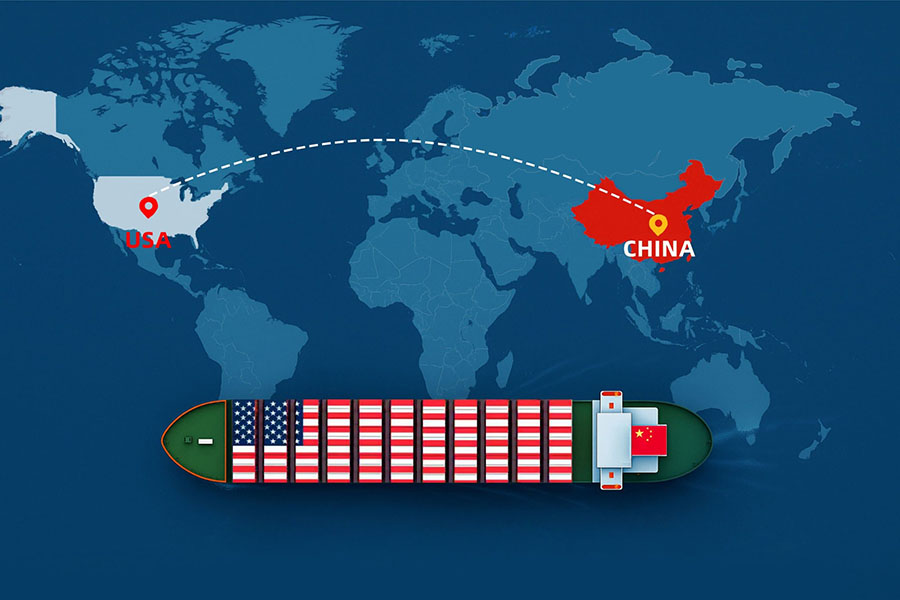
In international apparel trade, FOB (Free On Board) and CIF (Cost, Insurance, and Freight) are two of the most commonly used Incoterms between garment manufacturers and global buyers. These two trade terms are widely applied in clothing exports such as T-shirts, hoodies, sweatpants, and other ready-to-wear products shipped from China to overseas markets.
FOB and CIF mainly define how responsibilities, costs, and logistics control are divided between the seller and the buyer. FOB means the buyer takes responsibility for international shipping after the goods are loaded onto the vessel, while CIF means the seller also arranges and pays for freight and insurance up to the destination port.
Understanding the difference between FOB and CIF is essential for avoiding misunderstandings in pricing, shipping arrangements, and responsibility allocation. To avoid the issues mentioned above and ensure the correct use of these terms, this article will discuss the differences between FOB and CIF from the following aspects:

What Is FOB in Apparel Trade and Who Bears the Risk?
FOB stands for Free On Board, and it is one of the most commonly used Incoterms in international apparel trade. In garment sourcing, FOB is widely applied when you purchase clothing from China and the supplier is responsible for delivering the goods to the designated export port and loading them onto the vessel you nominate.
Under FOB terms, the cost structure mainly includes the product cost plus all expenses required to move the goods from the factory to the port and complete export customs clearance. However, international shipping costs and insurance are not included, as these are arranged by you as the buyer.
For example, if you are buying 20,000 hoodies from a factory in China under FOB terms, the supplier will handle production, packaging, inland trucking to the port, export declaration, and loading onto the vessel. Once the goods are loaded at the port (such as FOB Shenzhen or FOB Shanghai), the seller’s responsibility ends.
From that point, you become responsible for the shipment. This means you need to arrange and pay for:
- Ocean freight from China to your destination country
- Cargo insurance if needed
- Import customs clearance in your country
- Import duties, taxes, and local delivery to your warehouse
In terms of risk, under FOB, risk transfers at the moment the goods are loaded onto the vessel at the origin port. This means if any damage, loss, or delay occurs during international shipping, it is considered your responsibility as the buyer. In most cases, you will work with your freight forwarder and insurance provider to handle any claims or shipping issues.
In summary, FOB gives you full control over international shipping, but it also means you take over both the cost and risk once the goods leave the port of origin.
What Is CIF in Apparel Trade and Who Bears the Risk?
CIF stands for Cost, Insurance, and Freight, and it is a commonly used Incoterm in international apparel sourcing when you want the supplier to take more responsibility for shipping arrangements. In garment trade, CIF is often used when you purchase clothing from China and prefer the factory to manage ocean freight and insurance up to your destination port.
Under CIF terms, the seller is responsible for the product cost, export procedures in China, inland transportation to the port, ocean freight, and basic cargo insurance. However, CIF does not include import clearance or delivery within your country, which will still be handled by you as the buyer.
For example, if you are buying 20,000 T-shirts from a factory in China under CIF terms, the supplier will complete production, arrange trucking to the port, handle export customs clearance, book the shipping space, and purchase basic insurance. The goods will then be shipped to your nominated destination port, such as CIF New York or CIF Los Angeles.
Once the goods are loaded onto the vessel at the port of shipment, the risk officially transfers to you as the buyer, even though the seller has paid for freight and insurance. This means that during sea transportation, any loss or damage is technically your risk. However, since insurance is included, you can usually file a claim with the insurance company if incidents occur during transit.
When the goods arrive at your destination port, you will need to:
- Complete import customs clearance
- Pay import duties and taxes
- Arrange inland transportation to your warehouse or distribution center
In summary, CIF reduces your workload in international shipping because the seller handles freight and insurance, but you still take over risk during transit and manage all import-related processes after arrival.
FOB vs CIF: Key Differences in Apparel Trade
FOB and CIF are often compared in apparel sourcing because they define two very different levels of control and responsibility between you and the supplier. The key difference is not only about price structure, but also about who controls logistics and who carries shipping responsibility at each stage.
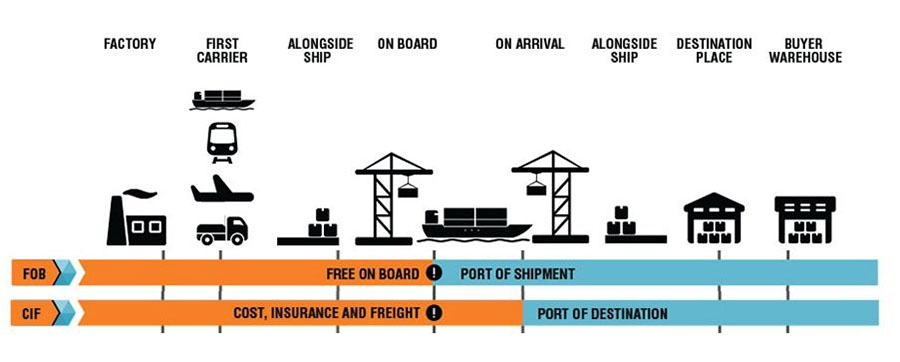
Under FOB terms, you are responsible for arranging international freight and insurance after the goods are loaded onto the vessel. This gives you more control over shipping routes, freight forwarders, and logistics costs, but also requires you to actively manage the transportation process. In this case, the supplier’s responsibility ends at the port of shipment.
Under CIF terms, the supplier takes over more of the logistics work by arranging and paying for ocean freight and basic insurance to your destination port. This reduces your operational workload, especially if you do not have your own freight forwarder, but it also means you have less visibility and control over shipping decisions such as carrier selection and freight cost optimization.
In terms of cost structure, FOB separates production and logistics costs clearly, allowing you to compare suppliers more transparently. CIF, however, combines product cost with shipping and insurance into a single delivered-to-port price, which can make it harder for you to evaluate the real logistics cost breakdown.
In terms of risk management, both FOB and CIF transfer risk at the moment the goods are loaded onto the vessel. The difference is that under CIF, the supplier arranges insurance for you, while under FOB, you are responsible for purchasing your own coverage if needed.
In summary, FOB gives you more control and transparency over shipping, while CIF provides more convenience by shifting logistics coordination to the supplier, but with less flexibility in cost and freight management.
FOB vs CIF Price Difference
The main difference between FOB and CIF pricing in apparel trade is that FOB covers production and delivery to the port in the exporting country, while CIF includes production, export handling, ocean freight, and insurance up to the destination port. In practice, CIF is an extension of FOB because it adds international logistics costs into the supplier’s quotation.
To understand this clearly, let’s take a real apparel sourcing example.
Assume you are buying 20,000 T-shirts from a factory in China.
FOB Price Structure
Under FOB terms, the factory only covers all costs required to deliver goods to the export port in China (such as Shenzhen or Ningbo) and complete export clearance.
Cost breakdown:
- Fabric and production cost: $42,000
- Printing, packaging, QC: $2,000
- Inland transport + export handling: $1,000
FOB total value = $45,000
At this point, the factory’s responsibility ends once the goods are loaded onto the vessel, and you separately arrange and pay for international freight and insurance.
CIF Price Structure
Under CIF terms, the supplier adds international shipping costs and insurance on top of the FOB structure.
Cost breakdown:
- FOB cost: $45,000
- Ocean freight: $7,000
- Insurance: $1,000
CIF total value = $53,000
In this case, the supplier arranges and pays for ocean freight and insurance up to your destination port, such as CIF Los Angeles or CIF New York.
Key Pricing Difference
From this example, the $8,000 difference between FOB and CIF is not product value, but the total cost of international logistics and insurance controlled by the supplier under CIF terms.
This creates a practical trade-off:
- Under FOB, you control freight cost, carrier selection, and logistics optimization
- Under CIF, logistics is simplified, but cost structure and freight decisions are controlled by the supplier
Therefore, FOB provides clearer cost transparency and better flexibility in total landed cost management, while CIF provides convenience by bundling logistics into a single supplier-managed price.
When to Use FOB vs CIF in Apparel Trade
In real apparel sourcing from China, the choice between FOB and CIF is mainly determined by how much control you want over the logistics chain and whether you can independently manage shipping from China to your destination country. Because China has multiple production regions and many export ports, the inland transport and port coordination process can become complex for first-time buyers.

FOB is more suitable when you already have an experienced freight forwarder or logistics partner. Under FOB terms, your supplier only handles production and delivery of goods to the designated port in China, while you control the international shipping process. This becomes especially practical when you are consolidating shipments from multiple suppliers in China into one container. In this case, FOB allows all suppliers to send goods to the same port, where your freight forwarder can coordinate consolidation and arrange either FCL or LCL shipment more efficiently. FOB therefore works better when you want more control over shipping cost, routing, and consolidation strategy.
CIF is more suitable when you do not have a reliable freight forwarder or you prefer to reduce operational complexity. Under CIF terms, the supplier not only ships the goods from the factory to the Chinese port but also arranges ocean freight and insurance all the way to your destination port. This means you do not need to coordinate multiple logistics steps within China or manage international shipping arrangements. CIF is particularly useful for buyers who prioritize simplicity over cost optimization, or those who are still unfamiliar with international shipping processes.
In practical terms, FOB is chosen when logistics control and cost optimization are important, especially for experienced importers and consolidated shipments. CIF is chosen when ease of execution and reduced coordination workload are more important than freight flexibility and cost transparency.
Common Misunderstandings About FOB and CIF
In real apparel sourcing, many problems between buyers and suppliers come from misunderstandings of FOB and CIF rather than the trade terms themselves. These misunderstandings often lead to incorrect pricing expectations, unclear responsibilities, and avoidable shipping disputes.
Misunderstanding 1: CIF means door-to-door delivery
A very common misunderstanding is that CIF means the supplier will deliver goods directly to your warehouse. In reality, CIF only covers shipping to the destination port, not final delivery. After arrival at the port, you still need to handle import customs clearance, pay duties and taxes, and arrange inland transportation. This misunderstanding often causes new buyers to underestimate their responsibilities at the destination country.
Misunderstanding 2: FOB means the seller is not responsible for anything after quotation
Another misunderstanding is that FOB means the seller’s responsibility is very limited from the beginning. In fact, under FOB terms, the seller is still fully responsible for production, quality control, packaging, inland transportation to the port, export declaration, and loading onto the vessel. The risk only transfers after the goods are loaded onto the ship. This misunderstanding often leads buyers to incorrectly assume that FOB is a “factory gate price,” which is actually EXW, not FOB.
Misunderstanding 3: CIF is always more expensive than FOB
Many buyers assume CIF is always more expensive because it includes freight and insurance. However, this is not always a true comparison of product cost. CIF includes logistics services arranged by the seller, while FOB separates product cost and shipping cost. In some cases, sellers may have better shipping rates than individual buyers, meaning CIF pricing can sometimes appear competitive or even similar. The key difference is not only price level, but also who controls logistics and how transparent the cost breakdown is.
Conclusion
FOB and CIF are two essential Incoterms in international apparel trade, each serving different sourcing needs and levels of logistics involvement. Understanding how they differ in responsibility, cost structure, and risk transfer is crucial for making the right sourcing decisions and avoiding unnecessary misunderstandings in real trade operations.
As a professional garment manufacturing company, we have extensive experience in apparel production and international export, and we are able to provide comprehensive solutions to support your business across product development, manufacturing, and global shipping coordination. If you need any assistance or have any questions regarding FOB, CIF, or apparel sourcing from China, please feel free to contact us at any time.