
T-shirts feel so normal today that many people assume they were always part of everyday dress. But that was not the case. The T-shirt first developed as an undergarment, then moved into workwear and military use, and only later became common as visible casual clothing.
T-shirts started becoming common in the early to mid-20th century, first as standard undershirts for workers and the U.S. military, then as everyday casual outerwear by the 1950s. By the 1960s, they had become widely accepted as common public clothing rather than only underwear.
At Fusionknits, this question matters because understanding when T-shirts became common helps explain why they remain one of the strongest products in apparel manufacturing today. Their rise was not based on fashion alone. It was built on comfort, practicality, low cost, and later on cultural influence and large-scale production.
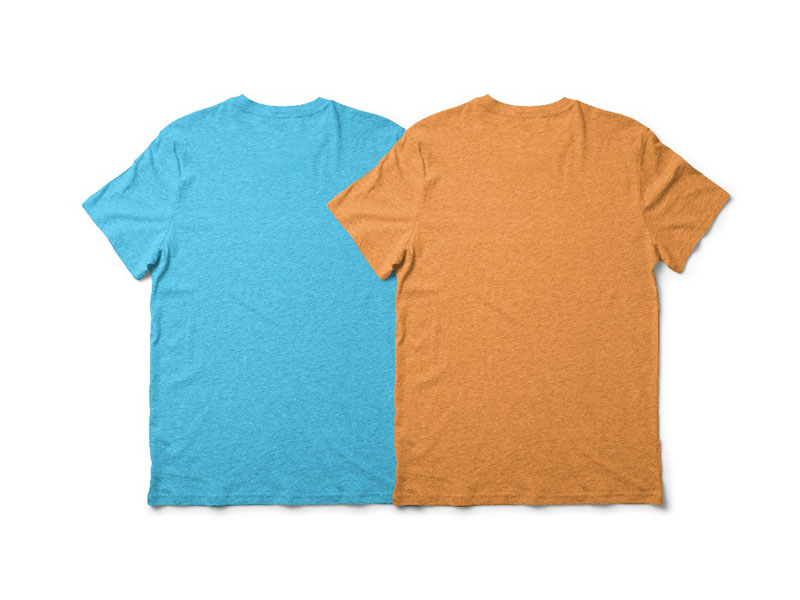
Did T-shirts begin as underwear rather than everyday clothing?
Yes. The modern T-shirt did not begin as outerwear. It evolved from 19th-century undergarments and was first worn mainly as an undershirt rather than as a visible top.
The T-shirt began as underwear. It developed from one-piece union suits and separate undershirts used in the late 19th century, and it was originally meant to be worn under uniforms or work clothing rather than as a stand-alone garment.
From a product development point of view, this origin explains many of the core features that still define T-shirts today. The garment was lightweight, easy to clean, flexible, and simple to produce. Those characteristics came directly from its role as a basic underlayer.
Why the early T-shirt worked well as underwear
- It was lightweight
- It was easy to wash
- It was simple to produce
- It allowed movement in warm conditions
- It worked well under uniforms and work garments
Why this early role still matters
It shaped the garment structure
The simple round neck, short sleeves, and pull-on shape were all practical for an underlayer.
It made the shirt easy to scale
Because the product was basic and functional, it became easier to manufacture in large quantities once industrial production improved.
Early product role overview
| Early function | What it meant for the T-shirt |
|---|---|
| Undershirt | Worn under uniforms or workwear |
| Basic utility garment | Focused on comfort and simplicity |
| Low-cost item | Easy to produce and replace |
This is why the T-shirt was not instantly common as outerwear. It first had to move beyond its role as underwear before it could become a public everyday shirt.
When did the modern T-shirt first appear in recognizable form?
The modern T-shirt appeared in recognizable form in the early 20th century, especially when short-sleeved, crew-neck cotton undershirts began to be standardized and issued more widely.
The modern T-shirt appeared in the late 19th century to early 20th century, and by 1913 the U.S. Navy was issuing short-sleeved white undershirts that closely matched the modern T-shirt form. That military standard helped define the garment more clearly.
This point matters because a garment usually becomes more common after it becomes standardized. Once the Navy and other institutions used a recognizable version of the T-shirt, the product became easier to manufacture, describe, and distribute. The word “T-shirt” also entered common English usage by the 1920s.

What made the early modern T-shirt recognizable
- Crew-neck shape
- Short sleeves
- Lightweight cotton knit
- Pull-over structure
- White undershirt function
Why standardization matters in apparel history
It creates category clarity
Once the garment had a stable shape and use, it became easier to recognize as a distinct product type.
It supports mass production
A standard product is easier to reproduce at scale than a loosely defined one.
Early modern T-shirt timeline view
| Stage | Historical role |
|---|---|
| Late 19th century | Undergarment evolution from union suits |
| Early 20th century | More recognizable separate undershirt |
| 1913 | U.S. Navy standard issue undershirt |
This was the stage when the T-shirt became a real garment category, but it still was not yet fully common as visible public clothing.
Did the military help make T-shirts common?
Yes. The military played a major role in making T-shirts more common, especially in the United States. Military use helped normalize the garment, expand its production, and expose large numbers of men to it as practical clothing.
The military helped make T-shirts common by issuing them as undershirts and work garments, especially during the early 20th century and World War II. Returning servicemen then brought T-shirt wearing into civilian life, helping the garment move from military utility to everyday casual use.
From a manufacturing point of view, military use did more than spread the garment socially. It also supported volume production. A military-issued basic shirt needed to be practical, inexpensive, and easy to wash, which are the same qualities that later helped the T-shirt succeed in mass civilian markets.
Why military use was so important
- It standardized the garment
- It increased production volume
- It proved the shirt’s practicality
- It helped move the shirt into workwear and civilian use
How military use changed public perception
It made the garment familiar
Large numbers of men wore T-shirts during service, so the product became more socially visible.
It helped remove some underwear-only associations
When servicemen wore T-shirts in practical public contexts, the garment began to seem less restricted to private underlayer use.
Military influence overview
| Military effect | Commercial result later |
|---|---|
| Standard use | Clear product identity |
| Large-scale issue | Stronger mass production base |
| Civilian carryover | Wider everyday adoption |
The military did not complete the T-shirt’s rise alone, but it created one of the strongest early steps toward making the garment common.
When did T-shirts start becoming common as outerwear?
This is the key shift in the garment’s history. T-shirts existed earlier, but they became truly common when people began wearing them openly as stand-alone shirts rather than as hidden undershirts.
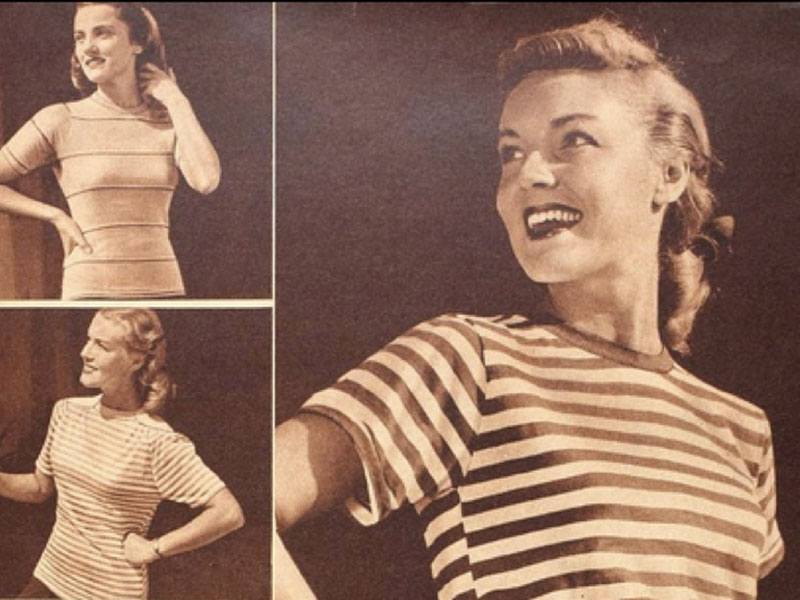
T-shirts started becoming common as outerwear in the 1940s and especially the 1950s. They moved from undergarments into public casualwear as military influence, workwear use, and popular culture made it more acceptable to wear them visibly.
Until the 1940s, the T-shirt was still largely considered an undershirt. By the 1950s, however, it had become much more accepted as a stand-alone garment, especially in the United States. This transition was strengthened by film and youth culture.
Why the 1940s and 1950s mattered
- Workwear and military use had already normalized the shirt
- Public visibility increased
- Film culture raised the garment’s status
- Youth style made casual dressing more acceptable
Why the change happened in stages
The 1940s made the shirt more visible
Military imagery and practical public wear made the T-shirt less hidden than before.
The 1950s made it culturally desirable
Marlon Brando and James Dean helped recast the T-shirt as a symbol of youth, masculinity, and casual cool rather than just underwear.
Outerwear transition view
| Period | T-shirt role |
|---|---|
| Before 1940s | Mostly underwear |
| 1940s | More visible in work and military contexts |
| 1950s | Common as casual outerwear |
This is the stage when the T-shirt truly began to become common in everyday public clothing.
Did Hollywood and youth culture make T-shirts mainstream?
Yes. Popular culture played a major role in moving the T-shirt from practical clothing into mainstream fashion and everyday social acceptance.
Hollywood and youth culture helped make T-shirts mainstream in the 1950s because the garment became associated with rebellion, confidence, and casual modern style. That cultural shift helped the T-shirt become common not only as a functional shirt but also as a fashionable one.
From a product history point of view, this is one of the most important transitions. A garment can be technically useful and still not become mainstream. The T-shirt became fully common when it gained cultural value as well as practical value. Once it was seen as desirable, not only acceptable, its market expanded much faster.
Why cultural influence mattered so much
- It changed social acceptance
- It connected the shirt with modern youth identity
- It made casual dressing more visible
- It turned the shirt into a style signal
How culture changed the product
The shirt gained emotional value
It was no longer only cheap and practical. It became expressive and symbolic.
The shirt moved into general fashion
Once the T-shirt appeared in film and youth culture, it became easier for the public to accept it as normal outerwear.
Cultural transition overview
| Influence | Effect on the T-shirt |
|---|---|
| Film stars | Made it aspirational |
| Youth culture | Made it casual and fashionable |
| Public visibility | Increased acceptance as normal clothing |
This cultural stage is one reason the 1950s are often treated as the decade when T-shirts became truly common in mainstream dress.
By when had T-shirts become widely common in everyday life?
By the 1960s, the T-shirt was no longer only accepted. It had become deeply integrated into public casualwear, branding, self-expression, and youth identity.

By the 1960s, T-shirts had become widely common in everyday life. At that point they were not only standard casual clothing, but also increasingly used for printed graphics, slogans, advertising, protests, and souvenir culture.
This matters because “becoming common” can mean different things. The T-shirt became recognizable much earlier, but by the 1960s it had clearly become a normal and widely accepted public garment with broad social uses. After that, it expanded even further through graphics, branding, and mass retail.
Signs that the T-shirt had become common by then
- It was worn openly across age groups
- It had moved far beyond military and workwear use
- It was used for self-expression
- It supported commercial printing and promotion
Why the 1960s were a turning point
Printing expanded the category
T-shirts became more than clothing basics. They became communication tools.
Fashion and commerce reinforced each other
The more common the garment became, the more uses and subcategories it developed.
Everyday adoption view
| Period | T-shirt status |
|---|---|
| 1950s | Mainstream casual outerwear |
| 1960s | Widely common and culturally flexible |
| Later decades | Global wardrobe staple |
By this point, the T-shirt had clearly moved from a specific-use garment into a common everyday shirt.
Why did T-shirts become so common so successfully?
The T-shirt did not spread only because it looked good. It became common because it solved many product needs at the same time. It was practical, inexpensive, easy to clean, easy to wear, and easy to manufacture.
T-shirts became common so successfully because they combined comfort, low cost, simple production, broad styling potential, and later strong cultural value. Few garments could match that balance as effectively across so many customer groups.
At Fusionknits, this is one of the clearest reasons T-shirts remain so central in apparel manufacturing today. Their popularity was not based on one moment only. It was built through a combination of utility, scale, and cultural adaptability.
Why the T-shirt was so commercially strong
- Simple structure
- Low-cost manufacturing potential
- Comfortable fabric use
- Easy fit logic
- Wide age and class appeal
- Strong branding potential later
Why this still matters today
The product is still efficient
The same qualities that made T-shirts common early on still support large-scale production today.
The product remains flexible
A T-shirt can function as a basic, a fashion piece, a branded item, or a promotional garment.
Product success overview
| Strength | Why it supported common use |
|---|---|
| Comfort | Easy daily wear |
| Simplicity | Easy manufacturing and fit |
| Price accessibility | Broad market reach |
| Cultural flexibility | Easy adaptation across decades |
This is why the T-shirt did not just become common once. It stayed common and expanded into one of the strongest garment categories in the world.
Conclusion
T-shirts became common gradually rather than all at once. They first appeared as undergarments in the late 19th and early 20th centuries, became more established through military and workwear use in the early to mid-20th century, and then became common as everyday outerwear during the 1940s and especially the 1950s. By the 1960s, they were widely accepted as normal public clothing and had also become a strong medium for graphics, self-expression, and branding.
From a professional apparel manufacturing perspective, this history explains why the T-shirt remains such a powerful product category today.
At Fusionknits, the T-shirt is understood not only as a basic garment, but as a product built on simplicity, comfort, and industrial efficiency. Its rise from underwear to global everyday clothing is one of the clearest examples of how a practical garment can become a permanent part of modern apparel culture.