
A polo shirt can look sharp, polished, and easy to wear, but only when the fit is right. If it is too tight, the shirt starts to pull, the placket opens awkwardly, and the collar loses its clean line. If it is too loose, the polo can look lazy, oversized in the wrong way, or too casual for the setting.
A polo shirt should usually be neither too tight nor too loose. The best polo fit is typically close enough to look clean and structured, but relaxed enough to allow easy movement and natural drape. In most cases, a well-balanced polo should skim the body rather than cling to it or hang away from it.
At Fusionknits, we see polo fit as one of the most important parts of product quality. A good fabric and a strong collar can still look weak if the fit is wrong. That is why the best answer is not one extreme. It is a fit that matches the product purpose, the fabric, the customer, and the way the polo is meant to be worn.
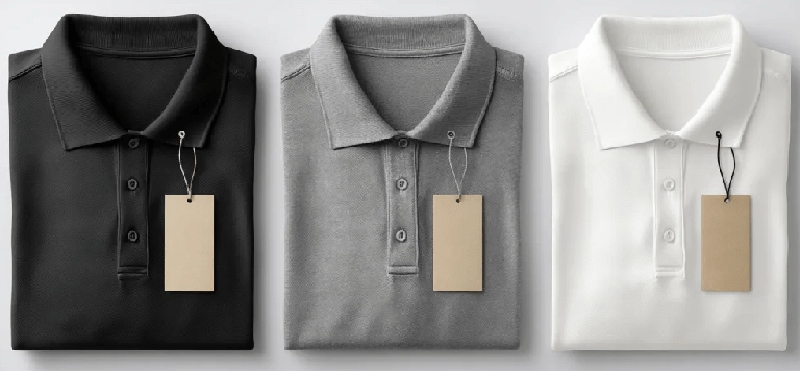
Why Does Polo Shirt Fit Matter So Much?
A polo shirt sits between a T-shirt and a shirt, so fit changes the whole product identity. It is casual, but still structured. It is relaxed, but still meant to look intentional. That is why a polo reacts more strongly to fit mistakes than many people expect.
Polo shirt fit matters so much because the garment depends on balance. It needs enough structure to keep the collar, placket, and body looking clean, but it also needs enough ease to feel comfortable and wearable. If the fit is off, the whole shirt quickly looks less polished.
Polos are very sensitive to chest width, shoulder line, sleeve opening, body length, and fabric recovery. A small mistake in one of these areas can make the whole shirt feel too tight, too loose, or simply awkward. That is why fit is not only a style question. It is also a technical one.
At Fusionknits, we usually say that a polo should feel controlled, not compressed, and relaxed, not careless. That balance is what gives the category its long-term value.
Why fit affects a polo so quickly
- The collar makes structure more visible
- The placket draws attention to the chest
- The sleeve opening affects the arm line
- The body shape is easier to judge than in looser outerwear
- The fabric must support both comfort and shape
Why this matters in product development
Polos are not as forgiving as tees
A T-shirt can often hide slight fit weakness better than a polo.
Structure raises the standard
The collar and front opening make imbalance easier to notice.
Customers expect versatility
A polo should work in casual and cleaner settings, so fit has to support both.
| Fit issue | Common result |
|---|---|
| Too tight | Strain, pulling, reduced polish |
| Too loose | Weak silhouette, less structure |
| Balanced fit | Cleaner and more versatile result |
Should a Polo Shirt Be Tight?
Usually no, at least not in the sense of clinging closely to the body. A polo can be trim, but it should not look or feel compressed. Tight polos often lose the calm, easy confidence that makes the category work.

A polo shirt should not usually be tight. A trim or tailored fit can work well, but the shirt should still allow movement, keep the placket flat, and avoid visible pulling across the chest, stomach, or upper arms. A polo that is too tight usually looks less refined, not more stylish.
At Fusionknits, we often see buyers confuse “sharp” with “tight.” But these are not the same thing. A sharp polo has good proportion and clean fit balance. A tight polo often creates stress lines, opens the placket, and makes the collar look weaker.
Signs a polo is too tight
- Buttons pull at the placket
- The chest shows horizontal tension lines
- The sleeves grip the arm too hard
- The hem catches or rides up
- Movement feels restricted
- The collar does not sit cleanly
Why too-tight polos usually underperform
They reduce comfort
A polo should move naturally through sitting, walking, and daily wear.
They make the body look forced
A good polo should frame the body, not squeeze it.
They age badly in wear
A too-tight fit often stresses fabric, seams, and placket shape faster.
| Tight-fit result | Why it is a problem |
|---|---|
| Pulling at buttons | Weakens front appearance |
| Sleeve strain | Makes fit look aggressive |
| Restricted movement | Lowers comfort |
| Riding hem | Reduces polish |
Should a Polo Shirt Be Loose?
Not usually in the broad everyday sense. A polo can be relaxed, but if it becomes too loose, it starts to lose the shape that separates it from a basic T-shirt.
A polo shirt should not usually be loose in an oversized or shapeless way. A relaxed fit can work well, especially in some casual or resort categories, but the shirt should still hold a clean shoulder line, controlled sleeve shape, and a body that follows the frame without collapsing away from it.
A loose polo often weakens the collar effect and makes the shirt look less intentional. In some modern oversized or resort-inspired collections, extra room can work well, but that should still feel designed, not accidental.
At Fusionknits, we see that most commercial polos perform best when they are relaxed enough for comfort but still structured enough to look purposeful.
Signs a polo is too loose
- Shoulder seam drops too far
- Chest and waist hang without shape
- Sleeve opening looks too wide
- Collar feels visually disconnected from the body
- The placket falls too softly
- The shirt loses clean proportion
Why too-loose polos can feel weaker
They reduce visual sharpness
A polo should still look more composed than a basic tee.
They make styling harder
The shirt may not layer or tuck as cleanly.
They confuse the category
The garment starts to move away from refined casualwear and toward shapeless basics.
| Loose-fit result | Why it is a problem |
|---|---|
| Dropped shoulder | Less controlled silhouette |
| Excess body volume | Weaker shape |
| Wide sleeve opening | Less flattering arm line |
| Soft placket collapse | Reduced polish |
What Is the Best Overall Fit for a Polo Shirt?
For most people and most categories, the best answer is a balanced fit. Not tight. Not oversized. Not boxy in the wrong way. A polo usually looks best when it skims the body with enough room for comfort.
The best overall fit for a polo shirt is usually a body-skimming or balanced regular fit. It should follow the torso lightly, sit cleanly at the shoulder, allow easy movement through the chest and arm, and keep the collar and placket looking stable without visible strain or extra bulk.
At Fusionknits, this is the fit direction we most often recommend for broad commercial success. It works because it keeps the polo wearable, flattering, and versatile. It can move between work, travel, casual outings, and smarter off-duty dressing much more easily than either extreme.
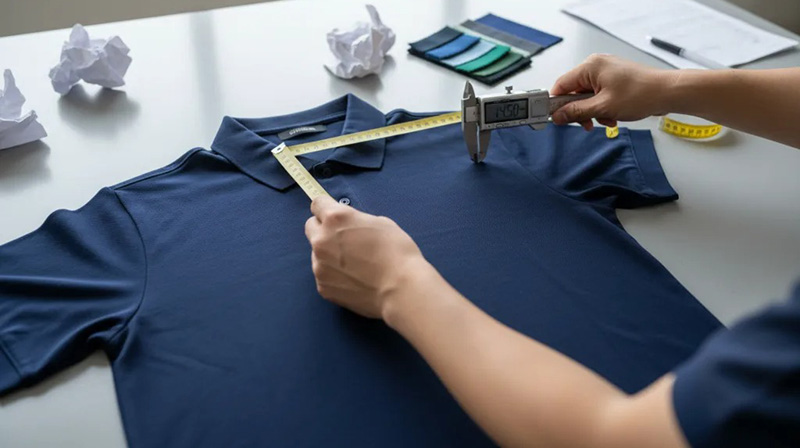
What a balanced polo fit usually looks like
- Shoulder seam sits close to the natural shoulder
- Chest has enough room without pulling
- Waist follows the body lightly
- Sleeves sit neatly without gripping
- Hem falls cleanly without riding up
- Collar stays stable and flat
Why this fit works best
It supports versatility
The shirt can move across more settings.
It flatters more body types
The fit avoids both compression and shapelessness.
It makes the polo look intentional
The category works best when the line is clean and calm.
| Fit direction | Best use case |
|---|---|
| Trim balanced fit | Smart-casual and clean everyday wear |
| Regular balanced fit | Broadest commercial success |
| Relaxed fit | Casual or resort use |
How Should the Shoulders and Chest Fit in a Polo Shirt?
These two zones often decide whether the polo looks premium or weak. If the shoulders are wrong, the whole shirt loses its line. If the chest is wrong, the placket and collar often fail next.
The shoulders of a polo shirt should sit close to the natural shoulder edge, and the chest should have enough room to stay smooth without pulling. The shirt should not pinch, stretch, or drop too far off the frame.
At Fusionknits, we usually start fit review at the shoulder and chest because these zones tell the truth quickly. A weak shoulder makes the shirt feel loose even if the waist fits. A tight chest makes the placket break open even if the rest looks acceptable on the hanger.
Signs the shoulder fit is right
- Seam sits near the natural shoulder point
- Sleeve hangs cleanly from the arm
- Collar looks centered and balanced
- Upper body shape feels stable
Signs the chest fit is right
The placket stays flat
Buttons should close without tension.
The body line stays smooth
No horizontal pulling should show.
Movement feels natural
The shirt should allow walking, reaching, and sitting without stress.
| Fit zone | Correct result |
|---|---|
| Shoulders | Clean, natural line |
| Chest | Smooth, no pulling |
| Upper back | Comfortable movement |
| Placket area | Flat and stable |
How Should the Sleeves Fit on a Polo Shirt?
Sleeves are a small detail, but they strongly affect whether the polo looks sharp or awkward. Many polos fail here because the sleeve opening is either too tight around the bicep or too wide and floppy.

Polo shirt sleeves should fit close enough to look clean, but not so tight that they grip the arm or create strain. The sleeve opening should lightly follow the upper arm without squeezing it or standing away from it too much.
At Fusionknits, sleeve fit is one of the easiest ways to improve a polo without changing the whole body pattern. A better sleeve often makes the entire shirt feel more premium.
Signs the sleeve fit is right
- Sleeve opening follows the arm lightly
- Sleeve length feels proportionate
- Rib or finish sits neatly if used
- Arm movement stays comfortable
- The sleeve does not flare too much
Signs the sleeve fit is wrong
Too tight
The arm looks squeezed and the shirt loses ease.
Too loose
The shirt feels less refined and more casual than intended.
Too long
The upper body loses proportion.
| Sleeve issue | Visual effect |
|---|---|
| Too tight | Forced and restrictive |
| Too loose | Weak and less polished |
| Balanced sleeve | Clean and flattering |
Does Fabric Change Whether a Polo Should Fit Tighter or Looser?
Yes, very much. Fabric and fit should never be judged separately. A trim fit in stretch cotton behaves differently from a trim fit in dense piqué. A relaxed fit in soft jersey behaves differently from a relaxed fit in stiff knit.
Yes, fabric changes whether a polo should fit tighter or looser because knit structure, stretch, recovery, and drape all affect how the shirt sits on the body. Structured piqué often works best in balanced regular fits, while softer jersey or stretch blends can support slightly trimmer fits more comfortably.
At Fusionknits, we always match fit logic to material logic. A strong piqué polo usually benefits from a clean but not overly close shape. A cotton-elastane polo can sit slightly nearer to the body because the fabric supports movement better. A fine-gauge knit polo may need a different balance again because drape becomes more important.
Fabric types and fit behavior
- Cotton piqué: best in balanced regular or trim fits
- Cotton jersey: softer, often works in trim or regular fits
- Cotton-elastane: supports closer fit more easily
- Performance knit: can handle clean athletic fits
- Fine-gauge knit: often best in elegant body-skimming fits
Why fabric-fit matching matters
The same pattern behaves differently in each fabric
A cut that works in stretch knit may fail in rigid piqué.
Structure affects polish
More structured fabrics need room to hang correctly.
Recovery affects comfort
Stretch and resilience can support a closer silhouette.
| Fabric type | Better fit direction |
|---|---|
| Piqué | Balanced regular fit |
| Jersey | Trim to regular fit |
| Stretch blend | Slightly closer fit |
| Fine-gauge knit | Clean body-skimming fit |
Should Polo Shirts Fit Differently for Casualwear, Workwear, and Luxury Styles?
Yes. One of the biggest mistakes in polo development is treating every product lane the same. A resort polo, a work uniform polo, and a luxury knit polo should not all follow one identical fit rule.
Yes, polo shirts should fit differently depending on product category. Casual everyday polos often work best in balanced regular fits, workwear or uniform polos often need practical room for comfort and repeat use, and luxury polos usually benefit from cleaner body-skimming silhouettes that feel more refined.
At Fusionknits, category role always comes first. The “right” fit is the fit that supports the product’s actual use. A slim premium polo can be beautiful in mercerized cotton or fine knit. A uniform polo usually needs broader comfort and easier movement. A resort polo may be softer and slightly more relaxed.
Fit by category
- Everyday casual polo: regular balanced fit
- Uniform polo: slightly relaxed practical fit
- Premium polo: trim balanced fit
- Resort polo: easy relaxed fit
- Performance polo: athletic controlled fit
Why product role matters
Use conditions are different
The shirt must fit the job it is meant to do.
Styling expectations are different
A refined polo should not fit like a staff uniform polo.
Fabric behavior changes too
Category and material usually move together.
| Polo category | Best fit direction |
|---|---|
| Everyday casual | Balanced regular fit |
| Uniform | Slightly relaxed fit |
| Premium refined | Trim balanced fit |
| Resort | Relaxed fit |
How Can You Tell If a Polo Shirt Fits Correctly?
A good polo fit should look easy before it looks impressive. It should not demand attention through tightness or volume. It should simply sit well.
A polo shirt fits correctly when the shoulder line is clean, the placket stays flat, the chest and waist stay smooth without strain, the sleeves frame the arm neatly, and the hem falls naturally without pulling or excess bulk. The shirt should feel comfortable while still looking intentional.
At Fusionknits, we usually check fit through movement as well as appearance. A good polo should still look composed when the wearer sits, walks, and lifts the arms naturally. Fit should hold in life, not only in a mirror.
Quick signs of a correct fit
- No pulling at the buttons
- Shoulder seam aligns well
- Sleeve opening feels clean
- Collar sits flat
- Shirt does not balloon out
- Hem stays controlled
Why movement matters too
A standing fit can be misleading
Some weak polos only show problems in motion.
Polos are daily-use garments
They need practical comfort, not only static presentation.
Real fit includes recovery
The shirt should return to shape after movement.
| Correct-fit sign | Meaning |
|---|---|
| Flat placket | Chest fit is good |
| Clean shoulder line | Upper-body balance is good |
| Easy movement | Fit is practical |
| Controlled hem | Body shape is right |
How Should Brands Decide the Best Polo Fit for Their Collection?
Brands should not ask whether polos should be tight or loose in general. They should ask what role the polo needs to play in the collection and what customer it is built for.
Brands should decide polo fit by product category, target customer, and fabric behavior. The strongest polo collections usually use a balanced regular fit as the core, then adjust trimness or ease depending on whether the product is premium, athletic, relaxed, or uniform-driven.
At Fusionknits, we usually recommend starting from the most commercially stable fit first. That is often a balanced regular fit with enough room for comfort and enough shape for polish. After that, brands can expand into cleaner premium silhouettes or more relaxed casual styles if the collection needs them.
Better fit-planning questions for brands
- Is this polo for broad everyday use or a niche style lane?
- Does the fabric support a trim or regular shape?
- Does the customer want clean polish or easy comfort?
- Will the polo be worn tucked, untucked, or layered?
- Is the shirt more sporty, premium, or practical?
Why this approach works
It improves product clarity
Each polo has a clearer role.
It reduces fit mistakes
The pattern matches the real use case.
It strengthens the collection
The range feels more intentional and more complete.
| Collection role | Better fit choice |
|---|---|
| Core bestseller | Balanced regular fit |
| Premium upgrade | Trim balanced fit |
| Casual relaxed option | Easy regular to relaxed fit |
| Uniform program | Comfort-led practical fit |
Conclusion
A polo shirt should usually be neither tight nor loose. The best fit is usually a balanced one that skims the body without clinging and keeps the collar, placket, sleeves, and hem looking clean.
Tight polos often create pulling, strain, and reduced comfort. Loose polos often weaken the structure and make the shirt feel less refined. In most categories, the strongest answer is a fit that is close enough to look intentional but relaxed enough to move naturally and wear comfortably.
At Fusionknits, we see polo fit as a product logic decision, not just a style preference. The best fit depends on the fabric, the customer, and the category role. A premium mercerized polo may work best in a trim balanced fit. A broad everyday piqué polo usually works best in a regular balanced fit. A resort polo may need more ease. When brands understand that difference clearly, they build polos that look better, feel better, and perform more consistently in real wear.