Many buyers hear mixed opinions about 100% cotton hoodies. Some people praise the natural feel. Others complain about shrinkage, stretching, or shape loss after washing. That creates confusion, especially for brands sourcing hoodies at scale.
No, 100% cotton hoodies are not bad. In fact, they can be excellent when the cotton quality, knit structure, finishing, and garment construction are developed properly. The real issue is not whether a hoodie is 100% cotton. The real issue is whether the fabric system is strong enough to support long-term comfort, recovery, and wash performance.
At Fusionknits, we do not judge hoodie quality by fiber label alone. We judge it by how the garment performs in real wear. A strong 100% cotton hoodie can feel natural, breathable, soft, and premium. A weak one can shrink too much, lose shape, or pill quickly. That is why the better question is not whether 100% cotton is bad. It is whether the cotton hoodie is engineered correctly for its product role.
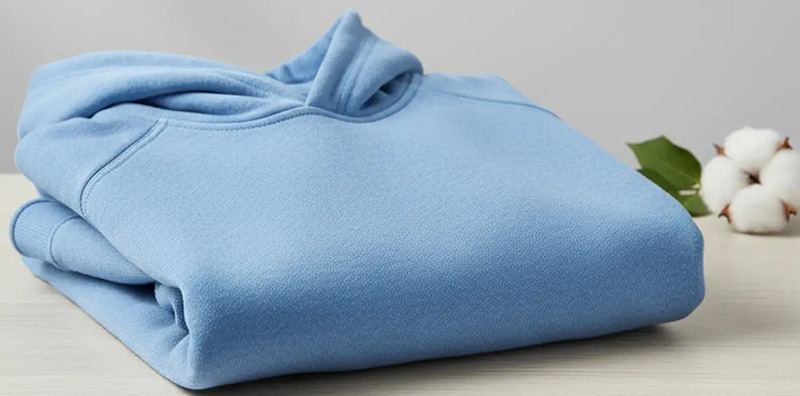
Why do some people think 100% cotton hoodies are bad?
This idea usually comes from experience with lower-quality products. Many people have owned cotton hoodies that shrank, twisted, or stretched out after washing. They then blame the fiber, even when the real problem is weak fabric development.
Some people think 100% cotton hoodies are bad because poor-quality cotton hoodies often shrink, lose recovery, or feel less stable after repeated washing. In most cases, the problem is not cotton itself. The problem is low fabric quality, weak finishing, or poor garment construction.
At Fusionknits, we often see this misunderstanding in sourcing discussions. Buyers compare a low-grade 100% cotton hoodie with a more stable cotton-poly blend and assume cotton is the problem. In reality, better cotton, better density, and better finishing can change the result completely.
Why this misunderstanding happens
- Weak cotton hoodies are common in low-cost markets
- Shrinkage is easy to notice quickly
- Customers often confuse fiber type with fabric quality
- Better blends sometimes perform more consistently in mass retail
- Cotton hoodies are judged heavily after washing
Why the issue is usually broader than fiber alone
Cotton is only one part of the product
The yarn, knit structure, brushing, and finishing all affect the final result.
Poor construction makes problems worse
Even decent cotton fabric can fail in a weak hoodie build.
Better cotton behaves very differently
A premium cotton fleece hoodie should not be judged by the same standard as a low-cost promotional blank.
| Common complaint | Usual real cause |
|---|---|
| Shrinkage | Weak finishing or poor wash control |
| Shape loss | Low recovery and poor structure |
| Fast pilling | Weak surface quality |
| Twisting | Poor fabric stability or sewing balance |
What are the advantages of 100% cotton hoodies?
Cotton remains popular for a reason. It gives hoodies a natural, familiar comfort that many customers still prefer over more synthetic-rich alternatives.

The main advantages of 100% cotton hoodies are natural softness, breathable comfort, a less synthetic hand feel, and a more authentic casualwear identity. In premium basics and washed streetwear, all-cotton hoodies often feel more honest, more tactile, and more premium to the customer.
At Fusionknits, pure cotton is often selected when the brand wants a stronger natural-material story or a more elevated casual feel. Cotton also responds well to garment washing and vintage finishing in many hoodie programs.
Key strengths of 100% cotton hoodies
- Natural touch
- Good breathability
- Strong comfort appeal
- Less synthetic surface feel
- Strong fit with premium casualwear
- Good compatibility with washed finishes
Why customers often prefer cotton
It feels familiar
Cotton is one of the most trusted fibers in apparel.
It supports comfort-led branding
A hoodie should feel easy and wearable, and cotton helps communicate that.
It works well in lifestyle products
Premium basics, oversized washed hoodies, and minimalist collections often benefit from all-cotton fabric.
| Cotton advantage | Product benefit |
|---|---|
| Natural softness | Better first-touch comfort |
| Breathability | Easier daily wear |
| Washed character | Stronger casual identity |
| Lower synthetic feel | Better premium perception |
What are the weaknesses of 100% cotton hoodies?
Cotton is strong in many areas, but it does have limits. These limits do not make it bad. They simply mean the product must be developed with more discipline.
The main weaknesses of 100% cotton hoodies are higher shrink risk, lower elastic recovery, and potentially weaker long-term shape retention compared with some strong blends. Cotton can also absorb more moisture and may feel heavier when damp.
At Fusionknits, these are not reasons to reject cotton. They are reasons to match the fabric correctly to the category. A premium washed hoodie may benefit from 100% cotton. A high-volume schoolwear hoodie may perform better in a blend because recovery and easier care matter more there.
Common limitations of pure cotton hoodies
- Higher shrinkage risk
- Lower stretch recovery
- More moisture absorption
- Greater need for finishing control
- More visible shape loss in weak fabric constructions
Why these limits matter in real products
Hoodies are repeat-wash garments
Small weaknesses show up quickly.
Fit and rib depend on stability
The body, cuff, and hem must still hold together visually.
Heavy cotton needs balance
Without the right structure, the hoodie can feel great at first and weaker later.
| Cotton limitation | Product risk |
|---|---|
| Shrinkage | Fit inconsistency |
| Lower recovery | Body and hem lose structure |
| Moisture absorption | Heavier feel when wet |
| Weak finishing | Faster quality decline |
Are 100% cotton hoodies worse than cotton-poly blends?
Not always. In some categories, cotton-poly blends are more practical. In other categories, 100% cotton is the stronger and more premium answer. The better option depends on the product goal.
No, 100% cotton hoodies are not always worse than cotton-poly blends. Pure cotton is often better for natural comfort, premium feel, and washed lifestyle products, while cotton-poly blends are often better for shape retention, durability, and easier care in broad commercial use.
At Fusionknits, we compare the two by function, not by marketing language. If the customer wants plush softness, natural hand feel, and a stronger cotton story, 100% cotton can be the better answer. If the product needs easier recovery and lower maintenance risk, a good blend may win.
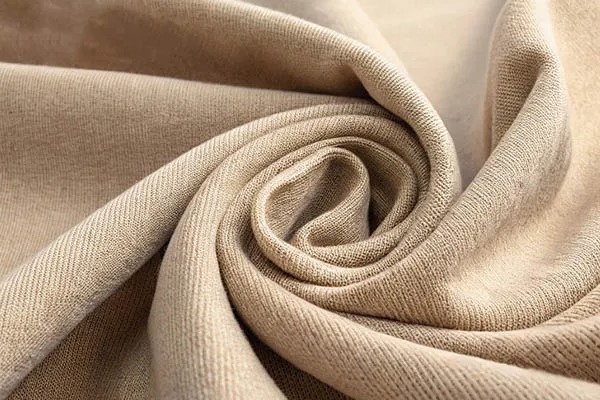
When 100% cotton is often better
- Premium basics
- Vintage-washed hoodies
- Natural-material collections
- Soft oversized lifestyle hoodies
- Elevated casualwear
When cotton-poly is often better
Commercial basics
These often need stronger long-term stability.
Uniform or promotional hoodies
Repeated laundering and easier care matter more.
Cost-sensitive categories
Blends often give more performance flexibility.
| Product goal | Better material direction |
|---|---|
| Natural premium comfort | 100% cotton |
| Broad durability and stability | Cotton-poly blend |
| Washed fashion hoodie | Often 100% cotton |
| Commercial consistency | Often blend |
Can a 100% cotton hoodie still be high quality?
Yes, absolutely. In fact, some of the best hoodies in the market are 100% cotton. The difference is that strong cotton hoodies use better yarn, better knitting, better finishing, and stronger construction discipline.
Yes, a 100% cotton hoodie can absolutely be high quality. A high-quality cotton hoodie usually uses better cotton fiber, stronger knit density, better surface control, better rib integration, and finishing that helps manage shrinkage and shape retention.
At Fusionknits, we never judge a cotton hoodie by label alone. We look at fabric weight, recovery, pilling resistance, hood shape, neckline stability, rib strength, and wash behavior. That full system is what makes the hoodie truly good.
What makes a cotton hoodie high quality
- Better cotton fiber
- Stronger knit density
- Better fleece or loopback structure
- Better surface quality
- Better neckline and hood construction
- Better shrink control
- Better rib recovery
They feel better from the start
The hand feel is often more natural and richer.
They age better when engineered well
A strong cotton hoodie can stay desirable over time.
Cotton supports a more authentic casualwear story.
| Quality factor | Why it matters |
|---|---|
| Better yarn | Stronger softness and stability |
| Better knit density | Cleaner shape |
| Better finishing | Better wash control |
| Better construction | Better long-term wear |
Who should choose 100% cotton hoodies?
Not every brand should build the same hoodie. Pure cotton is especially strong when the product story is centered around natural comfort, premium basics, washed texture, or authentic casualwear.

100% cotton hoodies are usually best for brands focused on premium basics, streetwear, vintage washes, natural-material stories, and elevated comfortwear. These categories benefit most from cotton’s natural hand feel, breathable comfort, and authentic visual character.
At Fusionknits, we often recommend all-cotton hoodies to brands that want customers to feel the fabric immediately and trust the product through touch. These hoodies can work especially well in oversized fits, garment-dyed products, and premium minimalist collections.
Best brand and product uses for 100% cotton
- Premium basics brands
- Washed streetwear
- Minimal casualwear
- Lifestyle comfort collections
- Natural-fiber storytelling brands
Why cotton fits these brands so well
The product story stays clear
Cotton supports a simple and believable value promise.
The tactile experience is stronger
Customers often respond quickly to natural hand feel.
The hoodie feels more personal
This matters a lot in premium and repeat-wear categories.
| Brand direction | Why 100% cotton fits |
|---|---|
| Premium basics | Better natural comfort |
| Washed streetwear | Better character and texture |
| Minimal casualwear | Cleaner fabric story |
| Lifestyle comfortwear | Strong touch-based appeal |
So, are 100% cotton hoodies bad or just misunderstood?
In most cases, they are misunderstood. The real issue is not the cotton itself. The real issue is whether the fabric and garment were developed properly for the intended use.
100% cotton hoodies are not bad. They are often misunderstood because poor-quality examples are judged as if they represent all-cotton hoodies as a whole. A well-made 100% cotton hoodie can be soft, breathable, premium, and highly desirable, while a weak one can shrink or lose shape too quickly. The difference is engineering, not the idea of cotton itself.
At Fusionknits, this is the most important point. Buyers should stop asking whether cotton hoodies are “good” or “bad” in general. They should ask whether the fabric quality, construction, and finishing are strong enough for the product role.
Conclusion
100% cotton hoodies are not bad. They can be excellent when the cotton quality, fabric density, finishing, and garment construction are developed correctly. Their biggest strengths are natural softness, breathable comfort, authentic casualwear appeal, and strong compatibility with premium basics and washed lifestyle products.
Their main weaknesses are shrinkage risk, lower recovery, and greater need for careful finishing and wash control. That means 100% cotton is not automatically better than a good blend, but it is also not a problem material. It is simply a material that needs the right product logic.
At Fusionknits, we see 100% cotton hoodies as a strong option for premium basics, streetwear, and comfort-led collections where natural feel and authentic texture matter. The best decision always comes back to purpose. A well-engineered all-cotton hoodie can be one of the best products in a collection. A weak one can fail quickly. So the real answer is simple: 100% cotton hoodies are not bad. Bad hoodie development is bad.