Many buyers use the words polo and shirt as if they belong to two separate categories. That creates confusion in sourcing, product development, and product descriptions. In reality, a polo is not outside the shirt category. It is one specific product inside it.
At Fusionknits, we define a polo as a type of shirt. More specifically, a polo shirt is a collared knit shirt with a short placket, usually designed for casual, smart-casual, or sport-inspired wear. All polos are shirts, but not all shirts are polos.
As a professional apparel manufacturer, we see this distinction matter every day. When a buyer says “shirt,” the category is still too broad. It may mean a woven dress shirt, a casual button-up, a polo shirt, or even a knit top in some retail language. Once the word “polo” is used, the product becomes much clearer. That is why the better question is not only whether a polo is a shirt. The better question is what kind of shirt it actually is.
Is a polo technically a shirt?
Yes, it is. In the most direct product-language sense, a polo belongs inside the wider shirt family. It is not a separate clothing universe. It is a specific shirt type with its own construction and identity.
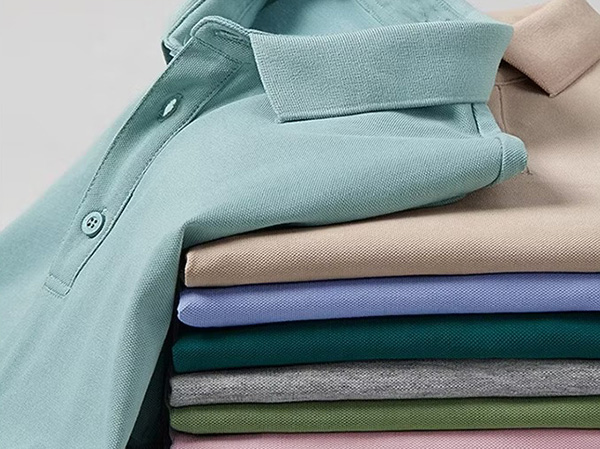
Yes, a polo is technically a shirt because it is an upper-body garment designed to cover the torso and usually includes a collar and front opening detail. The difference is that “shirt” is the broad category, while “polo” is the more specific product name.
At Fusionknits, we usually explain this through category structure. “Shirt” is the umbrella term. Under that umbrella, there are many subtypes: dress shirts, casual shirts, overshirts, polo shirts, and other collared tops. A polo is one member of that larger family, not a separate category outside it.
Why this matters in product language
- “Shirt” is a broad term
- “Polo” is a more specific term
- The polo still belongs to upper-body shirt categories
- The difference is about category level, not category separation
Why buyers often get confused
Everyday language is less precise
In casual speech, people often say “shirt” for many different tops.
Retail language is not always technical
Some stores group polos separately for convenience, even though they are still shirts.
| Term | Meaning |
|---|---|
| Shirt | Broad upper-body garment category |
| Polo shirt | Specific collared knit shirt category |
What kind of shirt is a polo?
This is where the answer becomes more useful. A polo is not just any shirt. It has a clear product logic. It usually sits between a T-shirt and a woven button-front shirt.

At Fusionknits, we describe a polo as a collared knit shirt with a short placket and a sport-casual identity. It is usually softer and less formal than a woven shirt, but more structured and polished than a basic T-shirt.
That middle position is one reason the polo remains so commercially strong. It gives the wearer more structure than a tee, but more ease than a dress shirt. This makes it one of the most flexible shirt categories in modern apparel.
Main features that define a polo shirt
- Fold-down collar
- Short front placket
- Usually knit fabric
- Usually short sleeves
- Casual to smart-casual styling role
Why it feels different from other shirts
The knit fabric changes the whole mood
A knit polo usually feels softer and more relaxed than a woven shirt.
The placket is shorter
This makes the garment cleaner and less formal than a full button-front shirt.
| Shirt type | Main identity |
|---|---|
| Polo shirt | Knit, collared, short-placket shirt |
| Dress shirt | Woven, structured, full button-front shirt |
| T-shirt | Collarless knit top |
Why do people sometimes act like polos are not shirts?
This happens because polos have such a strong category identity of their own. In casual conversation, people often separate “polo” from “shirt” the same way they separate “jeans” from “pants,” even though jeans are still pants.
People sometimes speak as if polos are not shirts because the polo category is so familiar and visually distinct. In real apparel terms, this does not mean polos stop being shirts. It simply means they are a strongly recognizable shirt subtype.
At Fusionknits, we see this often in buyer conversations. A customer may ask for “shirts and polos” as if the two are fully separate. What they usually mean is “woven shirts and polo shirts.” The issue is not technical classification. It is everyday shorthand.
Why the confusion happens
- Polos have a very recognizable silhouette
- They are often merchandised separately
- Customers use shortcut language
- Shirt can sound too general in retail conversation
Why classification still matters
Technical development depends on it
A polo should not be developed like a woven shirt.
Product naming shapes expectations
The customer should know whether the garment is knit, woven, formal, or casual.
| Everyday phrase | Technical meaning |
|---|---|
| “Shirts and polos” | Usually woven shirts and polo shirts |
| “Polo” | Still a type of shirt |
Is a polo more like a shirt or more like a T-shirt?
This is one of the most helpful ways to explain the category. A polo usually stands between the two, but it tends to be classified as a shirt because of the collar and front structure.
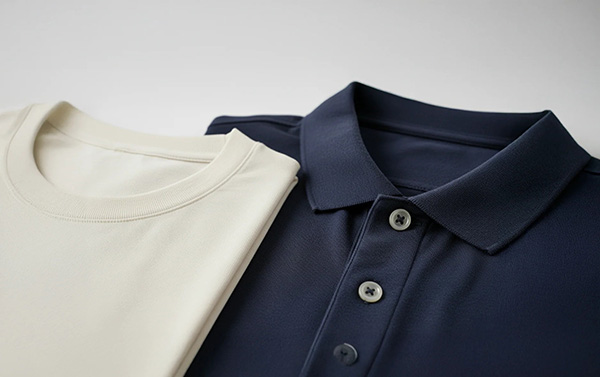
A polo is usually more like a shirt in category terms because it has a collar and a placket, but it borrows comfort and knit softness from a T-shirt. That is why a polo often feels like a hybrid between a shirt and a tee.
At Fusionknits, this is exactly why the polo remains important in so many collections. It gives brands and customers a product that feels easy but still looks finished. That balance makes it stronger than a plain tee in many settings and easier than a woven shirt in others.
Why polos feel closer to shirts
- They have collars
- They have front plackets
- They create a more complete upper-body frame
- They carry more polish than tees
Why polos still borrow from T-shirts
They are often knit
This gives them softness and movement.
They often feel easier in daily wear
A polo usually does not carry the same stiffness as a dress shirt.
| Garment comparison | Polo relation |
|---|---|
| Compared with T-shirt | More structured |
| Compared with woven shirt | Softer and less formal |
Does the fabric change whether a polo still counts as a shirt?
No. The fabric may change the product mood, but it does not change the category truth. A jersey polo and a piqué polo are both still polo shirts, which means they are both still shirts.
No, the fabric does not stop a polo from being a shirt. Whether the polo is made from piqué, jersey, mercerized cotton, or performance knit, it still belongs to the shirt category as long as it keeps the core polo structure.
At Fusionknits, fabric changes the subcategory and market position more than the category itself. A jersey polo may feel softer and more minimal. A piqué polo may feel more classic. A performance polo may feel more technical. But all of them remain shirts because the main construction identity is still polo-based.
Polo fabric directions that are still shirts
- Piqué polo shirt
- Jersey polo shirt
- Mercerized polo shirt
- Performance polo shirt
- Knit golf polo
Why the structure matters more than the fabric label
Category comes from the garment form
The collar and placket keep the shirt identity clear.
Fabric refines the product
It changes how the shirt behaves, not whether it is a shirt.
| Fabric direction | Still a shirt? |
|---|---|
| Piqué polo | Yes |
| Jersey polo | Yes |
| Performance polo | Yes |
Is a polo shirt more casual than other shirts?
Usually yes, but that still does not remove it from the shirt family. A polo may be more casual than a woven dress shirt, but it is still a shirt in product terms.

Yes, a polo shirt is usually more casual than many other shirts, especially dress shirts and structured button-downs. But formality level does not decide whether a garment is a shirt. It only changes where the shirt sits in the wardrobe.
At Fusionknits, we usually position polos in the smart-casual zone. This is one of the reasons they are so commercially effective. They can move between work, leisure, travel, golf, and social wear more easily than many other shirt types.
Why polos feel more casual
- Softer knit fabric
- Less rigid collar
- Shorter placket
- Stronger sport heritage
- Easier body movement
Why that does not change the category
Formality and category are different ideas
A shirt can be formal or casual and still remain a shirt.
Product identity comes first
The collar and shirt structure keep the polo inside the shirt family.
| Shirt type | General formality level |
|---|---|
| Dress shirt | More formal |
| Polo shirt | Smart-casual |
| T-shirt | Casual |
How should brands and buyers describe polos correctly?
The clearest approach is to use the broad category and the specific category together in the right order. That means recognizing the polo as a shirt, but naming it by its exact subtype.
At Fusionknits, we recommend that brands and buyers describe the garment as a polo shirt, not just a shirt and not just a polo when technical clarity matters. “Polo shirt” is the strongest term because it keeps both the broad category and the specific identity visible.
This naming approach is useful because it supports both technical sourcing and customer communication. It is clear enough for factories, merchandisers, and retailers at the same time.
Better naming practice
- Use “polo shirt” as the main term
- Add fabric if relevant
- Add fit if relevant
- Add function if needed
Strong examples of clear product naming
Fabric-based
Piqué polo shirt, jersey polo shirt
Fit-based
Regular-fit polo shirt, relaxed-fit polo shirt
Function-based
Performance polo shirt, golf polo shirt
| Naming format | Example |
|---|---|
| Category + fabric | Piqué polo shirt |
| Category + fit | Slim-fit polo shirt |
| Category + function | Golf polo shirt |
Why does this classification matter in manufacturing?
This is where the question becomes more than language. If the category is misunderstood, the whole product can be developed incorrectly.
This classification matters in manufacturing because a polo shirt requires different fabric planning, collar construction, placket development, and fit logic than other shirt categories. A buyer who treats a polo like a woven shirt may choose the wrong material, factory process, or finishing direction.
At Fusionknits, we always encourage buyers to define the shirt type clearly before development starts. A polo shirt is still a shirt, but it is a shirt with knitwear logic, not woven-shirt logic. That distinction affects sourcing, costing, and quality control.
Why factories need the correct category name
- Knit and woven development are different
- Collar and placket construction change
- Fit expectations change
- Fabric sourcing changes
- Wash and finishing strategies change
Why this improves final product quality
Clear category language reduces mistakes
The supplier can build the right product from the beginning.
The customer gets the expected result
Product clarity helps match market positioning with actual garment performance.
| Development area | Why category matters |
|---|---|
| Fabric sourcing | Knit vs woven logic |
| Pattern development | Shirt subtype affects fit |
| Quality control | Category changes construction checkpoints |
Conclusion
Yes, a polo is a type of shirt. More specifically, it is a collared knit shirt with a short placket and a casual to smart-casual identity.
The word “shirt” is the broad category, while “polo shirt” is the specific category inside it. People sometimes speak as if polos are separate from shirts because the polo has such a strong visual identity of its own, but in technical and commercial product language, it still belongs clearly within the shirt family.
At Fusionknits, we believe this distinction matters because better product language leads to better product development. When buyers understand that a polo is a shirt, but also a very specific kind of shirt, they make better fabric choices, develop clearer fits, and build stronger apparel collections with much less confusion.