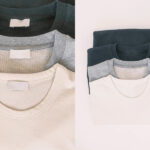
The manufacturing cost of a shirt is never one fixed number. It changes with fabric, order volume, labor market, decoration method, trims, finishing, packaging, and shipping term. In current industry guidance, a basic T-shirt can cost only a few dollars to make in bulk, while a premium or customized shirt can move into the low teens or much higher per piece. Recent manufacturing guides commonly place a basic bulk T-shirt around $3 to $10 per unit, while more premium, customized, or smaller-batch shirts can rise to $20 or more depending on specs.
At Fusionknits, the most accurate professional answer is this: a manufacturer’s cost to make a shirt is usually driven first by fabric, then by labor, trims, decoration, and overhead, with the final number depending heavily on whether the order is a basic bulk style or a premium, low-volume, highly customized product. Industry costing guides also consistently describe fabric as the largest cost contributor in many garments, especially shirts and T-shirts.
From a manufacturing point of view, the better question is not only “How much does a shirt cost to make?” but “What kind of shirt, in what quantity, with what fabric, and under what costing method?” A plain cotton crewneck tee, a pique polo, and a formal woven shirt do not carry the same cost structure. That is why professional shirt costing always starts with a line-by-line cost sheet rather than a guess.

What is the usual manufacturing cost range for a shirt?
For a basic shirt in volume production, manufacturers often work within a relatively low base cost, especially when the product is simple and the fabric is standard. Recent 2025 guidance from multiple apparel manufacturing sources places a basic T-shirt around $3 to $10 per piece, while more premium, decorated, or small-batch shirts can move well above that level. One current breakdown notes that basic poly-blend bulk T-shirts can start around $3, while premium customized units can exceed $20.
At Fusionknits, this means a manufacturer usually does not quote one universal shirt price. A basic bulk T-shirt may be low-cost, but once higher-grade cotton, special washes, embroidery, or smaller production runs are added, the cost rises quickly. Small-batch clothing guidance published in late 2025 also describes basic garments in small runs at roughly $8 to $30 per piece, which shows how strongly quantity affects factory cost.
This is why buyers should separate factory manufacturing cost from retail price and from small custom order price. A factory cost sheet focuses on fabric, labor, trims, overhead, and margin under a production scenario. A one-off custom shirt sold online includes very different economics.
Typical cost ranges by product level
- Basic bulk T-shirt: lower range
- Better cotton or custom decorated shirt: medium range
- Premium or small-batch customized shirt: higher range
Why the range is so wide
Volume changes everything
The same shirt can cost very differently at 100 units versus 10,000 units.
Specification changes fast
Fabric upgrades, trims, and decoration can move the shirt into a different cost bracket immediately.
| Shirt type | Typical factory cost behavior |
|---|---|
| Basic bulk tee | Lower cost range |
| Premium decorated tee | Medium to high |
| Small-batch custom shirt | Higher cost range |
What are the main cost components in shirt manufacturing?
A manufacturer usually builds shirt cost from a few main blocks: fabric, trims, labor, overhead, and sometimes decoration or washing. Standard garment costing formulas describe the total as fabric cost plus trims plus labor plus overhead plus profit. More recent costing guides still use the same structure, even when they describe it with terms such as FOB, CMT, or full production cost.

At Fusionknits, the core cost components of a shirt are material, making cost, trims, finishing, and overhead. Decoration, packaging, testing, and freight terms can then push the total higher depending on the client’s request. This is why good manufacturing quotes always start with a full cost sheet rather than one flat number.
The exact names can vary by supplier, but the logic remains the same. The shirt is not priced only by sewing time. It is priced by everything required to turn raw fabric into a packed finished garment that passes quality inspection.
Main cost areas in a shirt
- Fabric
- Trims
- Labor
- Overhead
- Washing or finishing
- Decoration
- Packaging
Why manufacturers use line-by-line costing
It improves accuracy
Different shirts can share a silhouette but still carry very different material or labor costs.
It protects margin
Without cost breakdown, a factory can underquote or overquote the job.
| Cost block | What it covers |
|---|---|
| Fabric | Cloth, yield, and wastage |
| Labor | Cutting, sewing, and finishing work |
| Trims | Labels, thread, buttons, packaging |
| Overhead | Factory running cost and admin allocation |
Is fabric usually the most expensive part of making a shirt?
Yes. Current industry costing guidance repeatedly describes fabric as the largest contributor in many garments, and this is especially true for shirts. One recent sourcing article says plainly that “fabric cost is king,” while a 2025 business costing guide notes that fabric and trim together can account for around 70% of a garment’s cost in some cases. Another recent T-shirt breakdown estimates materials at roughly 40% to 50% of total manufacturing cost.
At Fusionknits, fabric is usually the first and biggest cost driver in a shirt because it determines the hand feel, weight, drape, quality level, and final product position in the market. A shirt made from low-grade cotton and a shirt made from combed compact cotton may share a similar pattern, but they do not share the same manufacturing value.
This is also why fabric decisions should be made early. Once the fabric is upgraded to better cotton, higher GSM, special dyeing, enzyme wash, or a branded mill program, the rest of the cost structure moves with it. Fabric affects not only direct material cost, but also marker efficiency, shrinkage control, sewing behavior, and customer perception.
What makes fabric expensive?
- Better fiber quality
- Heavier or denser cloth
- Premium dyeing
- Enzyme or special finishing
- Certified or sustainable sourcing
Why fabric deserves protection in costing
The customer feels it first
The shirt’s quality is often judged first by touch, drape, and weight.
Cheap fabric causes later problems
Pilling, twisting, shrinkage, and poor recovery often begin with weak material choices.
| Fabric choice | Cost direction |
|---|---|
| Standard basic jersey | Lower |
| Better combed cotton | Higher |
| Premium blend or finish | Higher |
How much does labor add to shirt cost?
Labor is the next major cost area after fabric in many shirt categories. Recent manufacturing guidance places labor at around 20% to 30% of T-shirt cost in many scenarios, though the actual share can change by country, product type, and complexity. Simple shirts are faster to sew, while formal woven shirts or highly detailed tops take much more operator time.
At Fusionknits, labor cost depends on minutes, not only on garment type. A basic T-shirt can be sewn efficiently, but a shirt with more panels, plackets, collars, cuff construction, or detailed finishing can push labor much higher. That is why dress shirts and premium woven shirts often behave differently from simple knit tees in costing sheets.
Labor also changes with location. A shirt made in a higher-cost labor market will naturally carry a higher CMT or CM charge than the same shirt made in a lower-cost region, even when the pattern is identical. This is one reason apparel brands compare not only fabric cost, but also country-level making cost when selecting suppliers.
What raises labor cost?
- More sewing operations
- More handling steps
- More detailed pressing
- Tighter quality standards
- Higher labor-rate location
Why labor is not always the biggest cost
Simple shirts are efficient to sew
A basic tee often does not need enough operator time to overtake fabric cost.
Fabric cost stays high even when labor is controlled
Better cloth still sets the baseline value of the garment.
| Shirt type | Labor pressure |
|---|---|
| Basic tee | Lower to moderate |
| Polo shirt | Moderate |
| Dress shirt | Higher |
| Fashion woven shirt | High |
How much do trims, packaging, and finishing add?
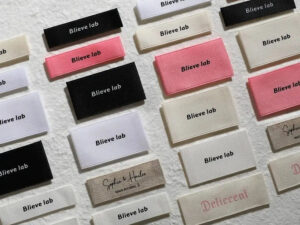
Trims and packaging are usually smaller than fabric, but they still matter. Labels, thread, buttons, neck tape, interlining, hangtags, folding boards, polybags, and retail presentation all add cost. In a basic T-shirt, this may be modest. In a dress shirt or branded premium program, it can become much more noticeable. Standard garment costing frameworks include trims as a distinct cost block for exactly this reason.
At Fusionknits, trims and packaging rarely lead the whole costing sheet, but they can quietly raise shirt cost when the program is highly customized or retail-ready. A shirt with stock labels and simple folding is very different from one with custom woven labels, branded neck tape, premium buttons, retail folding, and full presentation packaging.
Finishing also matters. Garment washing, enzyme treatment, compacting, pressing, or special hand-feel treatments can all add to the manufacturing cost, especially in better-quality casualwear and premium basics.
Common trim and finishing cost areas
- Thread
- Labels
- Buttons
- Interlining
- Hangtags
- Polybags
- Garment wash
- Pressing and packing
Why these costs still deserve attention
Small items multiply at scale
Minor trim increases become significant across thousands of units.
Retail-ready presentation costs more
Packaging for wholesale basics and packaging for store-ready product are not the same.
| Added element | Cost effect |
|---|---|
| Stock trims | Lower |
| Custom trims | Moderate |
| Special washing | Moderate to high |
| Premium retail packaging | Moderate to high |
Do printing and embroidery change the cost a lot?
Yes. Decoration can move a shirt from a basic manufacturing cost into a much higher bracket. Printing, embroidery, patches, appliqué, and specialty finishes all add setup, machine time, labor, and sometimes yield loss. In many branded or merch programs, the decoration becomes one of the largest cost drivers after fabric.

At Fusionknits, decoration changes shirt cost dramatically when the artwork is large, detailed, multi-position, or highly customized. A plain blank tee may sit in a low manufacturing range, but once it includes premium embroidery or complex printing, the shirt needs to be costed as a decorated product, not a blank basic.
This is one reason buyers should separate blank garment manufacturing cost from finished branded shirt cost. A low-cost body does not guarantee a low-cost final shirt if the decoration package is heavy.
Decorations that raise cost quickly
- Large embroidery
- Multi-color print
- Multiple placements
- Puff or specialty print
- Patches and appliqué
Why decoration should be costed separately
It changes the product category
The shirt is no longer a blank. It becomes a branded, finished item.
Setup can exceed expectations
Some decoration methods carry strong upfront or per-unit costs.
| Decoration level | Cost effect |
|---|---|
| None | Lowest |
| Small chest print | Moderate |
| Large embroidery | High |
| Complex multi-position branding | Very high |
Why do small runs cost so much more per shirt?
Small runs cost more because factories cannot spread setup, fabric minimums, labor planning, and overhead efficiently across enough units. Recent manufacturing guidance consistently shows that low-volume production carries much higher per-piece cost than bulk production. This is why small-batch basic clothing is often quoted far above mass-production cost.
At Fusionknits, low volume raises cost because the same development and setup work must be absorbed by fewer garments. Fabric minimums, cutting room setup, print setup, labeling, QC, and packing still happen, even if the order is small. That cost burden has to be divided somehow.
This is also why many factories quote very differently for 100 shirts versus 5,000 shirts. The product may be the same, but the economics are not.
Why small batches cost more
- Less setup efficiency
- Harder to spread overhead
- Fabric minimums stay relevant
- Decoration setup becomes heavier per unit
So how should buyers estimate a manufacturer’s shirt cost?
The most reliable way is to build a proper costing sheet and define the product clearly. Buyers should specify fabric, GSM, construction, trims, quantity, decoration, finishing, and packing before expecting an accurate price. Without those details, any number is only a rough estimate. Standard garment costing methods use line items for fabric, trims, labor, overhead, and margin for exactly this reason.
At Fusionknits, a manufacturer’s shirt cost should be estimated from the inside out: fabric first, then labor, then trims, finishing, decoration, and overhead. That approach reflects how factories actually build price, and it produces more realistic decisions for both buyers and production teams.
Conclusion
A manufacturer’s cost to make a shirt can range from only a few dollars for a basic bulk T-shirt to much higher levels for premium, decorated, or low-volume products.
In most standard shirt categories, fabric is the biggest cost driver, followed by labor, trims, finishing, decoration, and overhead. Current industry guidance commonly places basic bulk T-shirts around $3 to $10 to manufacture, while premium or heavily customized shirts can move into the $20+ range depending on the specification and order size.
At Fusionknits, the professional manufacturing view is simple: the real cost of a shirt is not one number, but a structure. The more accurate the costing sheet, the better the sourcing decision. A buyer who understands fabric, labor, trims, and volume can control price far more effectively than a buyer who asks only for the cheapest quote. In shirt manufacturing, cost is created by specification, not by guesswork.