In the global apparel industry, OEM (Original Equipment Manufacturing) and ODM (Original Design Manufacturing) are two of the most common cooperation models between clothing brands and factories.
For fashion startups, established brands, and private label buyers, choosing between OEM and ODM directly affects product development speed, design ownership, cost structure, and supply chain flexibility. In many real manufacturing projects, the difference between these two models determines how much control a brand has over the final product.
This article explains OEM and ODM from a garment manufacturing perspective, including real production workflows, collaboration structure, advantages, limitations, and how brands should choose the right model.
What Is OEM in Apparel Manufacturing?
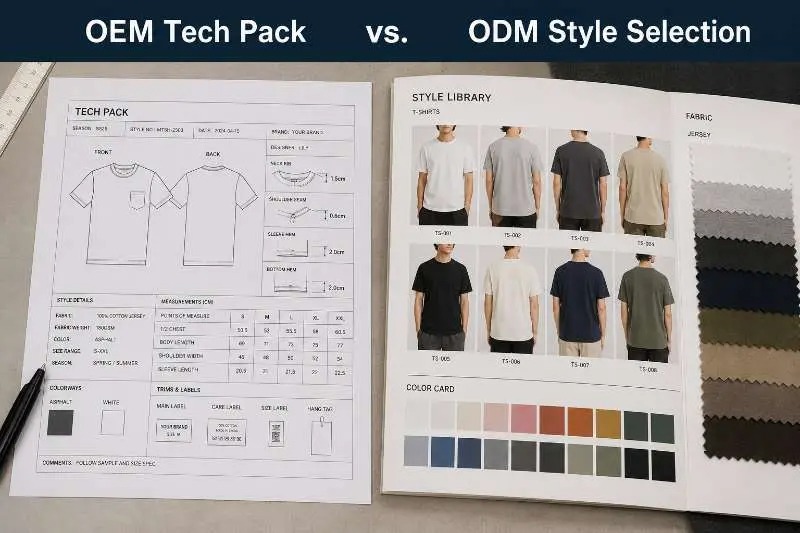
OEM (Original Equipment Manufacturing) refers to a production model where the buyer provides the full product design, and the factory is responsible for manufacturing according to the buyer’s specifications.
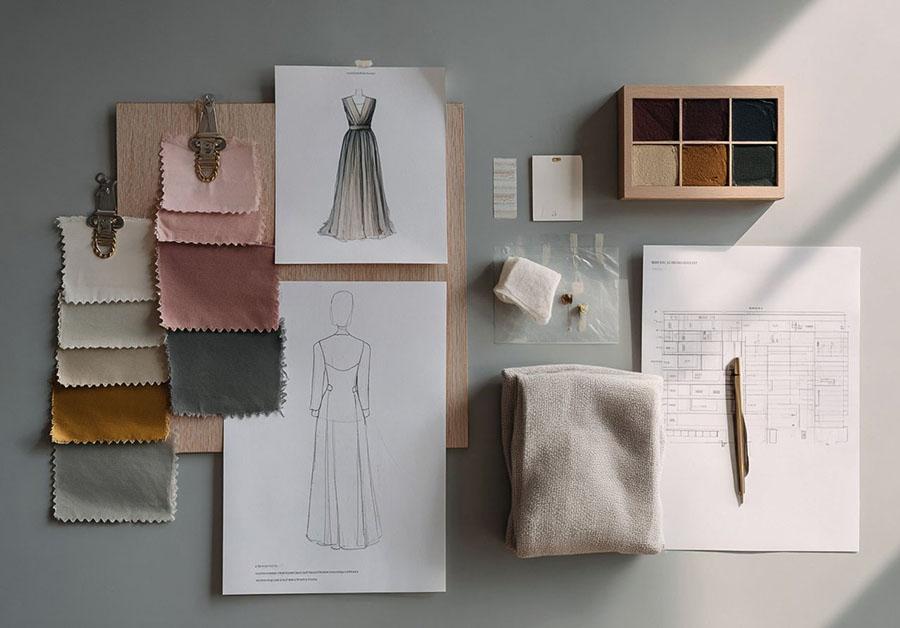
In OEM apparel production, the brand usually provides:
- Tech pack (size chart, measurements, construction details)
- Fabric requirements (composition, GSM, color standard)
- Design artwork (prints, embroidery, logos)
- Sample references or design sketches
The factory role is to:
- Source fabric and trims
- Develop patterns and samples
- Produce bulk garments
- Ensure quality control and consistency
In OEM, the brand owns the design, and the factory executes production.
What Is ODM in Apparel Manufacturing?
ODM (Original Design Manufacturing) refers to a model where the factory not only produces the garment but also provides ready-made or semi-developed designs for the buyer to select and customize.
In ODM apparel production, the factory typically provides:
- Existing garment styles
- Seasonal design collections
- Fabric options and color variations
- Pre-developed patterns and fits
The buyer then:
- Selects base designs
- Adds branding (logo, label, print, packaging)
- Makes minor modifications if needed
In ODM, the factory provides both design and production support.
OEM vs ODM: How the Workflow Differs in Real Production
To understand the difference clearly, it is useful to look at how both models operate in real garment manufacturing.
OEM Workflow (Buyer-Driven Development)
- Brand provides tech pack and design concept
- Factory develops samples based on instructions
- Sample revisions and approvals
- Bulk production begins
- Quality inspection and shipment
OEM is a fully customized production process controlled by the buyer.
ODM Workflow (Factory-Driven Development)
- Factory provides ready designs or catalog
- Buyer selects styles and confirms customization
- Logo and branding are applied
- Sampling and minor adjustments
- Bulk production and shipment
ODM is a pre-developed product system with faster execution.
Key Differences Between OEM and ODM in Apparel Trade
1. Design Ownership
- OEM: Brand owns full design and product concept
- ODM: Factory owns base design and product structure
2. Development Speed
- OEM: Longer lead time due to sampling and development
- ODM: Faster due to ready-made designs
3. Customization Level
- OEM: High customization (fabric, fit, construction)
- ODM: Limited customization (mainly branding and minor changes)
4. Cost Structure
- OEM: Higher development cost but fully unique product
- ODM: Lower development cost due to pre-existing designs
5. Brand Control
- OEM: Full control over product details
- ODM: Partial control based on factory design base
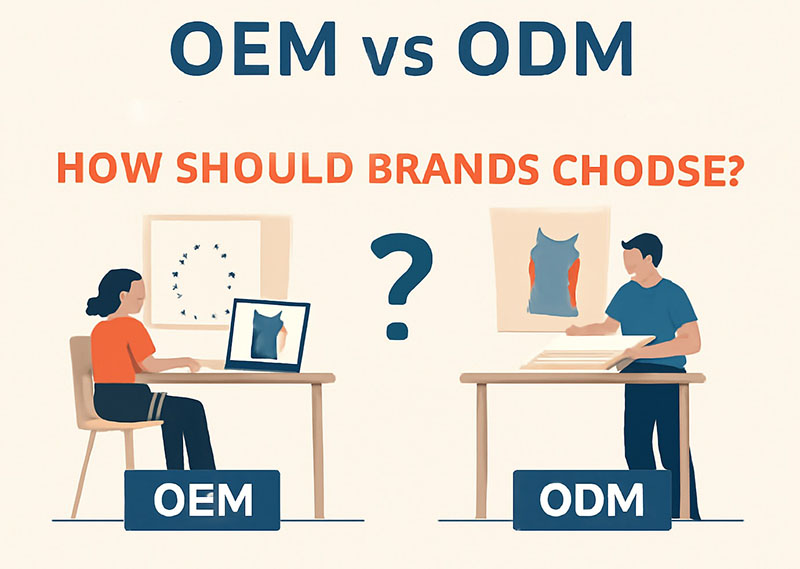
When Should Brands Choose OEM?
OEM is suitable when:
- Brand wants fully unique product development
- Strong design identity is required
- Tech pack is already well-developed
- Long-term product strategy is involved
In real apparel manufacturing, OEM is commonly used by:
- Established fashion brands
- Streetwear labels with strong design identity
- Companies building proprietary product lines
When Should Brands Choose ODM?
ODM is suitable when:
- Brand wants faster market entry
- Budget for development is limited
- Product testing or small collections are needed
- Focus is more on branding than design creation
In practice, ODM is widely used by:
- Start-up fashion brands
- E-commerce sellers
- Promotional apparel buyers
Common Misunderstandings About OEM and ODM
In real apparel manufacturing practice, OEM and ODM are often misunderstood by new brands and first-time buyers. These misunderstandings can directly affect product strategy, cost decisions, and even the success of a clothing collection. Understanding the differences correctly helps brands choose a more suitable production model instead of relying on assumptions.
Misunderstanding 1: ODM Means Low Quality Products
A common misconception is that ODM products are lower in quality because they are “pre-designed” or “ready-made styles”. In reality, ODM refers only to the design development process, not the manufacturing standard.
In professional garment factories, ODM products are still produced under strict quality control systems, using the same fabric sourcing, production lines, stitching standards, and inspection procedures as OEM orders. The key difference is not quality, but design ownership and development process.
In fact, many high-end factories use ODM collections as their seasonal development showcases, which often include trend-driven designs and professionally developed garment structures.
Conclusion: ODM does not mean lower quality; it only means the design is pre-developed by the factory.
Misunderstanding 2: OEM Is Always Better Than ODM
Another common misunderstanding is that OEM is automatically better because it offers full customization. While OEM does provide complete control over design, it is not always the best choice for every brand.
OEM development requires:
- Longer sampling and revision cycles
- Higher design and development costs
- Strong technical understanding from the brand side
- More time before entering the market
In contrast, ODM allows brands to access ready-made product structures, significantly reducing development time and helping brands launch collections faster.
For startups or fast-moving e-commerce brands, ODM can actually be more efficient and commercially practical than OEM.
Conclusion: OEM is not universally better; it depends on budget, timeline, and brand maturity.
Misunderstanding 3: ODM Cannot Be Customized
Many buyers believe that ODM products are fixed and cannot be changed. This is not accurate in real manufacturing environments.
While ODM starts from pre-developed designs, most factories allow partial customization, including:
- Fabric selection and GSM adjustment
- Color changes and dyeing customization
- Logo application (printing, embroidery, labeling)
- Minor pattern or fit adjustments
- Packaging and branding customization
However, ODM customization is usually based on existing garment structures, meaning the core design framework remains the same.
Conclusion: ODM is flexible within limits—it allows customization, but not full redesign like OEM.
Overall Insight
In real apparel sourcing, OEM and ODM should not be seen as opposite extremes, but rather as two flexible production strategies. OEM provides full creative control and brand ownership, while ODM provides speed and efficiency with controlled customization.
Choosing the right model depends on how a brand balances design uniqueness, time-to-market, and production cost structure.
OEM + ODM Hybrid Model in Real Manufacturing
In modern apparel sourcing, many factories—including ours—often work in a hybrid model:
- Start from ODM base styles
- Apply OEM-level customization
- Adjust fit, fabric, and branding per client requirement
This hybrid approach balances speed and customization, which is very common in today’s global apparel supply chain.
Conclusion
OEM and ODM represent two different collaboration models between apparel brands and manufacturers. OEM focuses on full customization and brand ownership, while ODM focuses on speed, efficiency, and ready-to-use designs.
When selecting the right approach, brands should carefully evaluate their own business priorities, including budget, product development timeline, level of design differentiation, and long-term brand positioning. These factors directly influence whether a fully customized OEM route or a more flexible ODM model is the better fit.
We support both OEM and ODM manufacturing solutions with strong capabilities in fabric development, garment production, and private label manufacturing. Based on each client’s market strategy and product direction, we help identify the most suitable production path and streamline the entire process from concept to final shipment, turning brand ideas into real, market-ready products.