
Many T-shirt products fail long before they reach the customer. The idea may look strong on a screen, but the final garment can still feel weak, hard to wear, badly balanced, or too difficult to produce consistently. In most cases, the problem is not one dramatic error. It is a group of small design mistakes that were never corrected early enough.
Common T-shirt design mistakes include ignoring fit, choosing the wrong fabric, using poor print placement, overcomplicating graphics, forgetting the target customer, and designing without manufacturing logic. The strongest T-shirt designs usually balance visual appeal, wearability, production efficiency, and commercial clarity.
At Fusionknits, T-shirt design is never treated as artwork alone. A good design must also work as a product. It must fit the market, suit the fabric, support bulk production, and remain wearable after the first impression. That is why many of the most common design mistakes are not only creative mistakes. They are product development mistakes.

Why do so many T-shirt designs fail even when the idea looks good?
A T-shirt design can look impressive in a mockup and still fail as a real garment. This happens because digital presentation and actual product performance are not the same thing.
Many T-shirt designs fail because they are created as visual concepts first and garment products second. A design may look attractive on a screen, but if it ignores fit, fabric, print method, or customer use, it often becomes weak in real production and weak in real sales.
From a manufacturing perspective, one of the biggest design problems is imbalance. The designer may pay close attention to graphics, slogans, or color ideas, but very little attention to body proportion, neckline, fabric behavior, or print durability. The result is often a product that attracts early interest but does not perform well as an actual shirt.
At Fusionknits, this problem appears most often in early-stage brands and trend-driven collections. The visual direction may be strong, but the garment logic behind it is still underdeveloped.
Why a good idea can still become a weak T-shirt
- The fit does not match the market
- The fabric does not support the design
- The print size is wrong
- The garment is hard to wear repeatedly
- The design looks better online than in hand
- The product is too trend-specific
- The shirt is not easy to scale in production
Why this problem is so common
Mockups hide garment reality
A flat visual or digital model does not show true fabric drape, neckline balance, or print feel.
Designers sometimes ignore production logic
A T-shirt is still a manufactured product, even when it carries a creative message.
The customer buys more than the graphic
The buyer also reacts to fit, comfort, quality, and repeat wear value.
A simple design reality check
| Design focus only | Product result |
|---|---|
| Visual excitement | Strong first attention |
| Weak garment logic | Weak real-world performance |
| Trend without function | Shorter selling life |
| Better design plus better construction | Stronger long-term product value |
That is why the strongest T-shirt design is usually not just visually interesting. It is commercially and technically usable too.
Is ignoring fit one of the biggest T-shirt design mistakes?
Yes. Fit is one of the most common and most expensive design mistakes because it affects every customer who wears the product. A good graphic cannot save a poor body shape.
Ignoring fit is one of the biggest T-shirt design mistakes because fit directly affects comfort, appearance, market positioning, and customer satisfaction. Even a strong graphic or fabric cannot fully correct a shirt that fits the wrong customer badly.
A T-shirt can fail in several ways through fit. The body may be too long, too short, too narrow, too loose, or badly balanced at the shoulder. The sleeve opening may look weak. The neckline may sit poorly. Even small mistakes in proportion can change how the whole garment feels.
At Fusionknits, fit is treated as one of the most important parts of design because it defines how the shirt lives on the body, not only how it looks on a flat sketch.

Common fit mistakes in T-shirt design
- Shoulder too wide or too narrow
- Body too long or too short
- Sleeve shape not matching the target style
- Neck opening too loose or too tight
- Poor balance between chest width and body length
- Wrong silhouette for the target customer
Why fit mistakes damage the product quickly
They reduce repeat wear
A shirt that feels awkward will not become a favorite item.
They increase return risk
Customers react strongly to fit problems, especially in e-commerce.
They confuse product positioning
A premium tee, a streetwear tee, and a promotional tee should not all share the same block.
Fit problem overview
| Fit mistake | Likely result |
|---|---|
| Wrong body proportion | Poor silhouette |
| Weak neckline balance | Lower perceived quality |
| Sleeve shape mismatch | Wrong style impression |
| No market-specific fit logic | Weak customer response |
A T-shirt design becomes much stronger when fit is treated as part of the design itself, not only as a technical adjustment later.
Why is choosing the wrong fabric such a common design mistake?
Many T-shirt designs are built around graphics or silhouette before the fabric is chosen carefully. That often creates a product mismatch because the material controls much of the shirt’s real character.
Choosing the wrong fabric is a common T-shirt design mistake because fabric affects hand feel, print quality, drape, shrinkage, durability, opacity, and market position. A strong design concept can still fail if the material does not support the intended product use.
From a manufacturing point of view, fabric is never a neutral background. It changes how the shirt feels, how the print sits, how the hem falls, and how the product behaves after washing. A lightweight jersey may weaken a premium concept. A stiff heavyweight fabric may damage a soft lifestyle design. A poor print surface may reduce graphic clarity.
At Fusionknits, fabric selection is treated as a design decision because it changes the final product more than many buyers expect.
- Choosing fabric by price only
- Using fabric too thin for the intended market
- Choosing fabric too heavy for the design concept
- Ignoring print compatibility
- Ignoring shrinkage and twisting risk
- Using rough fabric in a softness-focused product
Why fabric mistakes hurt the shirt immediately
The customer feels fabric first
Material quality is often noticed before construction details.
Graphics depend on fabric behavior
The same print can look different on different shirt surfaces.
Fabric defines product level
The material often decides whether the shirt feels basic, premium, athletic, or fashion-led.
Fabric mistake overview
| Fabric mistake | Product effect |
|---|---|
| Too thin | Lower perceived value |
| Too heavy | Less comfort or wrong silhouette |
| Poor print surface | Weaker graphic result |
| Unstable fabric | More wash complaints |
A T-shirt design becomes more commercially reliable when the fabric supports the concept instead of fighting it.
Do many T-shirt designs fail because the graphic placement is wrong?
Yes. Even a strong graphic can become weak if the scale, position, or proportion is not handled correctly. Placement mistakes are among the most visible design errors in printed T-shirts.
Many T-shirt designs fail because the graphic placement is wrong. A print can be too high, too low, too large, too small, or poorly balanced against the body shape of the garment. Good design needs correct visual placement, not just good artwork.
Graphic placement is not only a style issue. It is also a garment architecture issue. A design should relate properly to the neckline, chest width, body length, and intended fit. A print that looks good on a flat digital mockup may look badly positioned on a real human body.
At Fusionknits, print placement is reviewed with the garment block, not separately, because the shirt itself changes how the artwork is read.
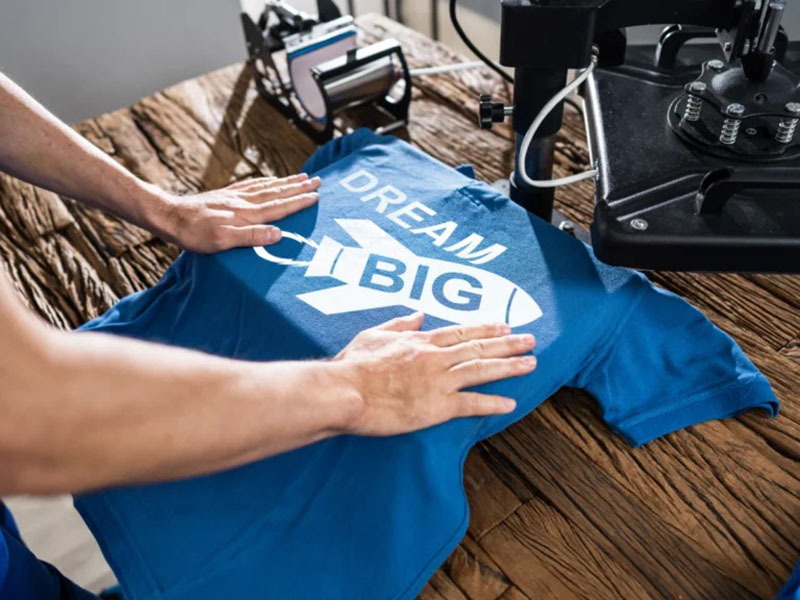
Common print placement mistakes
- Print too high near the neckline
- Print too low on the torso
- Oversized artwork on a narrow body
- Artwork too small to create impact
- Left-chest logo positioned inconsistently
- Poor proportion between print size and garment size
Why placement matters so much
It changes visual balance
The print and the garment should support each other.
It affects product professionalism
Poorly placed graphics often make the shirt look less developed.
It affects grading and size range
The design may need adjustment across larger and smaller sizes depending on the program.
Placement error guide
| Placement mistake | Visual result |
|---|---|
| Too high | Crowded neckline area |
| Too low | Weak upper-body balance |
| Too large | Overloaded garment appearance |
| Too small | Low graphic impact |
A strong graphic does not create a strong shirt by itself. The placement must work with the garment structure too.
Is overdesign one of the most common T-shirt design mistakes?
Yes. Many T-shirt designs fail because too many ideas are pushed into one garment. In trying to create impact, the shirt loses clarity.
Overdesign is one of the most common T-shirt design mistakes because too many graphics, colors, messages, techniques, or details can make the shirt look confused and reduce its wearability. The strongest T-shirt designs often communicate one clear idea well instead of many ideas poorly.
From a commercial point of view, a T-shirt should usually be easy to understand quickly. If the product feels visually crowded, the customer may admire the effort but still not want to wear it. Overdesign also creates more production complexity and can increase the risk of print, alignment, or cost issues.
At Fusionknits, the strongest T-shirt concepts usually show editing discipline. The design says enough, but not too much.
Signs of overdesigned T-shirts
- Too many print areas
- Too many fonts
- Too many colors without structure
- Front, back, sleeve, and label all competing visually
- Multiple visual themes in one shirt
- Too much detail for the intended price point
Why overdesign hurts product value
It lowers wearability
Customers may not know how to style the shirt or when to wear it.
It can make the shirt feel cheaper
Too much visual noise often reduces the sense of polish.
It can hurt production control
More decoration steps create more room for inconsistency.
Overdesign overview
| Overdesign issue | Likely result |
|---|---|
| Too many graphics | Visual confusion |
| Too many print colors | Higher cost and weaker focus |
| Too many messages | Less clear identity |
| Too much detail | Harder commercial appeal |
A T-shirt usually becomes stronger when the design is edited toward clarity instead of pushed toward excess.
Why is forgetting the target customer such a serious design mistake?
A T-shirt is not only an object. It is a product for a specific wearer, market, and use situation. When the customer is not clear, the design often becomes too generic or too misplaced.

Forgetting the target customer is a serious T-shirt design mistake because the shirt’s fit, graphic style, color, price level, and fabric should all match a specific market. A shirt designed without a clear customer often lacks commercial direction and repeat-buying value.
From a manufacturing perspective, customer definition affects almost everything. A youth streetwear customer may respond to heavyweight oversized tees with bold graphics. A corporate promotional buyer may want simple cotton tees in stable colors. A premium basics customer may want minimal branding and better fabric. These are not the same design problem.
At Fusionknits, design review usually begins with a market question: who is this shirt actually for?
What target-customer mistakes look like
- Trend design for the wrong age group
- Premium pricing with low-level fabric
- Overbuilt graphics for a basics customer
- Weak color choice for the intended market
- Wrong fit for the real buyer profile
- No clear wear situation
Why customer clarity improves design
It supports better product decisions
Fit, fabric, and graphics become easier to choose when the wearer is clear.
It improves sell-through
A better market match usually improves conversion and repeat sales.
It reduces unnecessary design risk
The brand can focus on what the customer actually values.
Customer-fit overview
| Design without customer clarity | Likely result |
|---|---|
| Random fit direction | Weak product identity |
| Mixed visual language | Unclear market appeal |
| Wrong price-value balance | Lower sales confidence |
| Better customer alignment | Stronger product relevance |
The strongest T-shirt designs usually begin with a clearer wearer, not only a stronger mood board.
Do color and print choices often make T-shirt designs weaker?
Yes. Color and print choices can either strengthen the shirt or make it much harder to wear, produce, and reorder. Poor color logic is one of the most common hidden design problems.
Color and print choices often make T-shirt designs weaker when the contrast is poor, the artwork is hard to read, the base color reduces wearability, or the print method does not suit the fabric. Strong T-shirt design needs visual clarity and practical product logic at the same time.
A shirt can fail because the base color is too difficult for the target customer to wear. A print can fail because it lacks enough contrast. A design can also become weaker when the chosen print method creates the wrong hand feel or wash result for the intended market.
At Fusionknits, color and print are reviewed together because the shirt base and the artwork should support the same commercial goal.
Common color and print mistakes
- Low contrast between shirt and graphic
- Overuse of trend colors with weak repeat potential
- Too many print colors for the product level
- Wrong print method for the fabric
- Print that feels too heavy for the shirt type
- Artwork that reads poorly from normal viewing distance
Why these mistakes matter
They reduce visual impact
The customer should understand the shirt quickly and clearly.
They reduce wearability
A difficult color base may limit how often the shirt is used.
They reduce production stability
Some print routes and color choices are harder to repeat consistently.
Color and print issue guide
| Design issue | Product result |
|---|---|
| Weak contrast | Lower graphic visibility |
| Hard-to-wear shirt color | Lower repeat use |
| Too many print colors | Higher complexity and cost |
| Wrong print route | Poor feel or durability |
A good T-shirt design usually uses color and print as product tools, not only as decoration.
Why is designing without production logic such a costly mistake?
Some T-shirt designs look creative but ignore what happens in sampling and bulk production. This is where many avoidable problems begin.
Designing without production logic is a costly mistake because it can create weak sampling, unstable bulk quality, unnecessary cost, and poor repeatability. A T-shirt design must be buildable, not only attractive.
From a factory point of view, some design ideas create avoidable problems because they do not respect garment behavior. The print may cross unstable seam areas. The fabric may not support the graphic method. The trim details may be too expensive for the intended retail price. The design may rely on exact visual effects that are hard to reproduce at scale.
At Fusionknits, manufacturability is treated as part of design quality. A shirt that cannot be built consistently is not yet a strong product.
Signs that a design lacks production logic
- Decoration placed across difficult seam zones
- Fabric and print method mismatch
- Too many unnecessary operations
- Quality target higher than the cost structure allows
- No plan for size scaling or print grading
- Design dependent on unrealistic visual perfection
Why manufacturing logic matters in design
It protects costing
A product should fit the price level it is meant to sell at.
It protects consistency
A brand needs reorders to look close to the first approved standard.
It protects delivery
Overcomplicated products often create more delay risk.
Production-logic overview
| Weak production logic | Business result |
|---|---|
| Hard-to-build design | Slower development |
| Weak method matching | Lower quality output |
| Too much complexity | Higher cost and more risk |
| Better buildability | Stronger repeat production |
The strongest T-shirt design usually works both as a visual idea and as a factory-ready product.
How can brands avoid these common T-shirt design mistakes?
Most design mistakes can be reduced long before bulk production if the design process includes both creative thinking and product discipline. The strongest T-shirt lines usually come from clearer decision-making, not only stronger inspiration.
Brands can avoid common T-shirt design mistakes by defining the target customer clearly, developing fit and fabric first, testing graphics on real garments, simplifying where possible, matching print methods to materials, and reviewing samples against both creative and manufacturing standards. Good design works better when it is tested as a product.
At Fusionknits, the most successful T-shirt development process usually follows a practical sequence. The brand defines the market, builds the garment block, selects the fabric, tests the decoration, and then refines the product based on real sample feedback. That approach reduces many of the most common avoidable mistakes.
Practical ways to improve T-shirt design quality
- Start with the customer, not only the graphic
- Build the fit intentionally
- Choose fabric with the end use in mind
- Test artwork scale on real garment samples
- Keep the visual message clear
- Match print method to product level
- Review sampling carefully before bulk
Why this process works better
It improves product balance
The garment and the design support each other more naturally.
It reduces waste
Clearer development usually means fewer unnecessary revisions.
It improves commercial performance
A better-designed shirt is easier to wear, easier to sell, and easier to reproduce.
Better design workflow
| Better design habit | Long-term benefit |
|---|---|
| Customer-first thinking | Stronger market fit |
| Fit and fabric discipline | Better wearability |
| Controlled print decisions | Better product clarity |
| Sample-based correction | Better bulk results |
A strong T-shirt design is usually not the result of more ideas. It is usually the result of better decisions.
Conclusion
Common T-shirt design mistakes usually come from imbalance. The most frequent problems include ignoring fit, choosing the wrong fabric, using poor print placement, overdesigning the garment, forgetting the target customer, and designing without real manufacturing logic. These mistakes often look small at first, but they can weaken the final product in comfort, appearance, production consistency, and market performance.
From a professional manufacturing perspective, the best T-shirt design is not only visually appealing. It is also wearable, buildable, and commercially clear.
At Fusionknits, strong T-shirt products are usually developed when design, fit, material, print method, and production logic are aligned from the beginning. In a crowded shirt market, the brands that win most often are not the ones with the loudest artwork. They are the ones that turn better design decisions into better products.