Many buyers use the word sweatshirt as if it describes one simple product. In real apparel development, that is not accurate. A sweatshirt can be lightweight or heavyweight, brushed or loopback, clean and minimal or oversized and streetwear-led. That is why sweatshirt development often becomes confusing. If the product type is not defined clearly at the beginning, fabric choice, fit, finishing, and price positioning can all go in the wrong direction.
At Fusionknits, we see sweatshirts as a broad product family rather than one fixed garment. Different types of sweatshirts usually include crewneck sweatshirts, oversized sweatshirts, fleece sweatshirts, French terry sweatshirts, quarter-zip sweatshirts, mock-neck sweatshirts, cropped sweatshirts, raglan sweatshirts, vintage-wash sweatshirts, and performance-inspired sweatshirts. The best way to understand sweatshirt types is to group them by silhouette, fabric, neckline, and end use.
We believe sweatshirt classification matters because each type serves a different customer and a different market. A premium loopback crewneck should not be developed like a winter fleece oversized sweatshirt. A cropped fashion sweatshirt should not be handled like a uniform basic. Once the category is clear, product development becomes stronger and much more efficient.
Why are there so many different types of sweatshirts?
A sweatshirt looks simple from the outside, but the category is highly flexible. It can move across loungewear, activewear, streetwear, schoolwear, travelwear, and premium basics. Because of that, the market keeps creating new subtypes.
There are many different types of sweatshirts because the category can be changed through fabric, neckline, fit, wash effect, and styling role. Even small adjustments in shape or material can create a noticeably different sweatshirt product.
At Fusionknits, we usually explain sweatshirt types through four main classification systems: silhouette, fabric, neckline, and end use. This is a more practical way to understand the market than trying to memorize every retail label separately.
Why the category keeps expanding
- It works in many apparel segments
- Fabric changes the product mood quickly
- Neckline changes category identity
- Fit changes the target customer
- Fashion cycles create new versions
Why category clarity matters for brands
It improves sourcing decisions
A fabric and fit plan should match the correct sweatshirt type.
It improves collection planning
Different sweatshirt types can play different roles inside the same line.
| Classification method | Example |
|---|---|
| By neckline | Crewneck sweatshirt |
| By fabric | French terry sweatshirt |
| By fit | Oversized sweatshirt |
| By use | Performance sweatshirt |
Is the crewneck the most basic type of sweatshirt?
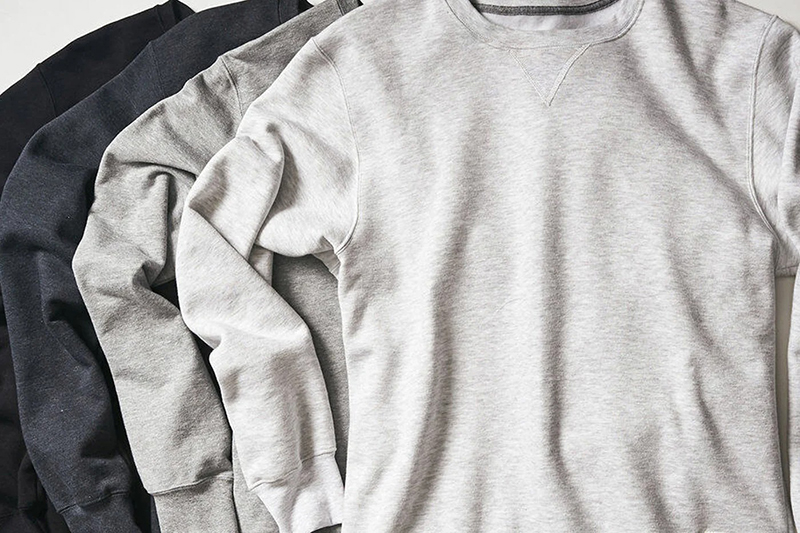
Yes. In most apparel markets, the crewneck sweatshirt is the clearest and most traditional sweatshirt type. It is usually the starting point for product development because it is broad, wearable, and easy to position commercially.

Yes, the crewneck sweatshirt is usually the most basic and most recognizable type of sweatshirt. It has a round neckline, no hood, and a simple pullover structure that works well in casualwear, premium basics, uniforms, and streetwear.
At Fusionknits, the crewneck sweatshirt is often the core item in a sweatshirt collection because it provides the cleanest base for fabric, color, wash, and branding development. Once this product is defined, the range can expand more easily.
Common features of a crewneck sweatshirt
- Round neckline
- No hood
- Long sleeves
- Rib neck, cuff, and hem in many styles
- Broad casual and lifestyle use
Why it remains the category foundation
It is easy to understand
Customers know how to wear it immediately.
It is highly adaptable
It works in premium, basic, oversized, vintage, and uniform categories.
| Sweatshirt type | Main role |
|---|---|
| Crewneck sweatshirt | Core category foundation |
What fabric-based sweatshirt types are most common?
Fabric is one of the strongest ways to divide sweatshirt categories because material changes softness, warmth, drape, and seasonality. A sweatshirt may keep the same silhouette but belong to a different product family once the fabric changes.
At Fusionknits, the most common fabric-based sweatshirt types are fleece sweatshirts, French terry sweatshirts, loopback sweatshirts, and smoother structured knit sweatshirts. These materials create different levels of warmth, softness, breathability, and premium value.
Fleece sweatshirts are often plush and warm. French terry sweatshirts are more balanced and versatile. Loopback sweatshirts often feel more refined and substantial. Smoother interlock or structured knit sweatshirts can feel cleaner and more elevated.
Main fabric-based sweatshirt families
- Brushed fleece sweatshirts
- French terry sweatshirts
- Loopback sweatshirts
- Interlock or structured knit sweatshirts
Why fabric grouping is so important
Fabric changes customer experience
A brushed fleece sweatshirt feels very different from a French terry one.
Fabric changes seasonal use
Some sweatshirts are built for winter, others for year-round wear.
| Fabric type | Main product effect |
|---|---|
| Brushed fleece | Soft and warm |
| French terry | Balanced and breathable |
| Loopback cotton | Refined and structured |
| Interlock knit | Smooth and cleaner |
What fit-based sweatshirt types matter most today?
Fit is one of the most commercially important ways to split sweatshirt categories. A classic regular sweatshirt and an oversized sweatshirt may share fabric and neckline, but they target different markets and styling moods.
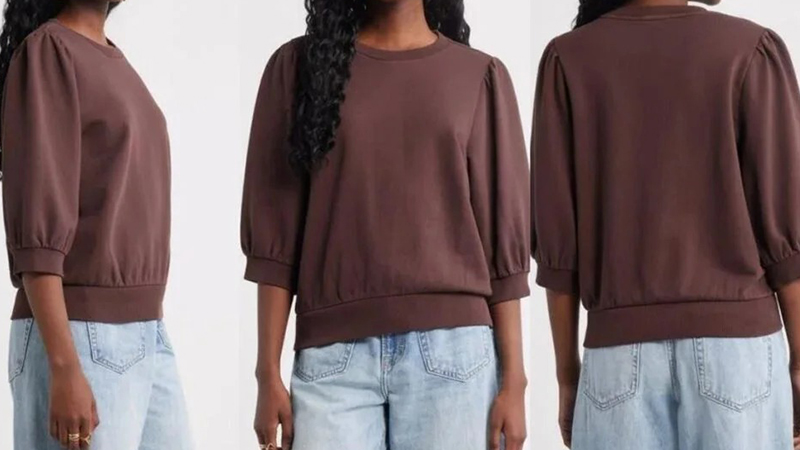
The main fit-based sweatshirt types are regular-fit sweatshirts, relaxed-fit sweatshirts, oversized sweatshirts, and cropped sweatshirts. These types matter because silhouette now plays a major role in how sweatshirts are merchandised and styled.
At Fusionknits, fit categories are especially important in fashion and streetwear development. Oversized sweatshirts often need more fabric body and stronger shoulder balance. Cropped sweatshirts often need more deliberate proportion control. A regular-fit sweatshirt usually stays the broadest commercial option.
Common fit-based sweatshirt types
- Regular-fit sweatshirt
- Relaxed-fit sweatshirt
- Oversized sweatshirt
- Cropped sweatshirt
Why fit changes the product so much
It changes styling direction
Oversized feels different from clean regular fit, even in the same fabric.
It changes customer expectation
The fit influences who buys the garment and how often it is worn.
| Fit type | Main identity |
|---|---|
| Regular fit | Broad everyday use |
| Relaxed fit | Easy comfort |
| Oversized fit | Streetwear and fashion-led |
| Cropped fit | Trend-driven fashion use |
What neckline-based sweatshirt types should brands know?
Neckline is another important classification because it changes the product’s visual identity immediately. A crewneck remains the base, but other neckline variations can create entirely different categories.
At Fusionknits, the main neckline-based sweatshirt types include crewneck sweatshirts, quarter-zip sweatshirts, mock-neck sweatshirts, funnel-neck sweatshirts, and in some cases zip-collar or half-zip sweatshirts. These products share sweatshirt fabric logic, but their neckline changes the styling and category role.
Quarter-zips often feel more sporty or refined. Mock-neck sweatshirts often feel more elevated and modern. Funnel-neck and zip-collar versions may sit between performancewear and premium casualwear.
Main neckline-based sweatshirt families
- Crewneck sweatshirt
- Quarter-zip sweatshirt
- Mock-neck sweatshirt
- Funnel-neck sweatshirt
- Half-zip sweatshirt
Why neckline grouping helps
It improves range planning
A collection can stay in one fabric family but still add variety through neck shape.
It supports different use cases
A quarter-zip may work better for travel or layering than a standard crewneck.
| Neckline type | Main mood |
|---|---|
| Crewneck | Classic and universal |
| Quarter-zip | Sporty and versatile |
| Mock-neck | Cleaner and more modern |
| Funnel-neck | Technical or fashion-led |
Are raglan and vintage-wash sweatshirts separate types?
Yes. Once design details become strong enough, they create their own sweatshirt subcategories. Raglan construction and vintage washing are both strong enough to change how the product is read in the market.

Yes, raglan sweatshirts and vintage-wash sweatshirts can be treated as separate sweatshirt types because they are defined by distinctive construction or finish. Raglan sweatshirts are identified by their sleeve construction, while vintage-wash sweatshirts are identified by their surface treatment and worn-in visual character.
At Fusionknits, raglan sweatshirts often feel more athletic or heritage-led. Vintage-wash sweatshirts often feel more casual, retro, or streetwear-ready. These categories help brands create depth without leaving the sweatshirt family.
Design-led sweatshirt types
- Raglan sweatshirt
- Vintage-wash sweatshirt
- Garment-dyed sweatshirt
- Acid-wash sweatshirt
- Graphic sweatshirt
Why design-led subtypes matter
They create stronger personality
The sweatshirt becomes more than a simple basic.
They support different brand moods
Athletic, vintage, music-inspired, or premium-casual directions can all fit here.
| Design type | Main identity |
|---|---|
| Raglan sweatshirt | Athletic and heritage-led |
| Vintage-wash sweatshirt | Retro and lived-in |
| Graphic sweatshirt | Brand or message-driven |
What are the most useful end-use sweatshirt types?
For many brands, the most practical way to divide sweatshirts is by use case. This helps product planning much more than fashion language alone because it connects the garment directly to the customer’s real life.
The most useful end-use sweatshirt types are lounge sweatshirts, streetwear sweatshirts, uniform sweatshirts, travel sweatshirts, active-inspired sweatshirts, and premium basics sweatshirts. These categories help brands develop products around real customer behavior instead of only around trend names.
At Fusionknits, use-based classification is often the best commercial tool. A lounge sweatshirt should prioritize softness. A streetwear sweatshirt should prioritize shape and visual weight. A travel sweatshirt should balance comfort and practicality. A premium basics sweatshirt should prioritize fabric and finish.
Common end-use sweatshirt groups
- Lounge sweatshirt
- Streetwear sweatshirt
- Uniform sweatshirt
- Travel sweatshirt
- Active-inspired sweatshirt
- Premium basics sweatshirt
Why use-based grouping works well
It matches design to function
The sweatshirt becomes easier to build correctly.
It improves merchandising
Collections make more sense when each sweatshirt has a clear role.
| End-use category | Main priority |
|---|---|
| Lounge | Softness and comfort |
| Streetwear | Shape and finish |
| Uniform | Stability and durability |
| Premium basics | Fabric and refinement |
How many sweatshirt types should a brand actually develop?
A brand does not need every possible sweatshirt subtype. It needs the ones that fit its customer, season, and pricing structure. Too many versions can weaken the assortment instead of strengthening it.
At Fusionknits, we usually recommend that brands build around 4 to 8 core sweatshirt types rather than trying to cover every variation. For many collections, the most useful range includes a crewneck sweatshirt, a fleece sweatshirt, a French terry sweatshirt, an oversized or relaxed sweatshirt, a quarter-zip or mock-neck version, and one vintage-wash or design-led style.
This gives enough depth to feel complete without making development too scattered. A strong sweatshirt line should grow from product logic, not from too many names.
A practical sweatshirt lineup for many brands
- Core crewneck sweatshirt
- Fleece comfort sweatshirt
- French terry everyday sweatshirt
- Oversized fashion sweatshirt
- Quarter-zip or mock-neck sweatshirt
- Vintage-wash or graphic sweatshirt
Why this structure works
It covers broad customer needs
Comfort, casualwear, premium basics, and fashion are all represented.
It keeps development manageable
The collection stays focused and commercially clear.
| Range strategy | Result |
|---|---|
| Too many random types | Confusing assortment |
| Clear core sweatshirt families | Stronger collection logic |
Conclusion
Different types of sweatshirts can be grouped by silhouette, fabric, neckline, finish, and end use. The most common and useful types include crewneck sweatshirts, fleece sweatshirts, French terry sweatshirts, loopback sweatshirts, oversized sweatshirts, cropped sweatshirts, quarter-zip sweatshirts, mock-neck sweatshirts, raglan sweatshirts, and vintage-wash sweatshirts.
Each type serves a different customer need and creates a different market identity. That is why the sweatshirt category is broader than many buyers expect.
At Fusionknits, we believe the best way to understand sweatshirt types is not to memorize every retail term, but to classify products in a practical way. Once brands define the sweatshirt by fit, fabric, neckline, and use, product development becomes clearer, sourcing becomes easier, and the final collection becomes much stronger.