Running joggers may look like a simple sportswear item, but fabric choice decides whether they actually perform well on the body. A jogger that feels soft in a showroom can still fail during running if it traps heat, holds sweat, loses shape, or becomes heavy after movement. In real activewear development, the best running jogger fabric is never chosen by softness alone. It is chosen by how well it manages moisture, stretch, recovery, breathability, and long-term wear.
The best fabrics for running joggers are usually lightweight polyester blends, nylon blends, and performance stretch fabrics with elastane or spandex. These materials are preferred because they offer moisture management, faster drying, flexibility, shape retention, and lower garment weight during movement. In some cases, cotton-rich fabrics can work for light casual jogging, but they are usually less effective for serious running performance.
At Fusionknits, running jogger fabric is treated as a performance system, not only a material label. A strong running jogger needs the right fiber, the right fabric structure, and the right garment engineering. When those factors work together, the jogger feels lighter, moves better, and supports real running use much more effectively.
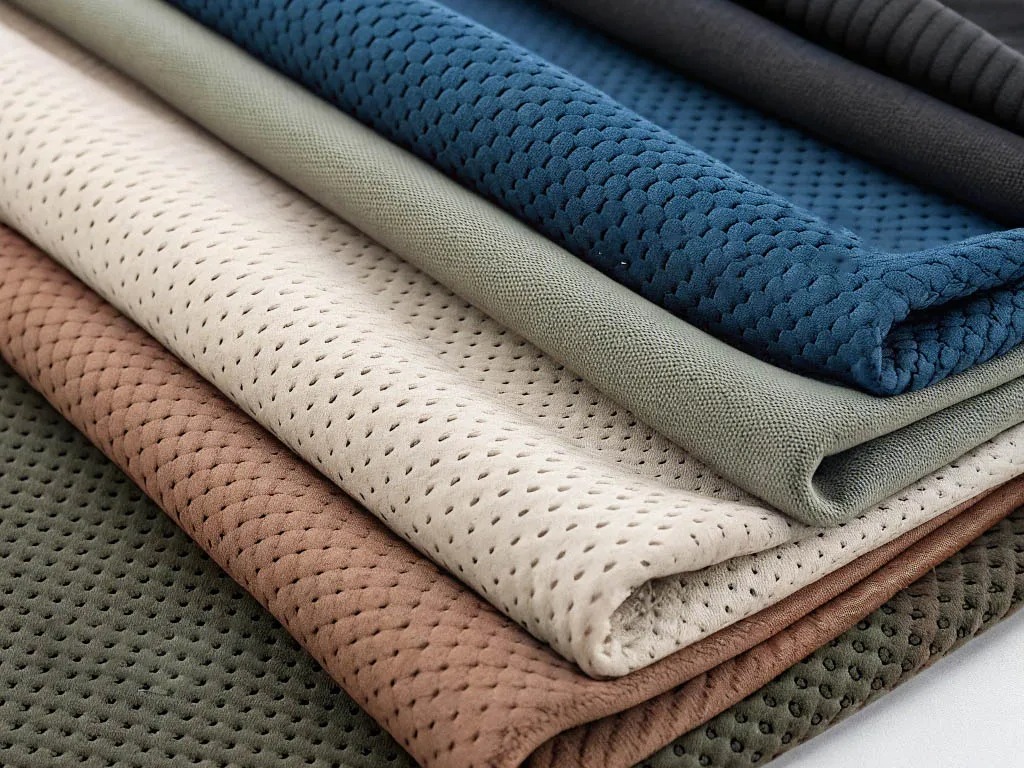
Why does fabric matter so much in running joggers?
Running places much more stress on fabric than casual daily wear. The body produces heat, moisture, and repeated movement through the hip, thigh, knee, and seat. If the fabric does not handle those demands well, the jogger quickly becomes uncomfortable.
Fabric matters so much in running joggers because it affects sweat control, heat release, stretch, weight, friction, and comfort during motion. A poor fabric may feel heavy, sticky, restrictive, or too warm, while a better fabric helps the garment stay dry, light, flexible, and stable through repeated movement.
From a manufacturing perspective, running joggers should not be developed like lounge joggers or fashion joggers. A fabric that works for casualwear may fail in activewear because running demands more from moisture transport, elasticity, and surface durability. This is why sportswear product development always needs clearer technical priorities.
At Fusionknits, the first question in running jogger development is not “Which fabric feels softest?” It is “Which fabric supports motion, sweat control, and repeat performance most effectively?”
Why fabric directly changes running performance
- It controls how fast sweat moves away from the skin
- It affects how quickly the garment dries
- It changes how much the fabric stretches and recovers
- It influences friction and skin comfort
- It affects total garment weight during activity
- It shapes long-term durability after repeated washing
Why this matters in product development
Running creates constant movement stress
The fabric has to keep up with repeated body motion without collapsing or restricting.
Sweat changes garment behavior
Once moisture enters the fabric, the wrong material can become heavier and less comfortable.
Comfort and performance are linked
A running jogger that feels wrong in heat, friction, or weight usually stops performing well.
A simple running-fabric view
| Fabric factor | Effect on running joggers |
|---|---|
| Moisture control | Better dry feel during activity |
| Stretch and recovery | Better movement support |
| Breathability | Better temperature balance |
| Lower weight | Better running comfort |
That is why fabric is one of the most important decisions in running jogger development.
Are polyester blends the best fabric for running joggers?
In many cases, yes. Polyester blends remain one of the most widely used and commercially effective fabric directions in performance joggers because they balance function, cost, and scalability very well.

Yes, polyester blends are often the best fabric for running joggers because they offer light weight, quick drying, moisture management, shape stability, and broad commercial flexibility. When blended with elastane or spandex, polyester fabrics become even more useful because they gain stretch and better movement support.
Polyester performs well because it does not absorb moisture the same way natural fibers do. Instead, it is usually engineered to move moisture outward and dry faster. This helps the jogger stay lighter during use. Polyester also works well across many constructions, from lightweight interlock to performance jersey and woven-stretch jogger fabrics.
At Fusionknits, polyester blends are often the first fabric direction considered for running joggers because they give strong performance across a wide range of price levels and training intensities.
Why polyester blends work so well
- Quick drying
- Good moisture transport
- Light fabric weight
- Stable shape retention
- Broad production availability
- Strong color durability
Why blends improve polyester further
Elastane adds movement support
The jogger becomes easier to wear through stride and bend.
Fabric structure can be optimized
Polyester can work in knit or woven performance constructions.
Cost remains commercially practical
This helps brands build stronger products without moving too far outside target price.
Polyester blend guide
| Fabric direction | Running benefit |
|---|---|
| Polyester-elastane knit | Stretch and moisture control |
| Polyester-spandex woven | Light performance structure |
| Brushed polyester blend | Softer feel for cooler running conditions |
That is why polyester blends remain one of the strongest answers for running jogger fabric.
Is nylon a better fabric than polyester for running joggers?
Nylon is also a strong performance fiber, and in some premium activewear programs it can feel even better than polyester in durability, smoothness, and stretch support. However, the better choice depends on the exact product goal.
Nylon can be better than polyester for some running joggers because it often offers a smoother hand feel, strong durability, and excellent support in stretch blends. However, polyester is usually more common because it offers stronger moisture-management value at broader commercial scale. In premium activewear, nylon-elastane blends are often a very strong choice.
Nylon usually feels slightly smoother and often looks more refined in high-performance garments. It also performs well in body-contouring and sleek activewear products. But cost, fabric engineering, and category direction still matter. Nylon is not automatically better in every case.
At Fusionknits, nylon is often selected when the running jogger needs a cleaner premium hand feel, stronger abrasion resistance, or a more elevated activewear finish.
Why nylon works well in running joggers
- Smooth hand feel
- Good strength and durability
- Strong support in stretch blends
- More refined premium appearance
- Useful in lightweight technical fabrics
Why polyester is still often more common
It usually dries very efficiently
This remains one of its strongest sportswear advantages.
It scales well commercially
Polyester is easier to use across broader market programs.
It works in more accessible price ranges
This matters in larger activewear collections.
Nylon versus polyester overview
| Fiber | Main advantage in joggers |
|---|---|
| Polyester | Moisture control and broad practicality |
| Nylon | Smooth premium feel and strength |
That is why nylon is an excellent option, but the strongest answer depends on whether the jogger is performance-basic, commercial activewear, or premium running apparel.
Why is elastane or spandex important in running jogger fabrics?
A running jogger without enough flexibility can feel restrictive during stride, warm-up movement, and recovery motion. This is why stretch support plays such an important role in modern performance fabrics.
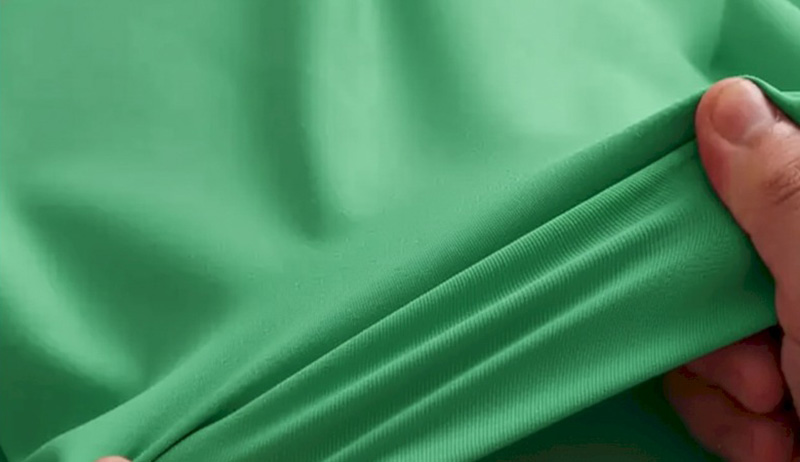
Elastane, also called spandex in many markets, is important in running jogger fabrics because it adds stretch, recovery, and movement support. A small percentage of elastane can improve comfort significantly by helping the jogger move with the body without losing shape during repeated use.
Running places stress on the seat, thigh, knee, and waistband. Fabrics that only rely on rigid structure may not respond well enough. Elastane helps reduce that problem by adding controlled stretch while still allowing the main fabric to maintain its identity.
At Fusionknits, elastane is usually treated as a support fiber rather than a headline fiber. Even a relatively low percentage can strongly improve jogger comfort and wear performance.
Why elastane improves running joggers
- Adds movement flexibility
- Improves recovery after stretch
- Supports cleaner fit during motion
- Helps reduce restriction at knees and thighs
- Improves comfort in slim or tapered jogger silhouettes
Why stretch must still be controlled
Too much stretch can weaken support
The fabric should move with the body, not collapse.
Recovery matters as much as flexibility
A fabric that stretches but does not recover well quickly loses shape.
Garment use defines the needed level
A light running jogger may need a different stretch balance than a training jogger.
Stretch-support guide
| Fabric with elastane | Running result |
|---|---|
| Polyester-elastane | Strong general performance choice |
| Nylon-elastane | Premium smooth activewear feel |
| Woven stretch blend | Better structure with mobility |
That is why elastane is one of the most important support fibers in quality running joggers.
Are woven fabrics or knit fabrics better for running joggers?
Both can work, but they create different product results. The better choice depends on whether the jogger is intended to feel soft and lounge-like, or light and performance-driven.
Woven fabrics are often better for high-performance running joggers because they can be lighter, cleaner, and less absorbent while maintaining strong mobility in stretch constructions. Knit fabrics can also work well, especially when softness and comfort are priorities, but they may feel heavier or warmer depending on the build.
Woven stretch joggers often feel more technical and more movement-efficient in outdoor running. Knit joggers often feel softer and more comfort-oriented, which can be useful in cooler-weather running or crossover training categories. The difference is not about right or wrong. It is about product purpose.
At Fusionknits, woven and knit running joggers are developed differently because they solve different performance needs.
Why woven fabrics work well in running joggers
- Lower garment weight
- Cleaner technical appearance
- Better wind resistance in some cases
- Lower water retention
- Strong mobility when stretch is added
Why knit fabrics still matter
They often feel softer
This can improve immediate comfort.
They support relaxed movement
Especially in crossover training and warm-up categories.
They fit lifestyle-sport hybrids well
Some customers want one jogger for running and casual wear.
Woven versus knit guide
| Fabric structure | Jogger effect |
|---|---|
| Stretch woven | Lighter, cleaner, more technical |
| Performance knit | Softer, more comfort-driven |
| Dense double-knit | More structure, often warmer |
That is why the best choice depends on whether the jogger is built for pure running performance or broader activewear use.
Is cotton good for running joggers?
Cotton is comfortable and familiar, but in serious running use it usually has clear limitations. It can still work in lighter activity or casual jogging, but it is not usually the best performance-first fabric.

Cotton is not usually the best fabric for running joggers because it tends to absorb sweat, dry more slowly, and become heavier during activity. While cotton can feel comfortable at rest and work in casual or low-intensity joggers, performance running joggers usually benefit more from synthetic or engineered blends.
Cotton-rich joggers may feel excellent in a showroom or for light everyday wear, but once the body begins producing more heat and moisture, the limitations become clear. The fabric can cling, feel wet, and lose its performance comfort faster than polyester or nylon blends.
At Fusionknits, cotton is usually reserved for casual joggers, athleisure crossover products, or lighter training categories rather than dedicated running programs.
Why cotton is weaker in running performance
- Absorbs more moisture
- Dries more slowly
- Gains weight when wet
- Can feel less stable during sweat-heavy activity
- Usually performs better in lifestyle categories than in serious running
When cotton may still work
For casual jogging
Low-intensity movement places less pressure on moisture performance.
For hybrid athleisure joggers
Some customers prioritize comfort over high output performance.
In engineered blends
Cotton can still contribute softness when balanced carefully with synthetic support fibers.
Cotton guide
| Cotton use level | Running suitability |
|---|---|
| 100% cotton jogger | Lower for serious running |
| Cotton-poly blend | Better for hybrid use |
| Cotton-rich casual jogger | Better for light activity than performance running |
That is why cotton is usually not the strongest choice when the product brief is true running performance.
What fabric weight is best for running joggers?
Even a strong fiber can underperform if the fabric weight is wrong for the intended use. Running joggers usually perform best when the fabric feels light enough to move easily but substantial enough to stay controlled.
The best fabric weight for running joggers is usually lightweight to light-midweight, depending on climate and season. Lighter fabrics usually perform better for warm-weather running because they reduce heat buildup and garment drag, while slightly heavier technical fabrics may work better for cooler-weather joggers or outdoor training conditions.
Too much fabric weight makes the garment feel slower, warmer, and less responsive. Too little fabric weight may weaken opacity, durability, or surface control. The best weight depends on climate, fit, and whether the jogger is built for summer running, all-season training, or cold-weather performance.
At Fusionknits, fabric weight is always matched to use environment because a running jogger should feel right in motion, not only on a hanger.
Fabric weight considerations
- Warm weather needs lighter fabrics
- Cold weather allows slightly heavier builds
- Slim joggers often need controlled structure
- Loose joggers need enough body to avoid collapse
- The lower leg should not feel heavy or over-layered
Why weight matters so much
Running amplifies every fabric problem
Extra weight feels more noticeable during repeated motion.
Heat control depends on fabric mass
Heavier fabrics may trap too much warmth.
Structure still matters
A running jogger should not become shapeless or flimsy.
Weight guide
| Fabric weight direction | Best use |
|---|---|
| Lightweight | Warm weather running |
| Light-midweight | Broad all-season use |
| Midweight technical | Cooler weather training |
That is why the best running jogger fabric is not only the right fiber. It is also the right weight.
What fabric features should brands and buyers prioritize in running joggers?
The strongest running jogger is usually built through multiple performance decisions working together. One good fiber is not enough if the structure, stretch, and moisture behavior are weak.
Brands and buyers should prioritize moisture management, quick drying, stretch and recovery, low weight, breathability, durability, and comfort against the skin when selecting fabrics for running joggers. The best fabric is the one that supports the intended running environment and training intensity without sacrificing garment stability.
At Fusionknits, the best running jogger fabrics are usually chosen through full product evaluation rather than fiber label alone. The garment has to perform in motion, in sweat, in repeat wash cycles, and in real market use.
Key performance features to prioritize
- Moisture-wicking ability
- Fast drying
- Stretch with strong recovery
- Low garment weight
- Breathability
- Surface durability
- Consistent shape after washing
Why this full review matters
Running use is demanding
A weak fabric problem becomes obvious very quickly in activewear.
The best fabric depends on use level
Light jogging, serious running, and hybrid activewear do not need identical solutions.
Better testing leads to better products
The jogger should be approved through wear and wash review, not only hand feel.
Buyer guide
| Priority | Why it matters |
|---|---|
| Moisture control | Better dry comfort |
| Stretch recovery | Better movement support |
| Lower weight | Better running ease |
| Durability | Better repeat performance |
That is how buyers can choose running jogger fabrics more professionally and more accurately.
Conclusion
The best fabrics for running joggers are usually polyester blends, nylon blends, and technical stretch fabrics supported by elastane or spandex. These materials perform well because they dry faster, manage moisture better, move more easily with the body, and keep their shape more effectively than many casualwear fabrics. Woven stretch fabrics often lead in technical running joggers, while performance knits can work well when softness and crossover comfort are also priorities. Cotton can still play a role in casual or low-intensity joggers, but it is usually not the strongest choice for serious running performance.
At Fusionknits, the best running jogger fabric is always selected through full performance logic. Fiber type, stretch support, fabric weight, structure, and real wear demands all have to work together.
When brands choose fabrics with movement, sweat control, and durability in mind, they build joggers that are lighter, more comfortable, and much more dependable in actual running conditions.