Many brands ask which type of shirt sells the most because they want one safe product answer before they invest in development and production. But in apparel, strong sales do not come from one trend alone. They usually come from the product types that combine comfort, repeat wear, easy styling, and stable market demand. Industry coverage of the apparel market continues to point to casualwear and basics as key growth drivers, while T-shirts remain one of the most popular and profitable shirt categories in the market.
The type of shirt that sells the most is usually the basic T-shirt, especially in core forms such as crew necks, standard fits, cotton or cotton-blend fabrics, and commercially safe colors. In most markets, simple everyday shirts outperform niche styles because they are easier to wear, easier to reorder, and easier to scale in wholesale and retail programs.
At Fusionknits, this question is approached from a manufacturing and product-development angle. The strongest-selling shirt is usually not the most complicated one. It is usually the one with the broadest wearability, the clearest market fit, and the best balance between product appeal and production stability.
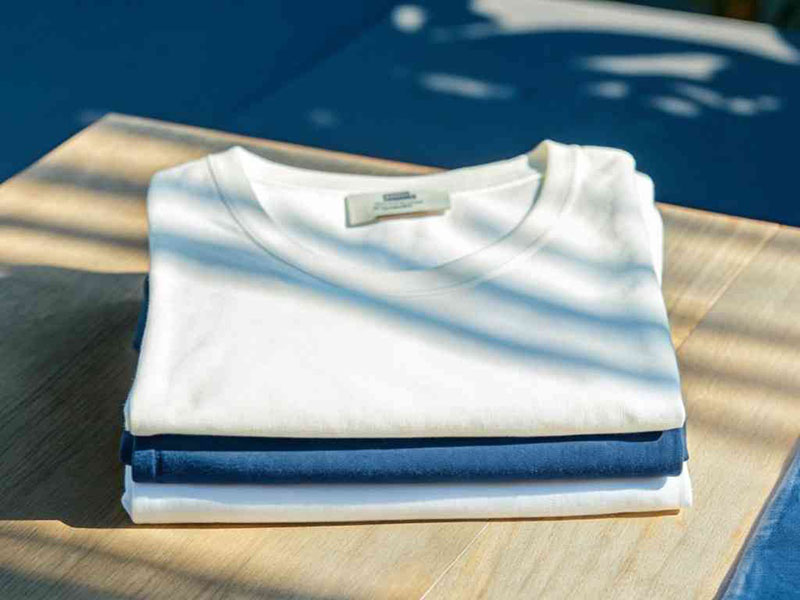
Why do basic shirts usually sell more than fashion-heavy shirts?
A shirt can attract attention with trend-driven details, but the products that sell most consistently are usually easier to wear and easier to repeat. That is one reason basics remain so important in modern apparel. Industry trend coverage around apparel demand continues to highlight casualwear, comfort, and elevated basics as strong commercial directions.
Basic shirts usually sell more than fashion-heavy shirts because they fit more wardrobes, more customer groups, and more selling channels. A shirt that is easy to style and easy to restock usually has stronger long-term sales than a highly specific fashion item.
From a manufacturing perspective, basic shirts also offer stronger repeatability. They are easier to reproduce consistently, easier to reorder, and easier to place across multiple markets. A strong basic can work in retail, private label, promotional business, and wholesale programs without needing major changes.
At Fusionknits, this is one of the clearest patterns in shirt development. The products with the broadest commercial value are usually the ones built around wear comfort, clear fit logic, and low styling risk.
Why basics perform so well commercially
- They are easier to wear every day
- They match more wardrobes
- They are less trend-sensitive
- They support repeat orders more easily
- They work in more sales channels
Why trend-heavy shirts are less stable
They have narrower target appeal
A very specific silhouette or graphic direction may attract one customer segment but miss a wider market.
They often have a shorter sales window
Trend-led products can move fast for one season and then slow down quickly.
They increase inventory risk
A shirt with lower repeat wear value is usually harder to reorder safely.
A simple commercial comparison
| Shirt type | Commercial behavior |
|---|---|
| Core basic shirt | More stable, broader demand |
| Fashion-led niche shirt | More seasonal, higher risk |
| Elevated basic | Strong middle ground in many markets |
That is why the strongest-selling shirt is usually a basic with commercial discipline, not a product built only for visual impact.
Is the T-shirt still the best-selling type of shirt?
In most modern apparel markets, yes. The T-shirt remains one of the most important shirt categories because it connects casualwear, comfort, branding, and broad customer accessibility. Market commentary and category reporting continue to describe T-shirts as one of the most popular and profitable apparel segments.
Yes, the T-shirt is still one of the best-selling types of shirts because it is versatile, affordable, easy to style, and suitable for many business models, including retail basics, fashion collections, promotional products, and private-label programs.
The T-shirt works so well commercially because it is not limited to one market. A T-shirt can be sold as an entry-level basic, a premium heavyweight essential, a printed fashion product, a uniform item, or a branded merchandise piece. Very few shirt categories can move across that many commercial positions so easily.
At Fusionknits, the T-shirt is usually the strongest starting point when a buyer wants high-volume potential and lower product complexity.

Why the T-shirt stays commercially strong
- Broad age and gender appeal
- Easy daily wear use
- Flexible pricing range
- Strong print and branding value
- Efficient manufacturing potential
Why the T-shirt works across markets
A T-shirt can serve value retail and elevated basics at the same time, depending on fabric and construction.
It supports branding
Graphic programs, private label, and corporate merchandise all rely heavily on T-shirt formats.
It fits the casualwear market
Casual and comfort-driven dressing remain important drivers in the apparel market.
Product range flexibility
| T-shirt direction | Market use |
|---|---|
| Basic crew neck | Broad everyday retail |
| Graphic tee | Brand and fashion storytelling |
| Heavyweight tee | Elevated basics and streetwear |
| Promotional tee | Volume and event programs |
This is why the T-shirt remains one of the strongest answers when the goal is stable shirt sales.
What specific T-shirt style usually sells the most?
Even inside the T-shirt category, not every style performs equally. Some shapes have wider appeal and lower return risk than others.
The T-shirt style that usually sells the most is the basic crew neck in a regular or slightly relaxed fit. This style performs well because it fits a wide range of body types, works across many markets, and supports both blank and decorated product programs. Trend coverage in promotional and apparel basics also points to elevated basics and comfort-led styling rather than extreme cuts as leading directions.
The crew neck remains commercially strong because it is familiar. It is also easy to grade, easy to style, and easy to fit into a wide range of collections. V-necks, mock necks, oversize shapes, and fashion-led silhouettes may all perform well in specific segments, but they usually do not match the broad volume potential of a standard crew neck.
At Fusionknits, the regular-fit or slightly relaxed crew neck remains one of the most commercially dependable shirt forms.
Why crew necks dominate
- Easy to wear
- Easy to layer
- Broad gender appeal
- Lower fit risk
- Strong compatibility with printing and branding
Why regular or relaxed fits perform best
They fit a broader market
Extreme slim fits and extreme oversized fits usually serve narrower audiences.
They reduce return pressure
Safer fit profiles often support better customer satisfaction.
They work across more collections
A regular base block is useful in basics, wholesale, uniforms, and fashion-driven product lines.
T-shirt shape comparison
| T-shirt style | Commercial potential |
|---|---|
| Crew neck regular fit | Highest broad-market potential |
| Relaxed fit crew neck | Strong in modern casualwear |
| V-neck | More limited by preference |
| Trend oversized tee | Strong in some segments, narrower overall |
That is why the best-selling shirt is often not the most dramatic silhouette. It is usually the most wearable one.
Do plain shirts sell more than graphic shirts?
This depends on the market channel, but in broad commercial terms, both can perform strongly for different reasons. Plain shirts often win in repeat wear, while graphic shirts often win in attention and brand storytelling.
Plain shirts usually sell more consistently in basics, private label, and wholesale programs, while graphic shirts can sell very well in brand-driven, youth-focused, and promotional programs. The stronger seller depends on whether the business is built around wardrobe essentials or visual identity. Elevated basics reporting suggests that consumers continue to respond strongly to refined essentials, while the T-shirt segment also remains popular for branded and decorative applications.
From a manufacturing point of view, plain shirts are often safer because they have wider repeat potential. A black or white plain T-shirt can be sold again and again with lower inventory risk. Graphic shirts, however, can move faster when the brand identity is strong and the design speaks clearly to the target audience.
At Fusionknits, plain shirts are often the stronger base for long-term reorder programs, while graphics work better when the brand has a defined voice and audience.
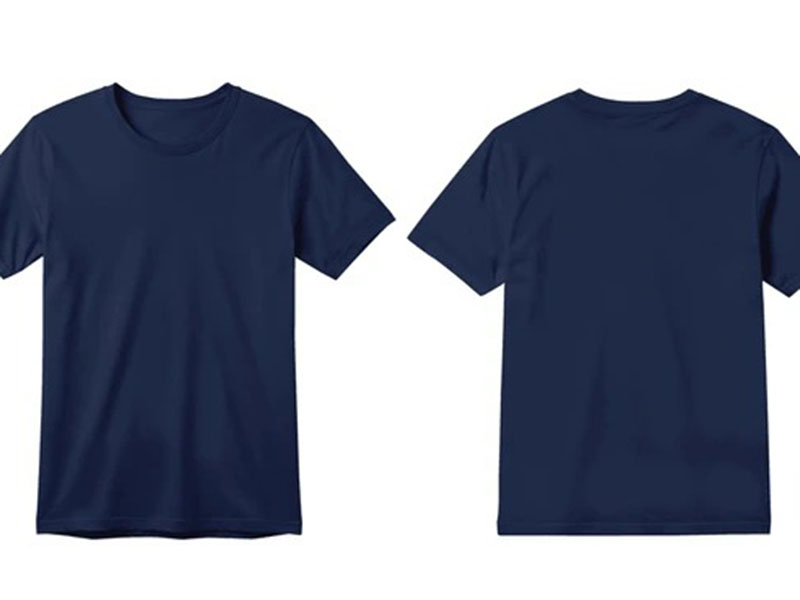
Why plain shirts sell consistently
- Easy to wear repeatedly
- Lower styling risk
- Stronger wardrobe function
- Better replenishment potential
- Lower trend dependency
Why graphic shirts still matter
They create distinction
A graphic tee can give the brand a visible identity.
They support storytelling
Many customers buy graphics not only as clothing, but as a signal of taste or belonging.
They can improve perceived value
A good graphic can move a simple garment into a stronger retail position.
Plain vs graphic product logic
| Shirt type | Best commercial use |
|---|---|
| Plain shirt | Basics, private label, replenishment |
| Graphic shirt | Brand building, lifestyle retail, merch |
The strongest shirt program often includes both, but the best-selling unit by volume is often a basic plain core style.
What colors and materials help a shirt sell more?
A shirt style can be commercially strong and still underperform if the color or material is wrong. Product sell-through often depends on how easily the customer can imagine wearing the shirt.
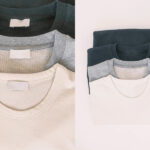
The colors and materials that help a shirt sell more are usually commercially safe options such as black, white, gray, and navy, combined with cotton or cotton-blend fabrics. These choices usually perform better because they are wearable, familiar, and suitable for repeat use. T-shirt and apparel trend coverage continues to emphasize comfort, everyday versatility, and elevated basics rather than only novelty.
At Fusionknits, the strongest-selling shirts usually sit in a very practical product zone: wearable color, reliable fit, comfortable fabric, and clear commercial use. A bright fashion color or niche fabric may help in a focused capsule, but it rarely carries the same repeat strength as core neutrals and core materials.
Colors that usually sell well
- Black
- White
- Heather gray
- Navy
- Off-white
- Washed muted neutrals in some casualwear lines
Materials that usually sell well
- 100% cotton
- Cotton-rich blends
- Mid-weight jersey
- Heavyweight cotton in premium basics
- Performance blends in active categories
Why these choices work
Customers trust them
Core colors and familiar fabrics are easier to buy without hesitation.
They support broader styling
Neutral shirts fit more wardrobes and lower the risk of single-use buying.
They support different business models
The same shirt base can work in retail, wholesale, and printed programs.
Product base comparison
| Product element | Strong commercial direction |
|---|---|
| Color | Core neutrals |
| Fabric | Cotton or cotton-rich blend |
| Surface | Smooth, stable jersey |
| Weight | Market-appropriate, usually mid-weight or better |
That is why the best-selling shirt usually combines a strong shirt type with a commercially safe fabric and color direction.
Are polos or woven shirts ever the best-selling type?
Yes, but usually in more specific channels. The broadest answer still tends to favor T-shirts, but polos and woven shirts remain strong in selected categories such as corporatewear, uniforms, formalwear, and controlled smart-casual programs.

Polos and woven shirts can be the best-selling type in certain business channels, especially uniforms, corporatewear, schoolwear, and structured menswear programs. However, in broad mass-market casualwear, basic T-shirts usually have the strongest overall sales potential.
From a manufacturing perspective, polos and woven shirts are often stronger in defined use cases rather than in broad lifestyle volume. A polo is useful where the buyer wants a more polished casual appearance. A woven shirt works well where structure and dress level matter more than pure comfort or low-price accessibility.
At Fusionknits, these categories are approached as commercially important, but usually more segmented than T-shirts.
Where polos sell strongly
- Uniform programs
- Corporate apparel
- Schoolwear
- Golf and resort categories
- Smart-casual product lines
Where woven shirts sell strongly
- Officewear
- Uniforms
- Formal and semi-formal retail
- Seasonal menswear programs
Why they do not always outperform T-shirts broadly
The use case is narrower
A customer can wear a T-shirt more often across more daily contexts.
Fit and styling are more restrictive
Polos and woven shirts usually carry more size sensitivity and more style boundaries.
Price points are often higher
That can reduce volume in broader casual markets.
Category comparison
| Shirt category | Best commercial context |
|---|---|
| T-shirt | Broad casualwear and basics |
| Polo | Uniforms and smart casual |
| Woven shirt | Structured and formal segments |
These categories are important, but the most widely selling shirt type is still usually the T-shirt.
What should brands and buyers learn from this when developing a shirt line?
The biggest lesson is that broad sales strength usually comes from product clarity, not from overdesign. A shirt sells best when it matches how people actually dress and buy.
Brands and buyers should learn that the strongest-selling shirts are usually the ones with broad wearability, stable fit, reliable fabric, and clear commercial use. A shirt line performs better when it starts with core products first and then adds fashion variation in a controlled way.
At Fusionknits, the most effective shirt lines usually begin with a commercial core. That core often includes a standard or slightly relaxed crew neck T-shirt in neutral colors, strong cotton or cotton-blend fabric, and a fit that works across a wide customer base. Trend pieces can still be added, but they work best when the foundation is already stable.
A strong commercial shirt strategy usually includes
- One core best-selling silhouette
- Neutral color foundation
- Reliable fabric standard
- Repeatable fit block
- Optional seasonal or graphic extension
Why this approach works better
It lowers inventory risk
Core products are easier to reorder and easier to carry.
It improves product identity
Customers remember a brand more clearly when its core product is stable.
It supports stronger manufacturing
Factories can repeat a proven product more accurately than a constantly changing one.
Product development guide
| Development choice | Better long-term result |
|---|---|
| Core shirt first | Stronger sell-through foundation |
| Too many niche styles first | More complexity and inventory risk |
| Stable fit and fabric | Better repeat business |
| Controlled trend additions | Better brand balance |
This is why the best-selling shirt is often the one developed with the most discipline, not the most decoration.
Conclusion
The type of shirt that sells the most is usually the basic T-shirt, especially in a crew neck, regular or slightly relaxed fit, commercially safe color, and cotton or cotton-blend fabric. Industry trend coverage continues to support the strength of casualwear, basics, and elevated essentials, while the T-shirt remains one of the most popular and commercially important shirt categories in the market.
From a professional manufacturing perspective, the strongest-selling shirt is usually not the most trend-driven one. It is the one with the broadest wearability, the clearest fit logic, the safest commercial color base, and the strongest repeat potential.
At Fusionknits, the most dependable shirt programs are usually built around a strong core basic first, then expanded carefully into graphics, premium fabrications, or more fashion-led variations. When product clarity, market fit, and manufacturing discipline work together, the shirt line usually becomes easier to scale, easier to reorder, and more commercially successful over time.