Sweatpants are one of the most popular garments worldwide, worn for sports, casual wear, loungewear, and street style. Despite their ubiquity, many people do not know where sweatpants are manufactured or how global production affects cost, quality, and availability. For brands and buyers, understanding sweatpants production locations is critical for sourcing, cost management, and quality control.
Most sweatpants are produced in countries such as China, Vietnam, Bangladesh, Pakistan, India, and Turkey. These regions offer skilled labor, access to textile materials, established supply chains, and competitive production costs, making them key hubs for apparel manufacturing.
At Fusionknits, we produce a wide range of sweatpants for activewear brands and wholesale buyers. Our experience shows that knowing where sweatpants are made is important for understanding global manufacturing trends and ensuring consistent product quality.

Why do sweatpants require specialized manufacturing?
Although sweatpants are simple in appearance, producing high-quality garments involves several complex steps.
Sweatpants require precise fabric cutting, knitting, sewing, and finishing processes to achieve comfort, durability, and proper fit.
High-volume production demands experienced workers and well-equipped factories.
Key production requirements
| Process | Importance |
|---|---|
| Fabric sourcing | Very High |
| Cutting and stitching | High |
| Elastic and drawcord insertion | High |
| Quality control | High |
| Packaging and finishing | Medium |
Meeting these requirements ensures that sweatpants maintain consistency and performance.
Why attention to detail matters
Minor errors in construction can result in:
- Uneven seams
- Improper sizing
- Reduced durability
- Poor customer satisfaction
Factories with experience in knitwear or activewear are best suited for sweatpants production.
Why China is a leading producer of sweatpants
China remains one of the largest hubs for global apparel production.

Many sweatpants are manufactured in China due to its advanced textile infrastructure, skilled labor, high-volume capacity, and efficient logistics networks.
Chinese factories are capable of handling complex materials such as cotton-polyester blends and performance fabrics.
Advantages of Chinese production
- Large, experienced workforce
- Integrated supply chain for fabrics and trims
- Advanced machinery and technology
- Economies of scale for bulk production
These factors make China a preferred choice for both premium and mass-market sweatpants.
Typical products made in China
- Fleece sweatpants
- French terry joggers
- Activewear training pants
- Fashion-forward streetwear styles
China produces garments for a variety of brands and markets.
Why Vietnam is a major sweatpants producer
Vietnam has emerged as a competitive hub in the global apparel industry.
Vietnam offers a combination of skilled labor, quality production, and moderate costs, making it ideal for mid-to-high-end sweatpants.
The country is especially strong in knitwear and casual wear.
Benefits of Vietnamese manufacturing
- High-quality stitching and finishing
- Efficient factory management
- Compliance with international labor standards
- Cost-effective for medium-volume orders
Vietnam allows brands to balance quality and price.
Sweatpants commonly produced in Vietnam
- Mid-range activewear
- Gym and yoga pants
- Loungewear
- Lifestyle joggers
Vietnamese factories often serve both domestic and export markets.
Why Bangladesh and Pakistan are important
Bangladesh and Pakistan are leading low-cost apparel manufacturing hubs.
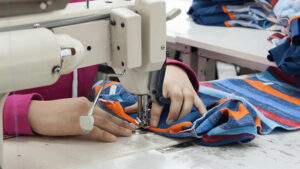
Many large-scale sweatpants orders for global brands are produced in these countries due to lower labor costs and established textile industries.
These countries specialize in cotton-based fabrics, a staple for casual sweatpants.
Advantages of Bangladesh and Pakistan
- Competitive labor costs
- Established textile supply chains
- Large production capacity
- Experience with cotton fabrics
Low-cost production allows brands to offer affordable sweatpants without sacrificing basic quality.
Common products
- Budget-friendly cotton sweatpants
- Basic fleece joggers
- Entry-level activewear
- School and team uniforms
These regions provide cost efficiency for large orders.
How India contributes to sweatpants production
India has a long history in textile manufacturing.
India produces a significant volume of cotton-based sweatpants, particularly for mid-range and casual markets.
Skilled artisans and experienced factories enable both domestic and export production.
Strengths of Indian production
- Cotton expertise
- Traditional textile industry knowledge
- Moderate production costs
- Flexibility for custom designs
Indian production supports mid-market brand needs.
Common products
- Cotton fleece joggers
- Fashionable casual sweatpants
- Lightweight cotton loungewear
India caters to both mass-market and boutique brands.
Why Turkey is a key location for European markets
Turkey offers strategic advantages for European distribution.

Some sweatpants for European brands are produced in Turkey to reduce lead times and improve supply chain efficiency.
Turkish factories provide strong craftsmanship and access to European-quality materials.
Advantages of Turkish production
- Proximity to European retailers
- Experienced workforce
- Reliable logistics and shipping
- Strong quality standards
Turkey is particularly popular for mid-to-premium European brands.
Typical products
- Premium cotton joggers
- Fashion-forward sweatpants
- Limited-edition designs
Turkey supports seasonal collections and fast fashion cycles.
How global sourcing affects sweatpants quality
Not all production regions deliver the same quality.
Factory expertise, material sourcing, and quality control processes influence the final product quality.
Brands must select manufacturing partners carefully.
Factors affecting quality
- Fabric type and weight
- Stitching consistency
- Elastic durability
- Trim quality
- Final inspection
Attention to these details ensures brand consistency.
How production location affects pricing
Sweatpants production costs vary depending on country.
Labor, materials, and operational costs in each country influence the final unit price.
Higher-cost regions may deliver higher-quality or faster turnaround products.
Estimated relative costs
| Country | Relative Production Cost |
|---|---|
| Bangladesh | Low |
| Pakistan | Low |
| India | Medium |
| Vietnam | Medium |
| China | Medium-High |
| Turkey | High |
Brands balance cost, quality, and speed when selecting a country.
How order volume impacts production location choice
Production volume also affects where sweatpants are made.
Large orders often go to low-cost countries like Bangladesh or China, while smaller premium runs may be produced in Vietnam or Turkey.
Volume influences unit cost, lead times, and factory selection.
Volume considerations
- High-volume orders: cost efficiency and scalability
- Mid-volume orders: balance of quality and cost
- Small or custom orders: flexibility and craftsmanship
Strategic volume planning ensures profitability.
Why sustainable production is becoming important
Sustainability is an increasing concern in apparel manufacturing.
Sweatpants produced with organic cotton, recycled polyester, or eco-friendly dyes are gaining popularity worldwide.
Consumers are willing to pay more for environmentally responsible products.
Sustainable production initiatives
- Organic cotton sourcing
- Recycled fabrics
- Reduced water and energy use
- Ethical labor practices
Sustainability enhances brand reputation and market appeal.
How Fusionknits approaches sweatpants manufacturing
At Fusionknits, we carefully select manufacturing partners and materials.
We prioritize quality, sustainability, and scalability while choosing production locations for our clients’ sweatpants.
This approach ensures garments meet both performance and market expectations.
Key considerations
- Material selection
- Factory expertise
- Production volume
- Quality control
- Lead time and logistics
These factors combine to deliver high-quality products consistently.
Conclusion
Sweatpants are primarily produced in China, Vietnam, Bangladesh, Pakistan, India, and Turkey. China provides high-volume production and technical fabric expertise, Vietnam balances quality and cost, and Turkey offers proximity to European markets with skilled craftsmanship. Bangladesh, Pakistan, and India serve large-scale, cost-sensitive production needs, particularly for cotton-based sweatpants.
The choice of production location impacts quality, cost, lead times, and sustainability. Modern consumers increasingly prioritize premium fabrics, ethical labor practices, and eco-friendly materials, influencing where and how sweatpants are manufactured.
At Fusionknits, understanding global production trends and carefully selecting factories ensures that sweatpants meet brand standards, maintain quality, and deliver consistent consumer satisfaction worldwide.