ORORO has become one of the most recognized heated apparel brands in the global market. Many consumers and B2B buyers are curious about where ORORO clothing is manufactured and how production location affects quality, technology, and pricing.
ORORO clothing is primarily manufactured in China, where the company sources technical fabrics, heating components, lithium-ion battery systems, and garment assembly through specialized apparel and electronics integration supply chains. China remains a leading production hub for heated apparel because of its advanced manufacturing infrastructure and integrated textile ecosystem.
At Fusionknits, we understand that heated clothing production requires far more than standard garment manufacturing. Heated apparel combines textile engineering, carbon fiber heating integration, insulation design, and battery technology, all of which require experienced production facilities.
Why does ORORO manufacture clothing in China?
China has become the global center for both apparel manufacturing and consumer electronics production. Heated clothing combines these two industries, making China a highly efficient production location.
ORORO manufactures clothing in China because the country offers strong expertise in technical fabrics, heating technology integration, battery production, and scalable garment manufacturing.
Few countries can currently match China’s complete supply chain for heated apparel production.
Advantages of manufacturing heated clothing in China
- Integrated textile and electronics supply chain
- Advanced battery manufacturing capability
- Experienced technical apparel factories
- High-volume production efficiency
- Specialized heating component suppliers
- Faster sample and product development
These advantages allow heated apparel brands to scale efficiently while maintaining technical consistency.
Why heated apparel is more complex than regular clothing
Heated garments require multiple production systems working together:
| Production Area | Function |
|---|---|
| Textile manufacturing | Fabric production and garment assembly |
| Electronics integration | Heating system installation |
| Battery engineering | Portable power supply |
| Insulation development | Heat retention |
| Safety testing | Electrical and thermal protection |
This complexity makes factory capability extremely important.
What types of ORORO products are made in China?
ORORO produces multiple heated apparel categories, including heated jackets, heated vests, hoodies, gloves, and accessories. Most of these products are manufactured through specialized Chinese supply chains.

ORORO’s heated jackets, vests, hoodies, and battery-powered apparel are largely produced in China because these products require advanced textile and electronic integration.
At Fusionknits, we see that heated garments demand much higher technical coordination than standard outerwear.
Common ORORO product categories
| Product Category | Main Manufacturing Focus |
|---|---|
| Heated Vests | Lightweight insulation and battery integration |
| Heated Jackets | Weather resistance and thermal efficiency |
| Heated Hoodies | Comfort-focused heating systems |
| Heated Gloves | Compact heating technology |
| Heated Base Layers | Flexible stretch fabrics |
Each category requires different material and construction strategies.
Why heated vests are especially popular
Heated vests remain commercially successful because they provide:
- Lightweight warmth
- Better mobility than jackets
- Flexible layering
- Lower battery consumption
This makes them attractive for both outdoor workwear and lifestyle use.
Why is China strong in heated apparel manufacturing?
China dominates heated apparel manufacturing because it combines advanced textile production with strong electronics manufacturing capability.
China is highly competitive in heated clothing because factories can efficiently combine technical fabrics, battery systems, heating elements, and garment construction within one integrated supply chain.
This level of integration reduces development time and production cost.
China’s supply chain advantage
Many production stages happen within the same manufacturing regions:
- Fabric knitting
- Dyeing and finishing
- Heating element production
- Battery assembly
- Garment sewing
- Packaging and export
This improves efficiency significantly.
Why electronics integration matters
Heated apparel requires careful coordination between:
- Fabric flexibility
- Wiring systems
- Battery safety
- Heating performance
- Wash durability
Factories without technical expertise may struggle to maintain quality and safety standards.
Does manufacturing in China affect ORORO quality?
Many consumers still associate Chinese manufacturing with low-cost products, but modern apparel production quality depends far more on factory standards and brand requirements.
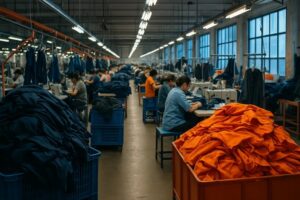
Manufacturing in China does not automatically reduce quality. ORORO products rely on technical development, quality control systems, battery safety standards, and experienced suppliers to maintain product performance.
At Fusionknits, we explain to buyers that factories produce according to the brand’s requested specifications and quality standards.
Why product quality varies between factories
The same country can produce:
- Budget apparel
- Premium activewear
- Technical heated garments
- Luxury fashion products
The difference depends on:
| Quality Factor | Impact |
|---|---|
| Material quality | Comfort and durability |
| Heating system design | Thermal performance |
| Battery quality | Runtime and safety |
| Construction standards | Long-term durability |
| Testing systems | Product consistency |
Factory capability matters more than country labels alone.
Why heated garments require stricter quality control
Heated clothing must undergo additional testing such as:
- Battery cycle testing
- Overheating protection testing
- Wash durability testing
- Electrical safety verification
These testing standards are critical for consumer safety.
What fabrics are used in ORORO clothing?
Fabric selection strongly affects comfort, insulation, battery efficiency, and heating performance. Heated garments require specialized material combinations.
ORORO clothing commonly uses polyester, nylon, softshell fabrics, fleece lining, and synthetic insulation to balance warmth, flexibility, and durability.
At Fusionknits, heated garment fabrics must support both comfort and electronic integration.
Common fabrics in heated apparel
| Fabric Type | Main Benefit |
|---|---|
| Softshell Polyester | Wind resistance |
| Nylon Shell Fabric | Durability and weather protection |
| Fleece Lining | Warmth and softness |
| Synthetic Insulation | Thermal retention |
These materials improve heating efficiency and overall comfort.
Why lightweight fabrics matter
Heated apparel already contains:
- Batteries
- Heating elements
- Wiring systems
Heavy fabrics can reduce mobility and wearability.
Why insulation improves battery performance
Proper insulation helps:
- Retain generated heat
- Reduce energy loss
- Extend battery runtime
Efficient insulation directly improves user experience.
How do ORORO heating systems work?
The heating system is the most important technical feature in heated apparel.

ORORO heated clothing typically uses carbon fiber heating elements powered by rechargeable lithium-ion battery systems.
Modern heating systems are designed to remain flexible, lightweight, and washable.
Why carbon fiber heating is popular
Carbon fiber systems provide:
- Lightweight flexibility
- Even heat distribution
- Comfortable wearability
- Energy efficiency
This makes them highly suitable for wearable garments.
Common heating zones
| Heating Area | Purpose |
|---|---|
| Upper back | Core warmth |
| Chest panels | Front body heating |
| Lower back | Improved comfort |
| Collar area | Neck warmth |
Strategic heating placement improves thermal efficiency.
Why battery quality matters
Battery systems influence:
- Heating duration
- Safety performance
- Charging efficiency
- Overall garment weight
High-quality battery management systems improve reliability significantly.
How does ORORO compare with other heated apparel brands?
The heated apparel market has become increasingly competitive as outdoor and workwear demand grows globally.
ORORO is often positioned as a lifestyle-focused heated apparel brand that balances affordability, comfort, and practical heating performance.
Compared to industrial workwear brands, ORORO focuses more on everyday usability and casual outdoor wear.
ORORO strengths
- User-friendly controls
- Lightweight construction
- Comfortable fabric choices
- Balanced pricing
- Good heating consistency
These features appeal to broad consumer markets.
Comparison with industrial heated apparel brands
| Brand Type | Main Focus |
|---|---|
| ORORO | Lifestyle and casual outdoor use |
| Industrial brands | Heavy-duty workwear |
| Luxury heated apparel | Premium design and fabrics |
Each category serves different customer needs.
How important is safety in heated clothing manufacturing?
Safety is one of the most critical areas in heated garment production because electrical systems are integrated into wearable apparel.
Reliable heated clothing manufacturers use safety-certified batteries, overheat protection systems, and extensive testing to reduce operational risks.
At Fusionknits, safety testing is essential during heated apparel development.
Important safety systems
- Overheat protection
- Waterproof connectors
- Battery management systems
- Temperature control settings
- Short-circuit prevention
These systems protect users during long-term wear.
Common certifications for heated apparel
| Certification | Purpose |
|---|---|
| CE Certification | European compliance |
| UL Certification | Electrical safety |
| RoHS Compliance | Hazardous material control |
Certification improves both consumer trust and international compliance.
How should buyers evaluate heated clothing manufacturers?
Selecting a heated apparel supplier requires evaluating both garment manufacturing and electronics integration capability.
Buyers should evaluate heated clothing manufacturers based on battery quality, heating consistency, safety systems, wash durability, and technical fabrics expertise rather than country alone.
At Fusionknits, heated garment production requires collaboration between apparel engineers and electronic component specialists.
Questions buyers should ask suppliers
- What heating technology is used?
- Are batteries safety certified?
- How many heating zones are included?
- Can garments survive repeated washing?
- What testing systems are used?
These questions help identify experienced technical apparel manufacturers.
Important heated apparel testing areas
| Testing Area | Purpose |
|---|---|
| Wash testing | Durability verification |
| Heat consistency testing | User comfort |
| Battery cycle testing | Long-term reliability |
| Fabric abrasion testing | Garment lifespan |
| Safety testing | Electrical protection |
Strong testing standards reduce product failure risks significantly.
Conclusion
ORORO clothing is primarily manufactured in China because the country offers a highly integrated supply chain for both technical apparel production and electronic component manufacturing. Heated garments require specialized fabrics, battery systems, heating elements, and safety engineering, all of which are strongly supported by China’s advanced textile and electronics industries.
The quality of heated clothing depends far more on factory standards, technical expertise, and quality control systems than on country of origin alone. ORORO products rely on specialized heating technology, durable construction, insulation efficiency, and battery safety management to maintain consistent performance across global markets.
At Fusionknits, we believe successful heated apparel manufacturing requires balancing comfort, durability, thermal efficiency, and electronic safety. As heated clothing continues growing in outdoor, lifestyle, and workwear categories, brands that prioritize technical innovation, material quality, and strict testing standards will remain highly competitive in the global apparel industry.