Brands ask this question for a simple reason. A print can look great on day one and still fail after repeated washing, stretching, and daily wear. In real production, durability is not just about the print method name. It also depends on fabric type, ink system, curing temperature, press settings, artwork size, and aftercare. Even so, the market still wants a direct answer: which one usually lasts longer?
At Fusionknits, our practical answer is this: screen printing usually lasts longer than DTF in standard bulk apparel production, especially when the screen print is properly cured and matched to the right garment fabric. DTF has improved a lot and can be highly durable, but screen printing is still more widely treated as the long-term durability benchmark in current industry guidance.
As a professional clothing manufacturer, we do not treat this as a winner-takes-all debate. We look at durability together with order size, artwork complexity, hand feel, stretch needs, and retail positioning. A print method can be excellent and still be the wrong commercial choice. But if the question is only about which one tends to last longer over time, screen printing still leads more often in real production use.
Why is durability such an important issue in printed apparel?
Print durability affects more than product appearance. It influences customer trust, reorder rates, complaint volume, return cost, and brand reputation. A print that fades, cracks, or peels too early makes the entire garment feel low quality, even if the fabric itself is good.
At Fusionknits, we see durability as one of the biggest hidden cost factors in custom apparel. A print that survives repeated washing protects the brand, while a print that fails too early turns a simple production choice into a commercial problem.
This is especially important for T-shirts, hoodies, uniforms, merch programs, gym apparel, and promotional basics. These products often go through frequent washing, high-friction wear, and repeated stretching. That means the decoration method must survive not only display and first impression, but also real-life use. Industry comparisons continue to frame durability as one of the central decision points between screen printing and DTF.
What durability affects directly
- Wash performance
- Crack resistance
- Peel resistance
- Color retention
- Customer satisfaction
- Reorder confidence
Why this matters for brands
The print often defines perceived quality
Customers usually notice the decoration before they judge the sewing or fabric.
Failure creates fast reputational damage
One poor print can make the whole product line look unreliable.
| Durability issue | Business effect |
|---|---|
| Cracking | Lower perceived quality |
| Peeling | Higher returns and complaints |
| Fading | Reduced repeat purchase confidence |
What is screen printing, and why is it known for durability?
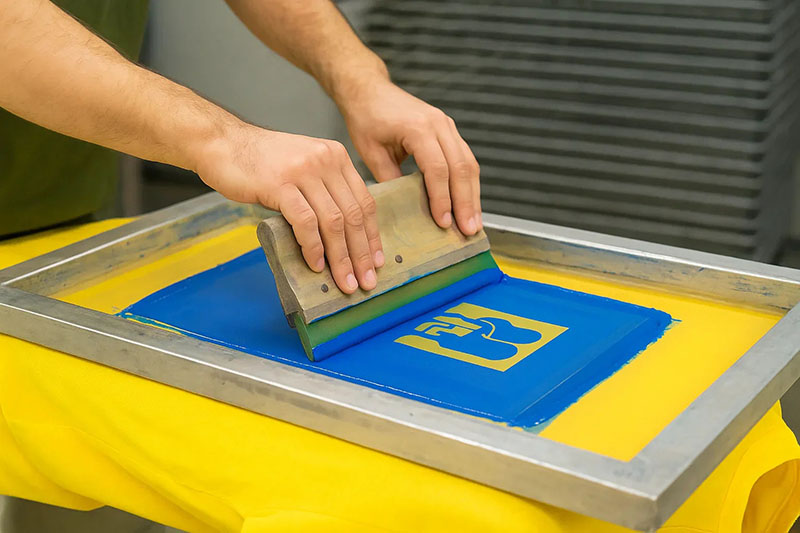
Screen printing is a decoration process where ink is pushed through a stencil screen onto the garment. In apparel, plastisol screen printing is especially well known because it creates bold, opaque graphics with strong adhesion and long-term wash performance when cured correctly.

At Fusionknits, screen printing has remained the durability reference point because the ink layer is stable, repeatable, and proven across large production volumes. When the ink deposit, mesh choice, and curing process are controlled properly, screen printing usually handles repeated washing better than most transfer-based alternatives.
That reputation comes from long-term industry use. Screen printing has been the default for bulk printed apparel for decades because it is efficient in volume and dependable under repeated wear. Some recent comparisons still describe screen printing as the go-to option for large runs when the priority is long-lasting results.
Why screen printing tends to hold up well
- Strong ink adhesion when cured properly
- Good resistance to wash wear
- Reliable for large production runs
- Stable color coverage on many garments
- Lower risk of edge lifting than transfer films
Why manufacturers still trust it
It performs consistently in bulk
Once setup is correct, thousands of units can be printed with repeatable output.
It has a long proven history
Buyers already understand what a good screen print should feel and look like.
| Screen printing strength | Result |
|---|---|
| Proper curing | Better wash resistance |
| Stable ink deposit | Strong visual longevity |
| Bulk consistency | Lower production risk |
What is DTF, and why has it become so popular?
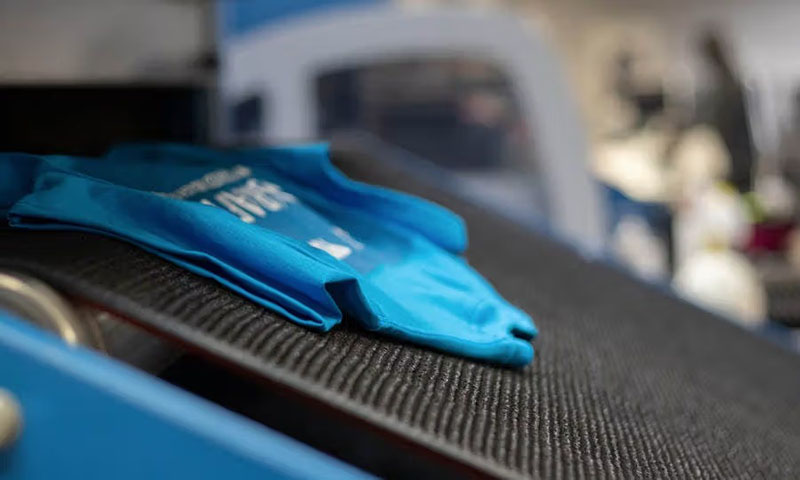
DTF stands for direct-to-film. The design is printed onto a transfer film, powdered with adhesive, cured, and then heat pressed onto the garment. It has become popular because it handles complex full-color graphics, short runs, customization, and fast order changes very well.
At Fusionknits, DTF has grown fast because it gives brands flexibility that traditional screen printing cannot always match. It works especially well for short production runs, high-color artwork, personalized jobs, and programs where setting up multiple screens would be too slow or too expensive.
Recent industry commentary also shows that DTF durability has improved significantly. Some suppliers and transfer-focused businesses now claim DTF can survive dozens of washes, and in some cases they position modern DTF as approaching screen print durability when applied correctly. But even in those optimistic comparisons, the wording usually emphasizes “when pressed correctly,” which shows how process-sensitive DTF still is.
Why DTF is attractive commercially
- No screen setup
- Good for low minimums
- Handles detailed artwork well
- Works across many garment types
- Supports customization and on-demand production
Why brands choose it
It reduces setup friction
Complex full-color graphics are easier to execute in small quantities.
It supports fast SKU variation
Brands can test more designs without committing to large screen-print runs.
| DTF strength | Commercial value |
|---|---|
| Short-run efficiency | Better for small orders |
| Graphic detail | Handles complex artwork |
| Fast changeover | Good for custom programs |
Which one usually lasts longer in normal wash-and-wear use?
In normal wash-and-wear use, screen printing still usually lasts longer. Multiple current comparisons continue to describe screen printing as the more proven long-term method, especially for repeated washing and bulk production. Even sources that are supportive of DTF often still frame screen printing as the benchmark for durability.
At Fusionknits, our manufacturing view is that screen printing usually wins on longevity, while DTF wins on flexibility. DTF can last very well when materials and pressing conditions are correct, but screen printing is still the safer choice when a brand wants the strongest long-term durability reputation across repeated washing cycles.
That does not mean DTF is weak. It means DTF is more sensitive to execution quality. If the transfer film, powder, heat, pressure, and peel timing are all correct, DTF can perform strongly. But if any of those variables drift, the risk of early wear increases. Screen printing also depends on process discipline, but the commercial market still treats it as the more reliable durability standard overall.
General durability ranking
- Screen printing: usually longer-lasting
- DTF: strong, but more process-sensitive
- Both: can fail if badly executed
Why screen printing still leads
It has fewer transfer-layer variables
DTF relies on a film-and-adhesive system in addition to the artwork itself.
It has stronger bulk-production confidence
Large brands still trust screen printing heavily when durability matters most.
| Method | Typical durability perception |
|---|---|
| Screen printing | Industry durability benchmark |
| DTF | Strong but more variable |
Why can DTF still perform very well in some cases?
DTF has improved because film quality, powder quality, and heat-press consistency have improved. Several recent supplier-led durability guides now claim modern DTF can survive 40–60 washes or even more under controlled conditions, and some position it as comparable to screen print in many cases.
At Fusionknits, we take these claims seriously, but we also treat them with production caution. Good DTF can absolutely be durable, especially on the right garments with correct pressing and proper aftercare. The key point is that DTF durability is highly dependent on execution discipline.
This means DTF can be a very strong choice for fashion drops, creator merch, event apparel, and low-volume graphic products where the design complexity is high and the production quantity is limited. In those situations, the flexibility advantage may outweigh the slight durability advantage of screen printing. That is why DTF continues to grow, even though screen printing still usually wins the durability argument.
What helps DTF last longer
- Correct press temperature
- Correct pressure
- Correct dwell time
- Good transfer film
- Good adhesive powder
- Appropriate wash care
Where DTF makes strong sense
Small-batch programs
Brands do not need to invest in screens for every new artwork.
Complex artwork
DTF handles gradients, detail, and multi-color visuals more easily.
| DTF condition | Effect on longevity |
|---|---|
| Strong transfer materials | Better adhesion |
| Correct pressing | Better wash resistance |
| Poor process control | Faster wear risk |
How do cracking, peeling, and fading differ between the two?
Screen printing usually wears through gradual cracking or surface aging over time, especially if the ink layer is thick or the print sits on a high-stretch area. DTF is more likely to be judged by edge wear, peeling risk, or failure at stress points if the transfer bond is weak. Several recent comparisons specifically mention that DTF may show more wear at stress points over time, even while acknowledging its strong overall performance.
At Fusionknits, we usually expect screen prints to age more predictably, while DTF can look excellent early on but become more vulnerable if the transfer layer was not applied perfectly. That is why we often describe screen printing as the safer long-term option for core products with high wash frequency.
This does not mean every DTF print peels. It means the failure mode is different. Buyers should understand that both methods can fail, but they often fail in different ways. Choosing between them should include not only lifespan, but also how the print is likely to age on the specific garment type.
Common wear patterns
- Screen printing: fading and cracking over time
- DTF: possible edge lift, peeling, or stress-point wear
- Both: can suffer from poor laundering
Why aging behavior matters
Customers notice edge failure quickly
A small peel can look worse than a mild crack.
Print location changes the risk
Chest prints, back prints, and stretch zones age differently.
| Wear issue | More commonly associated with |
|---|---|
| Gradual cracking | Screen printing |
| Edge lift or peel risk | DTF |
| General fade from harsh washing | Both |
Which is better for brands: the most durable method or the most flexible method?
That depends on the business model. If the brand runs high-volume basics, uniforms, or evergreen graphic products, screen printing is often the stronger long-term choice. If the brand runs short drops, customized products, artist graphics, or low minimum collections, DTF may be the better commercial choice even if it is not always the absolute durability winner.
At Fusionknits, we advise brands to choose screen printing when long-term durability and large-run efficiency matter most, and to choose DTF when graphic complexity, small-batch flexibility, and fast design turnover matter more.
This is the practical answer many businesses need. The longest-lasting method is not always the best business method. A slightly less durable process may still be the better strategic option if it supports the right MOQ, speed, and design freedom.
When screen printing is usually better
- Large volume runs
- Core graphic tees
- Uniform programs
- Long-term evergreen products
When DTF is usually better
- Small runs
- On-demand production
- Multi-color graphics
- Personalized designs
| Business goal | Better fit |
|---|---|
| Maximum durability in bulk | Screen printing |
| Short-run design flexibility | DTF |
How should brands care for printed garments to extend life?
Aftercare matters for both methods. Wash inside out, use cold or mild temperatures, avoid aggressive detergents, avoid fabric softener when possible, and dry with low heat or air dry when practical. Current DTF durability guidance especially emphasizes gentle care, cold or warm washing, and lower-heat drying to protect adhesion over time.
At Fusionknits, we tell clients that even the best print method can lose life if the garment is treated harshly. Durability starts in production, but it is preserved in laundering.
Best care practices
- Wash inside out
- Use mild detergent
- Avoid bleach
- Use low heat
- Air dry when possible
- Avoid over-ironing printed areas
Conclusion
Screen printing usually lasts longer than DTF, especially in standard high-volume apparel production where wash resistance and long-term reliability are the main priorities. DTF has improved significantly and can be very durable when transfer materials, heat settings, and garment care are all handled correctly, but current industry comparisons still tend to place screen printing ahead as the more proven durability standard.
At Fusionknits, we view the choice as a balance between longevity and flexibility. If a brand wants the strongest long-term durability reputation, screen printing is usually the safer answer.
If the brand needs speed, detailed artwork, small minimums, and fast design changes, DTF can be an excellent solution. The smartest production decision is not based on trend alone. It comes from matching the print method to the garment, the order size, the artwork, and the real expectations of the customer.