
In international garment trade, CIF (Cost, Insurance and Freight) and FOB (Free On Board) are two of the most commonly used Incoterms between apparel factories and global fashion brands. Although both are widely used in sea freight shipments, they define very different responsibilities in terms of cost structure, logistics control, and risk transfer.
Understanding CIF vs FOB is essential for any apparel buyer because the choice directly impacts how much control you have over shipping cost, freight arrangement, and supply chain visibility.
This article breaks down CIF vs FOB from a garment manufacturing perspective, focusing on practical workflows, real sourcing scenarios, and key decision factors for buyers and brands.

What Is FOB in Apparel Trade?
FOB (Free On Board) is a trade term where the factory is responsible for production and delivery of goods to the port, including export clearance and loading onto the vessel.
Once the goods are loaded onto the ship, the responsibility and risk transfer to the buyer.
Under FOB:
Seller (Factory) responsibilities:
- Production and quality control
- Fabric sourcing and manufacturing execution
- Inland trucking to port
- Export customs clearance
- Container loading onto vessel
Buyer responsibilities:
- Ocean freight booking
- Marine insurance
- Import customs clearance
- Import duties and final delivery
FOB = Buyer controls shipping, routing, and freight cost negotiation after port loading
What Is CIF in Apparel Trade?
CIF (Cost, Insurance and Freight) is a trade term where the factory is responsible for production and also arranges and pays ocean freight and basic insurance to destination port.
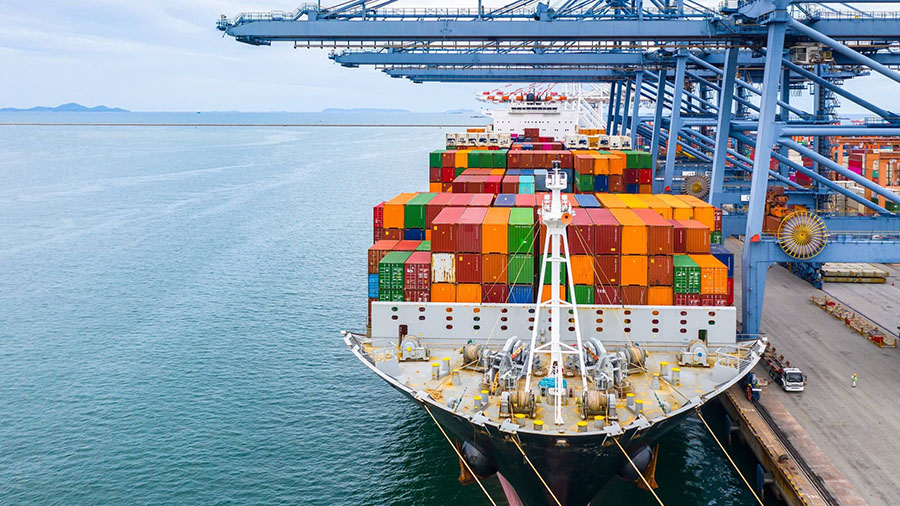
However, risk still transfers at the loading stage, not arrival.
Under CIF:
Seller (Factory) responsibilities:
- Production and QC
- Export documentation and clearance
- Inland logistics to port
- Ocean freight booking and payment
- Basic marine insurance
Buyer responsibilities:
- Import clearance
- Duties and taxes
- Inland delivery after destination arrival
CIF = Factory controls shipping arrangement and cost to destination port
CIF vs FOB: Key Differences in Real Garment Sourcing
In real garment sourcing, CIF and FOB differences go beyond pricing—they define who controls the entire logistics decision chain.
FOB gives buyers direct control over freight forwarders, shipping routes, and cost negotiation, while CIF centralizes these decisions at the factory side, reducing buyer involvement but also reducing transparency.
From a manufacturing perspective, this difference becomes especially important during peak shipping seasons, when freight rates fluctuate frequently and routing decisions can significantly impact total landed cost.
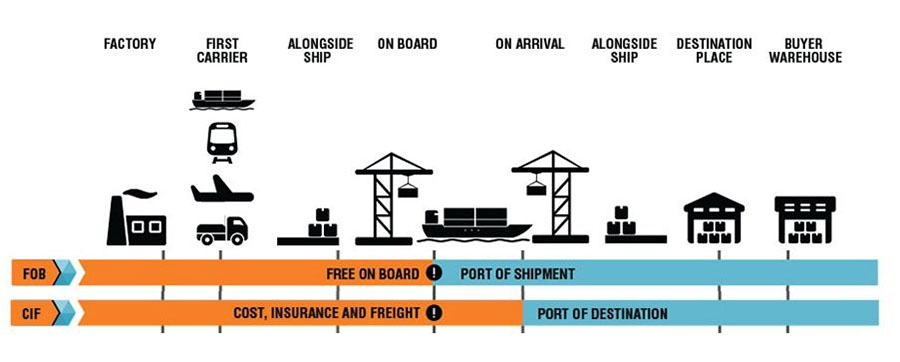
Shipping Responsibility Differences (How Logistics Is Controlled)
Under FOB, the factory handles production and export procedures up to vessel loading. After that, the buyer takes over international shipping management, including freight booking, insurance selection, and carrier decisions.
Under CIF, the factory continues responsibility beyond production by booking and paying for ocean freight and arranging basic insurance. The buyer only steps in at destination port for import clearance.
Key difference:
- FOB = Buyer controls logistics after port loading
- CIF = Factory controls logistics up to destination port
CIF vs FOB Price Difference (Real Garment Case Example)
To clearly understand pricing differences, let’s use a real apparel sourcing scenario:
A brand orders 10,000 basic cotton T-shirts (180gsm, 100% cotton) from a factory in China.
FOB Shenzhen Price Breakdown:
- Fabric + production cost: $2.10 / piece
- Inland trucking + export handling: $0.15 / piece
FOB Price = $2.25 / piece
Total FOB value:
10,000 pcs × $2.25 = $22,500
CIF Los Angeles Price Breakdown:
- FOB production cost: $2.25 / piece
- Ocean freight: $0.35 / piece
- Marine insurance: $0.05 / piece
CIF Price = $2.65 / piece
Total CIF value:
10,000 pcs × $2.65 = $26,500
Key Observation from This Example
- FOB price includes production + export handling only
- CIF price includes FOB cost + freight + insurance
- The price difference ($0.40 / piece in this case) represents international logistics costs controlled by the seller in CIF
However, in real trade, this difference is not fixed. CIF pricing can vary depending on:
- Shipping line selection
- Seasonal freight fluctuations
- Insurance coverage level
- Port congestion and fuel surcharges
This means CIF pricing is often less transparent compared to FOB, where buyers can directly negotiate freight independently.
Which Incoterm Do Buyers Prefer in Real Apparel Trade, and When to Use Each?
In apparel sourcing practice, FOB is generally the dominant model, especially for experienced buyers. The main reason is that FOB allows buyers to actively manage logistics costs and select freight partners based on performance, price, and reliability.
FOB is preferred when:
- Buyers have established freight forwarders
- Orders are large (full container shipments)
- Cost optimization is a priority
- Buyers want transparency in shipping costs
- Brands operate long-term supply chain systems
CIF is more commonly used when simplicity is more important than control. It reduces coordination work by shifting freight and insurance responsibilities to the factory.
CIF is preferred when:
- Buyers are new to international sourcing
- There is no logistics team or freight partner
- Order volume is small or irregular
- Buyers want a simplified “one price to port” structure
- Speed of procurement matters more than optimization
In real apparel supply chains, FOB is usually the long-term preferred model, while CIF is often used as an entry-level sourcing solution.
Conclusion
Whether you choose CIF or FOB, it is essential to clearly understand the strengths and limitations of each Incoterm, and how they align with your brand’s sourcing strategy, cost structure, and supply chain control requirements.
In real apparel trade, there is no “one-size-fits-all” solution. FOB offers greater flexibility and control over logistics and freight optimization, while CIF provides a more simplified sourcing process with shipping and insurance managed by the supplier. The right choice depends on your operational capability, experience level, and overall business goals.
we support global apparel brands under both FOB and CIF terms through high-quality garment manufacturing and professional export coordination. No matter which trade term you choose, our goal is to work closely with you to solve production and logistics challenges, reduce sourcing complexity, and build a reliable, long-term partnership that creates mutual success for both sides