In international apparel manufacturing and sourcing, trade terms such as EXW, FOB, CIF, and FCA are essential rules that define how responsibilities, costs, and risks are shared between buyers and sellers. For global clothing brands importing garments such as T-shirts, hoodies, sweatpants, and jackets from China, understanding these terms is critical because they directly impact logistics efficiency, pricing structure, and supply chain control.
Among these terms, FCA (Free Carrier) is a flexible and widely used Incoterm in modern international logistics, especially for air freight, sea freight, rail transport, and multimodal shipping. It is particularly suitable for apparel buyers who need more control over logistics arrangements while still allowing the supplier to handle export procedures in the origin country.
This article explains FCA from a professional garment manufacturing perspective, helping you clearly understand how it works in real apparel trade.
What Is FCA (Free Carrier) in Apparel Trade?
FCA (Free Carrier) is an international trade term where the seller delivers the goods to a named place in the origin country, and the responsibility and risk transfer to the buyer once the goods are handed over to the buyer’s nominated carrier or logistics provider. In apparel sourcing, FCA is widely used because it provides a clear separation between export-side responsibility and international shipping control.
Under FCA terms, the seller is responsible for completing production, packaging, inland transportation within China, and export customs clearance. After that, the goods are delivered to a specified location such as a freight forwarder’s warehouse, airport terminal, or seaport terminal. From this point onward, the buyer takes over full responsibility for international transportation, import customs clearance, and final delivery.
In simple terms, FCA means the seller completes all export processes and delivers goods to your chosen logistics point, and you take control of the shipment from there.
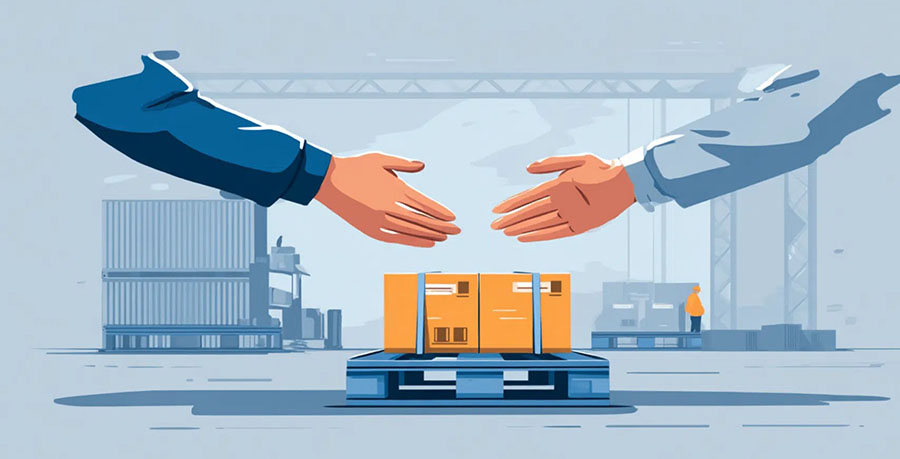
FCA Example in Real Apparel Trade (Practical Explanation)
To better understand FCA in real apparel sourcing, imagine you are working with a garment factory in China to purchase a batch of hoodies, and you agree on FCA Shenzhen Port terms.
Under this arrangement, the factory is responsible for completing production, quality control, packaging, and export customs clearance in China. After these export formalities are completed, the goods are delivered to a nominated logistics point such as a freight forwarder’s warehouse or directly to a port terminal in Shenzhen.
At this point, the responsibility shifts away from the supplier. Even though the seller has already handled all China-side export work, you become responsible for the shipment once your appointed carrier receives the goods at the agreed location. From that moment onward, you control the international transportation process, including freight booking, main carriage arrangement, and import procedures in your destination country.
In practical terms, this means the supplier ensures the goods are legally exported and properly handed over in China, but you are the one who decides how the goods will be shipped overseas and who manages the logistics performance and risk during transit.
In FCA trade, the key idea is not “who ships the goods first,” but “who takes over control at the named handover point.”
Responsibilities of Buyer and Seller under FCA
In FCA (Free Carrier) trade terms, the responsibilities of buyers and sellers are clearly divided at the named place of delivery, and this division determines how the entire logistics process is managed in international apparel sourcing.
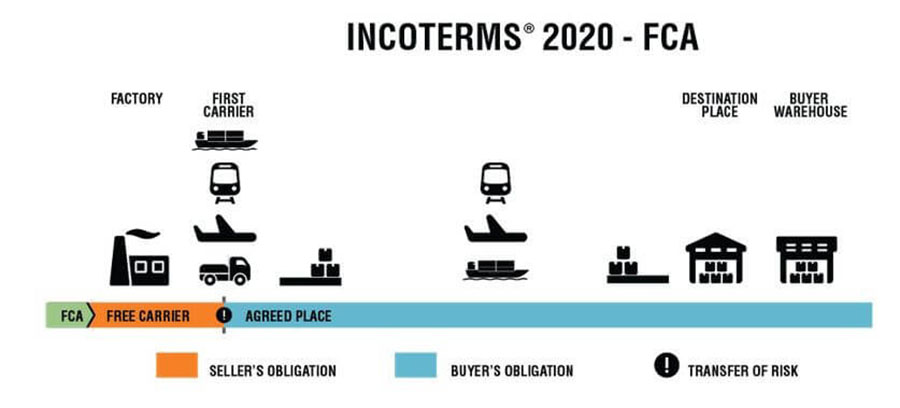
Seller’s Responsibilities (Your Supplier in China)
Under FCA terms, the seller is mainly responsible for completing all production and export-side obligations before handing the goods over to your nominated carrier. In apparel trade, this includes:
- Producing garments according to your specifications
- Quality control, packaging, and labeling
- Inland transportation within China to the named place (port, airport, or warehouse)
- Export customs declaration and clearance
- Providing necessary export documents (invoice, packing list, etc.)
- Delivering goods to your nominated forwarder or carrier
In simple terms, the seller is responsible for getting your goods ready and legally exported from China, then delivering them to your designated logistics point.
Once the goods are handed over at the named place, the seller’s responsibility and risk end completely.
Buyer’s Responsibilities (You as Importer)
For you as the buyer, FCA shifts the responsibility to the international logistics stage. After receiving the goods at the named place, you will need to:
- Arrange international freight (air, sea, or multimodal transport)
- Bear transportation risk after handover to carrier
- Handle import customs clearance in your destination country
- Pay import duties, taxes, and related fees
- Organize inland delivery from destination port to your warehouse or facility
In simple terms, you take control of the shipment after export completion, including all international transportation and import operations.
The most important feature of FCA is the clear separation of responsibilities at the handover point:
- Seller handles: production + China inland logistics + export clearance
- Buyer handles: international shipping + import process + final delivery
This structure gives you more control over global freight decisions while still relying on the supplier to complete export formalities in China, making FCA a balanced option for experienced apparel importers.
What Is FCA Price in Apparel Trade?
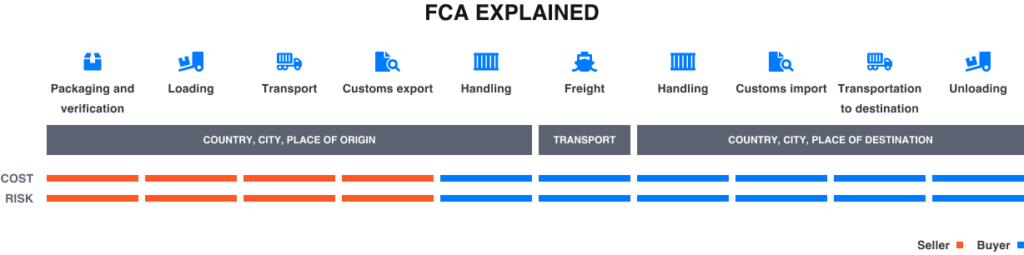
In international apparel sourcing, FCA price (Free Carrier price) refers to a quotation that includes all costs required for the seller to deliver goods to a named place in the exporting country, but does not include international freight or import-related costs. Compared with EXW, FCA price is more complete because it already covers export procedures and inland logistics within China.
Under FCA terms, the seller calculates the price based on:
- Garment production cost
- Packaging and quality control
- Inland transportation in China (factory to port/forwarder warehouse)
- Export customs clearance and documentation
- Delivery to the agreed named place
In simple terms, FCA price = factory production cost + China-side logistics + export clearance.
For example, if you are purchasing 12,000 hoodies from a factory in Dongguan under FCA Shenzhen Port terms, the FCA quotation you receive from the supplier will already include all China-side logistics costs.
Let’s break it down:
- Fabric and production cost: $36,000
- Cutting, sewing, printing, finishing: $4,000
- Packaging and quality control: $2,000
- Inland trucking to Shenzhen port: $1,200
- Export customs clearance and documentation: $800
FCA total price = $44,000
At this stage, the seller has already completed production, export clearance, and delivery to the nominated logistics point.
However, you still need to handle:
- International freight from China to destination country
- Import customs clearance and taxes
- Insurance (if required)
- Final delivery to your warehouse
As an apparel importer, FCA pricing is useful when you want:
- A clearer quotation that already includes export handling
- Better control over international freight negotiation
- A balance between supplier support and logistics independence
In practice, FCA price is often used by experienced buyers who want to avoid export complexity in China while still maintaining control over global shipping costs.
Advantages and Disadvantages of FCA
In FCA (Free Carrier) trade terms, the advantages and disadvantages for both buyers and sellers mainly come from the fact that export responsibility stays with the seller, while international logistics responsibility shifts to the buyer at the named place. This creates a balanced but responsibility-split structure in real apparel sourcing.
Advantages for Buyers
- The seller handles production, packaging, and export customs clearance in China, which reduces your operational burden
- You gain more control over international freight selection and pricing, allowing better logistics optimization
- Suitable for buyers who already work with freight forwarders or logistics partners in China
In practice, FCA helps you avoid complex export procedures while still maintaining control over global shipping decisions.
Disadvantages for Buyers
- You still bear transportation risk immediately after goods are handed to the carrier
- You must independently manage international shipping and import clearance
- Without an experienced logistics partner, cost control and coordination can become challenging
This means FCA is not fully “hands-off” like DDP, and still requires logistics capability from your side.
Advantages for Sellers
- The seller only needs to handle domestic logistics and export clearance, reducing international shipping complexity
- Lower exposure to risks related to long-distance transportation
- More predictable operational responsibilities within China
FCA allows suppliers to focus on production and export procedures without managing overseas freight.
Disadvantages for Sellers
- The seller must ensure accurate export documentation and timely delivery to the named place
- Limited control after handover to the buyer’s carrier
- Coordination is required with multiple logistics parties in some cases
This means the seller’s responsibility ends earlier, but execution at the handover point must be precise to avoid disputes.
Who Pays Customs Clearance Costs under FCA ?
In FCA trade, customs clearance costs are an important part of the overall landed cost structure, and they can significantly influence your final import budget in apparel sourcing. Unlike simpler pricing assumptions, customs-related expenses are not bundled into a single “shipping fee,” but instead are split across different stages of the cross-border logistics chain.
When you work with FCA terms, customs costs typically fall into two categories: export-side clearance costs in the origin country and import-side clearance costs in the destination country. These costs may include documentation fees, customs inspection charges, declaration service fees, import duties, VAT, and handling charges at customs terminals.
In practical apparel trade, this means you must always evaluate FCA quotations beyond the product price itself, because customs-related expenses can vary depending on shipment value, product category, inspection frequency, and destination country regulations.
Another key point is that customs clearance is not only a financial cost but also a time-sensitive operational step. Delays in customs processing—whether at export or import—can affect production schedules, delivery timelines, and even retail launch plans for fashion brands.
FCA vs EXW vs FOB in Apparel Trade
In international apparel sourcing, FCA, EXW, and FOB are three closely related trade terms, but they differ significantly in how far the seller is responsible in the logistics chain and where risk transfer occurs. Understanding these differences helps you choose the most suitable sourcing structure based on your experience and logistics capability.
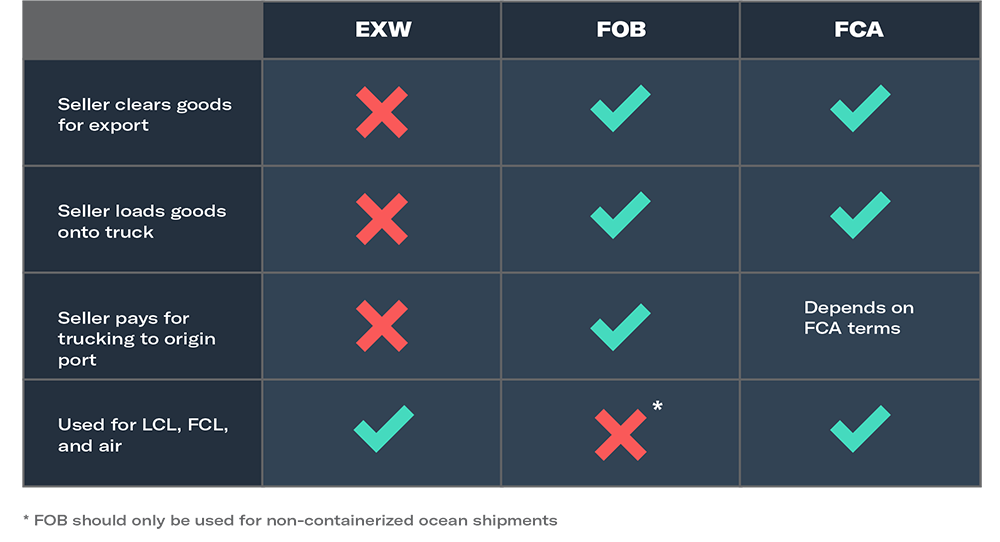
FCA vs EXW
The key difference between FCA and EXW lies in export responsibility and logistics involvement in the origin country.
- EXW (Ex Works): The seller only makes the goods available at the factory, and you handle everything including pickup, export customs, and shipping
- FCA (Free Carrier): The seller delivers goods to a named place and completes export customs clearance before handover
In simple terms: FCA = export handled by seller, EXW = export handled by buyer.
FCA vs FOB
FCA and FOB are similar in that both involve export handling by the seller, but they differ in transport mode flexibility and delivery point definition.
- FOB (Free On Board): Used only for sea freight, and the seller delivers goods onto the vessel at the port
- FCA (Free Carrier): Can be used for air, sea, rail, or multimodal transport, and delivery happens at any agreed named place
In simple terms: FOB is port-to-port sea shipping, FCA is more flexible and modern logistics-oriented.
Conclusion
FCA (Free Carrier) is a highly practical and flexible international trade term in apparel sourcing, especially for buyers who want to maintain control over international freight while still relying on suppliers to handle production and export customs clearance in China. It creates a clear and efficient division of responsibilities at the named place, making it easier to coordinate global logistics without losing visibility over the export process.
As an apparel buyer, understanding FCA helps you better evaluate supplier quotations, manage logistics risks, and optimize your supply chain structure. Choosing the right trade term is not only about price, but also about balancing control, efficiency, and operational complexity in real import and export transactions.
As a professional garment manufacturing company, we have extensive experience in apparel production and international export, and we are able to provide comprehensive solutions to support your business across product development, manufacturing, and global logistics coordination. If you need any assistance or have any questions regarding FCA or apparel sourcing from China, please feel free to contact us at any time.