A sweater can change the whole look of an outfit, but that does not automatically make it an accessory. In apparel, product categories matter because they affect design, sourcing, merchandising, and customer expectations. A sweater may support styling like an accessory in some situations, but in most product systems it is still treated as a core garment.
A sweater is usually not classified as an accessory. In most apparel and retail terms, a sweater is a clothing item, specifically an upper-body knitwear garment. Accessories usually include products like scarves, hats, belts, bags, or jewelry, while sweaters belong to the main apparel category.
At Fusionknits, this question matters because category language affects product development and communication. A sweater can act like a styling tool, and it can even be used in a decorative way, but from a manufacturing and merchandising perspective, it is still normally developed, costed, and sold as a garment rather than as an accessory.
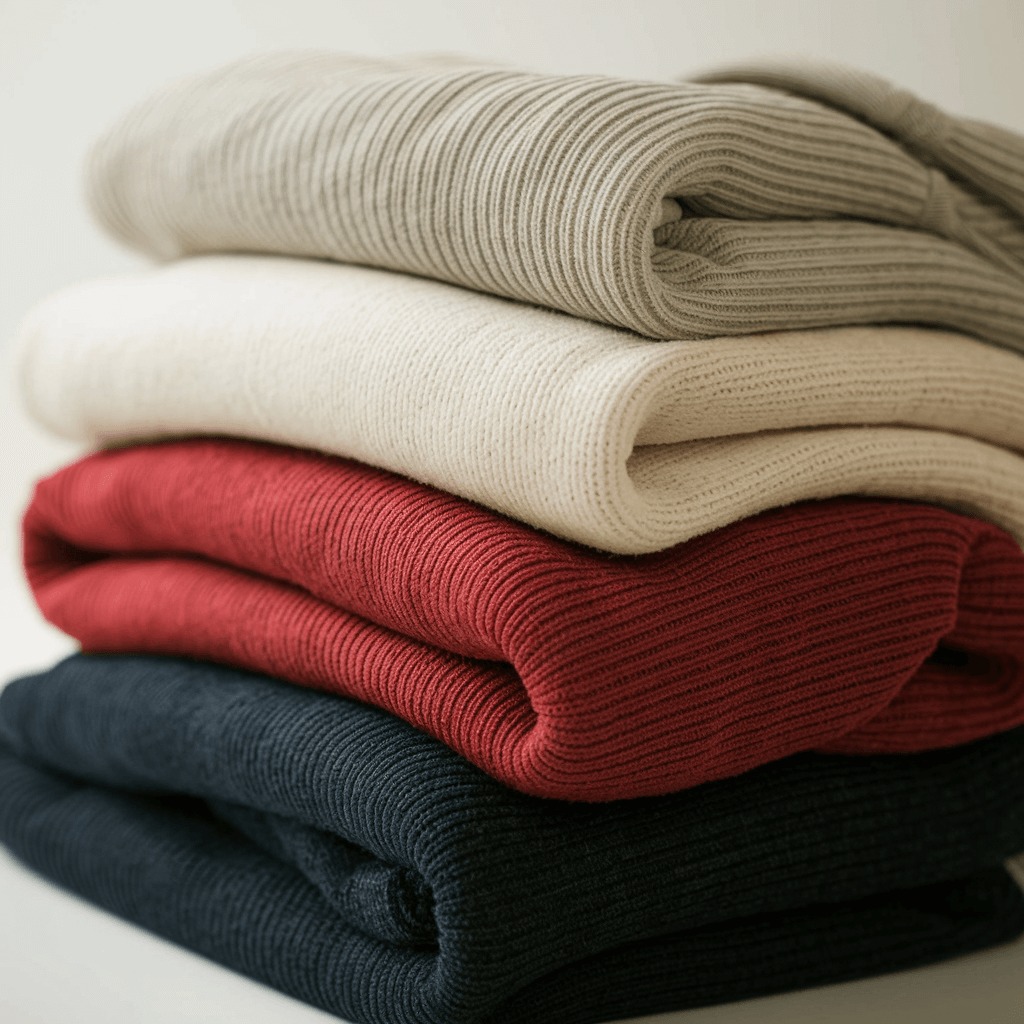
Why is a sweater usually considered clothing rather than an accessory?
A sweater is worn on the body as a main garment. It provides coverage, warmth, shape, and direct outfit structure. That places it in a different category from products that support or decorate an outfit without acting as a main clothing layer.
A sweater is usually considered clothing rather than an accessory because it functions as a primary wearable garment. It covers the upper body, contributes to fit and silhouette, and is developed as part of the main apparel line rather than as an add-on product.
From a manufacturing point of view, this distinction is important. A sweater needs body measurements, fit development, yarn planning, gauge control, and garment construction. Accessories usually do not follow the same level of full-body fit engineering. That difference alone shows why a sweater belongs to apparel first.
At Fusionknits, sweaters are treated as core knitwear products because they depend on garment blocks, size grading, sleeve proportion, neckline balance, and body length. Those are clothing decisions, not accessory decisions.
Why sweaters belong to the clothing category
- They cover the upper body
- They affect overall silhouette
- They require size grading
- They need full garment construction
- They function as a main layering piece
Why accessories are different
Accessories usually support the outfit
They add detail, function, or decoration, but they are not usually the main body garment.
Accessories often require less body fit engineering
A scarf, hat, or bag does not use the same sizing logic as a sweater.
Accessories are usually secondary in wear order
A sweater often comes earlier in outfit building because it shapes the whole upper-body look.
A simple category comparison
| Product type | Typical category role |
|---|---|
| Sweater | Main apparel garment |
| Scarf | Accessory |
| Belt | Accessory |
| Hat | Accessory |
| Cardigan | Main knitwear garment |
That is why a sweater is normally classified as clothing, not as an accessory.
What is the real difference between a garment and an accessory?
This is the key question behind the whole topic. Many people use the words loosely, but in fashion product development the distinction is practical and important.

The real difference is that a garment is a primary piece of clothing worn on the body as part of the main outfit, while an accessory is usually an additional item that supports, decorates, or completes the look. A sweater usually qualifies as a garment because it has full clothing function rather than secondary styling function.
A garment is usually built around body coverage, fit, and structure. An accessory may still be wearable, but it normally sits around or alongside the main garments instead of replacing one of them. A sweater is not just decorative. It is often one of the central pieces of the outfit.
At Fusionknits, this distinction is useful because garments and accessories move through different product planning systems. The materials, measurements, sampling methods, and retail logic are often completely different.
What usually defines a garment
- Covers part of the body in a main way
- Requires fit development
- Uses garment construction logic
- Belongs to tops, bottoms, dresses, or outerwear families
- Has strong influence on silhouette
What usually defines an accessory
- Adds function or decoration
- Supports the outfit instead of forming its main structure
- Often includes bags, hats, scarves, gloves, belts, jewelry
- Usually has simpler size logic
- Often carries lower garment-construction complexity
Why this matters in apparel business
It affects merchandising
Garments and accessories are usually displayed and categorized differently.
It affects production
A sweater uses knitwear manufacturing systems, not accessory production systems.
It affects pricing logic
A main garment often carries different value expectations than a supporting accessory.
Garment vs accessory overview
| Category question | Garment | Accessory |
|---|---|---|
| Covers the body as main wear | Yes | Usually no |
| Needs fit and size development | Yes | Less often |
| Completes or decorates an outfit | Sometimes | Usually yes |
| Main product in outfit planning | Yes | Usually no |
That is why a sweater sits much more clearly in the garment category.
Can a sweater ever function like an accessory?
Yes, but this is about styling behavior, not formal product classification. A sweater can sometimes be used in a way that behaves like an accessory even though it still remains a garment by category.
Yes, a sweater can function like an accessory in styling when it is draped over the shoulders, tied around the waist, or used mainly to add visual interest rather than to serve as the main worn garment. But even in that case, it is still classified as a sweater, not reclassified as an accessory.
This is where many people become confused. In fashion styling, garments can sometimes take on accessory-like roles. A knit tied over the shoulders can add color, layering effect, or texture in a way that feels similar to a scarf. But the product itself does not stop being a sweater.
At Fusionknits, this difference matters because brands sometimes build styling campaigns that show a sweater as a decorative layer. That can influence marketing, but it does not change the technical product category.
Situations where a sweater behaves like an accessory
- Draped over the shoulders
- Tied around the waist
- Used to add contrast color
- Carried for styling effect in transitional weather
- Layered lightly over another garment without being fully worn
Why this does not change the category
Styling role is not the same as product classification
A product can be styled differently without becoming a different category.
The construction is still garment-based
The sweater still has sleeves, body shape, neck opening, and full apparel structure.
Merchandising still treats it as knitwear
Retailers do not usually move sweaters into accessories just because of styling campaigns.
Styling-role comparison
| Use case | Still a sweater? | Acting like accessory? |
|---|---|---|
| Fully worn on body | Yes | No |
| Draped on shoulders | Yes | Yes, stylistically |
| Tied around waist | Yes | Yes, visually |
| Folded in a bag | Yes | No |
So yes, a sweater can sometimes behave like an accessory in styling, but it is still not officially an accessory.
Why do some people think sweaters are accessories in fashion?
This usually comes from styling culture rather than product classification. In fashion imagery, a sweater is sometimes used to add polish, color, layering depth, or preppy visual detail even when it is not fully worn.
Some people think sweaters are accessories because sweaters can be used as visible styling tools. When a sweater is wrapped over the shoulders or tied around the body, it starts to feel like an accessory in visual terms. But this is a styling interpretation, not a formal apparel definition.
From a commercial perspective, fashion photography often blurs category lines for visual effect. A sweater may be used to frame a shirt, soften a blazer look, or add a color highlight to a simple outfit. That makes it feel accessory-like, especially in editorial or lifestyle presentation.
At Fusionknits, this kind of styling is useful because it expands how customers imagine using the garment. But the product team still develops the sweater as knitwear, not as an accessory item.
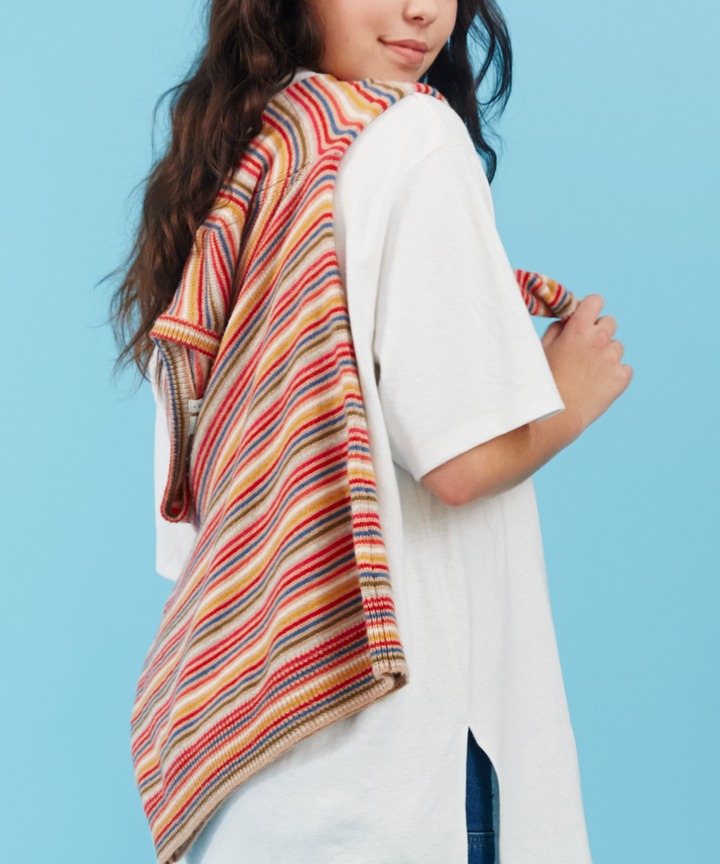
Why sweaters can feel accessory-like in fashion images
- They add color
- They add texture
- They create a layered styling story
- They can be worn decoratively
- They support seasonal transitions
Why fashion imagery can blur categories
The visual role becomes more important than function
The sweater may be used for style impact rather than warmth.
Editorial looks often prioritize mood
In styling, the product may be shown as a signal of taste rather than as a basic necessity.
The audience sees outfit effect first
That can make the sweater appear secondary even when it is still a main garment category.
Fashion-perception overview
| Reason for confusion | What is really happening |
|---|---|
| Sweater adds polish | Styling effect, not category change |
| Sweater tied over shoulders | Decorative use, still knitwear |
| Sweater used like color accent | Visual accessory role, not technical accessory |
So the confusion usually comes from styling language, not from real apparel classification.
Is a cardigan closer to an accessory than a pullover sweater?
Not really in formal category terms. A cardigan may feel more flexible because it opens in front and can be layered more easily, but it is still a garment. Its flexibility does not move it into the accessory family.
A cardigan is not closer to an accessory in product classification. Like a pullover sweater, it is still a knitwear garment. It may feel more versatile in styling because it can be opened, draped, or layered differently, but that does not make it an accessory.
This question matters because cardigans often look more adaptable than pullovers. They can act almost like a light jacket, a soft layer, or a decorative shoulder piece. But the base product logic remains garment-based.
At Fusionknits, both pullovers and cardigans are developed as knitwear garments. The cardigan simply has a different construction route because of the front opening.
Why cardigans may seem more accessory-like
- They are easier to layer
- They can be worn open
- They can be draped more naturally
- They sometimes feel lighter visually
- They can behave more flexibly in outfit styling
Why cardigans are still clearly garments
They still cover the body as a main item
The front opening does not change the fact that they are upper-body garments.
They still need fit and grading
Cardigans require body proportion and construction planning.
They still belong to knitwear lines
They are merchandised and produced as apparel, not accessories.
Cardigan vs pullover comparison
| Knitwear type | Main category |
|---|---|
| Pullover sweater | Garment |
| Cardigan | Garment |
| Sweater vest | Garment |
| Shawl or wrap scarf | Accessory or accessory-adjacent |
So a cardigan may look more flexible in styling, but it still does not become an accessory.
How are sweaters categorized in retail and manufacturing?
In both retail and manufacturing, sweaters are almost always placed inside apparel or knitwear rather than inside accessories. This matters because it shapes how they are developed, sold, and managed.
In retail and manufacturing, sweaters are usually categorized as apparel, specifically in knitwear or tops. They are developed through garment systems such as size grading, fit review, yarn planning, and construction control, while accessories are usually handled through separate product logic.
From a factory point of view, sweaters belong to a product family that includes pullovers, cardigans, sweater vests, and related knit tops. They need body measurements, fit approval, and full sample review. Accessories like hats or scarves may use similar yarns, but they do not move through the same full garment workflow.
At Fusionknits, this difference is important because product planning becomes clearer when category language is correct.
Where sweaters usually sit in product systems
- Apparel
- Knitwear
- Tops
- Seasonal layering products
- Sweater or knit collections
Where accessories usually sit
- Scarves
- Hats
- Gloves
- Bags
- Belts
- Small wearable add-ons
Why correct category placement matters
It affects technical packs
A sweater needs garment points of measurement, not accessory-only specs.
It affects factory choice
Sweaters usually require knitwear manufacturers, not accessory-only suppliers.
It affects retail logic
The customer expects sweaters in apparel sections, not accessory displays alone.
Category placement guide
| Product | Usual retail/manufacturing category |
|---|---|
| Sweater | Apparel / knitwear |
| Cardigan | Apparel / knitwear |
| Scarf | Accessory |
| Beanie | Accessory |
| Gloves | Accessory |
That is why a sweater is normally treated as a garment in every serious product system.
Can a sweater be merchandised with accessories?
Yes, very often. This is where category and merchandising should be separated. A sweater may be sold near accessories or styled with them, but that still does not change what it is.
Yes, a sweater can absolutely be merchandised with accessories. It may be styled with scarves, bags, hats, or jewelry, and it may even be displayed in coordinated outfit stories. But being sold alongside accessories does not make it one.
This is common in retail because brands want customers to imagine full outfits. A sweater may be shown next to a belt, handbag, and boots. That is merchandising strategy, not category redefinition.
At Fusionknits, this distinction matters because brands often create full styling stories around knitwear, but the production and classification side still treats the sweater as a garment.
Why sweaters are often shown with accessories
- To build outfit value
- To increase cross-selling
- To communicate brand mood
- To make seasonal styling easier
- To support visual merchandising
Why merchandising does not change category
Display is not classification
Products may be grouped visually without belonging to the same technical family.
Outfit styling is broader than product type
Many different product types work together in one retail image.
The sweater still carries main garment function
It remains one of the core wearable pieces.
Merchandising overview
| Display choice | Product category result |
|---|---|
| Sweater shown with scarf | Sweater stays garment |
| Sweater styled with jewelry | Sweater stays garment |
| Sweater in lifestyle set | Sweater stays garment |
So yes, sweaters are often sold with accessories, but they are not accessories themselves.
Why does it matter whether a sweater is called an accessory?
This may sound like a small wording issue, but it affects product communication, sourcing accuracy, and even how customers understand the item.
It matters because calling a sweater an accessory can confuse product expectations. A sweater needs garment-level fit, size, construction, and quality control. Accessories follow different development systems, so the wrong category language can create technical and commercial confusion.
From a manufacturing point of view, wrong category language may not always stop development, but it weakens clarity. A garment team needs to know whether it is building apparel or add-ons. A sweater must be treated with the seriousness of a core garment, not the simplicity of a small accessory item.
At Fusionknits, category clarity always improves product development because it aligns design, sourcing, and merchandising from the beginning.
What correct classification helps with
- Better product briefs
- Better sourcing routes
- Better costing accuracy
- Better retail positioning
- Better customer understanding
What wrong classification can weaken
Fit expectations
A sweater should not be discussed as if size and silhouette are secondary.
Product value
A main garment often carries different quality standards than an add-on item.
Collection structure
A brand usually builds apparel and accessories in different product layers.
Product-language guide
| Category label | Result |
|---|---|
| Sweater as garment | Clear development logic |
| Sweater as accessory | Confusing product logic |
| Sweater used decoratively | Fine in styling, not in classification |
That is why the language matters more than it first appears.
So is a sweater an accessory or not?
This is the final answer behind the whole topic. A sweater may sometimes support styling like an accessory, but in real product terms it is still a garment.
No, a sweater is usually not an accessory. It is a knitwear garment, part of the main apparel category. It may function like an accessory in some styling situations, but in manufacturing, retail, and product development it is normally classified as clothing rather than as an accessory.
At Fusionknits, this is the clearest and most useful answer because it supports both product accuracy and commercial clarity. A sweater belongs to knitwear first. Its styling flexibility does not change that.
Conclusion
A sweater is usually not an accessory. It is a clothing item, specifically a knitwear garment designed to cover the upper body and function as a main part of the outfit. Accessories usually support or decorate the look, while a sweater helps build the core silhouette, warmth, and structure of the outfit. Even when a sweater is draped over the shoulders or tied around the waist and starts to behave like a styling tool, it is still classified as a sweater rather than as an accessory.
From a professional apparel manufacturing perspective, this distinction is important because sweaters require garment-level planning, not accessory-level planning.
At Fusionknits, sweaters are always treated as core knitwear products because they depend on fit, yarn, gauge, construction, and body proportion. They may sometimes act like accessories in visual styling, but in real product development they remain what they are: garments.