The word “cardigan” is widely used in apparel, but buyers, designers, retailers, and consumers do not always use the same term in every context. In some cases, people use a direct synonym. In other cases, they use a broader product name, a retail label, or a style-specific term that overlaps with cardigan construction. This is why the same garment may be described differently in sourcing, product development, and consumer-facing language.
Another word for cardigan can be sweater, cardigan sweater, knit jacket, button-front sweater, open-front sweater, or knitwear layer, depending on the context. However, the most accurate alternative usually depends on whether the goal is technical classification, retail communication, or general everyday language.
At Fusionknits, this question matters because correct naming improves product development, tech pack clarity, and buyer communication. A cardigan is not only a fashion word. It is also a product category with clear structural meaning. When the naming is too loose, the risk of sourcing confusion becomes much higher.
Is “sweater” another word for cardigan?
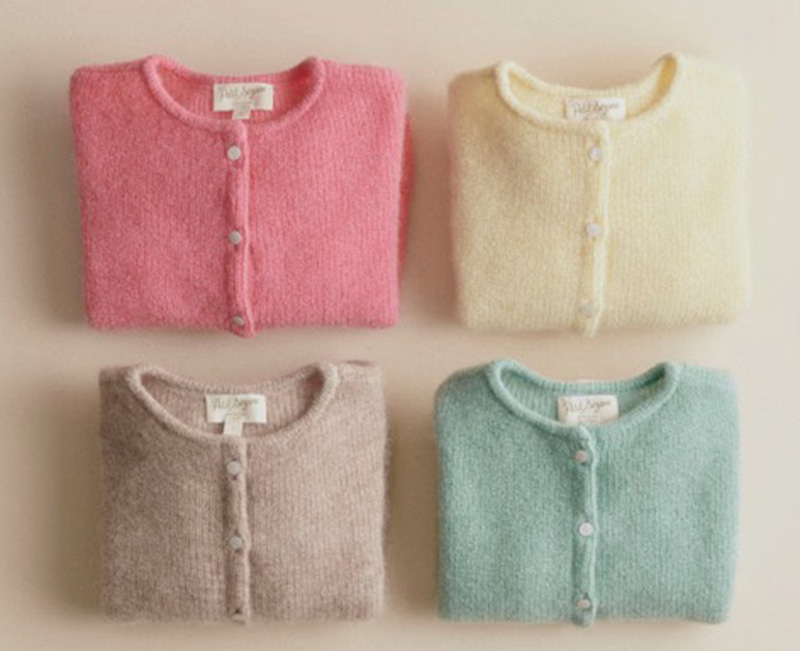
In casual conversation, many people use “sweater” as a broad alternative to cardigan. This is understandable, but it is not always precise. A cardigan belongs to the sweater family, yet not every sweater is a cardigan.
Yes, “sweater” can be used as another word for cardigan in broad or casual language, but it is not the most exact term. A cardigan is a specific type of sweater that opens in the front, while “sweater” is a broader category that also includes pullovers, crewnecks, turtlenecks, and other knitwear garments.
From a manufacturing perspective, this distinction is important. If a buyer says only “sweater,” the supplier still has to ask whether the garment is a pullover or a front-opening piece. A cardigan has different construction needs because it includes front bands, plackets, or closure support.
At Fusionknits, “sweater” is acceptable as a broad category term, but “cardigan” is the stronger technical word when the product opens at the front.
Why “sweater” is only a partial alternative
- It is broader than cardigan
- It does not confirm front opening
- It includes many knitwear types
- It is more general than technical
Why this matters in garment development
Category clarity affects sampling
A cardigan and a pullover do not share the same front construction.
Broader words increase interpretation risk
The more general the term, the more assumptions a factory may make.
Product families still need subcategories
“Cardigan” works best when more construction accuracy is needed.
A simple category comparison
| Term | Meaning |
|---|---|
| Sweater | Broad knitwear category |
| Cardigan | Front-opening sweater type |
| Pullover | Non-opening sweater type |
So yes, “sweater” can be another word for cardigan in loose conversation, but it is not always the best professional substitute.
Is “cardigan sweater” the most common alternative term?
Yes, in many retail and merchandising contexts, “cardigan sweater” is one of the most common alternatives. It does not replace the word cardigan. Instead, it expands it into a clearer consumer-facing phrase.
Yes, “cardigan sweater” is one of the most common alternative ways to say cardigan, especially in retail, e-commerce, and product listings. It is often used because it combines the specific cardigan category with the broader sweater category, making the product easier for shoppers to understand quickly.
In consumer markets, retailers often use longer labels because they improve product clarity. “Cardigan sweater” sounds more complete in a product title than simply “cardigan,” especially when the goal is search visibility or easier navigation in online stores.
At Fusionknits, “cardigan sweater” is often a strong choice for commercial product naming because it works well in both buyer communication and retail-facing descriptions.
Why “cardigan sweater” is used so often
- It sounds clear in product titles
- It helps shoppers understand the category quickly
- It works well in e-commerce systems
- It reduces ambiguity for broader audiences
Why the longer term is useful
It combines general and specific meaning
The shopper sees both the subcategory and the overall garment family.
Retail systems often sort products by more descriptive labels.
It still keeps the cardigan identity clear
The term is longer, but the meaning stays accurate.
Product-name overview
| Term | Typical use |
|---|---|
| Cardigan | Standard category name |
| Cardigan sweater | Retail-friendly alternative |
| Sweater | Broader garment family |
This is why “cardigan sweater” is often the strongest alternative in commercial language.
Can “knit jacket” be another word for cardigan?
Sometimes yes, but only in certain product situations. A knit jacket may overlap with cardigan design, especially when the garment has more structure, heavier yarn, or a more tailored appearance. Still, the two terms are not always interchangeable.
Yes, “knit jacket” can sometimes be another word for cardigan when the cardigan is more structured, heavier, or more outerwear-like. However, this term is usually better for cardigan styles that behave like soft jackets rather than for classic lightweight or fine-gauge cardigans.
From a product development perspective, a shawl-collar cardigan, zip-up cardigan, or heavily structured front-opening knit may move closer to knit-jacket territory. But a fine-gauge button-front office cardigan would usually still be better described simply as a cardigan.
At Fusionknits, “knit jacket” is used more carefully because it suggests more structure, more weight, and a slightly different product expectation.
When “knit jacket” works as an alternative
- The cardigan has more body structure
- The yarn is heavier
- The silhouette feels closer to outerwear
- The collar or placket feels more substantial
- The product is intended as a top layer
When it does not work well
Very lightweight cardigans
These usually feel too soft and too basic to be called jackets.
Fine-gauge office cardigans
They usually belong more clearly in the classic cardigan category.
Soft open-front draped cardigans
These are generally too fluid to be described as jackets.
Cardigan versus knit-jacket view
| Term | Best use context |
|---|---|
| Cardigan | Broad front-opening knitwear category |
| Knit jacket | More structured cardigan-like garment |
| Open-front sweater | Softer and lighter use case |
So “knit jacket” can be another word in some cases, but it is a selective alternative rather than a universal replacement.
Yes, in functional product language, “button-front sweater” is one of the clearest descriptive alternatives. It may not sound as elegant as “cardigan,” but it communicates the structure very clearly.
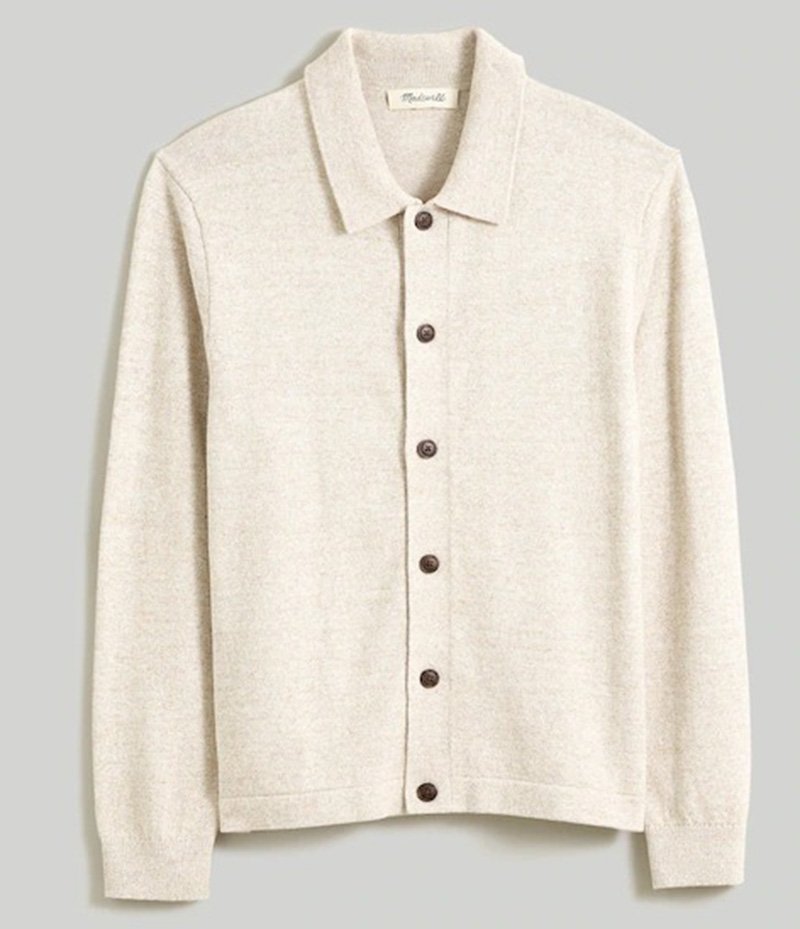
Yes, “button-front sweater” can be another name for cardigan, especially when the cardigan has a classic front placket and button closure. This term is more descriptive than category-based, but it works well when the goal is to explain the garment’s construction quickly and directly.
This kind of phrase is especially useful in technical communication or simplified product descriptions. It explains what the garment does rather than relying only on category vocabulary. However, it does not cover open-front or zip-up cardigan types.
At Fusionknits, “button-front sweater” is useful when the goal is descriptive accuracy, especially in tech discussions or clearer entry-level buyer communication.
- It describes the closure directly
- It helps non-specialist buyers understand the product
- It reduces confusion with pullovers
- It keeps the product inside the sweater family
Why it is limited
It only fits one cardigan type
Not every cardigan has buttons.
It sounds more descriptive than branded
The phrase is functional but not always elegant in retail styling.
It may be too narrow
Zip cardigans and open-front cardigans are excluded.
Descriptive naming overview
| Term | Meaning |
|---|---|
| Button-front sweater | Sweater with button opening in front |
| Cardigan | Broader front-opening knitwear term |
| Open-front sweater | Cardigan without front closure |
That is why “button-front sweater” is a useful alternative, but only for specific cardigan constructions.
What can you call an open-front cardigan instead?
When a cardigan has no buttons or zipper, the naming often shifts toward descriptive phrases rather than classic structural terms. These alternatives are useful in retail and styling language.
An open-front cardigan can also be called an open-front sweater, open knit layer, draped cardigan, or soft knit layer, depending on the style and how the garment is positioned. These terms focus more on wear function and silhouette than on strict category tradition.
Open-front styles often feel softer and more lifestyle-driven than classic button-front cardigans. As a result, the alternative names can become more fluid. The correct choice depends on whether the product is being sold as a basic, a fashion layer, or a soft knit outer piece.
At Fusionknits, open-front cardigan naming often depends on the garment’s drape, weight, and use case.
Common alternatives for open-front cardigan types
- Open-front sweater
- Draped cardigan
- Soft knit layer
- Knit wrap layer
- Open knit jacket in some structured cases
Why naming changes in these styles
The closure no longer defines the product
Without buttons or a zipper, silhouette becomes more important.
The product may feel more fluid
This makes it more likely to be described through styling behavior.
Market position changes the label
A relaxed lounge cardigan may not be described the same way as a tailored knit layer.
Open-front naming guide
| Term | Best use |
|---|---|
| Open-front sweater | Clear and simple retail description |
| Draped cardigan | More fashion-led and silhouette-based |
| Soft knit layer | Broader styling language |
| Knit wrap layer | Selective use for fluid layering garments |
This is why open-front cardigan alternatives are often more descriptive than strictly categorical.
Are “jumper” or “jersey” the same as cardigan?
Not usually in the same way, and this depends a lot on regional English. In some countries, “jumper” or “jersey” may refer broadly to knitwear, but they are not always the best direct substitutes in professional apparel communication.
No, “jumper” or “jersey” are not always the same as cardigan. In some English-speaking regions, “jumper” can mean sweater in general, and “jersey” can also refer to knit garments, but these words are usually too broad or too region-specific to work as precise alternatives for cardigan in professional product development.
From a manufacturing point of view, regional vocabulary can create confusion quickly. A buyer using British-style terms may mean one thing, while a factory reading the term through American-style category language may interpret it differently. For this reason, “cardigan” is usually still the safer and more globally stable term.
At Fusionknits, region-specific language is always clarified during development because category words need to travel accurately across markets.
Why regional terms can be risky
- They may mean different things in different countries
- They may refer to general knitwear, not specifically cardigans
- They may confuse retail naming and factory understanding
- They often lack closure-specific clarity
Why technical language needs more precision
Factories need structural information
A front-opening garment and a pullover cannot be treated the same way.
Retail vocabulary can be more flexible than production vocabulary
The same word may work in a store but fail in a tech pack.
Global communication needs simpler category control
Clearer wording reduces sourcing errors.
Regional-term overview
| Term | Risk level in technical use |
|---|---|
| Cardigan | Low risk |
| Sweater | Moderate risk |
| Jumper | More region-dependent |
| Jersey | Too broad or unclear in many contexts |
So while some regional words may overlap, they are usually weaker alternatives than cardigan, cardigan sweater, or button-front sweater.
What is the best alternative word to use in different situations?
The best alternative depends on context. Technical product development, retail merchandising, and everyday conversation do not always need the same word.
The best alternative word for cardigan depends on the situation. “Sweater” works in broad casual language, “cardigan sweater” works well in retail, “button-front sweater” works in descriptive product explanation, and “knit jacket” works when the cardigan has more outerwear structure. However, in most professional garment contexts, “cardigan” remains the clearest and most accurate main term.
At Fusionknits, naming is chosen based on the goal of the communication. A buyer presentation, a factory tech pack, and an e-commerce title may all use slightly different terms even when the product is the same. The strongest approach is to use the term that delivers the least ambiguity.
Best alternatives by context
- Everyday conversation: sweater
- Retail title: cardigan sweater
- Technical description: button-front sweater
- More structured design: knit jacket
- Open style: open-front sweater
Why context-based naming works best
It improves clarity
Different audiences understand different levels of detail.
It reduces sourcing errors
Accurate naming creates better product development.
It supports better commercial presentation
Retail language and factory language do not always need to be identical.
Naming-by-context guide
| Context | Best term |
|---|---|
| Casual speech | Sweater |
| Retail and e-commerce | Cardigan sweater |
| Product development | Cardigan |
| Descriptive explanation | Button-front sweater |
| Structured fashion knitwear | Knit jacket |
That is why the best alternative is not always one fixed word. It depends on who is using it and why.
Why does using the right cardigan term matter so much?
Some people treat naming as a minor detail, but in professional apparel development, it affects sampling, costing, tech pack accuracy, and category positioning.
Using the right cardigan term matters because garment naming shapes how buyers, factories, retailers, and customers understand the product. A small naming difference can change assumptions about closure, fit, structure, and even intended market position.
A cardigan is not just a style mood. It is a product type with front-opening construction, specific trim needs, and a certain place inside knitwear classification. The stronger the language, the easier it becomes to develop the correct garment.
At Fusionknits, correct product naming is considered part of product engineering because communication problems at the naming stage often become development problems later.
What better naming improves
- Tech pack clarity
- Sampling speed
- Sourcing accuracy
- Retail consistency
- Customer understanding
Why weak naming creates problems
It increases assumptions
Factories may begin from the wrong category basis.
It slows communication
More clarification becomes necessary later.
It weakens assortment structure
If products are labeled too loosely, category planning becomes less precise.
Product-language impact
| Naming quality | Result |
|---|---|
| Clear and specific | Better development and selling |
| Broad but usable | Acceptable in casual conversation |
| Too vague or region-specific | Higher confusion risk |
That is why choosing the right alternative word for cardigan is more important than it first appears.
Conclusion
Another word for cardigan can be sweater, cardigan sweater, button-front sweater, open-front sweater, or knit jacket, depending on the context. “Sweater” is the broadest alternative, but it is less precise. “Cardigan sweater” is one of the strongest commercial alternatives because it is clear and retail-friendly. “Button-front sweater” works well as a descriptive phrase, while “knit jacket” fits more structured cardigan styles. Open-front cardigan styles may also be described as open-front sweaters or soft knit layers depending on their silhouette and use.
At Fusionknits, the best term is always the one that gives the clearest product meaning with the least confusion. In most technical and sourcing situations, “cardigan” remains the strongest main term because it directly identifies a front-opening knitwear category. Alternative words can be useful, but they work best when they match the product structure, the audience, and the purpose of the communication.
When naming is handled correctly, product development becomes clearer, retail positioning becomes stronger, and cardigan collections become easier to build with accuracy and consistency.