Many loungewear brands fail before they gain traction because they start with products that feel generic, pricing that makes no sense, or suppliers that cannot support real growth. The category looks simple, but building a profitable loungewear brand takes more than soft fabric and a nice logo.
To start a loungewear brand, a business needs a clear market position, a focused product range, the right fabric strategy, reliable manufacturing support, realistic pricing, and strong brand presentation. The most successful brands begin with a narrow, wearable collection and build around comfort, fit, quality, and repeat purchase value.
At Fusionknits, we see loungewear as one of the most commercially promising apparel categories when it is built with discipline. Customers want softness and ease, but they also expect better fit, better durability, and better everyday styling than before. That means a strong loungewear brand should not be built like a hobby project. It should be built like a product system.
Why Is Loungewear Still a Strong Business Category?
Loungewear is no longer limited to home-only dressing. It now overlaps with sleepwear, casualwear, travelwear, resortwear, and soft lifestyle basics. That gives the category wider commercial value than many new founders first realize.
Loungewear is a strong business category because customers now want clothing that feels comfortable, looks presentable, and works across home, errands, travel, and relaxed daily life. This creates repeat demand for sets, separates, soft basics, and premium comfort products.
At Fusionknits, we see that the best loungewear brands do not sell softness alone. They sell ease, consistency, and trust. A customer may buy once because the design looks attractive, but they buy again because the fabric holds up, the fit feels right, and the product keeps its comfort after washing.
Why the category stays commercially strong
- Customers wear it often
- The category supports repeat orders
- It works in basics and premium markets
- It fits modern hybrid lifestyles
- It allows easy collection expansion
Why brands should take it seriously
Loungewear is now part of everyday wardrobes
It no longer sits only in sleep or stay-home use.
A brand can scale through better fabric, fit, and storytelling.
It creates strong cross-selling opportunities
Sets, tops, pants, robes, and layering pieces work together.
| Business factor | Why it helps loungewear |
|---|---|
| Repeat wear | Higher reorder potential |
| Broad age appeal | Wider market access |
| Comfort-led demand | Stronger product relevance |
| Easy collection building | Better brand expansion |
What Should a New Loungewear Brand Sell First?
One of the most common mistakes is trying to launch too many products at once. A new brand does not need a large catalog. It needs a focused product group that defines the brand clearly.
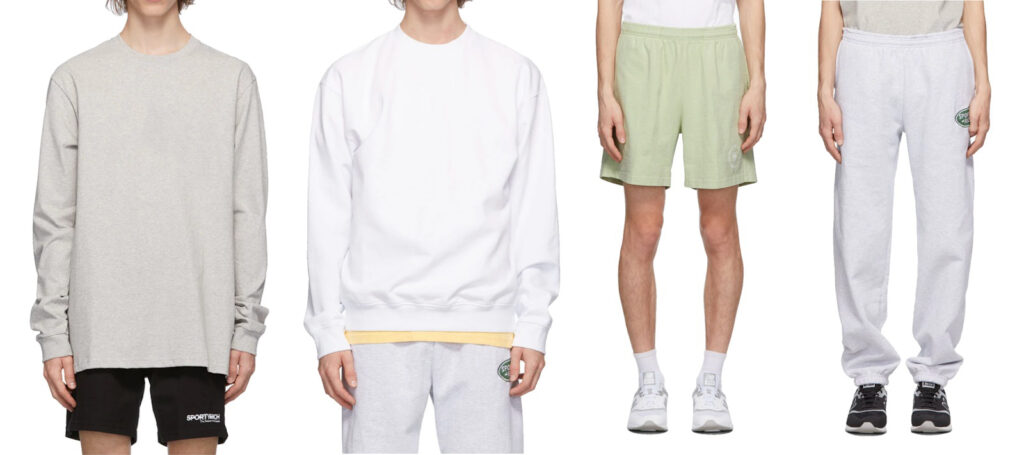
A new loungewear brand should usually start with a tight core collection such as a matching set, a lounge top, a relaxed pant, and one layering piece like a hoodie, cardigan, or robe. A narrow collection is easier to develop, easier to brand, and easier to sell well.
At Fusionknits, we often recommend starting with a small line that shares one fabric story and one fit direction. This improves consistency and reduces development mistakes. It also makes the brand easier for customers to understand.
Strong first-launch product options
- Matching lounge set
- Relaxed T-shirt or long-sleeve top
- Soft lounge pants
- Shorts for warmer markets
- Lightweight robe or hoodie
- Soft cardigan or wrap layer
Why a smaller launch works better
Product focus is stronger
The customer understands what the brand stands for.
Development becomes easier
Fewer styles mean better control over fabric, fit, and quality.
Inventory risk becomes lower
A tight edit is easier to manage than a wide scattered range.
| First-launch style | Why it works |
|---|---|
| Matching set | Strong visual identity |
| Lounge pant | Core category product |
| Relaxed top | Easy styling piece |
| Layering piece | Adds value and variation |
How Should You Define Your Loungewear Brand Position?
Before selecting fabrics or manufacturers, the brand needs a clear position. Without that, the collection becomes too generic and pricing becomes weak.
A loungewear brand should define its position by deciding who the customer is, what price level it targets, what comfort story it offers, and how it differs from existing brands. The clearest positions usually focus on premium softness, minimalist design, better fit, sustainable materials, or stylish home-to-street wearability.
At Fusionknits, brand position is one of the most important early decisions because it shapes every later choice. Fabric, packaging, labeling, MOQ strategy, and even size range depend on that direction.
Useful positioning questions
- Is the brand premium or accessible?
- Is the style minimal, cozy, feminine, sporty, or elevated?
- Is the customer buying mainly for home, travel, or daily use?
- Will the brand lead with fabric quality, fit, or styling?
Why positioning matters so much
It affects product design
A minimalist brand should not develop overly decorative products.
It affects fabric decisions
Premium softness and easy-care value need different material strategies.
It affects selling language
The brand needs a clear reason for customers to choose it.
| Positioning path | Main value |
|---|---|
| Premium comfort | Better hand feel and finish |
| Minimal lifestyle | Clean design and neutral palette |
| Soft travelwear | Easy movement and polish |
| Sustainable lounge basics | Material and sourcing story |
What Fabrics Work Best for a Loungewear Brand?
Fabric is the foundation of the category. In loungewear, customers notice hand feel immediately, but they also judge wash performance, pilling, and shape retention very quickly.
The best fabrics for a loungewear brand usually include cotton jersey, modal blends, viscose blends, French terry, brushed fleece, rib knits, bamboo-viscose blends, and cotton-elastane or polyester-cotton-elastane fabrics depending on the product type. The right fabric should balance softness, recovery, breathability, durability, and price level.
At Fusionknits, we treat loungewear fabric selection as both an emotional and technical decision. The fabric must feel soft enough to attract the customer, but it must also survive repeat washing and daily wear without losing its value too quickly.
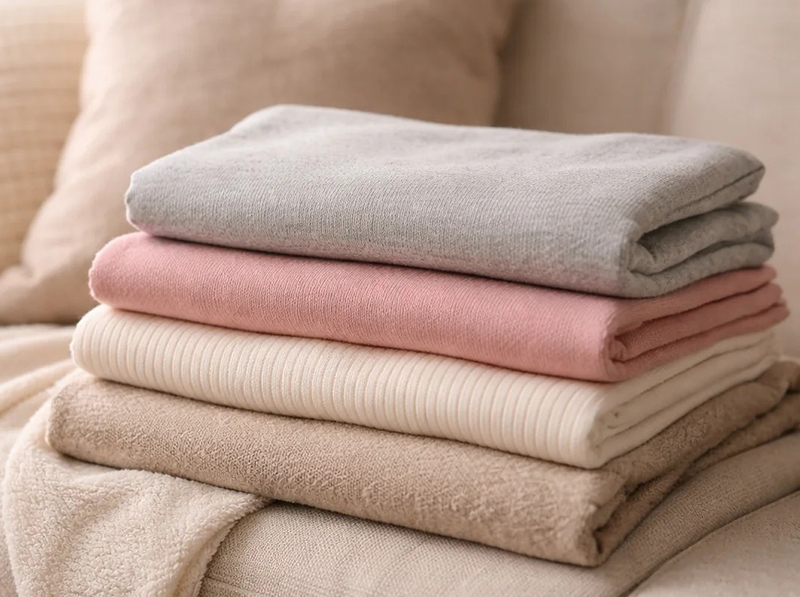
Strong loungewear fabric directions
- Cotton jersey for easy basics
- Modal or viscose blends for smooth softness
- French terry for all-day comfort sets
- Brushed fleece for cold-weather lines
- Rib knit for fitted comfort styles
- Cotton-elastane blends for better recovery
What founders should watch carefully
Softness alone is not enough
Some overly soft fabrics pill or stretch too easily.
Recovery matters
Pants and cuffs must keep their shape.
Weight matters
Too light can feel cheap. Too heavy can feel restrictive.
| Fabric type | Best use |
|---|---|
| Cotton jersey | Basic tops and easy sets |
| Modal blend | Premium soft sets |
| French terry | Everyday lounge sets |
| Fleece | Winter lounge lines |
| Rib knit | Body-close styles |
How Do You Build a Good Tech Pack for Loungewear?
Many startup founders underestimate this step. A mood board and a reference photo are not enough to develop a reliable product. A factory needs exact instructions.
A good loungewear tech pack should include flat sketches, measurements, tolerances, fabric details, trim details, construction notes, label placement, colorways, and packaging instructions. Strong tech packs reduce sampling mistakes and improve communication with the manufacturer.
At Fusionknits, we see many avoidable delays caused by weak tech packs. If fit notes are vague or fabric details are unclear, the sample often comes back wrong. That increases time, cost, and frustration.
A strong loungewear tech pack should include
- Front and back sketches
- Measurement chart
- Fabric composition and GSM
- Stitching and seam notes
- Drawcord, elastic, cuff, and hem details
- Label and hangtag placement
- Packaging instructions
Why this step matters
It improves accuracy
The factory understands the product better.
It reduces revision rounds
Clear instructions save development time.
It protects consistency
Later repeats are easier to manage.
| Tech pack section | Why it matters |
|---|---|
| Measurement spec | Fit accuracy |
| Fabric details | Material control |
| Construction notes | Quality consistency |
| Label and pack notes | Brand finish |
How Do You Find the Right Manufacturer for a Loungewear Brand?
The right supplier does more than sew garments. A good manufacturer helps protect fabric quality, fit balance, production consistency, and communication speed.

To find the right manufacturer for a loungewear brand, look for a supplier with proven knitwear and comfortwear experience, clear communication, stable quality control, realistic MOQs, fabric sourcing strength, and sampling ability. A good manufacturer should understand softness, fit, recovery, and repeat production discipline.
At Fusionknits, we believe the best manufacturing relationship starts with clarity. Founders should not only ask for price. They should ask about sampling process, MOQ, fabric sourcing, lead time, QC steps, and past experience with similar products.
What to check in a manufacturer
- Experience in knitwear or loungewear
- Sampling quality
- MOQ flexibility
- Communication speed
- Fabric sourcing support
- Quality control process
- Packing and labeling capability
Red flags to watch
Weak communication
Small misunderstandings become large production mistakes.
No clear fabric knowledge
Loungewear quality depends heavily on fabric behavior.
Unrealistic pricing
The cheapest offer often leads to weak recovery and poor finishing.
| Supplier trait | Why it matters |
|---|---|
| Knitwear experience | Better product understanding |
| Strong sample room | Better development results |
| Clear QC process | Lower risk in bulk |
| Reliable sourcing | Better fabric consistency |
How Should You Price a Loungewear Brand?
Pricing should never start with guessing what customers might pay. It should begin with product cost, brand position, margin goals, and competitor level.
A loungewear brand should price products by calculating fabric cost, trims, labor, packaging, shipping, duties, overhead, and target margin, then matching that number to the intended market position. The price should reflect both product quality and brand presentation, not only raw production cost.
At Fusionknits, we often see new brands underprice their first collection. This usually creates pressure later when they try to improve packaging, photography, or fabric quality. A better pricing strategy supports sustainable growth.
Core pricing components
- Fabric and trims
- Sample and development cost
- Production cost
- Packaging cost
- Freight and duties
- Marketing and content cost
- Retail margin target
Why pricing needs discipline
Low pricing can hurt brand growth
There may be no room left for proper branding or marketing.
Price should match the product story
Premium softness and better fit need premium support.
Margin protects long-term survival
A brand without healthy margin struggles to scale.
| Pricing factor | Business impact |
|---|---|
| Strong cost control | Better profit visibility |
| Clear margin goal | Better brand stability |
| Correct market match | Better sell-through confidence |
How Do You Create a Loungewear Brand Identity That Feels Strong?
The category is crowded, so brand identity matters. A soft product without a clear point of view usually gets lost quickly.
A strong loungewear brand identity comes from clear visual consistency, a defined customer lifestyle, a recognizable product mood, and disciplined presentation across logo, color palette, packaging, photography, and messaging. The strongest brands make customers feel one clear emotional promise.
At Fusionknits, we often see that product and presentation must grow together. A minimalist loungewear brand should not use chaotic graphics. A premium comfort brand should not package products in a weak or generic way.
Strong identity-building elements
- Clear brand tone
- Consistent color palette
- Cohesive packaging
- High-quality product photography
- Clear fabric and fit story
- Consistent naming and copy style
Why brand identity matters
Loungewear is emotional
Customers buy comfort with both their hands and their eyes.
Strong branding builds trust
The product feels more credible.
Better presentation improves price acceptance
Customers are more willing to pay when the brand feels complete.
| Brand element | What it supports |
|---|---|
| Visual consistency | Recognition |
| Product story | Differentiation |
| Better packaging | Premium perception |
| Cohesive content | Brand trust |
How Should You Launch and Grow a Loungewear Brand?
A strong launch does not need a huge product line. It needs clarity, confidence, and a plan for repeat business. Growth should come from learning what the customer responds to, then expanding carefully.
A loungewear brand should launch with a focused core collection, strong product visuals, clear messaging, and a simple marketing path through content, email, social media, and direct product storytelling. Growth should come from improving bestsellers, adding seasonal extensions, and building repeat customers through quality and consistency.
At Fusionknits, we believe the strongest growth usually comes from product discipline. Brands scale better when they improve what already works instead of adding too many weak new styles too quickly.
Strong launch actions
- Start with a tight core collection
- Invest in clean photography
- Explain fit and fabric clearly
- Lead with hero products
- Build email capture early
- Use repeat customers as a growth signal
Smart growth directions
Expand by product family
Add shorts, robes, or layering pieces after core sets perform.
Expand by season
Introduce fleece, lighter jersey, or rib lines based on timing.
Expand by color carefully
Keep core neutrals stable before pushing seasonal shades.
| Growth step | Best timing |
|---|---|
| Add more sets | After core sell-through proves demand |
| Add layering pieces | After the brand mood is clear |
| Expand colors | After fit and fabric are stable |
| Add premium line | After trust and margin improve |
Conclusion
Starting a loungewear brand is not just about making soft clothes. It is about building a focused product system around comfort, fit, fabric, and repeat wear value. The strongest brands begin with a clear market position, a narrow launch collection, reliable material choices, disciplined tech packs, and a manufacturing partner that understands knitwear and comfortwear. Cotton jersey, modal blends, French terry, fleece, and stretch-supported fabrics all have a role, but the best choice always depends on the product purpose and the customer promise.
At Fusionknits, we believe the most successful loungewear brands are the ones that stay clear and consistent. They do not launch too wide, they do not guess on quality, and they do not treat manufacturing like a last-minute step.
They build around strong basics, better fabrics, realistic pricing, and a brand identity that feels complete. When that foundation is in place, a loungewear brand becomes much easier to scale into sets, separates, seasonal capsules, and long-term customer loyalty.